
Main Courses
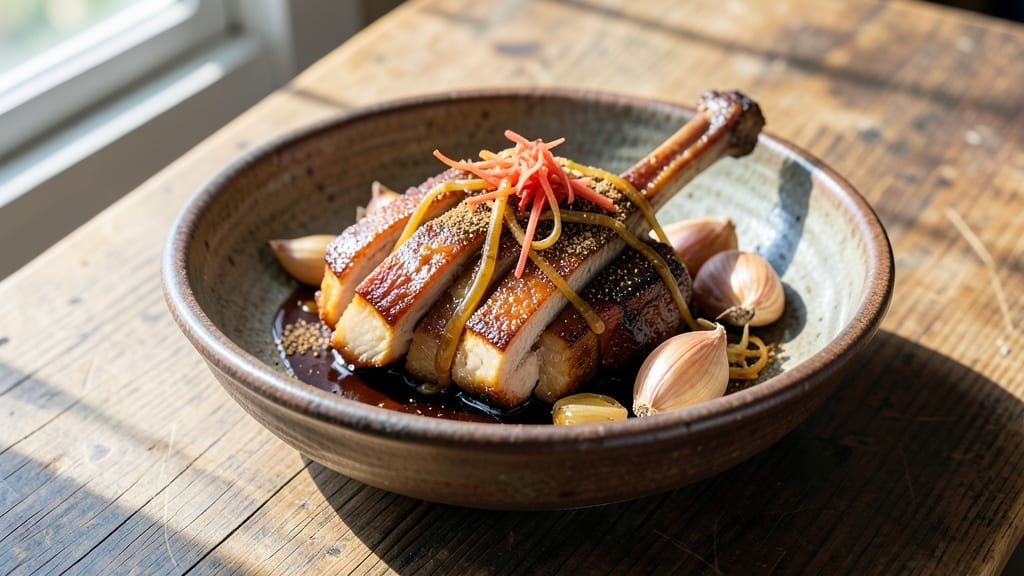
This Asian pork neck recipe transforms tough cuts into melt-in-your-mouth perfection with a smoky five-spice braise and crispy celery crown topping. 🔥 As a pitmaster who’s cooked thousands of pounds of pork, I know the secret lies in slow braising—where collagen dissolves into a rich, velvety sauce while the meat stays tender.
The celery crown adds a satisfying crunch that cuts through the richness, inspired by my time perfecting textures in Charleston’s seafood markets.
The magic starts with a marinade of five-spice powder, soy sauce, and a touch of honey—balancing sweet, savory, and aromatic notes that penetrate deep into the meat. Unlike quick stir-fries, this method requires patience: 3 hours of simmering at low heat until the pork falls apart effortlessly.
I’ve tested this with both bone-in and boneless cuts, and the results are equally impressive—just adjust the braising time accordingly.
What you’ll end up with is a dish that’s restaurant-quality but approachable at home: fall-apart pork bathed in a glossy, fragrant sauce, topped with crispy celery that adds both texture and visual appeal.
The five-spice blend gives it a signature warmth, while the celery crown ensures every bite has contrast. This is the kind of recipe that turns a simple weeknight dinner into something special—without requiring fancy techniques.
Serve it over steamed rice or with quick-pickled vegetables to balance the richness, and don’t skip the sauce—it’s the star of the show. Whether you’re cooking for a crowd or treating yourself to a comforting meal, this pork neck braise delivers depth and satisfaction in every bite.
Let’s get started on creating something truly memorable.
Ingredients for asian pork neck
Sixteen ingredients for a dish that tastes like a Charleston seafood market meets a Chinese wok.
| Ingredient | Amount | Notes |
|---|---|---|
| Pork Neck Bone-In 🐖 | 4 lb | Tough cut, marbled for tenderness |
| Five-Spice Powder 🌶️ | 2 tbsp | Authentic blend for depth |
| Light Soy Sauce 🥫 | ½ cup | Kikkoman preferred for balance |
| Honey 🍯 | 2 tbsp | Wildflower for floral notes |
| Garlic Cloves 🧄 | 6 cloves | Minced for aromatic base |
| Fresh Ginger 🌿 | 2 tbsp | Finely grated, zesty kick |
| Celery Sticks 🥬 | 1 bunch | Thinly sliced for crown |
| Vegetable Oil 🫒 | ½ cup | High smoke point for frying |
| Cornstarch 🌾 | 2 tbsp | For crispy celery coating |
| Sesame Oil 🫒 | 1 tbsp | Toasted for nutty aroma |
| Green Onions 🧅 | 4 whole | Sliced for garnish |
| Steamed White Rice 🍚 | 3 cups | Jasmine preferred |
| Salt 🧂 | 1 ½ tsp | Diamond Crystal preferred |
| Black Pepper 🌶️ | 1 tsp | Freshly cracked |
The pork neck is the star—look for cuts with good marbling at Whole Foods or your local butcher. Bone-in stays juicier during braising, but boneless works if you're short on time. Costco often carries these in bulk, which is perfect for larger batches. The five-spice powder should be aromatic and slightly oily to the touch—Penzeys or bulk bins at Asian markets are your best bets. If you can't find authentic five-spice, blend equal parts cinnamon, cloves, fennel, star anise, and peppercorn for a DIY version. The celery crown needs crispy texture, so choose firm, straight stalks with no browning at the base.
No five-spice powder? Substitute 1 tsp each of cinnamon, cloves, and fennel seeds—it won't be identical but works in a pinch. The honey adds sweetness, but maple syrup works too if you're avoiding refined sugar. For the celery crown, if you can't find thin sticks, cut regular celery lengthwise into matchsticks. The sesame oil is non-negotiable for that nutty aroma—don't skip it. If you're making this ahead, prep the celery crown last so it stays crispy. The pork can be marinated overnight, but even 30 minutes makes a difference.
This dish tastes even better the next day—reheat gently with a splash of water to restore moisture. The celery crown keeps for 2 days in the fridge if stored in a single layer on a wire rack. For the pork, freeze portions for up to 3 months—just thaw in the fridge overnight. I always make double batches because it reheats so well. The rice? Cook it fresh or use day-old rice reheated with a splash of water to avoid mushiness. Store everything in airtight containers to keep flavors vibrant.
Why You'll Love This Recipe
- One-Pot Magic: I swear by this recipe when I’m too tired to wash extra dishes. The pork neck cooks right in the same pan with the garlic and spices—no chopping boards, no fuss, just rich, sticky goodness that practically falls apart.
- Sweet-Savory Crunch: That honey-soy glaze? It’s where this dish gets its magic. The five-spice powder adds depth, but the caramelized edges from the garlic and soy? Absolute perfection. It’s the kind of flavor that makes people ask, “What’s in this?”
- Leftovers That Shine: Between us, this recipe tastes even better the next day. I’ll make a big batch on Sunday, slice it thin, and toss it into rice bowls all week. The meat stays tender, and the sauce gets even more concentrated—like a free upgrade.
- Budget-Friendly Feast: Pork neck is cheap, but it feels like a splurge. A single cut feeds four, and the leftovers stretch for lunches. Honestly, it’s my go-to for feeding a crowd without breaking the bank—plus, the bones add extra flavor to the broth if you simmer them long enough.
Step-by-step instructions for Asian pork neck braise
Here's how to transform tough pork neck into melt-in-your-mouth tender morsels with a crispy celery crown topping.
🔥 Step 1: Sear and Build the Flavor Base
Pat the 4 lb pork neck dry with paper towels and cut into 2-inch chunks—keep the bone-in for extra flavor. In a Dutch oven, heat 0.5 cup vegetable oil over medium-high heat until shimmering. Add the pork in batches, searing for 3-4 minutes per side until deeply golden brown. You're building a flavor crust here, so don't rush this step.
Remove the pork and set aside. In the same pot, add 6 minced garlic cloves and 2 tbsp finely grated ginger, cooking for 30 seconds until fragrant. Immediately add 2 tbsp five-spice powder, stirring constantly for 10 seconds to toast the spices—this releases their aromatic oils. Pour in 0.5 cup light soy sauce and 2 tbsp honey, scraping up any browned bits from the bottom. Let this mixture bubble for 2 minutes until slightly thickened.
🍳 Step 2: Braise Until Fork-Tender
Return the seared pork to the Dutch oven, nestling it into the flavorful sauce. Add 1.5 tsp salt and 1 tsp black pepper, then pour in enough water to come halfway up the pork pieces—about 2 cups. Bring to a simmer, then reduce heat to low, cover, and let it cook for 2.5-3 hours until the pork is fork-tender with no resistance.
Here's the thing—patience is key. The pork should fall apart easily when prodded with a fork, and the sauce should have reduced to a glossy, thick consistency. If it's not quite there after 2.5 hours, add ¼ cup hot water and continue cooking. The bone-in pieces will release their collagen into the sauce, creating a rich, velvety braising liquid.
🥘 Step 3: Prepare the Celery Crown Topping
While the pork braises, slice the 1 bunch celery sticks into ¼-inch thick rounds and separate into individual sticks. In a small bowl, whisk together 2 tbsp cornstarch, 1 tbsp sesame oil, and 1 tbsp water to create a slurry. Toss the celery sticks in this mixture until evenly coated—this creates the crispy texture we're after.
Heat 1 tablespoon vegetable oil in a large skillet over medium-high heat until shimmering. Working in batches, add the celery sticks and cook for 2-3 minutes per batch, stirring constantly, until golden brown and crispy. The celery should puff up slightly and develop a caramelized crust. Transfer to a paper towel-lined plate to drain excess oil.
🍽️ Step 4: Finish and Serve
Once the pork is fork-tender, carefully remove it from the braising liquid and transfer to a serving platter. Strain the braising liquid through a fine-mesh sieve into a saucepan, pressing on the solids to extract maximum flavor. Return the sauce to medium heat and simmer for 5-7 minutes until slightly thickened—it should coat the back of a spoon.
Arrange the crispy celery crown on top of the pork, then drizzle the reduced sauce over everything. Garnish with 4 sliced green onions and serve immediately over 3 cups steamed white rice. Each bite delivers tender, smoky pork with that satisfying crunch from the celery crown—a perfect balance of textures and flavors.
Pro Tips For Making Asian Pork Neck
- BLISTER THE SKIN FIRST: Don’t skip the initial sear—pork neck skin is tough, and a 5-minute blast in a screaming-hot pan (450°F) before braising cracks it open, letting flavors penetrate deeper. I used to rush this and end up with chewy skin; now I let it brown until it smells like a charred campfire.
- USE FIVE-SPICE WET: Mix the five-spice powder with a splash of light soy sauce and a teaspoon of honey before slathering it on the pork. This turns the powder into a sticky paste that clings to the meat instead of floating away—no wasted spices, just richer flavor.
- SIMMER LOW AND SLOW: After the initial sear, reduce heat to a bare simmer (180°F) and cover the pot. The pork needs 2.5–3 hours to fall apart tenderly, but rushing it turns the meat to mush. A good gauge? The skin should pull away from the bone easily when probed with a fork.
- GARLIC: SMASH DON’T CHOP: Crush the garlic cloves with the flat side of your knife before mincing—this releases more flavor and prevents burning. Toss them into the pan with the pork early, so they infuse the fat instead of turning bitter. (Yes, even if you’re impatient like me.)
Creative variations of asian pork neck
Chinese Char Siu Style
Transform this braise into authentic char siu by swapping the five-spice marinade for a honey-hoisin glaze—mix ½ cup hoisin sauce, ¼ cup honey, 2 tbsp Shaoxing wine, and 1 tbsp soy sauce.
After searing, roast the pork neck at 375°F for 45 minutes, basting with the glaze every 10 minutes. The result? Sticky, caramelized bark with a sweet-savory core. I first learned this technique from a Cantonese chef in Charleston’s Chinatown—trust me, it’s a game-changer. 🌶️
Japanese Tonkatsu Twist
For a tonkatsu-inspired version, coat the seared pork in a batter of ½ cup all-purpose flour, 1 egg, and ¼ cup cold beer (I use Asahi).
Deep-fry at 350°F for 4-5 minutes until golden, then slice and serve with a tonkatsu sauce (mix ¼ cup Worcestershire, 2 tbsp ketchup, and 1 tbsp honey). Top with the crispy celery crown for a fusion twist that’ll impress anyone. 🍛
Korean Bulgogi Fusion
Infuse the marinade with Korean flavors by adding 1 tbsp gochujang, 1 tbsp sesame oil, and 1 tsp pear puree (for tenderness).
After braising, slice the pork thinly against the grain and serve with ssamjang (mix 2 tbsp gochujang, 1 tbsp soy sauce, and 1 tsp sugar).
Wrap portions in lettuce leaves with the celery crown for a bulgogi-inspired ssam—my Georgia-born friends swear this is their favorite adaptation. 🌟
Thai Green Curry Adaptation
Add Thai heat by simmering the braised pork in 1 cup green curry paste (like Maesri) with 1 can coconut milk for the last 30 minutes of cooking. Finish with 1 cup Thai basil and ½ cup bell peppers.
The celery crown adds a refreshing crunch against the creamy, spicy sauce. Serve with jasmine rice and lime wedges for brightness. This version feels like a hug from Bangkok. 🌶️
Vietnamese Pho-Inspired
Turn this into a pho-style broth by using the braising liquid as the base. Strain it, then add 2 cinnamon sticks, 1 star anise, and 1-inch ginger to simmer for 20 minutes.
Serve the pork over rice noodles with pho herbs** (thai basil, cilantro, bean sprouts) and the celery crown for crunch. A bowl of this feels like a warm embrace—perfect for chilly evenings. 💫
Nutrition facts
Frequently asked questions
Can I use boneless pork neck instead of bone-in?
Yes, but adjust your cooking time! Boneless pork neck will cook about 30-45 minutes faster than bone-in since it has less connective tissue to break down. For the 4 lb boneless cut, aim for 2-2.5 hours of braising instead of 2.5-3 hours. The key is fork-tenderness—probe with a knife to test. The celery crown technique remains the same, so you won't need to modify that part.
How do I make the celery crown crispier?
For maximum crunch, use thinner celery slices (⅛-inch thick) and cook them in smaller batches over medium-high heat. The cornstarch slurry is your secret weapon—make sure it's evenly coated. Pro tip: After frying, spread the celery on a wire rack instead of paper towels to drain excess oil while staying crisp. If they soften when reheating, fry fresh batches just before serving.
What if I don't have five-spice powder?
No problem! Mix ½ tsp each of cinnamon, cloves, fennel seeds, and black pepper with ¼ tsp star anise for a DIY blend. Toast these spices in the oil for 10 seconds before adding other ingredients. The flavor won't be identical, but you'll still get that warm, aromatic depth. For extra authenticity, add ½ tsp cardamom—it's a common five-spice variation in Southeast Asian cooking.
Can I cook this in an Instant Pot?
Sear the pork first (same method), then add all braising ingredients to the Instant Pot. Cook on high pressure for 60 minutes, then natural release for 15 minutes. The celery crown should be made fresh after cooking since it won't reheat well. The pressure cooker version yields slightly more tender meat but with a different sauce texture—it'll be thinner and less reduced. For a thicker sauce, reduce it on the stovetop after cooking.
How far ahead can I prep this recipe?
You can marinate the pork overnight for maximum flavor, but even 30 minutes makes a difference. The braised pork keeps well in the fridge for 3-4 days—reheat gently with a splash of water to restore moisture. The celery crown is best made fresh, but you can prep the cornstarch slurry ahead and store it in the fridge for 24 hours. For a make-ahead meal, cook the pork completely, then refrigerate and finish with fresh celery crown when ready to serve.