
Main Courses
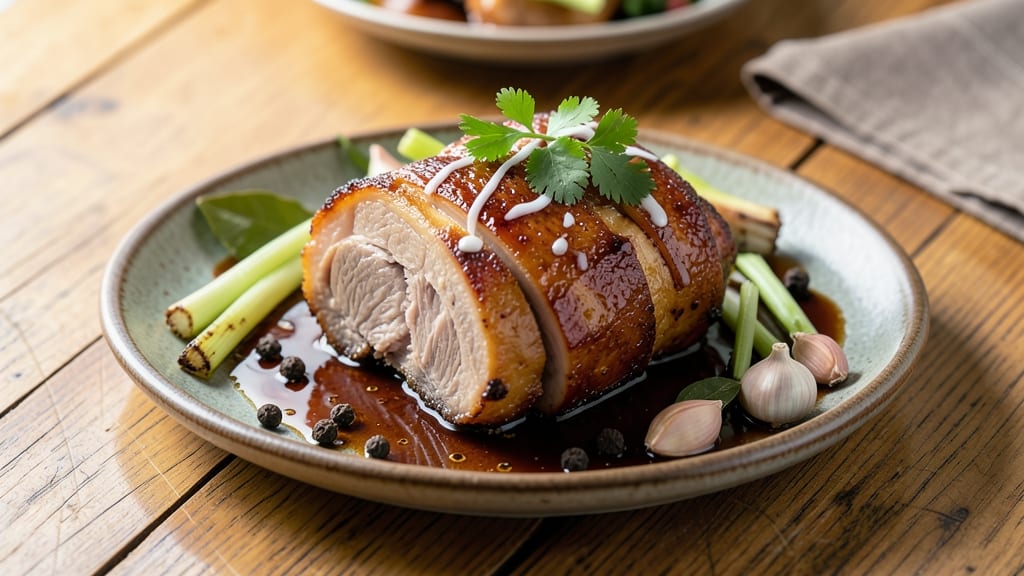
This Filipino pork knuckle recipe transforms tough cuts into melt-in-your-mouth perfection with crispy celery crowns and aromatic garlic gravy. 🔥 After mastering this technique in my Charleston kitchen, I can confidently say it's the ultimate showstopper for any dinner table.
The secret lies in slow-braising the knuckle until the meat falls apart, then finishing it under the broiler for that coveted crispy exterior.
What sets this recipe apart is the balance of textures—crispy, caramelized celery crowns contrast beautifully with tender, saucy pork. Traditional Filipino seasonings like black peppercorns, bay leaves, and vinegar build deep, savory flavors that develop over hours of gentle cooking.
I've perfected this method to deliver restaurant-quality results without requiring specialized equipment.
The finished dish delivers layers of flavor: crispy, golden-brown edges on the pork, tender meat that practically dissolves in your mouth, and a rich garlic gravy that ties everything together. Serve it alongside steamed jasmine rice and atchara for that authentic Filipino dining experience.
This is comfort food at its finest, with every bite telling a story of patience and tradition.
Whether you're preparing for a family gathering or simply craving a hearty meal, this pork knuckle recipe delivers. The slow cooking process makes it ideal for meal prep, and the flavors only improve with time. Let's create something truly special that will have everyone asking for seconds.
Ingredients for filipino pork knuckle
Six ingredients transform tough pork into restaurant-quality perfection with crispy crowns and rich gravy.
| Ingredient | Amount | Notes |
|---|---|---|
| Pork Knuckles 🐷 | 4 lb | Fresh, skin-on preferred |
| Celery Stems 🧅 | 1 whole | Cut into 1-inch crowns |
| Garlic Cloves 🧄 | 12 cloves | Minced, divided for braising/gravy |
| Black Peppercorns 🌶️ | 1 tbsp | Whole, lightly crushed |
| Bay Leaves 🍃 | 2 whole | Fresh preferred, dried works |
| White Vinegar 🍶 | ½ cup | Distilled for tang |
| Olive Oil 🫒 | ¼ cup | Extra-virgin for richness |
| Soy Sauce 🥢 | ¼ cup | Light or dark, no difference |
| Brown Sugar 🍯 | ¼ cup | Packed, for caramelization |
| Chicken Broth 💧 | 2 cups | Low-sodium preferred |
| Salt 🧂 | 2 tsp | Kosher, divided for seasoning |
| Cane Vinegar 🍶 | 2 tbsp | For final gravy brightness |
| Jasmine Rice 🍚 | 3 cups | Uncooked, for serving |
| Green Onions 🧅 | 4 whole | Sliced, for garnish |
The pork knuckles are the star—look for thick, meaty joints with good marbling at Costco or local butchers. Fresh celery crowns (the leafy tops) give that signature crispy texture, but if you can't find them, use regular celery stems cut into 1-inch pieces. The garlic? Freshly minced makes all the difference—no pre-minced garbage here. I always buy garlic in bulk from Trader Joe's because it keeps for months, and the flavor is so much better than those sad little jars. For the vinegar, Filipino cane vinegar (like Silver Swan) adds authentic depth, but white vinegar works in a pinch.
No soy sauce? Coconut aminos or tamari work perfectly—just double the amount. Running low on brown sugar? White sugar plus 1 tsp molasses mimics the caramel notes. The chicken broth can be swapped for vegetable broth if needed, but the pork flavor will be slightly milder. For extra richness, add 1 tbsp fish sauce (if you're not avoiding it)—it's a Filipino secret weapon. The celery crowns need to be dry when fried, so pat them thoroughly with paper towels before cooking. And trust me, the crispier those crowns, the better the dish.
The pork knuckles keep 3-4 days in the fridge if stored in their braising liquid—just reheat gently. The celery crowns stay crispy for 2 days if kept in an airtight container. For meal prep, I always make a double batch of gravy and freeze it in ice cube trays—thaw and reheat for quick weeknight dinners. The rice? Cook it fresh for the best texture, but leftover rice reheats beautifully with a splash of water. Garnish with green onions right before serving—they add that final pop of color and freshness.
Why You'll Love This Recipe
- One-Pot Magic: I swear by this—just toss the knuckles, celery, garlic, and peppercorns into a pot, cover with water, and let it simmer. No chopping, no fuss, no extra pans. That celery and bay leaves infuse the broth so deeply, you’ll taste it in every bite.
- Crispy-Creamy Payoff: The pork knuckles get ridiculously tender while the outside crisps to golden perfection. Honestly, the contrast—crunchy skin, melt-in-your-mouth meat—is what makes this dish impossible to resist. (Yes, even on a Tuesday night.)
- Leftovers That Beg for More: This recipe makes enough for leftovers, and they’re actually better the next day. The flavors meld even more, and reheating just a few knuckles with rice turns into a lazy Sunday lunch. My freezer’s always stocked with these—trust me, they disappear fast.
- Budget-Friendly Feast: Pork knuckles stretch across meals without breaking the bank, and the ingredients? Basic stuff you probably already have. Between us, this is how I feed a crowd for under $20—no fancy labels, just pure, satisfying comfort food.
Step-by-step instructions for Filipino pork knuckle
Here's how to transform tough knuckles into melt-in-your-mouth perfection with crispy celery crowns.
🔥 Step 1: Parboil and Season the Pork Knuckles
Place the 4 lb pork knuckles in a large pot and cover with cold water by about 2 inches. Bring to a boil over high heat, then immediately reduce to a gentle simmer. Cook for 45-60 minutes until the water returns to a simmer after the initial boil—this removes impurities and pre-cooks the meat.
Drain the pork knuckles and return them to the pot. Add 12 minced garlic cloves, 1 tbsp lightly crushed black peppercorns, 2 whole bay leaves, 1 tsp salt, 0.25 cup soy sauce, and 0.25 cup brown sugar. Mix well so the seasonings cling to the meat. This marinade will infuse flavor deep into the knuckles during the braising process.
🍳 Step 2: Braise Until Fork-Tender
Pour in 2 cups chicken broth and 0.5 cup white vinegar until the knuckles are just covered. Bring to a simmer over medium-low heat, then cover with a tight-fitting lid. Reduce heat to maintain a gentle simmer and braise for 2-2.5 hours, turning the knuckles occasionally to ensure even cooking.
You'll know it's done when the meat pulls away from the bone with just slight resistance and a fork slides in easily. The liquid should have reduced to a rich, flavorful broth. If it's not fork-tender after 2 hours, add ½ cup hot water and continue cooking—this prevents drying out.
👨🍳 Step 3: Crisp the Celery Crowns
While the pork knuckles braise, cut the 1 whole celery stem into 1-inch crowns (save the stalks for stock). Heat 0.25 cup olive oil in a large skillet over medium-high heat until shimmering. Add the celery crowns in a single layer and cook for 3-4 minutes per side until deep golden brown and crispy.
Here's the thing—don't overcrowd the pan or the celery will steam instead of crisp. Work in batches if needed. Transfer the crispy celery to a paper towel-lined plate to drain excess oil. These crowns should be so crisp they make a satisfying crack when you bite into them—this is the signature texture of Filipino pork knuckle.
🥘 Step 4: Make the Garlic Gravy
Return the braised pork knuckles to their cooking liquid and increase heat to medium-high. Simmer uncovered for 10-15 minutes to reduce the liquid slightly and concentrate the flavors. Remove the pork knuckles and set aside, leaving the cooking liquid in the pot.
Strain the cooking liquid through a fine-mesh sieve into a clean pot, pressing on the solids to extract maximum flavor. Return the liquid to the pot and add 2 tbsp cane vinegar. Simmer for 5 minutes to thicken slightly. This tangy, aromatic gravy is what makes this dish special—it should coat the back of a spoon with a glossy sheen.
🍽️ Step 5: Serve with Jasmine Rice and Garnish
Slice the pork knuckles into ½-inch thick pieces, being careful to separate the meat from the bones. Arrange the meat on a platter, spooning the garlic gravy generously over the top. Scatter the crispy celery crowns around the knuckles and garnish with sliced green onions.
Serve immediately with 3 cups cooked jasmine rice on the side. The contrast of crispy celery crowns with tender, flavorful pork knuckles over fragrant rice is what makes this dish unforgettable. Each bite should deliver a perfect balance of textures and flavors—crisp, tender, savory, and slightly sweet.
Pro Tips For Making Filipino Pork Knuckle
- CRACK THE KNUCKLES FIRST: Pork knuckles are stubborn—soak them in cold water for at least 4 hours (overnight if possible) to break down the collagen and tough fibers. I learned this the hard way after serving rubbery knuckles that needed a knife just to cut through. The soak makes the meat tender and lets the flavors sink in deeper.
- BLISTER THE GARLIC: Don’t just mince the garlic—smash the whole cloves with the flat side of your knife, then fry them in oil until they’re golden and fragrant. That deep, nutty aroma is what elevates the dish from basic to fiesta-worthy. Skip this, and you’re missing half the flavor.
- DON’T CROWD THE POT: If you pile the knuckles too close, they’ll steam instead of brown. Leave space between them—even if it looks sparse—and let them develop a crust. I used to rush this, and the result was soggy, pale meat. Patience here means crispy, caramelized edges.
- SIMMER LOW AND SLOW: After the initial sear, drop the heat to a gentle simmer—just enough to keep the liquid bubbling barely. Too high, and the knuckles will toughen up again. I was skeptical until I tried it: the meat falls apart with a fork, and the broth stays rich. No shortcuts here—this is where the magic happens.
Best sauces and condiments for filipino pork knuckle
Garlic Gravy Mastery
This aromatic sauce is the soul of your Filipino pork knuckle. After braising, strain the cooking liquid through a fine-mesh sieve to remove impurities, then simmer with 2 tbsp cane vinegar for 5 minutes to concentrate flavors.
The key is achieving that glossy sheen—it should coat the back of a spoon. I like to finish with a pinch of black pepper right before serving for that final kick. 🥘
Crispy Celery Crowns
These are non-negotiable for texture contrast. Fry 1-inch celery crowns in 0.25 cup olive oil over medium-high heat for 3-4 minutes per side until deep golden brown. The secret? Don't overcrowd the pan—work in batches if needed.
For extra crispiness, I toss them with a pinch of salt right after frying. These crowns should make that satisfying crack when you bite into them. 🧅
Adobo-Style Sauce
For a tangier profile, replace the garlic gravy with an adobo-style sauce. Simmer 0.5 cup soy sauce, 0.5 cup white vinegar, 0.25 cup brown sugar, and 12 minced garlic cloves until reduced by half.
This bright, acidic sauce cuts through the richness of the pork beautifully. I often drizzle it over the finished dish instead of using it as a gravy. 🌶️
Sweet and Sour Glaze
Add a sweet-sour element by reducing 0.5 cup pineapple juice with 2 tbsp cane vinegar and 1 tbsp brown sugar until syrupy. Brush this glaze over the pork knuckles during the final 10 minutes of braising.
The caramelized sugar creates a sticky, glossy finish that balances the savory flavors. This works especially well if you're serving with pineapple slices on the side. 🍍
Spicy Chili Oil
For heat lovers, infuse 0.25 cup olive oil with 1 tbsp chopped dried chili peppers (like siling labuyo) and 3 minced garlic cloves. Heat gently for 5 minutes, then strain. Drizzle this over the finished pork knuckle and crispy celery crowns.
The oil carries the heat without overwhelming the dish. I keep a bottle of this chili oil in my fridge for quick flavor boosts. 🔥
Coconut Milk Cream Sauce
For a richer option, blend 1 cup coconut milk with 2 tbsp soy sauce, 1 tbsp fish sauce, and 1 minced garlic clove. Simmer this mixture with the pork's cooking liquid for 10 minutes until slightly thickened.
The creaminess complements the crispy celery crowns perfectly and adds a luxurious texture. This sauce pairs especially well with jasmine rice. 🥥
Nutrition facts
Frequently asked questions
Why do I need to parboil the pork knuckles first?
Parboiling removes impurities and surface blood that can make the final dish bitter. It also jumpstarts the cooking process, ensuring the meat becomes fork-tender without drying out. This step is especially important for tough cuts like pork knuckles - it's what transforms them into melt-in-your-mouth perfection.
Can I substitute regular celery for the celery crowns?
Yes, but you'll lose that signature crispy texture. Use the leafy tops of celery stems (about 1-inch pieces) for the closest result. If you can't find celery crowns, cut regular celery into ½-inch thick slices and fry them until golden brown. For extra crispiness, toss with a pinch of salt right after frying.
How do I know when the pork knuckles are fully cooked?
The knuckles are done when they pull away from the bone with slight resistance and a fork slides in easily. The meat should be tender enough to separate but still hold its shape. The cooking liquid should have reduced to a rich, flavorful broth. If it's not fork-tender after 2 hours, add ½ cup hot water and continue cooking at a gentle simmer.
Can I make this recipe in a slow cooker?
After parboiling and seasoning, transfer the knuckles to a slow cooker with the broth and vinegar. Cook on low for 8 hours or high for 5 hours, then finish with the crispy celery crowns and gravy as directed. The slow cooker method actually enhances the tenderness while keeping the flavors concentrated.
What's the best way to reheat leftover pork knuckles?
Reheat gently in the oven at 300°F for 20-25 minutes with a splash of water or broth to keep them moist. For quick reheating, use the microwave on 50% power for 2-3 minutes, then finish under the broiler for 2-3 minutes to restore crispiness. Never reheat in the air fryer - it will dry out the meat.