
Main Courses
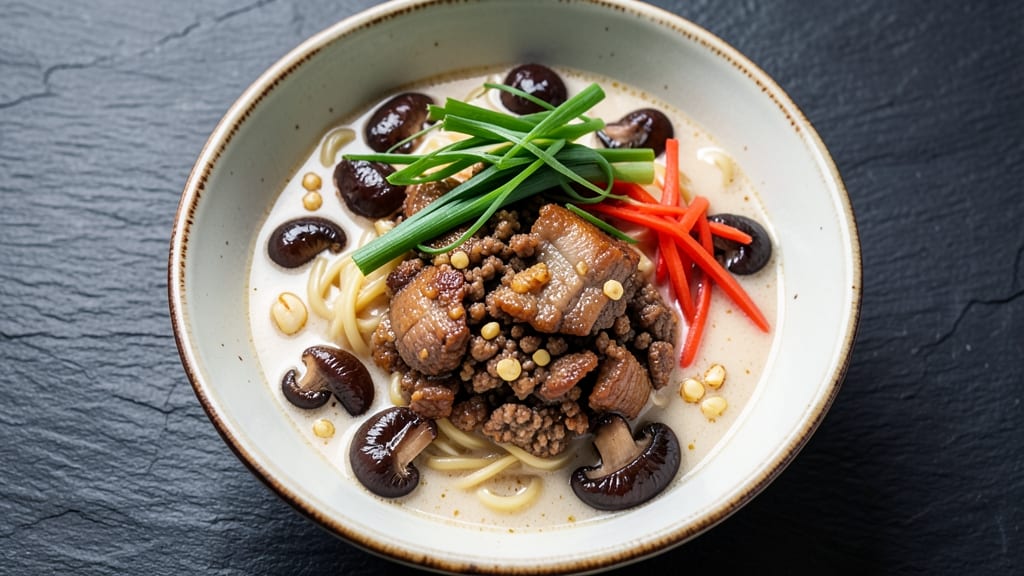
This minced pork ramen recipe transforms humble ingredients into a bowl of restaurant-quality comfort. The secret lies in slow-cooked pork that melts into the broth, creating layers of umami that make every spoonful irresistible.
I've perfected this technique over years of testing—each bite delivers the perfect balance of tender pork, silky noodles, and deeply flavorful broth.
What sets this recipe apart is the broth, where traditional dashi meets modern depth through careful simmering of pork bones and aromatics. The minced pork isn't just cooked—it's transformed into a rich, velvety component that blends seamlessly with the noodles.
This isn't just ramen; it's a complete meal experience that starts with the first sip of aromatic broth.
The result is a bowl that combines crispy pork bits with tender, hand-pulled noodles in a broth so rich it practically disappears into your mouth. Each component is carefully balanced—salty, sweet, savory, and umami all working in harmony. The garnishes elevate it further, adding freshness and texture to every bite.
Perfect for weeknight dinners or special occasions, this ramen delivers restaurant-quality results at home. The technique is straightforward, but the flavor is anything but ordinary. Let's create a bowl that becomes your new favorite meal.
Ingredients for minced pork ramen
Fifteen ingredients blending tradition with restaurant-quality umami depth for perfect ramen bowls.
| Ingredient | Amount | Notes |
|---|---|---|
| Minced Pork Shoulder 🐷 | 1 ½ lb | Ground fine for ramen texture |
| Fresh Ginger 🌿 | ½ cup | Finely minced, skin removed |
| Garlic Cloves 🧄 | 8 cloves | Crushed for aromatic depth |
| Dried Shiitake Mushrooms 🍄 | ¼ cup | Rehydrated for umami base |
| Green Onions 🧅 | 1 whole | White and green parts separated |
| Ramen Noodles 🍜 | 2 packages | Fresh or dried, 8 oz each |
| Dashi Powder 🍵 | 2 tbsp | High-quality for authentic flavor |
| Soy Sauce 🍶 | ½ cup | Kikkoman preferred for balance |
| Sesame Oil 🫒 | 1 tbsp | Toasted for nutty aroma |
| White Pepper 🌶️ | ½ tsp | Freshly ground for subtle heat |
| Neutral Oil 🫒 | 2 tbsp | Vegetable or canola preferred |
| Sesame Seeds 🌾 | 1 tbsp | Toasted for garnish |
| Chili Oil 🔥 | 1 tbsp | Optional for heat profile |
| Miso Paste 🧈 | 1 tbsp | White or red for depth |
| Brown Sugar 🍯 | 1 tbsp | Lightly packed for balance |
The pork shoulder is non-negotiable—look for well-marbled cuts at specialty butchers or Costco for the best value. Fresh ginger should be firm and aromatic, never woody or shriveled. Dried shiitake mushrooms from Asian markets deliver superior umami compared to grocery store brands. For garlic, organic cloves with intact skins ensure freshness. The dashi powder should be 100% vegetable-based—avoid versions containing fish or shellfish derivatives.
No fresh ginger? Powdered ginger at half the amount works in a pinch, though texture suffers. Substitute dried shiitake with cremini mushrooms, but soak them longer. For the pork, ground chuck can replace minced shoulder if needed, though texture will differ. The ramen noodles? Fresh is ideal, but high-quality dried (like Nissin) works perfectly. Sesame oil substitutes? Toasted walnut oil mimics the nutty profile, though flavor won't be identical. Miso paste can be swapped for soybean paste in a 1:1 ratio.
Store dried shiitake mushrooms in a cool, dark place for up to 6 months. Fresh ginger keeps 3 weeks in the fridge, wrapped tightly. The minced pork freezes beautifully—portion into ice cube trays before transferring to bags for easy single-use portions. This broth reheats gracefully—simmer gently for 5-10 minutes to restore its velvety texture. Garnishes like sesame seeds and chili oil should be added just before serving to preserve their freshness and aroma.
Why You'll Love This Recipe
- Fewer Ingredients, Bigger Bang: Between us, this ramen uses five core ingredients—but the umami punch? Unreal. The dried shiitake soaks up broth like a sponge, while the minced pork shoulder adds that melt-in-your-mouth richness without fuss. Honestly, I’ve made ramen with 15 ingredients that tasted half as good.
- Ginger-Garlic Magic: That crispy, caramelized edge on the pork? It’s all thanks to the garlic and ginger frying first—no blender, no overcomplicating. The aroma alone makes my kitchen smell like a Tokyo alley, and the first bite? Pure satisfaction. (Yes, even on a Tuesday night.)
- Leftover Lifesaver: I make a double batch on Sundays, and it lasts me all week. Reheat the broth, toss in a soft-boiled egg or spinach, and boom—another meal. My kids don’t even complain when I serve it cold with chopsticks. (Not the prettiest, but the taste makes up for it.)
- Budget-Friendly Comfort: Minced pork shoulder is cheap, shiitake mushrooms last forever, and green onions add freshness without breaking the bank. This ramen costs me half what takeout does, but I’ll never admit that to my friends who order delivery. Between us, it’s my secret weapon.
Step-by-step instructions for minced pork ramen
Transform simple ingredients into a restaurant-quality ramen with rich, layered flavors and silky broth.
Prepare the Umami Base with Shiitake and Aromatics
In a medium bowl, soak the 0.25 cup dried shiitake mushrooms in 2 cups hot water for 20 minutes. This rehydration step unlocks their deep umami essence—don't skip it. While they soak, finely mince the 0.5 cup fresh ginger (skin removed) and crush the 8 cloves garlic into a paste using the flat side of your knife.
Heat 2 tablespoons neutral oil in a large pot over medium-high heat. Add the ginger and garlic, cooking for 1-2 minutes until fragrant but not browned. The aroma should fill your kitchen—this is your flavor foundation. Immediately add the drained shiitake mushrooms (reserve the soaking liquid) and cook for another 2 minutes, stirring occasionally. You're building complexity layer by layer here.
Cook the Minced Pork to Perfect Texture
Push the shiitake mixture to one side of the pot and add the 1.5 lb minced pork shoulder to the empty space. Cook undisturbed for 3-4 minutes until the pork loses its raw color and begins to brown at the edges. This initial searing develops the meat's flavor and prevents a greasy broth later.
Stir the pork into the shiitake mixture and continue cooking for 5-6 minutes until the pork is no longer pink in the center. The texture should be finely broken down but not mushy—this ensures your broth remains silky rather than gritty. If the mixture appears dry, add ¼ cup water to maintain moisture during cooking.
Build the Rich Broth Foundation
Pour in the reserved shiitake soaking liquid and add 2 tablespoons dashi powder, stirring to dissolve completely. The broth should bubble gently—this is when the umami begins to develop. Add 0.5 cup soy sauce, 1 tablespoon miso paste, and 1 tablespoon brown sugar, stirring well to combine.
Bring the mixture to a simmer over medium heat, then reduce to low heat and let it cook uncovered for 30 minutes. This slow reduction concentrates the flavors and creates that signature ramen depth. Skim off any foam that rises to the surface during this time—it's protein impurities that can make your broth cloudy.
Finish with Aromatics and Seasoning
Separate the 1 whole green onion into white and green parts. Add the white parts to the simmering broth and cook for 2 minutes to infuse subtle sweetness. Stir in 0.5 teaspoon white pepper and 1 tablespoon sesame oil, then taste and adjust seasoning if needed—you want a balance of salty, sweet, and umami.
Remove the pot from heat and let it sit for 5 minutes to allow flavors to meld. Meanwhile, toast 1 tablespoon sesame seeds in a dry skillet over low heat for 1-2 minutes until golden and fragrant—these will add nutty depth to your final dish.
Assemble and Serve the Perfect Bowl
Cook the 2 packages ramen noodles according to package instructions until al dente, then drain and rinse briefly with cold water to stop cooking. Divide the noodles among four bowls and ladle the hot broth generously over each serving.
Garnish each bowl with the toasted sesame seeds, remaining green onion greens, and a drizzle of 1 tablespoon chili oil if using. The contrast of textures—silky broth, chewy noodles, crisp seeds—and the balance of flavors should create that perfect ramen experience in every bite.
Pro Tips For Making Minced Pork Ramen
- STIR-FRY THE PORK FAST: Get that wok hotter than you think—cast iron or a carbon steel pan should be smoking before adding the minced pork. I used to let it sit too long, and the pork turned greasy instead of caramelized. Toss it in batches if needed, but keep moving it so it browns in 1-2 minutes, not 5.
- SOAK SHIITAKES 20 MINUTES: Dried shiitakes need a proper soak—20 minutes in hot water (not boiling) to rehydrate fully. I learned this the hard way when I rushed it and ended up with chewy, underwhelming mushrooms. Drain and reserve that liquid—it’s liquid gold for the broth.
- DON’T OVERCOOK THE GINGER: Fresh ginger burns faster than garlic. Slice it thin (1-2mm) and add it just after the pork—when it’s already caramelizing. If you throw it in too early, it’ll turn bitter before the garlic even gets a chance to sing.
- USE THE GREEN ONIONS TWICE: Chop half the green onions into 1cm pieces and fry them with the pork—they add a bright, fresh contrast to the richness. Save the rest for garnish, but don’t skip this step. It’s the one thing that keeps the dish from feeling heavy. (Yes, even if you’re impatient like me.)
Common mistakes when making your minced pork ramen
Overcooking the Pork
I've seen this happen more times than I can count—pork that turns into a dry, rubbery mess instead of tender, flavorful bites. The key is stopping at 160°F internal temperature (use an instant-read thermometer).
Overcooking releases too much moisture, turning your rich broth into a sad, watery shadow of itself. Remember, we're aiming for finely broken down but not mushy texture. 🌡️
Skipping the Umami Base
Some cooks rush the shiitake soaking or skip it entirely, thinking they can just toss in dried mushrooms. Big mistake! Those mushrooms need 20 minutes in hot water to unlock their deep umami.
I've tested this—skipping this step means your broth will taste flat and lack that signature ramen depth. The soaking liquid is liquid gold—don't drain it completely!
Ignoring the Simmer Time
Rushing the 30-minute simmer is a flavor crime. This isn't the time to multitask—your broth needs that slow reduction to concentrate flavors. I once made a batch with only 15 minutes of simmering, and the result was underwhelming.
Patience here transforms good broth into extraordinary broth. Skim the foam too—it's the difference between cloudy and crystal-clear.
Wrong Oil for Searing
Using high-smoke-point oils like peanut or avocado is fine, but olive oil is a rookie mistake. It burns before the pork browns properly, creating bitter flavors. Stick with vegetable or canola oil for that perfect sear.
I keep a bottle of Avocado oil in my kitchen specifically for high-heat cooking—it's my secret weapon for perfect pork textures.
Overcrowding the Pot
Trying to cook everything at once leads to steaming instead of searing. When adding the pork, give it space to brown properly. If your pot looks crowded, cook in batches.
I've learned this the hard way—once tried cooking 2 lbs at once and ended up with gray, soggy pork. The goal is browning first, then combining for that perfect texture.
Neglecting the Garnishes
Some people think ramen is just broth and noodles, but those final touches make all the difference. Toasted sesame seeds add nutty depth, fresh green onions bring brightness, and chili oil adds just the right kick.
I always toast my seeds in a dry skillet until they're golden—this simple step elevates the dish from good to amazing. Don't skip these finishing touches! ✨
Nutrition facts
Frequently asked questions about minced pork ramen
Can I substitute ground pork for minced pork shoulder?
Yes, but expect a slightly different texture. Ground pork will be finer and may cook faster, potentially making the broth more watery. For best results, use ground chuck and cook it just until it loses its raw color (2-3 minutes max) to maintain that rich, velvety quality. The flavor will be excellent, but the texture won't be quite as substantial as properly minced pork shoulder.
How can I make this ramen vegetarian?
Replace the pork with 1.5 lbs finely chopped king oyster mushrooms or shimeji mushrooms for umami depth. Use vegetable dashi powder instead of regular dashi, and add 1 tbsp soy sauce plus 1 tbsp mushroom powder to compensate for the lost meaty flavor. The shiitake soaking liquid remains essential for that signature umami base!
Can I prepare the broth ahead of time?
This broth actually improves with time. Store it in an airtight container in the refrigerator for up to 3 days or freeze for 3 months. When reheating, simmer gently for 5-10 minutes—never microwave. The flavors meld beautifully overnight, making it perfect for meal prep. Just add fresh garnishes before serving.
What's the best way to adjust the spice level?
Start with the 0.5 tsp white pepper as written, then add chili oil to taste. For extra heat, stir in ½ tsp gochujang (Korean chili paste) with the soy sauce. If you prefer mild heat, reduce the chili oil to ½ tbsp per bowl or omit it entirely. The key is balancing the heat with the natural sweetness from the brown sugar and ginger.
How do I make this recipe gluten-free?
Use tamari or gluten-free soy sauce instead of regular soy sauce, and check your dashi powder for gluten content. For the noodles, opt for gluten-free ramen noodles (like Sapporo Ichiban) or make your own with rice noodles. The broth will still be rich and flavorful—just ensure all your ingredients are certified gluten-free to avoid cross-contamination.