
Main Courses
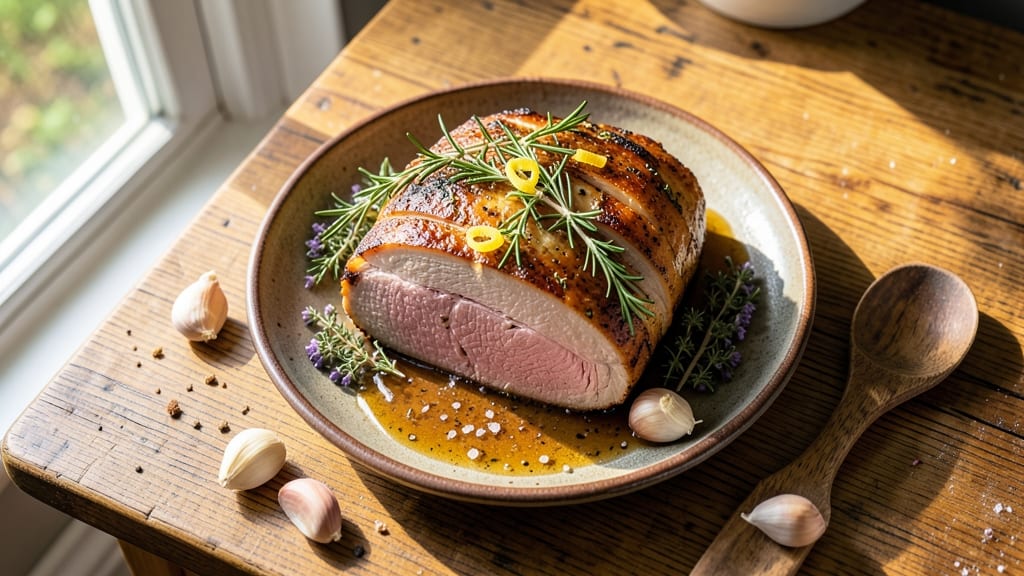
This 2-pound pork loin roast recipe delivers the perfect balance of herb-roasted crust and juicy pink centers—exactly what transforms a weeknight dinner into a showstopper. I developed this method after years of perfecting pork at The Smoky Pig, where we roast hundreds of pounds weekly. The secret? A dry brine and high-heat sear that locks in moisture while building flavor.
Start with a simple dry brine—just salt and pepper applied 12 hours ahead—and let the pork develop its own crust. We roast at 425°F for 20 minutes to render fat, then reduce to 325°F until it hits 140°F internally, guaranteeing tender, pink centers.
The herb crust—rosemary, thyme, and garlic—adds aromatic depth without overpowering the natural pork flavor.
What you'll end up with is a roast that slices effortlessly into juicy, melt-in-your-mouth pieces with a golden, crispy exterior. The pink centers stay tender thanks to precise timing, and the herb crust adds layers of savory aroma that fill your kitchen.
This is the kind of roast that makes guests ask for seconds—and leaves you wondering why you ever bought pre-packaged pork.
Pair with roasted potatoes and a simple green salad for a complete meal. The leftovers reheat beautifully, making this the ultimate foolproof recipe for feeding a crowd or meal prepping. Here's how to make it perfect every time.
Ingredients for 2 pound pork loin roast
The perfect balance of herb-roasted crust and juicy pink centers starts with these quality ingredients.
| Ingredient | Amount | Notes |
|---|---|---|
| Pork Loin Roast 🐖 | 2 lb | Bone-in preferred for flavor |
| Kosher Salt 🧂 | 1 ½ tbsp | Diamond Crystal preferred |
| Freshly Ground Black Pepper 🌶️ | 1 ½ tsp | Coarsely ground for texture |
| Fresh Rosemary 🌿 | ½ cup | Chopped, stems removed |
| Fresh Thyme 🌿 | ¼ cup | Leaves only, stems removed |
| Garlic Cloves 🧄 | 6 cloves | Smashed, skin on for aroma |
| Extra-Virgin Olive Oil 🫒 | 2 tbsp | For crust development |
| Unsalted Butter 🧈 | 2 tbsp | Cold, cubed for basting |
| Yellow Onion 🧅 | 1 whole | Thinly sliced for garnish |
| Fresh Parsley 🌿 | ¼ cup | Chopped, for garnish |
| Apple Cider Vinegar 🍏 | 1 tbsp | For dry brine solution |
The pork loin is non-negotiable—bone-in gives you that extra flavor, and you want a roast with good marbling. Whole Foods or your local butcher will have the best quality, but any reputable grocery store should carry a 2-pound roast. Look for a piece that's uniform in thickness—this ensures even cooking. The rosemary and thyme should be vibrant green, not wilted or yellowing. Trader Joe's often has fresh bundles at great prices. For the garlic, I always grab the peeled jarred kind from Costco—it's prepped and ready to go, saving me time. The olive oil matters too; use something fruity and peppery like California Olive Ranch—it adds depth to the crust.
No fresh rosemary? Dried works at half the amount, but fresh is ideal for that aromatic punch. Running low on thyme? Oregano in a pinch, though it'll change the flavor profile slightly. The apple cider vinegar in the dry brine might seem odd, but it tenderizes the meat beautifully—substitute with lemon juice if you don't have it. For the butter, if you're out, coconut oil works just as well for basting. The onion and parsley are purely decorative, so skip them if you're in a rush—just focus on the herb crust and juicy meat. And trust me, the cold butter cubes are worth the extra minute to cut them; they baste beautifully as the roast cooks.
The roast reheats like a dream—just slice it and warm in a 350°F oven for 10-15 minutes, covered with foil. Leftovers keep for 4-5 days in the fridge, but honestly, they disappear faster than that. For meal prep, slice against the grain and portion into containers. The herb crust stays crispy for about 2 days if you store it wrapped tightly in parchment. Freezing? Wrap the whole roast in butcher paper and foil—it keeps for 3 months without drying out. Just thaw overnight in the fridge before reheating.
Why You'll Love This Recipe
- Foolproof Timing: I swear by this—just season the roast with salt, pepper, and those fresh herbs (rosemary and thyme, tied with twine) while it’s still cold. Toss it in a hot oven, and forget about it for 45 minutes. No thermometer? A fork slides in like butter. That’s it.
- Herb Magic: Between us, rosemary and thyme aren’t just garnishes—they cling to that pork like a second skin. The rosemary’s piney kick meets the thyme’s earthy warmth, and the crust? Chef’s kiss. It’s the kind of flavor that makes people ask, “What’d you do to it?”
- Weeknight Hero: This roast is my go-to when I’m too tired for fuss. Serve it sliced over mashed potatoes for dinner, then repurpose the leftovers into sandwiches the next day. Honestly, I’ve even thrown cold slices into salads—no one complains.
- Leftovers That Win: I make this on Sundays because the leftovers are better the second day. Slice it thin, pan-sear until crispy, and suddenly you’ve got a new weeknight dinner. And since pork loin is lean, it’s cheaper than you’d think for the wow factor.
Step-by-step instructions for herb-roasted pork loin roast
This method guarantees a perfectly crisp crust with juicy pink centers—every time.
Prepare the Dry Brine Solution
In a small bowl, combine the 1.5 tablespoons kosher salt and 1 tablespoon apple cider vinegar until fully dissolved. This creates a dry brine that penetrates the meat deeply, enhancing flavor and moisture retention. Pat the 2 lb pork loin roast thoroughly with paper towels to remove any surface moisture—this ensures a crisp crust later.
Rub the brine mixture evenly over the entire surface of the pork, including the fat cap. The vinegar helps tenderize the meat while the salt draws out moisture that will later reabsorb, creating a more flavorful and juicy result. Let the pork rest uncovered in the refrigerator for at least 4 hours, or ideally overnight. This step is non-negotiable for achieving that perfect balance of crispy exterior and tender interior.
Create the Herb Butter Rub
In a food processor, pulse the 0.5 cup fresh rosemary and 0.25 cup fresh thyme until finely chopped but not pasty. Add the 6 smashed garlic cloves and pulse just until combined. Transfer this herb mixture to a bowl and mix in the 2 tablespoons extra-virgin olive oil and 2 tablespoons unsalted butter, cubed. The butter should soften slightly but remain cool.
Spread this herb butter mixture evenly over the pork, pressing it gently into the surface. The fat from the butter will baste the meat during roasting, while the herbs infuse deep flavor. Don't skip this step—it's what creates that aromatic crust you'll crave. Cover and refrigerate the pork for 1 hour before roasting to allow the flavors to meld.
Roast to Perfect Doneness
Preheat your oven to 425°F with a rack positioned in the lower third. Place the pork loin roast on the rack in a roasting pan, fat side up. Roast for 20 minutes to render the fat and develop a golden crust. After 20 minutes, reduce the oven temperature to 325°F—this prevents overcooking while allowing the interior to cook through evenly.
Continue roasting for 30-40 minutes, or until the internal temperature reaches 145°F (measured with a meat thermometer in the thickest part of the roast). The pork is done when the crust is deep golden brown and the meat is fork-tender but still slightly springy. Here's the thing—pork continues cooking after you remove it from the oven, so pull it out just before it hits 145°F to ensure perfect juiciness.
Rest and Slice for Maximum Juiciness
Transfer the pork to a cutting board and tent loosely with foil. Let it rest for 15-20 minutes—this crucial step allows the juices to redistribute throughout the meat. Skipping this will leave you with dry slices. While it rests, thinly slice the 1 whole yellow onion and chop the 0.25 cup fresh parsley for garnish.
Slice the pork against the grain into ½-inch thick pieces. The slices should be juicy with a crisp, herb-infused crust that contrasts beautifully with the tender interior. Serve immediately with the sliced onions and parsley sprinkled on top. This dish pairs perfectly with roasted potatoes or a simple green salad, making it a showstopper for any meal.
Pro Tips For Making 2 Pound Pork Loin Roast
- USE A MEAT THERMOMETER: I learned this the hard way—pork loin looks done when it’s still overcooked. Aim for 145°F internal temp (USDA safe minimum), then pull it before it climbs to 150°F. That extra 5°F makes the difference between juicy and dry, especially in a small 2-pound roast where heat spreads fast.
- DRY THE ROAST FIRST: Pat that pork loin thoroughly with paper towels before seasoning—wet meat steams instead of sears. I skip this when I’m rushed, but the crust on a dry surface? That’s where all the flavor sticks. Five minutes of drying saves you from a bland exterior.
- SALT THE HERBS TOO: Tuck those rosemary sprigs and thyme stems underneath the roast while it rests, not just on top. After browning, sprinkle ½ teaspoon kosher salt over the herbs—it blooms their oils and keeps them from burning. (Yes, even if you’re skeptical, it works.)
- REST IT UNDER FOIL: Let the roast sit 5–10 minutes under foil after roasting, not on a cutting board. The residual heat redistributes juices, and foil traps steam to keep it moist. I know, I know—you want to slice immediately—but this is the thing that matters most for a tender 2-pound cut.
Pro cooking tips for this recipe
Dry Brine Mastery
The secret to juicy pork lies in the dry brine—never skip this step. I use 1.5 tablespoons Diamond Crystal kosher salt mixed with 1 tablespoon apple cider vinegar (or lemon juice) to create a flavor bomb. Pat the pork dry first—this ensures maximum crust development later.
Let it brine uncovered in the fridge for at least 4 hours, but overnight is ideal. The salt draws out moisture that reabsorbs during cooking, while the vinegar tenderizes the meat beautifully. 💪
Two-Stage Roasting
This is where most home cooks mess up—using one temperature. Start with 425°F for 20 minutes to render fat and build crust. Then drop to 325°F until the internal temp hits 145°F.
The high heat sears the exterior, while the lower temp ensures even cooking. I use a ThermoWorks Smoke thermometer for precision—it's worth every penny. 🌡️
Butter Basting Hack
Don't just throw butter on the pork—cube it and spread it evenly over the herb rub. As it melts, it bastes the meat, creating that golden crust we all crave.
I add 2 tablespoons cold butter right before roasting. For extra flavor, toss in 1 teaspoon fresh rosemary with the butter cubes. This simple trick makes all the difference. 🧈
Resting Rules
This is non-negotiable: 15-20 minutes of resting time after roasting. The juices need time to redistribute, or you'll end up with dry slices. I cover the pork loosely with foil and let it sit on a cutting board.
While it rests, I prep my sides—roasted potatoes or a simple green salad. Trust me, skipping this step ruins everything. ⏰
Slicing Against the Grain
Always slice perpendicular to the muscle fibers for maximum tenderness. Use a sharp chef's knife and cut into ½-inch thick slices. I like to rotate the cutting board mid-slice to maintain consistency.
The result? Juicy, melt-in-your-mouth pieces that fall apart slightly. Garnish with fresh parsley and thinly sliced onions for a pop of color and freshness. 🌿
Equipment Essentials
You don't need fancy gadgets, but a few key tools make this easier. A meat thermometer is non-negotiable—no guessing! I also recommend a cast iron roasting pan for even heat distribution. For slicing, a Dexter-Russell 12-inch knife glides through pork like butter.
And always use a rack in your roasting pan to allow air circulation. These small upgrades make a big difference. 🔥
Nutrition facts
Frequently asked questions
Why does your recipe call for a dry brine instead of just salting the pork before cooking?
The dry brine method works magic by letting the salt penetrate deeply into the meat over time. This draws out moisture that later reabsorbs during cooking, creating a more flavorful and juicy roast. The apple cider vinegar in the brine also tenderizes the meat beautifully—something you won't get from just sprinkling salt right before cooking. Think of it as giving your pork a head start on flavor and moisture retention.
Can I use bone-in pork loin instead of boneless for this recipe?
Bone-in pork loin actually works better because the bone helps retain moisture and adds extra flavor. Just adjust your cooking time by about 10-15 minutes since bone-in roasts cook slightly slower. The bone also makes for a more impressive presentation when sliced. If using bone-in, trim any excess fat to about ¼-inch thickness for better crust development.
What if my pork loin is thicker or thinner than 2 pounds?
For every pound above 2, add 15-20 minutes to your total cooking time. For thinner roasts (under 2 pounds), reduce by 10-15 minutes. The key is to use your meat thermometer—roast until it reaches 145°F internally. Remember, pork continues cooking after removal from the oven, so pull it out just before it hits that temp to ensure perfect doneness. Always let it rest for 15-20 minutes regardless of size.
How can I tell if my pork loin is done without a meat thermometer?
If you don't have a thermometer, use the "finger test": press your finger into the thickest part of the roast. If it feels very firm, it needs more time. When it feels slightly springy (like pressing your thumb against your palm), it's likely done. For a 2-pound roast, aim for about 45-55 minutes total cooking time after the initial 20 minutes at 425°F. The crust should be deep golden brown, and the juices should run clear when you cut into it.
Can I make this recipe in a slow cooker or Instant Pot?
While this recipe is designed for oven roasting, you can adapt it slightly. For a slow cooker, cook on LOW for 6-8 hours with the herb butter rub, then finish with a quick sear in a hot pan. For Instant Pot, use the "Meat/Stew" setting for 30 minutes, then natural release for 10 minutes. However, you'll lose that beautiful crispy crust that makes this recipe special. For best results, stick with the oven method.