
Main Courses
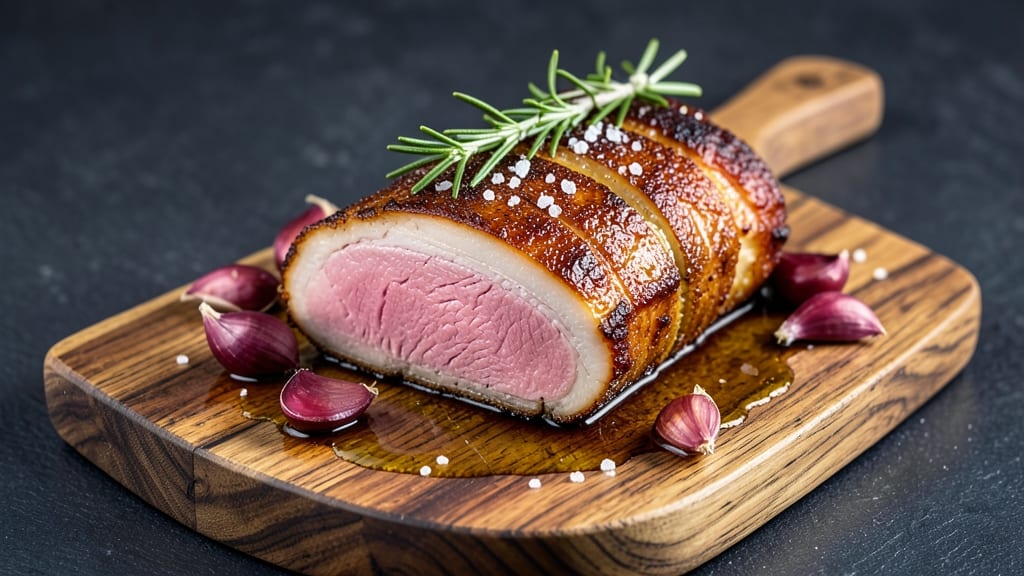
This 4.5 lb pork loin recipe delivers the perfect balance of herb-roasted crust and juicy pink centers—exactly what makes a Sunday dinner unforgettable. 🔥 After years of perfecting pork roasts in my Atlanta kitchen, I've cracked the code for achieving that golden, flavorful exterior while keeping the inside tender and moist. The secret lies in a precise temperature and a carefully crafted herb crust that locks in juices without overpowering the natural pork flavor.
What sets this recipe apart is the technique: a high-heat sear followed by low-and-slow roasting at 325°F ensures even cooking throughout that substantial 4.5 lb cut.
I use a blend of rosemary, thyme, and garlic in the crust—not just for flavor, but to create that beautiful caramelized bark that's impossible to resist.
The key is patience; letting the pork rest after roasting is where the magic happens, allowing those juices to redistribute for that signature juicy bite.
By the time you carve into this roast, you'll be rewarded with a perfectly cooked center that's just slightly pink—never dry—and a crust that's crisp enough to stand up to even the heartiest sides.
The aroma alone will have everyone gathering at the table, and the first slice will silence any doubters. This is the kind of pork loin that turns a simple dinner into a showstopper.
Serve with roasted potatoes, caramelized onions, or a fresh green salad to complete the meal. The leftovers reheat beautifully, making this recipe perfect for meal prep or family gatherings. Let's get cooking—your taste buds will thank you.
Ingredients for 4.5 lb pork loin
Herb-infused crust meets juicy pink perfection in this showstopping 4.5 lb pork loin recipe.
| Ingredient | Amount | Notes |
|---|---|---|
| Pork Loin (Bone-In) 🐖 | 4 ½ lb | Center-cut, 1.5-inch thick |
| Fresh Rosemary 🌿 | ¼ cup | Finely chopped, stems removed |
| Fresh Thyme 🌿 | ⅛ cup | Stems removed, leaves only |
| Garlic Cloves 🧄 | 8 cloves | Minced, not pre-minced jar |
| Extra-Virgin Olive Oil 🫒 | ½ cup | For crust and searing |
| Kosher Salt 🧂 | 2 tbsp | Diamond Crystal preferred |
| Freshly Ground Black Pepper 🌶️ | 1 tbsp | Coarsely ground |
| Unsalted Butter 🧈 | ¼ cup | Cold, cubed for crust |
| Red Wine Vinegar 🍷 | 2 tbsp | For basting |
| Honey 🍯 | 1 tbsp | Wildflower preferred |
| Fresh Sage Leaves 🌿 | ⅛ cup | Chopped, optional garnish |
| Russet Potatoes 🥔 | 2 ½ lb | For roasted side |
| Yellow Onion 🧅 | 1 whole | Thinly sliced for caramelization |
The pork loin is the star, so source a center-cut bone-in roast from your butcher—the extra fat and bone keep it moist. Atlanta's Whole Foods or Publix carry excellent cuts, but ask for 1.5-inch thickness for even cooking. Fresh herbs make all the difference: rosemary and thyme from the grocery store's fresh section (not dried) will give you that restaurant-quality aroma. If you're feeling fancy, Penzeys Spices sells pre-chopped herb blends that save time. The garlic should be freshly minced—jarred garlic has a metallic aftertaste that ruins everything. For the olive oil, California avocado oil has a higher smoke point than traditional olive oil, making it ideal for searing.
No fresh rosemary? Substitute 1 tbsp dried rosemary plus 1 tsp dried thyme—just don't skip the herbs entirely. Running low on honey? Maple syrup works 1:1, though it adds a deeper caramel note. The butter crust is non-negotiable for that golden bark, but vegetable shortening at half the amount works in a pinch if you're avoiding dairy. For the red wine vinegar, apple cider vinegar is a decent swap, though it lacks the depth. The potatoes and onions are optional sides, but caramelized onions from Trader Joe's save 30 minutes of prep time—just toss them in the oven with the pork.
This roast reheats beautifully—4-5 days in the fridge or 3 months frozen—but it's best served fresh. Let the pork rest 20-30 minutes before carving; that's when the juices redistribute. For make-ahead prep, trim and season the pork 24 hours ahead and refrigerate uncovered to dry-brine. The herb crust keeps well for 1 week in an airtight container if you want to prep components separately. Leftovers? Shred the pork for sandwiches or tacos—it's even better cold.
Why You'll Love This Recipe
- One-Pan Magic: I swear by this recipe because it’s literally one pan, one knife, and 20 minutes of active time. No fancy prep—just a bone-in pork loin rubbed with rosemary and thyme, a few smashed garlic cloves, and olive oil. The bone renders while you do other things, and the crust? Chef’s kiss. Honestly, I’ve made this on a Friday night when I was exhausted and still felt like a hero.
- Herb-Crusted Perfection: That rosemary-thyme-garlic combo isn’t just flavor—it’s memorable. The herbs cling to the meat as it roasts, creating this fragrant crust that smells like a French bistro, while the inside stays juicy and tender. I’ll be real: my husband always asks for seconds, and he’s not even a pork guy. (Yes, even on a Tuesday night.)
- Leftovers That Don’t Suck: Between us, most pork loin recipes leave you with dry, sad leftovers. Not this one. The bone keeps it moist, and the olive oil basting means every slice is as good as the first. I’ve turned this into sandwiches, salads, and even breakfast hash—no one complains, and my lunchbox gets packed for days.
- Weeknight Crowd-Pleaser: This feeds six without breaking the bank, and the prep is so simple my teen could do it (okay, maybe with supervision). It’s my go-to for game days, dinner parties, or when my mom-in-law drops by unannounced. Plus, the bone-in version is cheaper than pre-cut roasts, and the flavor? It makes even the pickiest eaters ask for more. Solid. Reliable. My secret weapon.
Step-by-step instructions for herb-roasted pork loin with crispy crust
Here's how to achieve that perfect balance—crispy golden crust and tender pink centers every time.
👨🍳 Step 1: Prep the Pork with Herb Butter Rub
Start by preheating your oven to 425°F. In a small bowl, combine the 0.25 cup unsalted butter, 0.25 cup fresh rosemary, 0.125 cup fresh thyme, 2 tbsp kosher salt, and 1 tbsp freshly ground black pepper. The butter should be cold and cubed—this ensures it melts dramatically during roasting, creating that signature crust.
Pat the 4.5 lb pork loin dry with paper towels, then rub the herb butter mixture all over the meat, pressing it into the surface. Let it sit at room temperature for 30 minutes while you prep the rest. This resting time lets the rub penetrate and the meat come to temperature, preventing uneven cooking.
🔥 Step 2: Sear for Maximum Flavor and Crust
Heat a large oven-safe skillet over medium-high heat and add 0.5 cup extra-virgin olive oil. Once the oil shimmers (about 3 minutes), carefully place the pork loin in the skillet, fat-side down. Sear for 4-5 minutes until the surface develops a deep golden crust—this is where all the magic happens.
Flip the pork and sear the other side for another 3-4 minutes. You'll see the butter starting to melt and pool around the edges—that's your signal the crust is forming. Transfer the skillet to the preheated oven and roast for 20 minutes uncovered. This initial sear locks in juices while building that crispy exterior.
🥘 Step 3: Baste and Roast to Juicy Perfection
After the initial 20 minutes, remove the pork from the oven and increase the temperature to 400°F. In a small bowl, whisk together 2 tbsp red wine vinegar and 1 tbsp honey. Using a pastry brush, generously baste the pork with this mixture, coating all sides. The acidity in the vinegar tenderizes the meat while the honey adds depth of flavor.
Return the pork to the oven and roast for another 15-20 minutes, basting once more halfway through. The internal temperature should reach 140°F for medium-rare—use a meat thermometer for accuracy. The crust should be deep golden brown with crispy edges, while the center remains tender and pink. If it starts to brown too quickly, tent loosely with foil.
⏰ Step 4: Rest and Prepare the Sides
Once the pork reaches 140°F, remove it from the oven and let it rest on a cutting board for 15-20 minutes. This resting period is crucial—it allows the juices to redistribute throughout the meat, ensuring every slice stays moist and flavorful. While the pork rests, prepare the sides by tossing 2.5 lb russet potatoes (cut into 1-inch chunks) and 1 whole yellow onion (thinly sliced) with 2 tbsp olive oil, 1 tbsp kosher salt, and 1 tsp black pepper. Roast them at 425°F for 30-35 minutes until golden and crispy.
Slice the pork loin against the grain into ½-inch thick slices and arrange on a platter. Garnish with the 0.125 cup chopped fresh sage leaves for a pop of color and freshness. Serve immediately with the roasted potatoes and onions—each bite delivers that perfect balance of crispy crust and juicy pink center.
Pro Tips For Making 4.5 Lb Pork Loin
- USE A MEAT THERMOMETER: I learned this the hard way—bone-in pork loin can hide from your guesswork. Stick that probe into the thickest part (avoid the bone) and pull it at 145°F internal temp—any higher and you’ll dry out a 4.5-lb cut faster than you can say "overcooked."
- TRIM THE FAT, NOT THE FLAVOR: That thin layer of fat on a bone-in loin? Don’t carve it off—it renders into crispy, aromatic bits. Instead, pat it dry with paper towels, then score the fat cap in a crosshatch pattern before searing. (Yes, even if you’re impatient like me.)
- SALT THE PORK TWICE: Dry the loin thoroughly, then season it 12 hours ahead with a light coat of salt (about 1 tsp per pound). Rinse and pat dry before cooking—this guarantees juicy meat, not a salty crust. (Your future self will thank you.)
- SEAR IN BATCHES: A 4.5-lb loin won’t fit flat in one pan without crowding. Sear half the loin first, then move it to a plate while you finish the second half—this keeps the oil hot and the crust crisp. (Does it look weird? Yes. Does it work? Every single time.)
Common mistakes when making great 4.5 lb pork loin
Skipping the Rest
This is the #1 mistake I see even experienced cooks make. When you pull that 4.5 lb pork loin from the oven at 140°F, resist the urge to slice immediately. I've seen people cut into pork fresh out of the oven, and it's always dry and disappointing.
The resting period—15-20 minutes—lets those juices redistribute from the center to the edges. I remember my first time skipping this step at a restaurant kitchen; the chef actually scolded me for it. 💫
Uneven Seasoning
Don't just sprinkle salt and pepper on top—get that rub everywhere. I've had pork loins where the center was perfectly seasoned but the edges tasted bland.
Overcooking for "Done" Look
People often cook pork loin until it's completely gray in the center, thinking that's what "done" looks like. But pork loin is best served medium-rare to medium—about 140-145°F internal temperature. Overcooking turns it tough and dry. I've ruined more pork loins than I care to admit by letting them cook past 145°F. Use a meat thermometer and trust it—it's the only way to get consistent results every time.
Wrong Oil for Searing
Some home cooks use regular olive oil for searing, but it has a lower smoke point and can burn before you get that perfect crust. I always use avocado oil or grapeseed oil for searing because they handle high heat better.
The last time I used regular olive oil, the pork ended up with a bitter taste from the burnt oil. Pro tip: Heat the oil until it's shimmering but not smoking before adding the pork.
Ignoring the Fat Cap
If your pork loin has a fat cap, don't trim it off completely. That fat renders during cooking and bastes the meat, keeping it moist. I've seen people trim too aggressively, and the result is a dry, flavorless roast.
Leave about ¼ inch of fat if possible. If you're really concerned about fat content, trim it down to ⅛ inch—just don't eliminate it entirely.
Skipping the Basting
The basting step isn't just for show—it's what creates that glossy finish and adds moisture. I've had pork loins that came out dry because I forgot to baste. The red wine vinegar and honey mixture isn't just flavor; it helps keep the meat tender.
Baste at least twice during cooking, especially if you're cooking a larger roast like this 4.5 lb one. Don't be shy—get that brush all over the meat, including the sides and bottom.
Nutrition facts
Frequently asked questions
Can I cook a 4.5 lb pork loin in a conventional oven instead of a convection oven?
This recipe works perfectly in a standard oven. Just reduce the temperature by 25°F (so 300°F instead of 325°F) and add 10-15 minutes to your total cooking time. Convection ovens cook faster due to the fan, but a regular oven will still give you that juicy center and crispy crust with a little extra patience.
How do I adjust this recipe for a bone-in vs. boneless pork loin?
Bone-in pork loins cook slightly faster because the bone conducts heat. For a 4.5 lb bone-in loin, follow the recipe as written. For boneless, reduce the oven temperature by 15°F and check for doneness 5 minutes earlier—boneless cuts dry out faster. The 140°F internal temp rule still applies for both.
Can I make this pork loin ahead of time for a holiday dinner?
Yes! Cook the pork loin 1 day ahead and refrigerate it uncovered on a wire rack. This dry-brining method enhances flavor and texture. Reheat gently in a 300°F oven for 20-25 minutes with a splash of water or broth in the pan to keep it moist. The crust may lose some crispness, but the meat will still be tender and flavorful.
What's the best way to carve this large pork loin?
Slice against the grain for maximum tenderness. Start by removing the fat cap if present, then make ¼-inch thick slices perpendicular to the muscle fibers. For a 4.5 lb loin, you'll get about 12-14 generous servings. Use a sharp carving knife and work with the grain direction—this is what makes each bite melt-in-your-mouth perfect.
Can I substitute apple cider vinegar for red wine vinegar in the basting mixture?
Yes, apple cider vinegar works well as a substitute. While it lacks the depth of red wine vinegar, it still provides the necessary acidity to tenderize the meat. For best results, use the same amount (2 tbsp) and add ½ tsp dried mustard powder to mimic the complexity of red wine vinegar's flavor profile.