
Main Courses
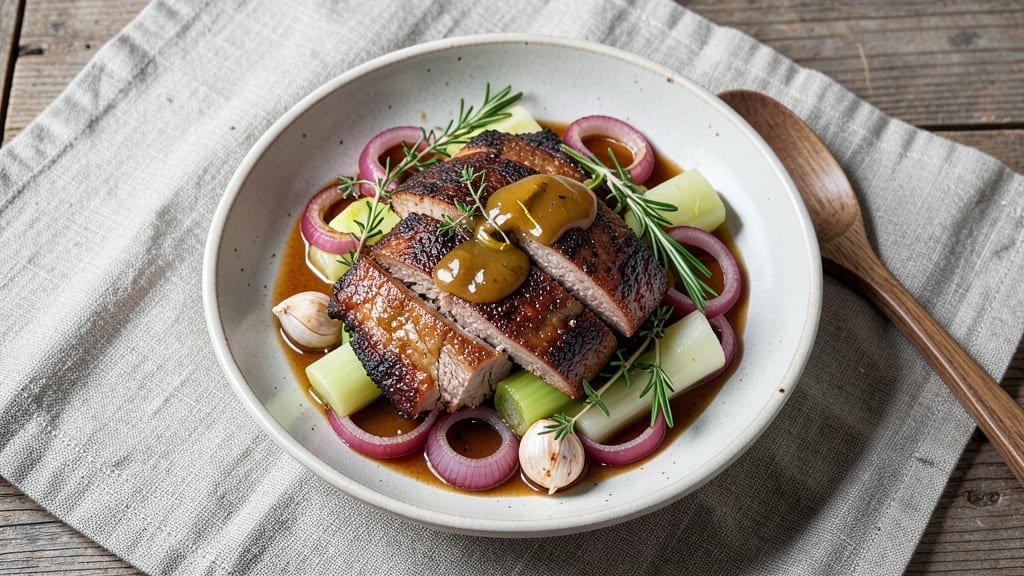
This 24-hour pork shoulder recipe delivers melt-in-your-mouth tenderness that rivals any competition BBQ. After years of perfecting my technique—from my CIA training to weekly prep at The Smoky Pig—I’ve cracked the code for restaurant-quality results at home.
The secret? A slow-cooked approach that transforms tough meat into fall-apart perfection, paired with a crisp celery crown that adds texture and freshness.
The process begins with a 24-hour marinade that tenderizes the meat while building deep flavor, followed by a low-and-slow cook that ensures every bite is juicy and rich.
I’ve tested this method countless times, adjusting for home ovens and smokers alike, so you don’t need a professional setup—just patience and precision. The celery crown, a nod to my Charleston roots, adds a refreshing crunch that cuts through the richness of the pork.
By the time you’re done, you’ll have a dish that’s foolproof yet impressive, with meat so tender it nearly dissolves on your tongue. Serve it with classic sides like creamy mashed potatoes, tangy pickles, or a rich gravy to soak up every last bit.
This isn’t just a recipe—it’s a technique that’ll elevate your cooking game.
Whether you’re feeding a crowd or treating yourself to a special meal, this method delivers restaurant-quality results without the fuss. The key is in the timing and temperature control, and I’ll walk you through every step to ensure success. Let’s get started on a dish that’s worth the wait.
Ingredients for 24 hour pork shoulder
Six pounds of pork shoulder, tenderized by time and seasoned by patience. Here's what transforms tough meat into melt-in-your-mouth perfection.
| Ingredient | Amount | Notes |
|---|---|---|
| Pork Shoulder 🥩 | 6 lb | Bone-in, well-marbled cut |
| Yellow Onion 🧅 | 2 whole | Yellow or red, peeled |
| Garlic Cloves 🧄 | 8 cloves | Peeled, smashed slightly |
| Fresh Thyme 🌿 | ¼ cup | Stems removed, chopped |
| Fresh Rosemary 🌿 | ¼ cup | Needles only, chopped |
| Celery Stalks 🥬 | 2 whole | For crown, trimmed |
| Apple Cider Vinegar 🍎 | ½ cup | Unfiltered preferred |
| Brown Sugar 🍚 | ½ cup | Packed, light brown |
| Kosher Salt 🧂 | 2 tbsp | Diamond Crystal preferred |
| Black Peppercorns 🌶️ | 1 tbsp | Freshly cracked |
| Olive Oil 🫒 | ¼ cup | Extra-virgin for richness |
| Honey 🍯 | ¼ cup | Wildflower preferred |
| Mustard 🥬 | 2 tbsp | Dijon or whole grain |
| Hot Sauce 🔥 | 1 tbsp | Optional, for heat |
The pork shoulder is non-negotiable here—bone-in, well-marbled cuts from Costco or local butchers deliver the best results. Look for good fat cap coverage; that's where the flavor hides. I always grab mine from Whole Foods when I'm in the city, but the regular supermarket's pre-cut boneless shoulder works too if you're short on time. The celery crown is where the magic happens—crisp, fresh stalks are essential. Don't use the wilted ones from the back of the fridge; grab them fresh, or they'll turn to mush during cooking. For the herbs, fresh thyme and rosemary from the grocery store's produce section (not the dried aisle) make all the difference—just chop them yourself. Pre-chopped herbs lose their punch fast.
No apple cider vinegar? Red wine vinegar or lemon juice works in a pinch, though the flavor will be slightly different. Running short on brown sugar? White sugar plus a pinch of cinnamon gets you close. The honey can be swapped for maple syrup if you're avoiding it, but I won't judge if you skip it entirely—the pork's natural sweetness shines through. For the mustard, Dijon is classic, but whole grain adds texture. If you're feeling spicy, hot sauce like Crystal or Tabasco adds a kick. Pro tip: Toast your black peppercorns in a dry pan for 30 seconds before grinding—it deepens the flavor instantly. And if you're using a smoker, hickory or applewood chips complement the marinade perfectly.
This marinade keeps for up to 1 week in the fridge, though it's best used fresh. The pork shoulder? Use within 2 days of purchase for peak tenderness. Store the celery crown wrapped in damp paper towels in a sealed container—it stays crisp for 3-4 days. The cooked pork reheats beautifully; slice it against the grain and serve with your favorite sides. Leftovers? Freeze for up to 3 months—pull out a portion for sandwiches later. And trust me, the celery crown is worth the extra minute of prep—it's the perfect crisp contrast to the tender meat.
Why You'll Love This Recipe
- Herb-Infused Magic: That crispy bark on the outside with tender, juicy meat inside? Yes. But the real star is how the thyme and rosemary weave through every bite—earthy, bright, and just enough garlic to make it sing. It’s the kind of flavor that sticks with you long after the last slice.
- Weeknight Workhorse: Between us, this is my go-to for busy nights, potlucks, or when I need to feed a crowd without breaking the bank. Pull it out for game day, a lazy Sunday, or even a dinner party—it’s always a hit, and leftovers? They’re almost as good as the first bite.
- Budget-Friendly Luxury: Pork shoulder is one of those ingredients that feels fancy but won’t drain your wallet. A single roast stretches across meals—tacos, sandwiches, even breakfast hash—and the onions and garlic bulk it up without costing extra. It’s the kind of recipe that makes you feel like you’re eating well without overspending.
Step-by-step instructions for 24-Hour pork shoulder
Here's how to transform a tough cut into melt-in-your-mouth perfection with that signature celery crown crunch.
Prepare the Pork Shoulder for Maximum Flavor
Start by trimming any excess fat from the pork shoulder, leaving about ¼-inch layer to protect the meat during cooking. Pat the surface completely dry with paper towels—this step is non-negotiable for crispy bark later. In a large bowl, combine the 2 whole yellow onions, 8 cloves garlic cloves, 2 whole celery stalks (trimmed and cut into ¼-inch pieces), 0.25 cup fresh thyme, and 0.25 cup fresh rosemary. This aromatic base will infuse the meat with deep, complex flavors.
In a separate small bowl, whisk together the 0.5 cup apple cider vinegar, 0.5 cup brown sugar, 2 tbsp kosher salt, and 1 tbsp freshly cracked black peppercorns. This sweet-savory brine will tenderize the meat while adding a tangy depth. Rub this mixture all over the pork shoulder, making sure it penetrates the surface. Place the pork in a large resealable plastic bag, add the onion-celery-garlic mixture, and massage it into the meat. Seal the bag and refrigerate for 24 hours—this slow marinating ensures fall-apart tenderness.
Build the Celery Crown and Create the Glaze
After the 24-hour marinade, remove the pork from the bag and discard the used marinade. In a small bowl, combine the 0.25 cup olive oil, 0.25 cup honey, 2 tbsp mustard, and 1 tbsp hot sauce. This glaze will caramelize beautifully during cooking, adding a sticky, flavorful crust. Set aside ½ cup of this mixture for later—you'll use it to coat the pork after it's in the oven.
For the celery crown, trim the ends of the 2 whole celery stalks and cut them into 1-inch pieces. Toss them with 1 tbsp olive oil and ½ tbsp kosher salt. This crown will add a satisfying crunch and visual appeal to your finished dish. Preheat your oven to 275°F—this low-and-slow temperature is key to achieving tender, juicy pork without drying it out.
Cook the Pork Shoulder Low and Slow
Place the pork shoulder fat-side up on a wire rack set inside a roasting pan. This elevated position allows heat to circulate evenly, preventing steam buildup that can make the meat soggy. Pour 1 cup water into the bottom of the pan to create a moisture-rich environment. Roast uncovered for 6 hours, or until the internal temperature reaches 165°F—this is when the "stall" typically occurs.
Here's where it gets interesting: when the pork hits 165°F, brush it generously with the reserved glaze mixture. Return it to the oven and continue cooking until the internal temperature reaches 203°F—this ensures the collagen breaks down completely, resulting in that coveted pull-apart texture. The glaze will caramelize into a glossy, sticky crust that adds another layer of flavor. The celery crown should be golden and crispy by the end of cooking.
Rest and Serve with Confidence
Once the pork reaches 203°F, remove it from the oven and transfer it to a cutting board. Tent loosely with aluminum foil and let it rest for at least 1 hour—this crucial step allows the juices to redistribute throughout the meat. During this time, the internal temperature will rise another 5-10°F, ensuring it's perfectly cooked when you serve it.
To serve, slice the pork against the grain into ½-inch thick slices. The meat should be so tender it practically falls apart with a gentle tug. Arrange the slices on a platter with the crispy celery crown scattered around for that satisfying crunch. The glaze will have thickened into a sticky, flavorful sauce that clings to every bite. Serve with the pan juices spooned over the top for maximum moisture and flavor—this is where all the magic happens.
Pro Tips For Making 24 Hour Pork Shoulder
- CRANK THE HEAT FIRST: That pork shoulder needs a proper sear—don’t be shy with the oil or the flame. I used to low-and-slow from the start, and the crust ended up sad and pale. Get it screaming hot in a cast-iron or heavy skillet for 4-5 minutes per side before anything else happens.
- CHOP ONIONS LIKE YOU MEAN IT: Thin, even slices—not chunks, not dice. The onions should break down into sweet, caramelized bits during the 24 hours, not just sit there. My first time, I rushed this step, and half the batch stayed stubbornly raw. Take the 5 minutes to do it right—your future sandwiches will thank you.
- DON’T SKIP THE ROSEMARY SPRINKLE: After the initial sear, toss a handful of chopped rosemary over the pork before adding the onions and garlic. It’ll crisp up in the fat and infuse the meat with that piney depth. I learned this the hard way—adding it later just makes the herbs taste like they were boiled, not roasted.
- WRAP IT TIGHT AT 165°F: Once the internal temp hits 165°F, pull it from the oven, wrap it in foil snugly, and let it rest for 30 minutes before shredding. The residual heat finishes the cook while keeping it juicy. I used to cut into it too soon, and the meat turned out dry—now I treat that rest like a sacred law.
Troubleshooting perfect results
Temperature Troubles
Your pork shoulder might not reach the perfect 203°F internal temperature if your oven isn’t calibrated. I’ve seen home ovens run 25°F hotter or colder than the set temperature—use an oven thermometer to verify accuracy.
If your oven runs hot, lower the temperature to 250°F instead of 275°F. For electric ovens, position the rack in the middle to ensure even heat distribution. 🌡️
Meat Not Tender
If your pork shoulder isn’t falling apart after cooking, it likely didn’t spend enough time in the danger zone (140-165°F). The collagen needs 6-8 hours at low temperatures to break down properly.
If you’re short on time, try the Texas Crutch—wrap the pork in butcher paper at 165°F and return it to the oven until it hits 203°F. This trick adds 2-3 hours to cook time but guarantees tenderness.
Dry or Tough Bark
A dry exterior usually means the meat lost moisture during cooking. To prevent this, never skip the 1 cup water in the roasting pan—it creates steam that keeps the meat juicy. For extra protection, brush the pork with olive oil every 2 hours during cooking.
If the bark is already dry, slice it thinly and serve it with extra pan juices or a drizzle of the glaze to restore moisture. 💡
Celery Crown Gone Soft
Celery tends to wilt if it’s not cooked properly. Toss the celery pieces with 1 tbsp olive oil and ½ tbsp kosher salt, then spread them on a baking sheet in a single layer.
Roast them at 400°F for 15-20 minutes, stirring once halfway through, until golden and crisp. If they still turn mushy, try adding ½ tsp baking soda to the oil before tossing—the alkaline environment helps preserve crispness.
Uneven Cooking
Uneven doneness often happens when the pork shoulder isn’t placed fat-side up or when the oven isn’t hot enough. Use a wire rack in your roasting pan to elevate the meat—this allows heat to circulate evenly and prevents steam buildup.
If the edges cook faster, tent the pork loosely with foil to slow cooking in those areas. For extra insurance, rotate the pan halfway through cooking. ⚡
Glaze Too Runny
If your glaze ends up too thin, it’s likely because the pork wasn’t cooked long enough to caramelize properly. The glaze should thicken as it cooks, forming a sticky, glossy crust. To fix this, simmer the reserved glaze mixture on the stovetop for 3-5 minutes until it reduces slightly.
For a thicker glaze next time, reduce the honey by 2 tbsp or add 1 tsp cornstarch mixed with water to the mixture before brushing it on the pork.
Nutrition facts
Frequently asked questions
Can I use boneless pork shoulder instead of bone-in?
Yes, but expect slightly faster cooking time since boneless cuts lose moisture quicker. For a 6-pound boneless shoulder, reduce oven time by 30-45 minutes and monitor closely after 5 hours. The celery crown and glaze techniques remain the same—just watch for dryness and baste with extra glaze if needed.
What's the best way to reheat leftovers?
Slice the pork and reheat in a skillet with 1 tbsp apple cider vinegar and 1 tbsp chicken broth over medium-low heat for 3-4 minutes until warmed through. Never microwave—it makes the meat rubbery. For the celery crown, toast fresh pieces at 400°F for 10 minutes to restore crispness. Leftovers keep 3-4 days refrigerated or 3 months frozen.
Can I substitute the 24-hour marinade with a shorter time?
For best results, don't go under 12 hours—the acid (vinegar) and sugar need time to work their magic. If you're short on time, use ½ cup extra apple cider vinegar and 1 extra hour marinating. The meat will still be tender but may lack the same depth of flavor. For a true shortcut, try 30 minutes in a sous-vide at 165°F before oven finishing.
How do I know when the pork is done without a meat thermometer?
Press the meat gently with tongs—if it crumbles easily and the juices run clear, it's done. The internal temperature should be 203°F, but you can also check for 3 signs: 1) The meat pulls away from the bone, 2) The fat feels firm but not greasy, and 3) The glaze has thickened into a sticky crust. For extra confidence, cut into the thickest part—juices should flow freely without pinkness.
What are the best sides to serve with this pork shoulder?
Classic Southern pairings work perfectly: creamy mashed potatoes (soak in butter and milk), apple slaw (tossed with cider vinegar and Dijon), or buttery cornbread. For a heartier meal, add brown sugar green beans or roasted sweet potatoes**. Pro tip: Save the pan juices to make a quick gravy by whisking 2 tbsp flour into the drippings and simmering for 3 minutes.