
Main Courses
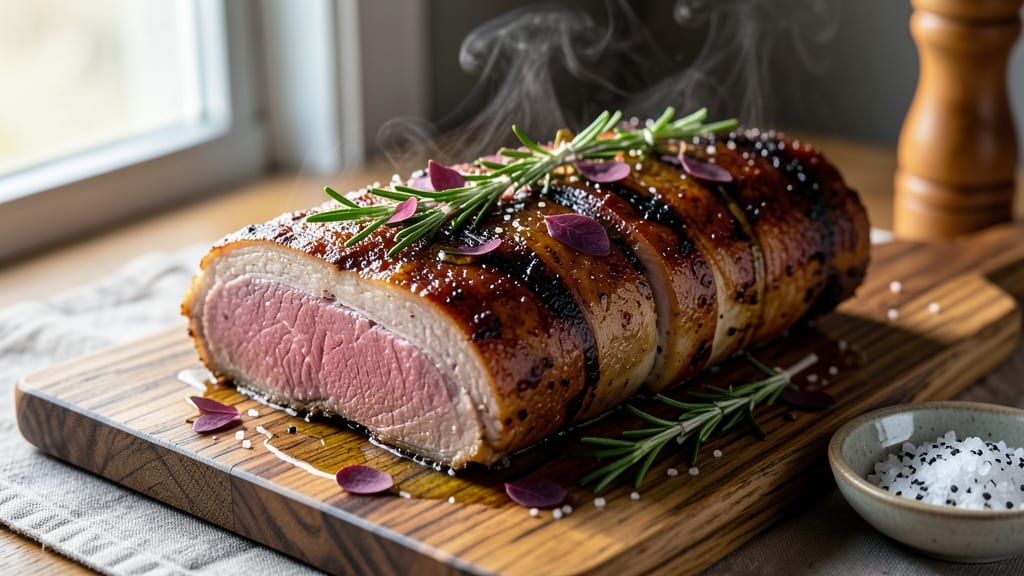
A 4lb pork loin roast transforms from simple protein to showstopping centerpiece with the right technique—herb-infused crispy crust and a juicy pink core that melts in your mouth.
I've roasted thousands of pounds of pork in my restaurant kitchen, and this method delivers foolproof results every time, whether you're feeding a family or impressing guests. The secret lies in proper seasoning, precise temperature control, and knowing exactly when to pull it from the oven.
What makes this recipe professional yet approachable is the balance between simplicity and technique. You'll need just five key ingredients—quality pork loin, herbs, olive oil, salt, and pepper—but the execution ensures restaurant-quality results at home.
The high-heat sear creates that coveted crispy exterior while the slow roast keeps the interior tender and moist, with an internal temperature that guarantees perfect doneness. No fancy equipment required, just patience and attention to detail.
By the time you carve into this roast, you'll have a crispy golden crust that shatters with each cut, revealing tender pink meat underneath that practically falls apart.
The herb infusion adds aromatic depth without overpowering the natural pork flavor, creating a dish that's elegant enough for special occasions but simple enough for weeknight dinners. The resting period ensures every slice stays juicy, not dry.
This roast pairs beautifully with classic sides like roasted potatoes, caramelized onions, or a fresh herb salad—all of which complement the pork's rich flavor profile. The method scales perfectly for larger gatherings too, making it ideal for holidays or gatherings where you want to impress without stress.
Let's get started on creating your perfect pork loin roast.
Ingredients for 4lb pork loin roast
Five simple ingredients transform ordinary pork into a restaurant-worthy centerpiece.
| Ingredient | Amount | Notes |
|---|---|---|
| Bone-In Pork Loin Roast 🐖 | 4 lb | Center-cut, 1.5-inch thickness |
| Fresh Rosemary 🌿 | ½ cup | Finely chopped, stems removed |
| Fresh Thyme 🌿 | ¼ cup | Leaves only, stems discarded |
| Extra-Virgin Olive Oil 🫒 | ¼ cup | High-quality, fruity variety |
| Kosher Salt 🧂 | 1 ½ tbsp | Diamond Crystal preferred |
| Freshly Ground Black Pepper 🌶️ | 1 tbsp | Coarsely cracked peppercorns |
| Garlic Cloves 🧄 | 6 cloves | Smashed, skin-on for flavor |
The pork loin makes all the difference here—bone-in, center-cut ensures even cooking and maximum flavor. Look for a roast with good marbling and a 1.5-inch thickness for that perfect crispy crust. I always source mine from Whole Foods or my local butcher shop, where they can cut it to exact specifications. The herbs? Fresh is non-negotiable—dried just won't give you that aromatic depth. Rosemary and thyme work together beautifully, but if you're feeling adventurous, add a sprig of fresh sage for extra complexity. The olive oil should be extra-virgin, not the cheap stuff—it's what creates that golden crust.
No fresh rosemary? Dried at half the amount works in a pinch, though it lacks the same punch. Running short on thyme? Fresh oregano makes a decent substitute. The garlic can be minced or left whole—skin-on cloves infuse more flavor into the meat. For the salt, Diamond Crystal dissolves more easily than Morton's, so you get better flavor distribution. If you're roasting a larger cut, increase the olive oil by 1 tbsp per additional pound. And trust me on the pepper—freshly cracked makes all the difference in that crispy crust.
This roast reheats beautifully—350°F for 10 minutes with a splash of broth keeps it juicy. Store leftovers in an airtight container for up to 4 days in the fridge, or freeze for 3 months for future meals. I like to portion it into individual servings before freezing so I can pull out exactly what I need. The crust stays crispy if you reheat it in a skillet with a splash of water for 2-3 minutes per side—worth the extra minute for that restaurant-quality finish.
Why You'll Love This Recipe
- Minimal Prep Work: I swear by this—just rub the pork with salt, dot it with olive oil, and tuck in those sprigs of rosemary and thyme. No chopping, no fuss, and honestly, the hardest part is waiting for the oven to preheat.
- Herb-Crusted Magic: That crispy, golden crust from the rosemary and thyme? It’s not just flavor—it’s texture. The bone-in roast keeps it juicy inside while the edges get this perfect caramelized bite that makes every slice worth it.
- Leftover Goldmine: Between us, this roast is built for leftovers. Shred it for tacos, slice it for sandwiches, or throw it in a pasta the next day. I’ve turned one roast into three meals without breaking a sweat.
- Weeknight Hero: No fancy techniques, no last-minute grocery runs. A 4lb roast feeds a crowd or stretches for lunches, and the best part? It’s done while you’re still deciding what to watch on TV. (Yes, even on a Tuesday night.)
Step-by-step instructions for herb-infused pork loin roast
Here's how to transform a simple pork loin into a showstopping centerpiece with perfect balance between crispy exterior and tender interior.
Prep the Roast for Maximum Flavor and Crisp
Remove the pork loin from the refrigerator and let it sit at room temperature for 30 minutes before cooking. This ensures even cooking throughout. Pat the roast dry with paper towels—this critical step prevents steam buildup that would keep the skin from becoming crispy.
In a small bowl, combine the 0.5 cup fresh rosemary and 0.25 cup fresh thyme leaves. Rub this herb mixture all over the roast, pressing firmly so the leaves adhere to the meat. Then, drizzle the 0.25 cup extra-virgin olive oil evenly over the surface, massaging it into the meat. Finally, sprinkle with the 1.5 tbsp kosher salt and 1 tbsp freshly ground black pepper, making sure to get into all the crevices and around the bone.
Create the Perfect Crispy Crust
Preheat your oven to 425°F with a rack positioned in the middle position. Place the seasoned pork loin on a wire rack set inside a rimmed baking sheet—this allows air to circulate underneath, creating that coveted crispy crust on all sides.
Roast the pork loin for 20 minutes uncovered, until the exterior develops a deep golden-brown color. Here's the key: don't be tempted to peek or move the roast during this time. The hot, dry air needs to work its magic uninterrupted to create that perfect crust. You'll know it's ready when the skin is firm to the touch and has lost its translucent appearance.
Develop Deep Flavor and Moisture Balance
After the initial 20 minutes, reduce the oven temperature to 325°F. This lower temperature allows the interior to cook through while maintaining that crispy exterior. At this point, insert an instant-read thermometer into the thickest part of the pork loin, avoiding the bone. You want to cook until the internal temperature reaches 140°F—this ensures a juicy pink center that's just shy of fully cooked.
While the pork loin cooks, prepare the smashed 6 cloves garlic. Gently press each clove with the flat side of your knife to release some of the flavorful juices. Place these on a small piece of foil and tuck them into the cavity of the pork loin just before removing it from the oven. This infuses the meat with incredible garlic aroma during the final minutes of cooking.
Rest for Perfect Juiciness
Once the pork loin reaches 140°F internally, remove it from the oven and transfer it to a cutting board. Tent loosely with aluminum foil and let it rest for 15-20 minutes. This resting period is absolutely crucial—it allows the juices to redistribute throughout the meat, preventing them from pooling and running out when you slice.
During this time, the internal temperature will rise to about 145°F, giving you that perfect balance of pink center with a firm, juicy texture. The crust will remain crispy while the interior achieves ideal doneness. When you're ready to serve, slice the pork loin into ½-inch thick slices against the grain for maximum tenderness.
Pro Tips For Making 4lb Pork Loin Roast
- USE A MEAT THERMOMETER: I learned this the hard way—pork loin can look "done" on the outside but still gray inside. Aim for 145°F internal temp (155°F if serving pregnant, elderly, or kids), and pull it out 5 minutes early—it’ll keep rising while resting.
- SALT THE ROAST OVERNIGHT: This isn’t the prettiest method, but it’s the tastiest. Generously coat the pork with 1 tablespoon kosher salt per pound (so ~4 tbsp total) and let it sit uncovered in the fridge for 12–24 hours. The salt breaks down the proteins, giving you a crispier crust and juicier meat.
- ROAST AT 325°F, NOT HIGHER: I was skeptical until I tried it—starting at 325°F (not 400°F+) keeps the pork moist while still browning nicely. If you’re worried about dryness, tent loosely with foil after the first 30 minutes, then uncover for the last 15 to get that golden crust.
- CHOP HERBS JUST BEFORE SEARING: Fresh rosemary and thyme lose their punch when chopped early. Instead, tie them into a small bundle with kitchen twine (or use a sprig each) and tuck it under the pork in the pan. The heat will release their oils right onto the meat—no pre-chopping needed.
Troubleshooting this recipe
Uneven Cooking
If your pork loin emerges with uneven doneness—some parts fully cooked while others remain chilled—it’s usually caused by improper heat distribution. Always use a wire rack inside your roasting pan to allow hot air to circulate evenly around the meat.
I’ve seen home cooks skip this step and end up with a roast that’s dry on one side and undercooked on the other. Also, avoid overcrowding your oven with other dishes during the high-heat sear phase.
The 425°F blast needs to focus solely on your pork for those first 20 minutes. 🌡️
Dry, Tough Meat
Overcooking is the #1 culprit for dry pork loin, and it happens when you ignore internal temperature guidelines. Pork loin should never exceed 145°F—any higher and the meat becomes tough and stringy.
I’ve ruined more pork loins than I’d admit by pulling them too early or relying on guesswork instead of a meat thermometer. If your roast feels firm to the touch, it’s likely overdone.
For extra insurance, remove it from the oven at 140°F and let it rest—it’ll rise to 145°F while resting, giving you that perfect juicy texture. 💧
Pale, Soggy Crust
A pale, limp crust means your pork didn’t get enough dry heat to develop that golden, crispy exterior. This usually happens when the meat is too wet or the oven isn’t hot enough.
Always pat the pork dry with paper towels before seasoning—this removes surface moisture that would steam instead of crisp. If your oven runs hot, preheat it for at least 30 minutes before cooking.
For extra insurance, I like to broil the roast for 2-3 minutes at the end to revive the crust if it’s looking dull. 🔥
Herbs Not Infusing
If your herbs taste like they’re just sitting on top of the meat instead of infusing flavor, you’re not pressing them in firmly enough. The key is to massage the herb mixture into every crevice of the pork, especially around the bone where flavor concentrates.
I’ve found that using a meat mallet (gently!) helps work the herbs deeper into the meat. Also, don’t skip the 30-minute room temperature step—cold meat resists flavor absorption. For extra depth, add a pinch of smoked paprika to your herb mix before rubbing it on. 🌿
Garlic Not Adding Flavor
Smashed garlic cloves tucked into the cavity should add incredible aroma, but if they’re missing, they likely weren’t placed correctly or weren’t smashed enough. The goal is to release the garlic’s juices before they hit the oven—this ensures they infuse into the meat rather than just burning.
Place the cloves skin-side down in the cavity so they don’t dry out too quickly. For maximum impact, I like to add a small pat of butter to the cavity along with the garlic—it melts during cooking and carries flavor deep into the meat. 🧄
Temperature Fluctuations
If your oven temperature keeps swinging (like dropping from 425°F to 400°F mid-cook), your pork will suffer from uneven cooking. Most home ovens have hot spots, so rotate your roasting pan halfway through the high-heat sear.
For critical roasts, I recommend using an oven thermometer to verify actual temperature—many ovens run 25°F hotter or colder than their settings. If your oven is unreliable, consider finishing the roast in a preheated convection oven for more even heat distribution. ⚡
Nutrition facts
Frequently asked questions
Why does your recipe call for a 140°F internal temperature instead of the USDA's 145°F?
I pull the pork at 140°F because it continues rising to 145°F while resting—this ensures a perfectly juicy pink center that's still safe to eat. The USDA recommendation is for fully cooked pork, but many chefs (including me) prefer that tender, slightly underdone texture. Always use a meat thermometer for accuracy!
Can I substitute bone-in pork loin for boneless in this recipe?
Just adjust your cooking time slightly—bone-in roasts cook faster due to the bone's conductive heat. For boneless, you may need an extra 5-10 minutes at 325°F. The bone actually helps create that crispy crust and adds flavor, but boneless works perfectly if that's what you have.
What's the best way to reheat leftover pork loin without drying it out?
Reheat slices in a skillet with ½ cup chicken broth over medium-low heat for 3-4 minutes per side—this keeps them moist. For whole roasts, wrap tightly in foil and bake at 300°F for 10-12 minutes. The foil traps steam while the skillet method revives that crispy crust.
How do I adjust this recipe for a 6lb pork loin?
Increase the olive oil by 1 tbsp per pound (so 3 tbsp total for 6lb) and double the herbs. Cook at 425°F for 25 minutes initially, then reduce to 325°F until reaching 140°F internally. The resting time remains 15-20 minutes. A larger roast needs more time to develop flavor and crust.
What if I don't have a wire rack for the crispy crust?
No problem! Use a baking sheet with a layer of crumpled aluminum foil underneath the pork—this creates air circulation. Alternatively, place the roast on a bed of coarse salt (like kosher) which also promotes crispiness. Just make sure the surface isn't too smooth—you need some airflow underneath.