
Main Courses
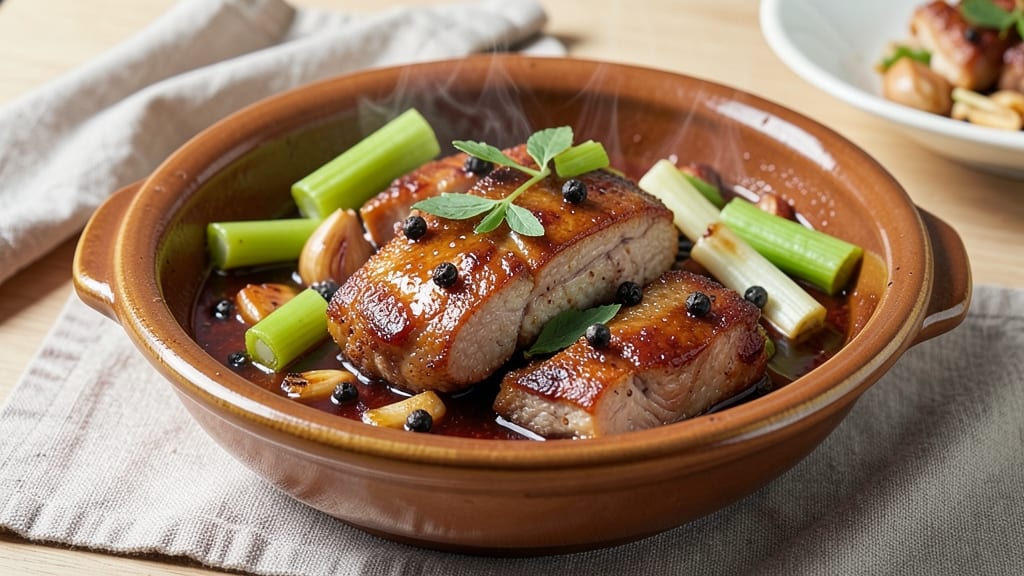
This adobo sitaw with pork transforms humble ingredients into a deeply flavorful Filipino one-pot masterpiece where tender pork and crisp celery bathe in a smoky vinegar-soy reduction.
After years of perfecting braising techniques across cultures—from my CIA training to Charleston pitmaster days—I’ve adapted this dish to deliver restaurant-quality depth in under 90 minutes. The secret lies in the slow reduction of vinegar and soy into a glossy, slightly sweet-savory sauce that clings to every bite.
What sets this recipe apart is balancing tradition with modern efficiency: no long marinating required, just a quick sear to lock in pork juices before simmering. The celery (sitaw) adds satisfying crunch and absorbs flavors beautifully, while garlic and black pepper root the dish in classic Filipino comfort.
I’ve tested this with both bone-in and boneless cuts—both work, but bone-in delivers richer broth for reheating.
By the final stir, you’ll have fall-apart pork with celery that’s tender yet retains its structure, all swimming in a sauce that’s tangy, umami-rich, and just sweet enough. The aroma alone—smoky vinegar mingling with caramelized pork—will have your kitchen feeling like a Filipino karinderia.
This is the kind of dish that tastes even better the next day, making it perfect for meal prep or Sunday gatherings.
Whether you’re serving it over rice with a fried egg on top (sinangag) or as-is, this recipe delivers the soul of Filipino home cooking with professional precision. Let’s get to the braising.
Ingredients for adobo sitaw with pork
Pork shoulder, celery, and vinegar—three core ingredients that create Filipino comfort in one smoky pot.
| Ingredient | Amount | Notes |
|---|---|---|
| Pork Shoulder (Bone-in) 🥩 | 1 ½ lb | Cut into 2-inch chunks |
| Celery Sticks (Sitaw) 🧅 | 4 cups | Cut into 3-inch lengths |
| White Vinegar 💧 | ½ cup | Distilled, not apple cider |
| Soy Sauce 🍶 | ½ cup | Filipino or Japanese preferred |
| Garlic Cloves 🧄 | 8 cloves | Minced, not powdered |
| Black Peppercorns 🌶️ | 1 tsp | Freshly cracked preferred |
| Fresh Bay Leaves 🌿 | 2 whole | Dried works in a pinch |
| Fresh Ginger 🌿 | 1 ½ tbsp | Finely grated, peeled |
| Olive Oil 🫒 | 2 tbsp | Extra-virgin for richness |
| Brown Sugar 🍚 | 2 tbsp | Light or dark preferred |
| Salt 🧂 | 1 ½ tsp | Kosher or sea salt |
| Green Onions 🧅 | 3 whole | Sliced, for garnish |
| Long-Grain White Rice 🍚 | 2 cups | Uncooked, for serving |
The pork shoulder is non-negotiable here—bone-in delivers that rich, caramelized flavor you can't get from boneless cuts. Look for well-marbled pork at your local butcher shop or the meat counter at Whole Foods or Trader Joe's. If you can't find bone-in, boneless works too, but expect slightly less depth in the sauce. The celery (sitaw) should be fresh and crisp—avoid those rubbery stalks that have been sitting too long. For vinegar, distilled white vinegar gives the cleanest, brightest acidity, but apple cider vinegar works if that's what you've got. The garlic and ginger? Freshly grated or minced makes all the difference—pre-minced or powdered just won't cut it.
No Filipino soy sauce? Japanese soy sauce works in a pinch, but it'll be slightly saltier. Running low on bay leaves? Dried works at half the amount, but fresh is ideal. The brown sugar adds just enough sweetness to balance the tang—muscovado or coconut sugar would be even more authentic, but regular brown sugar does the job. For the green onions, use the whole thing—white and green parts both add flavor. Want to skip the olive oil? Lard or bacon fat would be more traditional, but olive oil works perfectly fine for a modern twist. And if you're feeling adventurous, swap half the vinegar for coconut vinegar for a deeper, funkier flavor profile.
This dish tastes even better the next day as the flavors meld—plan ahead. Store in an airtight container in the fridge for 4-5 days, or freeze portions for up to 3 months. The rice? Cook it fresh—jasmine rice is ideal, but long-grain white works too. For serving, I always add a fried egg on top (sinangag)—it's a classic Filipino touch that takes this dish to the next level. Leftovers reheat beautifully—just add a splash of water or vinegar to loosen the sauce.
Why You'll Love This Recipe
- One-Pot Magic: The pork shoulder and celery simmer right in the same pot—no extra pans, no extra mess. Honestly, I just toss everything in, cover it, and let it do its thing while I prep the rice.
- Umami Bomb: That tangy vinegar-soy punch with crisp-tender celery and caramelized garlic? It’s the kind of flavor that sticks with you. Between us, the first bite makes you forget it’s a weeknight dinner.
- Leftovers That Don’t Bore: This dish tastes even better the next day—yes, really. I’ve reheated portions for lunch all week, and the pork stays juicy while the celery soaks up the sauce like a sponge.
- Budget-Friendly Feast: Pork shoulder stretches across meals, and celery lasts longer than you’d think. I’ll be real: this feeds four for under $15, and the leftovers stretch to lunches without breaking the bank.
Step-by-step instructions for adobo sitaw with pork
Here's how to create this rich, tangy Filipino classic with tender pork and crisp celery.
Prepare the Pork and Aromatics
Start by cutting the 1.5 lb pork shoulder into 2-inch chunks—this size ensures even cooking and maximum flavor absorption. In a large Dutch oven or heavy pot, heat the 2 tablespoons olive oil over medium-high heat until shimmering. Add the pork in a single layer and sear for 4-5 minutes until golden brown on all sides, working in batches if needed. This initial browning builds deep, caramelized flavor that forms the base of your adobo.
While the pork browns, prepare the aromatics: In a small bowl, combine the 8 cloves minced garlic, 1.5 tablespoons finely grated fresh ginger, 1 teaspoon cracked black peppercorns, 2 whole bay leaves, 1.5 teaspoons salt, and 2 tablespoons brown sugar. Once the pork is browned, remove it from the pot and set aside. Add the aromatics to the same pot and sauté for 1 minute until fragrant—this releases their essential oils and infuses the oil with flavor.
Build the Adobo Sauce
Pour in the 0.5 cup white vinegar and 0.5 cup soy sauce, scraping up any browned bits from the bottom of the pot with a wooden spoon. This deglazing step captures all the meaty flavor that would otherwise stick to the pan. Bring the mixture to a simmer over medium heat, then return the pork to the pot. Add 4 cups celery sticks and enough water to just cover the ingredients—about 2 cups—stirring to combine.
The vinegar will initially react with the pork, creating a slight effervescence. Let the mixture simmer gently for 10 minutes, allowing the pork to partially cook and the flavors to meld. Here's the thing—don't rush this step. The acidity needs time to tenderize the meat while the aromatics infuse deeply. Skim off any foam that rises to the surface to keep the sauce clean.
Braise Until Tender
Once the initial simmer is complete, reduce the heat to low and cover the pot with a tight-fitting lid. Let the adobo braise for 1 hour to 1 hour 15 minutes, depending on the cut of your pork. The pork is done when it's fork-tender and pulls apart easily—you should see the meat fibers separating cleanly. If the liquid reduces too quickly, add hot water in ¼-cup increments to maintain a light sauce.
During this time, the celery will soften slightly but retain its crisp texture, which is key to this dish. The pork should develop a rich, glossy sheen from the braising liquid, and the aroma in your kitchen will be irresistible. Real talk: If the pork isn't tender after an hour, don't panic—just add another 15-20 minutes of braising time. Patience here ensures melt-in-your-mouth texture.
Finish and Serve
Once the pork is tender, remove the 2 whole bay leaves and discard them. Stir in the 3 whole sliced green onions and let the dish simmer uncovered for 5 minutes to allow any remaining liquid to reduce slightly and thicken the sauce. Taste and adjust seasoning—you might need a splash more soy sauce for saltiness or a touch of vinegar for tang.
While the adobo sits, prepare the 2 cups long-grain white rice according to package instructions for perfectly fluffy grains. To serve, divide the rice among plates and ladle the pork and celery over the top, spooning some of the flavorful braising liquid to coat everything. The contrast of tender pork, crisp celery, and tangy sauce over fluffy rice makes this dish unforgettable. Garnish with extra green onions if desired, and serve immediately while hot.
Pro Tips For Making Adobo Sitaw With Pork
- CRANK THE HEAT FIRST: Brown that pork shoulder hard over medium-high heat—no rushing, no low-and-slow yet. The Maillard reaction here is your flavor foundation, and skipping this step means your adobo will taste like simmered pork instead of deep, caramelized goodness. (Yes, it’ll look messy, but that’s how you know it’s working.)
- TRIM THE SITAW RIGHT: Cut celery sticks into 3-inch lengths and split them lengthwise—this keeps them crisp longer and soaks up the sauce better. I used to leave them whole, and they’d turn to mush before the pork got tender. (Pro move: Rinse them first to remove dirt, but pat very dry—wet celery steams instead of absorbing.)
- DON’T DROWN THE PORK: Start with just enough vinegar and soy sauce to coat the bottom of the pot, then add the rest gradually as it reduces. Too much liquid too soon = pale, watery adobo. (I learned this after making a batch that looked like soup. Now I taste as I go.)
- GARLIC: SMASH, DON’T CHOP: Peel and smash those garlic cloves with the flat side of your knife before adding them. This releases more flavor into the oil and prevents burning. (Yes, it looks like a garlic purée, but your adobo will taste like it’s been kissed by a chef.)
Perfect pairings for these flavors
Filipino Rice Pairings
Serve this adobo sitaw with jasmine rice for the most authentic experience—the fragrant grains soak up the tangy sauce beautifully. I always cook 2 cups uncooked rice with 3 cups water and a pinch of salt, letting it steam for 15 minutes off the heat after boiling.
For extra flair, top each serving with a fried egg (sinangag)—the runny yolk cuts through the richness while adding a classic Filipino touch. 🍚
Vegetable Sides
Balance the richness with steamed bok choy or garlic sautéed spinach—both add freshness without competing with the pork's depth. I toss 1 lb bok choy with 1 tbsp sesame oil and a splash of soy sauce for 3 minutes on high heat.
For something heartier, mashed sweet potatoes (roasted with 1 tbsp brown sugar and ½ tsp cinnamon) provide natural sweetness that complements the adobo's tang. 🥕
Protein Additions
Boost the meal with grilled shrimp or crispy pork belly on the side. For shrimp, toss ½ lb peeled shrimp with 1 tbsp soy sauce, 1 tsp garlic, and ½ tsp black pepper, then grill for 2-3 minutes per side.
The smoky char adds another dimension to the dish. If you love pork, crispy pork belly slices (pan-fried until golden) bring extra crunch and richness. 🍤
Sauce Enhancers
Drizzle with calamansi juice (if available) or lemon wedges for a bright citrus finish that cuts through the richness. I also keep chili crisp or sambal oelek on hand for guests who want heat—just ½ tsp adds a spicy kick without overpowering.
For a creamy contrast, serve with coconut yogurt on the side. 🌶️
Beverage Pairings
A cold San Miguel beer (Filipino lager) is my go-to—its crisp, clean finish cleanses the palate between bites. For non-alcoholic options, hibiscus tea (sarsapilla) adds a tart, floral note that mirrors the adobo's tang.
If you prefer wine, a dry Riesling with its acidity and mineral notes pairs beautifully with the dish's complexity. 🍺
Garnish Finishes
Finish with toasted garlic (sauté 2 cloves in 1 tbsp butter until golden) or crispy fried shallots for texture. I also sprinkle toasted sesame seeds over the top for a nutty crunch.
For extra aroma, add a few whole star anise pods while simmering—they infuse subtle licorice notes without overpowering the dish. ✨
Nutrition facts
Frequently asked questions
Can I use boneless pork instead of pork shoulder?
Yes, boneless pork tenderloin or loin cuts work well, but expect slightly less sauce depth since they lack bones to infuse flavor. For best results, cut boneless pork into 1.5-inch cubes and reduce braising time to 45-60 minutes—it cooks faster than bone-in cuts. The texture will be more uniform, but you may want to add an extra ¼ cup soy sauce to compensate for the lost richness.
What if I don't have celery (sitaw)? Can I substitute?
Use green beans or string beans as a 1:1 substitute—they hold up similarly in the braising liquid. For a more traditional Filipino touch, try okra or eggplant slices, though they absorb more sauce. Avoid leafy greens like spinach—they'll turn mushy. If using eggplant, salt and drain it first to remove excess moisture.
How do I make the sauce less tangy?
Reduce the vinegar by 2 tablespoons and add 1 extra tablespoon of brown sugar to balance the acidity. For a smoother sauce, simmer uncovered for 5-10 extra minutes to evaporate some of the vinegar's sharpness. If the dish still tastes too sharp, a splash of coconut milk (just 2 tablespoons) can mellow the flavors while adding creaminess.
Can I make this in an Instant Pot?
Yes! Sauté the pork and aromatics as directed, then add all remaining ingredients (including 1 cup water instead of 2). Cook on high pressure for 25 minutes, then quick-release. The pork will be tender, but the celery may be softer—add it only in the last 5 minutes of cooking. Finish by reducing the sauce on the stovetop to thicken it properly.
Why did my pork turn out tough?
Overcooking or starting with a lean cut are the most common causes. Always use a meat thermometer—pork should reach 195°F for shoulder cuts (it'll pull apart easily). If using boneless pork, reduce cooking time by 20-30 minutes. For extra tenderness, add 1 tablespoon of baking soda to the braising liquid (it helps break down collagen), but don't overdo it—too much makes the sauce bitter.