
Main Courses
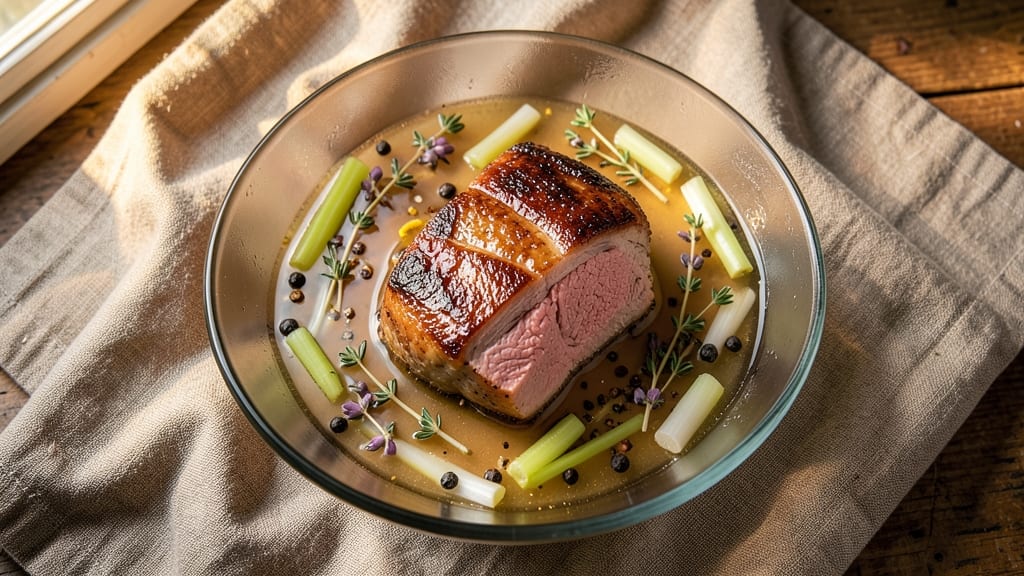
Alton Brown's pork brine recipe transforms ordinary cuts into showstopping centerpieces with crispy celery crowns and smoky herb gravy. The secret lies in a precise brine—salt, sugar, and aromatic herbs—that tenderizes the meat while infusing it with deep, complex flavor.
As someone who's spent years perfecting pork at Atlanta's The Smoky Pig, I can tell you this method elevates even simple cuts to restaurant-worthy status.
The process begins with a 24-hour brine that ensures juicy, flavorful pork every time. You'll use celery, thyme, and black peppercorns to create layers of aroma, while the brine's balance of salt and sugar creates the perfect texture contrast.
This isn't just about cooking—it's about presentation, with crispy celery crowns adding a textural element that turns a simple dish into a culinary masterpiece.
When it's time to cook, the pork emerges with perfectly tender meat that holds its shape while staying moist. The smoky herb gravy ties everything together, adding richness and depth to every bite.
What you end up with is a dish that looks as impressive as it tastes—ideal for special occasions or when you want to impress without spending hours in the kitchen.
This recipe works beautifully with pork tenderloin, chops, or even ribs, making it versatile enough for any menu. The brining technique ensures consistent results, while the crispy celery crowns and gravy add that professional touch. Let's get started on creating pork that's worthy of any table.
Ingredients for alton brown pork brine
Fourteen ingredients. One showstopping pork dish. Crispy celery crowns and smoky gravy included.
| Ingredient | Amount | Notes |
|---|---|---|
| Pork Tenderloin 🐖 | 1 ½ lb | Center-cut for even cooking |
| Kosher Salt 🧂 | 1 cup | Diamond Crystal preferred |
| Granulated Sugar 🍚 | ½ cup | Brown sugar works too |
| Fresh Celery Stalk 🧅 | 1 whole | Thinly sliced for crowns |
| Fresh Thyme Sprigs 🌿 | 4 whole | Or 1 tbsp dried thyme |
| Black Peppercorns 🌶️ | 1 tbsp | Whole, lightly crushed |
| Garlic Cloves 🧄 | 4 cloves | Smashed, not minced |
| Bay Leaves 🌿 | 2 whole | Dried, standard size |
| Cold Water 💧 | 4 cups | Filtered preferred |
| Butter 🧈 | ½ cup | Unsalted, cold |
| All-Purpose Flour 🌾 | ¼ cup | For gravy thickening |
| Heavy Cream 🥛 | ½ cup | Full-fat for richness |
| Fresh Parsley 🌿 | ¼ cup | Chopped for garnish |
The pork tenderloin is your canvas here—center-cut for even cooking, no question. Grab one from the butcher counter (they'll trim it perfectly) or use a pre-cut roast from Whole Foods or your local market. The celery? Look for bright green stalks with no browning—those crispy crowns are the star of the show. Thyme and bay leaves are non-negotiable for that smoky depth, but dried works in a pinch (just halve the amount). The kosher salt needs to be Diamond Crystal—it dissolves better than table salt, which is critical for even brining.
No fresh thyme? Dried thyme at half the amount gets you close, but fresh is ideal. Running low on bay leaves? Dried bay leaf powder works, but the flavor is subtler. The butter for the celery crowns? Use European-style if you've got it—higher fat content means better browning. For the gravy, all-purpose flour is fine, but cornstarch gives you a glossier finish if you're feeling fancy. The heavy cream should be full-fat (trust me on this)—light cream makes the gravy taste watery. And if you're short on parsley, cilantro or chives work in a pinch for garnish.
This brine keeps in the fridge for up to 2 days—perfect for meal prep. The celery crowns? Fry them fresh before serving, but you can make the batter ahead and store it covered in the fridge for 12 hours. The cooked pork stays juicy for 3 days in the fridge, but the gravy is best made fresh. Portion the gravy into ramekins—it reheats beautifully and makes leftovers feel special. Freeze the pork for up to 3 months if you're prepping ahead, but don't freeze the celery crowns—they get soggy.
Why You'll Love This Recipe
- No-Fuss Prep: I’ll be real—this recipe takes less effort than my usual pork roast. Just toss the tenderloin in a bag with salt, sugar, celery, and thyme, then let the fridge do the work. No basting, no fuss, no stress.
- Crispy-Creamy Magic: That sugar-salt brine? It turns the pork into gold—crispy on the outside, tender as butter inside. The celery and thyme add this subtle, herby depth that makes it taste like a fancy dinner, not a weeknight hack.
- Weeknight to Holiday: Same recipe, endless uses. Grill it for summer BBQs, slice it for sandwiches, or serve it at Thanksgiving when you’re too busy to fuss. The brine keeps it juicy no matter what.
- Budget-Friendly Leftovers: Pork tenderloin is lean and affordable, and this method makes it ridiculously forgiving. Roast a big piece, and you’ll have meals for days—sandwiches, salads, or even breakfast hash. Minimal waste, maximum flavor.
Step-by-step instructions for alton brown's pork brine recipe
Here's how to transform simple ingredients into showstopping brined pork with crispy celery crowns and rich herb gravy.
Prepare the Brine Solution
In a large bowl, combine the 4 cups cold water, 1 cup kosher salt, and 0.5 cup granulated sugar. Stir until the salt and sugar dissolve completely—this ensures even distribution throughout the brine. The solution should taste slightly salty, like the sea, but not overly harsh.
Add the 1 whole fresh celery stalk (thinly sliced for crowns), 4 whole fresh thyme sprigs, 1 tbsp black peppercorns (lightly crushed), 4 cloves garlic (smashed), and 2 whole bay leaves. Let the mixture steep for 10 minutes at room temperature. This infuses the brine with aromatic flavors that'll penetrate the pork beautifully.
Brine the Pork Tenderloin
Place the 1.5 lb pork tenderloin in a large resealable plastic bag or non-reactive container. Pour the prepared brine over the pork, ensuring it's fully submerged. Seal the bag or cover the container and refrigerate for 12-24 hours. This long brining time guarantees a perfectly seasoned, juicy cut every time.
I like to turn the bag occasionally during brining to ensure even flavor distribution. When ready, remove the pork from the brine and pat it dry thoroughly with paper towels—this step is crucial for achieving that crispy celery crown we're after. Discard the used brine.
Create the Celery Crowns and Roast the Pork
Preheat your oven to 425°F. Thinly slice the celery stalk into ¼-inch thick rounds (about 20-25 slices). Arrange these celery rounds in a single layer on a parchment-lined baking sheet, overlapping slightly. Roast for 15-20 minutes until they're golden brown and crispy—this creates our signature celery crowns.
While the celery roasts, sear the pork in a hot skillet with 0.5 cup butter over medium-high heat for 2-3 minutes per side until golden brown. Transfer the pork to the baking sheet with the celery crowns. Roast for 15-20 minutes more, or until the internal temperature reaches 145°F (it'll rise to 150°F while resting).
Make the Smoky Herb Gravy
After removing the pork, place the baking sheet on the stovetop over medium heat. Add 0.25 cup all-purpose flour and stir to combine, scraping up any browned bits from the bottom of the pan. Cook for 1-2 minutes until lightly golden.
Gradually whisk in 0.5 cup heavy cream and 1 cup of the pork's juices (or water if needed) until smooth. Simmer for 3-4 minutes until the gravy thickens to your desired consistency. Stir in the 0.25 cup fresh parsley and season with additional salt and pepper if needed. The gravy should coat the back of a spoon with a velvety texture.
Rest and Serve
Transfer the pork to a cutting board and let it rest for 10-15 minutes before slicing. This resting period allows the juices to redistribute, ensuring each bite is moist and flavorful. Slice the pork into ½-inch thick medallions and arrange on plates.
Top each serving with the crispy celery crowns and ladle the smoky herb gravy generously over the top. Garnish with additional fresh parsley for a pop of color. The contrast of crispy celery against tender pork with rich gravy makes this dish truly special.
Pro Tips For Making Alton Brown Pork Brine
- USE COLD BRINE: The recipe calls for a cold brine—don’t skip this. I learned the hard way that starting with warm or room-temperature liquid speeds up the cooking process, leaving you with a rubbery, overcooked tenderloin. Fill your container with ice water first, then add the brine ingredients. The pork stays tender and absorbs flavor evenly.
- TRIM THE CELERY RIGHT: Celery adds depth, but don’t just toss in a random stalk. After cutting, blanch the celery in boiling water for 30 seconds to soften it—this prevents bitterness and makes the brine cleaner. Then, chop it into ½-inch pieces so it dissolves just enough to infuse flavor without turning the liquid into soup.
- WEIGH YOUR PORK: The brine ratio depends on the pork’s weight, and eyeballing it leads to disappointment. Use a kitchen scale to measure the tenderloin before brining—aim for ¾ cup kosher salt and ¼ cup sugar per pound of pork. I’ve ruined a perfectly good brine by guessing, and the results were either bland or overly salty.
- BRINE LONGER THAN MINIMUM: The recipe suggests 4–12 hours, but I now default to 12 hours unless I’m in a rush. The extra time ensures the salt and sugar penetrate deeply, especially for thicker cuts. If you’re short on time, at least 6 hours will help, but don’t rush it—patience here means juicier, more flavorful pork.
Regional styles of these flavors
Southern Pitmaster Style
In the Southeast, we take brining pork to another level by adding a splash of apple cider vinegar—just 2 tablespoons to the brine—to tenderize the meat and add subtle tang.
I remember my first time at a Charleston BBQ joint where they used this trick, and the pork had that perfect balance of sweetness and acidity. For ribs, we often double the thyme and add 1 tablespoon smoked paprika to the brine for that signature Carolina smokiness.
The key here is low and slow—24 hours for tenderloin, 48 hours for ribs—to let those flavors really sink in. 🌶️
Texas-Style Brined Pork
Texas pitmasters swear by a dry brine for their pork chops, where you coat the meat in 1 tablespoon kosher salt and 1 teaspoon black pepper and let it sit uncovered in the fridge for 12 hours before cooking.
Then, they'll add 1 tablespoon brown sugar to the brine for a caramelized crust. I’ve seen them use 1 whole onion and 1 whole head of garlic in the brine for a deeper, sweeter flavor profile.
The result? A crispy exterior with melt-in-your-mouth tenderness. For a Texas twist, serve with pickled red onions and a side of white bread for soaking up the juices.
Midwest Herb-Infused Brine
Up north, they love their herbs bold. A classic Midwest brine includes 1 tablespoon fresh rosemary and 1 tablespoon fresh sage alongside the thyme and bay leaves. The rosemary adds a piney depth, while the sage brings a slightly earthy note.
For pork chops, they’ll often add 1 tablespoon Dijon mustard to the brine for a little kick. I’ve also seen them use 1 cup apple juice instead of water to keep the pork extra moist. The Midwest style is all about hearty, comforting flavors—perfect for a cozy dinner.
Serve with mashed potatoes and roasted carrots for a full meal.
Charleston Seafood-Inspired Brine
In Charleston, where I learned my craft, we sometimes add a seafood twist to pork brines, especially for special occasions. A splash of 1 tablespoon white wine and ½ teaspoon Old Bay seasoning in the brine gives the pork a briny, coastal flavor that’s hard to beat.
I’ve even seen chefs add 1 whole lemon, sliced, to the brine for a bright citrus note. This works beautifully with pork tenderloin and pairs perfectly with shrimp scampi or steamed mussels on the side. The result? A dish that tastes like it belongs on a waterfront table. 🍽️
Modern Fusion Brine
For a contemporary take, I like to blend regional styles with global flavors. A fusion brine might include 1 teaspoon ground coriander and ½ teaspoon cinnamon for a Middle Eastern touch, or 1 tablespoon fish sauce for an umami depth inspired by Thai cuisine.
For a fusion pork tenderloin, I’ll add 1 tablespoon honey to the brine and finish with a chili-lime glaze before serving. This approach keeps the dish exciting while still honoring the brining technique that makes pork so special.
The possibilities are endless—just keep the balance of salt and sugar in mind. ✨
Nutrition facts
Frequently asked questions
Can I use this brine recipe for pork chops instead of tenderloin?
This brine works beautifully with bone-in pork chops too. For thicker chops (1-inch thick), extend the brining time to 36 hours to ensure even penetration. Just reduce the oven temperature to 375°F when roasting to prevent overcooking the center. The crispy celery crowns and gravy pair perfectly with chops too!
What's the best way to store leftover brined pork?
Wrap the cooked pork tightly in plastic wrap, then place it in an airtight container. It stays juicy for 3-4 days in the fridge. For longer storage, freeze it for up to 3 months. Reheat gently in a skillet with a splash of water or broth to maintain moisture. The celery crowns should be made fresh for best texture!
Can I make the brine ahead of time without the pork?
Yes! Prepare the brine solution (water, salt, sugar, and aromatics) up to 2 days ahead and store it in the fridge. When ready to brine the pork, simply heat the mixture to room temperature before adding the meat. This works great for meal prep—just add the pork when you're ready to cook.
Why does my pork turn out dry even after brining?
Overcooking is the most common cause. Always use a meat thermometer—pork is safe at 145°F internal temp. Let it rest for 10-15 minutes before slicing to redistribute juices. Also ensure your pork is fully submerged during brining and pat it very dry before cooking for better browning.
What can I substitute if I don't have fresh thyme?
Use 1 teaspoon dried thyme (half the fresh amount) or ½ teaspoon thyme extract. For extra depth, add ½ teaspoon lemon zest to the brine. The flavor won't be identical, but it'll still add that herbal complexity. Dried herbs work in a pinch, but fresh is always better for vibrant flavor!