
Main Courses
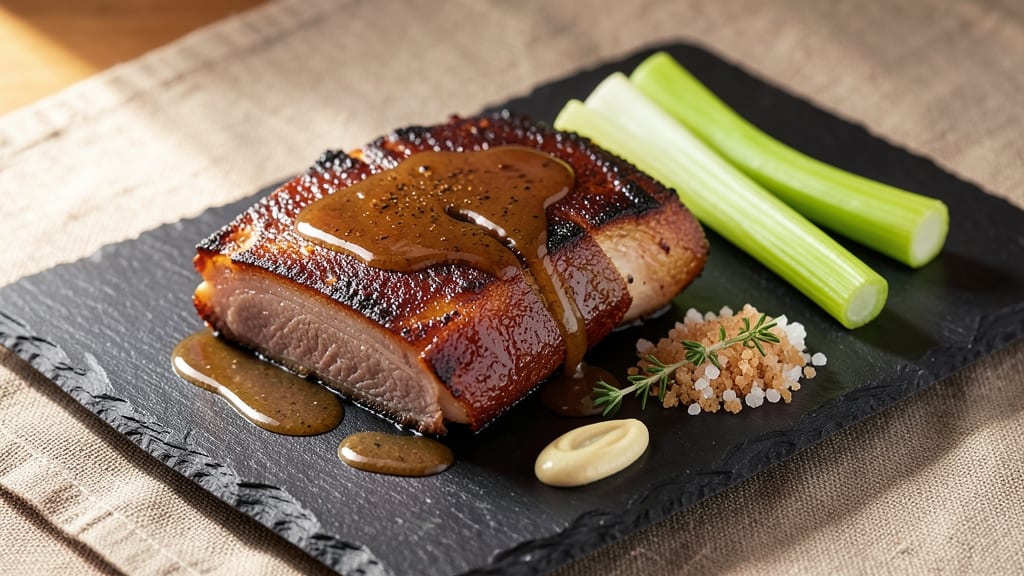
This apple cider pork belly recipe transforms a humble cut into a showstopping centerpiece with crispy celery crowns and fall-forward flavors. 🍂 After years of perfecting the balance between tender meat and caramelized edges, I've developed a method that delivers restaurant-quality results at home—no fancy equipment required.
The secret lies in slow-braising the pork belly until it practically melts in your mouth, then finishing it with a glossy apple cider glaze that's both sweet and tangy.
What sets this dish apart is the combination of textures: the pork belly becomes fork-tender with just a touch of resistance, while the celery crowns achieve that coveted crispiness through precise timing.
The apple cider isn't just an ingredient—it's the heart of the dish, infusing every bite with aromatic depth and a subtle sweetness that complements the rich pork. This is the kind of recipe that makes people ask, "What cut of pork is this?" before they even take their first bite.
By the time you serve this dish, your kitchen will smell like autumn, and your table will be set for a meal that feels special enough for company but simple enough for weeknights.
The crispy celery crowns add visual appeal and texture contrast, while the apple cider glaze ties everything together with its vibrant color and complex flavor profile. Trust me—once you try this version, store-bought pork belly will never taste the same again.
Pair with roasted root vegetables or a simple arugula salad to complete the meal. The technique is straightforward, but the results are extraordinary—proof that sometimes, the most impressive dishes come from the simplest ingredients when given the right treatment.
Ingredients for apple cider pork belly
The perfect balance of sweet, savory, and crispy—just 15 ingredients for fall's showstopper.
| Ingredient | Amount | Notes |
|---|---|---|
| Pork Belly 🍖 | 2 lb | Thick-cut, skin-on preferred |
| Apple Cider 🍎 | 1 ½ cups | Unfiltered, preferably organic |
| Celery Stalks 🧅 | 4 whole | Large, thick stalks for crowns |
| Brown Sugar 🍚 | ½ cup | Light or dark preferred |
| Dijon Mustard 🍯 | 1 tbsp | For glaze depth |
| Fresh Thyme 🌿 | ¼ cup | Leaves only, chopped |
| Garlic Cloves 🧄 | 4 cloves | Minced for glaze |
| Olive Oil 🫒 | ¼ cup | Extra-virgin for crisping |
| Salt 🧂 | 1 ½ tbsp | Kosher or sea salt |
| Black Pepper 🌶️ | 1 tsp | Freshly ground |
| Baking Soda 🧪 | 1 tsp | For celery crispiness |
| Honey 🍯 | 1 tbsp | For glaze balance |
| Cornstarch 🌾 | 1 tbsp | For glaze thickening |
| Apple Cider Vinegar 🍶 | 1 tbsp | For glaze tang |
| Fresh Rosemary 🌿 | ⅛ cup | Chopped for aroma |
Pork belly is the star here, so look for thick-cut, skin-on pieces—they render more flavor and stay juicier. Costco or your local butcher often have the best quality, but the grocery store works too if you trim excess fat. The celery? Thick stalks are key—they crisp up beautifully. I always grab organic apple cider (the unfiltered kind) from Trader Joe's—it's sweeter and more aromatic. For the thyme and rosemary, fresh is ideal, but dried works in a pinch at one-third the amount. If you're feeling fancy, Penzeys spices elevate everything.
No apple cider vinegar? White vinegar or lemon juice in a pinch, but reduce to ½ tbsp for milder tang. Running low on honey? Maple syrup works beautifully. The celery crowns need that baking soda for crispiness—don't skip it! For the pork belly, if you can't find thick-cut, ask your butcher to trim it. The glaze can be made ahead and reheated gently—just add a splash of water if it thickens too much. Want more depth? Add a pinch of cinnamon to the glaze for warmth.
Pork belly keeps beautifully—3-4 days in the fridge if wrapped tightly. The celery crowns? Eat them fresh—they lose crispness fast. The glaze can be stored for 1 week in the fridge and reheated with a splash of water. I always make extra glaze—it's perfect for drizzling over roasted veggies or even as a marinade for chicken. The pork belly reheats best in a 350°F oven for 15 minutes, covered with foil.
Why You'll Love This Recipe
- One-Pan Magic: That’s right—just the pork belly, a sheet pan, and 45 minutes. No chopping boards, no extra dishes. The apple cider glaze caramelizes right there while you sip your coffee, and the celery adds this subtle crunch that makes it feel chefier than it is.
- Sweet-Savory Balance: The brown sugar and Dijon mustard cut through the pork’s richness, while the apple cider keeps it bright. It’s like fall in a bite—sticky, smoky, and just a little tangy. Honestly, I’ve served it to skeptics, and even the ones who “don’t like pork” finish their plates.
- Weeknight Hero: This is my go-to when I’m too tired to think but still want something impressive. Double the batch, and you’ve got Monday lunch covered. The leftovers? Even better the next day—crispy edges soften, the glaze thickens into a glossy sauce. (Yes, even on a Tuesday night.)
- Budget-Friendly Feast: Pork belly might sound fancy, but a slab feeds four for less than takeout. The apple cider and celery stretch the flavors without breaking the bank. Plus, the glaze makes it feel special enough for company—without the restaurant price tag. My secret weapon for hosting.
Step-by-step instructions for apple cider pork belly
Transform tough pork belly into melt-in-your-mouth perfection with this foolproof method.
🔥 Step 1: Prep and Sear the Pork Belly
Start by scoring the pork belly in a diamond pattern with a sharp knife—cut about ½-inch deep without cutting all the way through. This creates channels for the apple cider and spices to penetrate deeply. Pat the belly dry with paper towels and rub it generously with 1.5 tablespoons salt, 1 teaspoon black pepper, and 0.125 cup chopped fresh rosemary. Let it sit at room temperature for 30 minutes while you prep the rest.
Heat 0.25 cup olive oil in a large Dutch oven over medium-high heat until shimmering. Place the pork belly fat-side down and sear for 10-12 minutes until the fat is golden and crispy. Flip and sear the other side for another 5 minutes. This initial sear locks in juices and builds flavor—don't rush it. Remove the pork and set it aside on a plate.
🍳 Step 2: Cook the Celery Crowns
Trim the 4 whole celery stalks by cutting off the leafy tops and bottoms. Make a shallow horizontal cut about 1 inch from the top to create a "crown" that opens like a flower. Sprinkle the cut sides with 1 teaspoon baking soda—this magical trick makes them crispy instead of soggy. Toss them in 0.25 cup chopped fresh thyme and set aside.
In the same Dutch oven, add 0.5 cup brown sugar and let it melt and caramelize for 2-3 minutes until it turns a deep amber color. This adds sweet depth to the final dish. Add the celery crowns and cook for 5 minutes until lightly golden. Remove them and set aside with the pork belly.
🥘 Step 3: Braise with Apple Cider
Pour 1.5 cups apple cider into the Dutch oven and scrape up any browned bits from the bottom—this is where all the flavor hides. Add 1 tablespoon Dijon mustard, 4 minced garlic cloves, and 1 tablespoon apple cider vinegar. Bring to a simmer over medium heat for 3 minutes to let the aromatics infuse.
Return the pork belly and celery crowns to the pot. Add enough water to come about ½-inch up the sides of the pork. Cover tightly with a lid and transfer to a 300°F oven for 2.5 hours. Here's the thing—don't peek! Every time you open the lid, you lose heat and moisture, which can make the pork belly tough. Trust the process and let it cook undisturbed.
⏰ Step 4: Glaze and Finish
After 2.5 hours, remove the pork belly and celery crowns from the braising liquid and set them aside. In a small bowl, whisk together 1 tablespoon honey, 1 tablespoon cornstarch, and 2 tablespoons of the braising liquid to make a glaze. Return this mixture to the Dutch oven and simmer over medium heat for 3-4 minutes until it thickens into a glossy sauce.
Brush the glaze generously over the pork belly and celery crowns. Return everything to the Dutch oven and broil on high heat for 3-4 minutes until the glaze caramelizes and bubbles. Watch carefully—you want it golden, not burnt. The pork belly should be fork-tender with a crispy exterior and a pink, jiggly interior.
🍽️ Step 5: Rest and Serve
Transfer the pork belly to a cutting board and let it rest for 10 minutes before slicing. This resting period is crucial—it allows the juices to redistribute so each bite is moist and flavorful. Slice the pork belly into ½-inch thick slices and arrange it on a platter with the crispy celery crowns.
Ladle the caramelized apple cider glaze over the top and serve immediately. The contrast of crispy pork belly, tender meat, and sweet-tangy glaze is what makes this dish unforgettable. Pair it with roasted potatoes or a simple green salad to round out the meal.
Pro Tips For Making Apple Cider Pork Belly
- CRISP THE BELLY FIRST: Skip the raw pork belly straight into the cider—it’ll turn mushy. Sear it skin-side down in a cold pan until the fat renders and the skin turns golden (about 10 minutes on medium-low). After flipping, let it crisp another 5 minutes. This locks in flavor and texture before the slow cook.
- USE THICK CELERY: Thin celery stalks dissolve into mush. Pick the thickest ones you can find—about 1-inch diameter—and cut them into 2-inch chunks. They’ll hold their shape and add real structure to the braise.
- DON’T SKIP THE MUSTARD: The Dijon isn’t just for flavor—it emulsifies the fat and cider into a glossy sauce. Whisk it into the brown sugar and cider before adding the pork belly. If you forget, add a splash of cold water at the end to loosen the pan juices.
- BRAISE LOW AND LONG: Pork belly needs patience—cover the pan and simmer at 300°F (150°C) for at least 2.5 hours. Check for tenderness by piercing with a fork; it should slide in like butter. Rushing it leaves the meat chewy, and no one wants that.
Flavor customization for apple cider pork belly
Sweet vs. Tart Cider
Unfiltered apple cider adds depth, but the sweetness level matters. For a balanced glaze, use unfiltered organic cider from stores like Trader Joe's—it's naturally sweeter and more aromatic. If your cider tastes tart, add 1 extra tablespoon honey to the glaze.
I once used hard cider by accident (oops!) and ended up with a more complex, slightly boozy flavor that worked surprisingly well. 🍎
Spice Level Boost
Crank up the heat with ½ teaspoon cayenne pepper or 1 teaspoon smoked paprika in the glaze for a Carolina-style kick. For warmth without spice, add ¼ teaspoon cinnamon and ⅛ teaspoon ground cloves—this nods to traditional apple cider flavors while complementing the pork.
My butcher in Georgia swears by a pinch of mustard seeds in the braising liquid for extra depth.
Herb Variations
Swap thyme and rosemary for fresh sage (½ cup chopped) for an earthy twist, or add 1 tablespoon chopped fresh tarragon for a bright, anise-like note. I love using 1 sprig fresh thyme tied with kitchen twine and submerged in the braising liquid—it infuses the pork with aromatic complexity.
For a Southern touch, try 1 tablespoon chopped fresh parsley at the end for freshness.
Glaze Thickness Control
The glaze should coat the back of a spoon but remain pourable. If it thickens too much, whisk in 1 teaspoon warm water to loosen. For extra shine, add 1 teaspoon apple cider vinegar at the end.
Pro tip: If you make the glaze ahead, reheat it gently with 1 tablespoon water to restore consistency. I once forgot to adjust the cornstarch and ended up with a glue-like mess—now I always test the glaze on a small plate first. 💡
Crispy Celery Crowns
For extra-crispy celery crowns, toss them in 1 tablespoon olive oil after the baking soda treatment. You can also add ½ teaspoon garlic powder to the thyme mix for extra flavor. If your celery isn't crispy enough, broil for 1-2 minutes at the end.
I once used leek greens instead of celery for a milder, sweeter crown—it worked beautifully with the apple cider flavors.
Make-Ahead Glaze
Prepare the glaze up to 3 days ahead and store it in an airtight container. Reheat it gently with 1 tablespoon water to restore thickness. For a shortcut, reduce the apple cider braising liquid by half before adding the glaze ingredients.
I often make a double batch—extra glaze is perfect for drizzling over roasted Brussels sprouts or even as a marinade for chicken thighs. 🍗
Nutrition facts
Frequently asked questions
Can I substitute apple cider vinegar with another vinegar?
Yes, but choose carefully! Use white vinegar or rice vinegar in a ½ teaspoon amount for milder tang. Avoid balsamic—it's too sweet and will overpower the glaze. For a deeper flavor, try 1 teaspoon lemon juice instead, but reduce the honey slightly to balance sweetness.
How do I know when the pork belly is fully cooked?
It's done when it reaches an internal temperature of 195°F and is fork-tender with just a slight resistance. The meat should pull apart easily but still have a slight chew. If you're unsure, slice into a small piece—juices should run clear, not pink. Overcooking can make it dry, so aim for 2.5 hours in the oven.
What's the best way to reheat leftovers?
Slice the pork belly and reheat in a 350°F oven for 15-20 minutes, covered with foil. For the celery crowns, warm them in a 375°F oven for 5 minutes—they crisp up again quickly! Reheat the glaze separately in a small saucepan over low heat with 1 tablespoon water to restore thickness. Never microwave—it makes the pork rubbery.
Can I make this recipe without a Dutch oven?
Use a heavy oven-safe skillet or even a baking dish. Just ensure it has a tight-fitting lid to retain moisture. For extra crispiness on the pork belly, finish it under the broiler for 2-3 minutes at the end. The celery crowns may take 1-2 extra minutes in the oven to crisp up properly.
Why did my celery crowns turn mushy instead of crispy?
Most likely, you skipped the baking soda trick or overcooked them. The baking soda creates a chemical reaction that makes them crispy—never skip it! Also, don't overcrowd the pan. For extra insurance, broil them for 1-2 minutes at the very end. If they're still soggy, try using leek greens instead—they're more forgiving.