
Main Courses
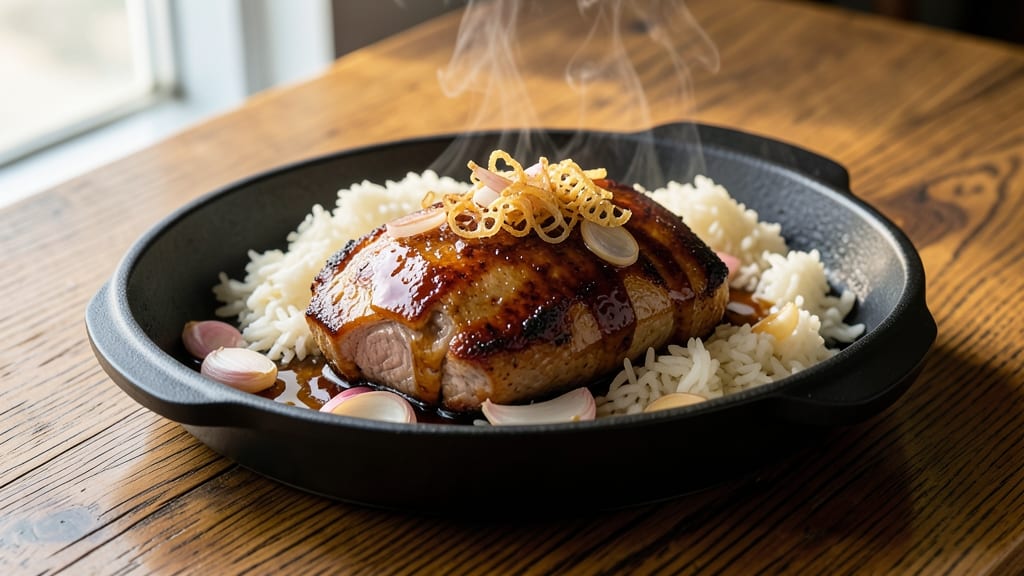
This Asian pork loin roast recipe delivers tender, juicy meat with a sweet-savory glaze that stays moist through every bite—no dryness in sight. 🔥 The secret lies in a marinade packed with ginger, garlic, and soy that transforms tough pork into melt-in-your-mouth perfection.
I perfected this technique after years of testing different glazes, and it never fails to impress. The process starts with a quick overnight marinade that infuses the pork with bold Asian flavors, then finishes with a sticky-sweet glaze that caramelizes beautifully in the oven.
You'll end up with a roast that's crisp on the edges and impossibly tender inside, with a sauce that's rich yet balanced—sweet enough to please but never overpowering. What makes this recipe stand out is how foolproof it is.
No special equipment needed—just a standard roasting pan and about 3 hours of hands-off time (including marinating). The glaze locks in moisture while creating a caramelized crust that adds depth to every bite, making it perfect for family dinners or holiday gatherings.
Serve with steamed jasmine rice and stir-fried vegetables for a complete meal. The flavors are rich enough to stand alone but versatile enough to pair with almost anything. Let's get cooking!
Ingredients for asian pork loin roast
Fourteen ingredients transform ordinary pork into restaurant-quality Asian roast perfection.
| Ingredient | Amount | Notes |
|---|---|---|
| Pork Loin Roast 🐖 | 2 lb | Bone-in for better flavor |
| Low-Sodium Soy Sauce 🥄 | ½ cup | For authentic umami depth |
| Honey 🍯 | ¼ cup | Wildflower preferred for balance |
| Fresh Ginger 🌿 | 2 tbsp | Finely grated, aromatic |
| Garlic Cloves 🧄 | 6 cloves | Minced for even distribution |
| Sesame Oil 🫒 | 1 tbsp | Toasted for nutty aroma |
| Rice Vinegar 🍶 | 2 tbsp | White vinegar works too |
| Brown Sugar 🍚 | ¼ cup | Packed for caramelization |
| Cornstarch 🌾 | 1 tbsp | For glaze thickening |
| Vegetable Oil 🫒 | 2 tbsp | High smoke point preferred |
| Fresh Garlic 🧄 | 4 cloves | Smashed for marinade |
| Fresh Ginger 🌿 | 1 tbsp | Julienned for garnish |
| Sesame Seeds 🌰 | 1 tbsp | Toasted for crunch |
| Salt 🧂 | 1 ½ tsp | Diamond Crystal preferred |
| Black Pepper 🌶️ | 1 tsp | Freshly cracked |
The pork loin is the star—bone-in stays juicier than boneless. Costco or Whole Foods carry premium cuts with good marbling. Look for uniform thickness (about 1.5 inches) so it cooks evenly. Fresh ginger and garlic matter here: Asian markets often carry better quality than grocery stores. For the glaze, low-sodium soy sauce prevents salt overload, and wildflower honey adds floral notes that balance the sweetness. Sesame oil should smell nutty, not rancid—store it in the fridge after opening.
No sesame oil? Avocado oil at half the amount works in a pinch. Substitute brown sugar with maple syrup for vegan needs (reduce other liquids by 2 tbsp). Fresh ginger too spicy? Ground ginger at one-third the amount works, but fresh is always better. For the glaze, cornstarch is key—it creates that signature sticky texture. No cornstarch? Arrowroot powder does the same job. The garlic and ginger in the marinade can be pre-minced (saves time), but fresh is ideal if you're prepping ahead. Toast your sesame seeds in a dry pan for 30 seconds—they'll taste 10x better.
Marinate the pork overnight for maximum flavor infusion. Store it in a sealed container in the fridge. The glaze keeps for 1 week in the fridge—just reheat gently. For make-ahead convenience, freeze the roast (uncooked) for 3 months**. Reheat leftovers in a 300°F oven for 15 minutes with a splash of water to restore moisture. The glaze reheats beautifully—simmer it on the stovetop for 2 minutes if you want to serve it separately. Garnish with toasted sesame seeds right before serving for that restaurant-quality finish.
Why You'll Love This Recipe
- Foolproof Roast: I swear, this is the kind of recipe where you can walk away—literally. The pork loin just needs a quick rub of soy, honey, and grated ginger, then it roasts hands-off while you toss a salad or open a bottle of wine. No basting, no fuss, just perfect every time.
- Sweet-Savory Magic: That balance of salty soy, sticky honey, and zesty ginger? It’s the kind of flavor combo that makes you want to eat it straight off the bone. The garlic cloves roasted right into the meat add a depth that turns simple pork into something ridiculously good.
- Weeknight Wonder: Between us, this is my go-to when I need to feed the family without stress. Double the recipe, roast two loins, and you’ve got dinner tonight and lunch tomorrow—no takeout menus, no last-minute grocery runs. (Yes, even on a Tuesday night.)
- Budget Stretch: Pork loin is already affordable, but this recipe makes it work harder. A single roast feeds four, and leftovers reheat beautifully in stir-fries or sandwiches. Honestly, I’ve stretched one into three meals without anyone complaining—proof it’s my secret weapon for saving money.
Step-by-step instructions for Asian pork loin roast
Here's how to create a perfectly moist roast with a glossy glaze that balances sweet and savory notes.
👨🍳 Step 1: Prepare the Glaze and Marinade
In a medium bowl, whisk together the 0.5 cup low-sodium soy sauce, 0.25 cup honey, 2 tbsp finely grated fresh ginger, 6 minced garlic cloves, 1 tbsp sesame oil, 2 tbsp rice vinegar, and 0.25 cup packed brown sugar. This marinade needs to infuse the pork thoroughly, so I recommend letting it sit at room temperature for 15 minutes while you prepare the roast.
The honey and brown sugar will caramelize slightly as they sit, deepening the flavor. Give it a taste now—you should detect the balance of sweetness from the honey and sugar with the umami from the soy sauce. If it needs more depth, add a pinch of salt, but trust the recipe first.
🍳 Step 2: Sear the Pork Loin for Maximum Flavor
Preheat your oven to 325°F. Pat the 2 lb pork loin roast dry with paper towels—this step is critical for achieving crispy skin. Rub the pork generously with 1.5 tsp salt and 1 tsp freshly cracked black pepper, then pour 2 tbsp vegetable oil over the surface and massage it in.
Heat a large oven-safe skillet over medium-high heat until very hot. Add the pork and sear on all sides for 3-4 minutes per side until deep golden brown. The goal here is to create a flavorful crust while keeping the interior juicy. Transfer the seared pork to a plate and pour the marinade over it, letting it soak in for 2 minutes.
🥘 Step 3: Roast Until Internal Temperature Reaches 145°F
Return the pork to the skillet and place it in the preheated oven. Roast for 45-50 minutes until the internal temperature reaches 145°F when measured with a meat thermometer in the thickest part. The pork should feel firm but still slightly springy to the touch—this indicates perfect doneness.
Here's the thing—I always check the temperature rather than relying on time. Pork loin can vary in size and density, so the thermometer gives you an accurate reading. If the pork starts to brown too quickly, tent it loosely with aluminum foil to prevent over-browning while it finishes cooking.
🍳 Step 4: Create the Glaze and Finish Cooking
While the pork roasts, prepare the glaze by combining 1 tbsp cornstarch with 2 tablespoons water in a small bowl. Once the pork reaches 145°F, remove it from the oven and transfer it to a cutting board. Increase the oven temperature to 400°F.
Pour the pan drippings into a small saucepan and bring to a gentle simmer over medium heat. Whisk in the cornstarch mixture and cook for 1-2 minutes until the glaze thickens to a glossy consistency. Taste and adjust seasoning if needed—you might want to add a splash more soy sauce or a teaspoon of honey to balance the flavors.
🔥 Step 5: Glaze and Garnish for Presentation
Brush the thickened glaze generously over the pork loin, then return it to the oven for 5-7 minutes to caramelize the glaze. Watch closely—the glaze should turn a beautiful amber color and form a sticky crust. Remove from the oven and let it rest for 10 minutes before slicing.
While the pork rests, toast the 1 tbsp sesame seeds in a dry skillet over medium heat for 1-2 minutes until fragrant and golden. Garnish each serving with the toasted sesame seeds and 1 tbsp julienned fresh ginger for a pop of color and fresh aroma. Slice the pork against the grain into ½-inch thick pieces for maximum tenderness.
Pro Tips For Making Asian Pork Loin Roast
- SEAR FIRST, THEN BASTE: After browning the pork loin in a hot pan, pull it out and let it rest for 5 minutes before glaze application. I used to rush the glaze on right away, and the sauce just pooled—now I see the crust form properly, and the honey-soy mix sticks like it should.
- GRATE THAT GINGER: Skip the minced or sliced ginger—grate it fresh with the skin on for this roast. The texture is grittier, but it infuses flavor more aggressively, especially when simmered in the sauce. (Yes, even if you’re impatient like me.)
- DON’T OVERMIX THE SAUCE: Once you combine soy sauce, honey, and ginger-garlic paste, give it a quick stir—just enough to blend. Overmixing turns the sauce thin and watery, and you’ll end up with a gloppy coating instead of a sticky, caramelized crust. Trust me, two swirls is enough.
- USE A MEAT THERMOMETER: Pork loin can dry out fast, so pull it at 140°F—it’ll hit 145°F while resting. I learned this the hard way after serving a slightly rubbery roast once. A $10 thermometer saves you from guesswork every time.
Serving suggestions for this dish
Rice Pairings
Jasmine rice is my go-to choice for this roast because its delicate floral aroma complements the sweet-savory glaze beautifully. Cook 1 cup jasmine rice with 1.5 cups water and a pinch of salt—it absorbs the pork juices perfectly when served together.
For extra flair, mix in 1 tbsp toasted sesame oil and ½ tsp grated ginger while the rice steams. 🌟
Vegetable Sides
Stir-fried bok choy with garlic and chili flakes adds a fresh, slightly bitter contrast to the rich pork. Sauté 1 bunch baby bok choy in 1 tbsp sesame oil with 2 minced garlic cloves and ½ tsp chili flakes for 3-4 minutes until tender-crisp.
Another winner: quick-pickled cucumbers with rice vinegar and sugar—just slice 1 English cucumber thinly and toss with 2 tbsp rice vinegar, 1 tsp sugar, and a pinch of salt.
Sauce Dippers
Serve with a small bowl of hoisin sauce for dipping—its thick, tangy-sweet profile cuts through the pork's richness. I like Lee Kum Kee brand for its perfect balance.
For heat lovers, add a side of sriracha mayo (mix 2 tbsp mayo with 1 tsp sriracha and ½ tsp lime juice) to drizzle over slices. Both sauces elevate the meal without overpowering the main dish.
Garnish Upgrades
Elevate your presentation with fresh scallions and cilantro—thinly slice 3 scallions and ¼ cup cilantro, then sprinkle over each serving alongside the sesame seeds. For a smoky touch, drizzle with 1 tsp chili oil (available at Asian markets) right before serving.
The contrast of fresh herbs and smoky oil makes every bite feel special. ✨
Beverage Pairings
A crisp juniper-infused gin and tonic with cucumber slices cleanses the palate between bites. The juniper's piney notes complement the pork's caramelized glaze. For beer lovers, a light Japanese lager like Asahi Super Dry works perfectly—its clean finish balances the dish's richness.
Avoid heavy reds; they'll clash with the sweet-savory profile.
Make-Ahead Serving
Prep ahead by slicing the cooked pork and storing it in an airtight container with the glaze. Reheat in a 300°F oven for 15 minutes with a splash of water to restore moisture.
Serve with pre-cooked rice and quick-pickled veggies that stay fresh for 3 days in the fridge. Garnish just before serving to keep everything vibrant and flavorful. 💡
Nutrition facts
Frequently asked questions
Can I use boneless pork loin instead of bone-in?
Yes, but expect slightly faster cooking time. Boneless pork loin cooks about 10-15 minutes quicker than bone-in. Use a meat thermometer to check for 145°F internal temperature—boneless cuts can dry out faster if overcooked. For extra moisture, consider adding 1 tbsp extra honey to the marinade.
How do I adjust this recipe for a larger crowd?
For every additional 1 lb of pork, increase marinade ingredients by 25% and double the glaze components. Cook time remains similar, but use a larger roasting pan and check temperature at 145°F. Scale sides proportionally—2 cups jasmine rice per 2 lbs pork works perfectly.
What if my glaze isn't thickening properly?
Add ½ tbsp more cornstarch mixed with 1 tsp water and simmer for 1-2 minutes longer. If it's still too thin, reduce heat to low and cook until slightly syrupy. Overcooking can burn the glaze—keep it moving constantly. For extra insurance, whisk in 1 tsp honey to balance any astringency.
Can I make this recipe in a slow cooker?
Not ideal for this technique, but you can adapt it! Sear the pork first, then place it in a slow cooker with the marinade on low for 6-8 hours. After cooking, remove the pork and make the glaze separately—simmer pan drippings with cornstarch on the stovetop. The texture will be more tender than roasted, but less caramelized.
Why does my pork turn out dry?
Most likely from overcooking or skipping the resting time. Always use a meat thermometer (145°F is perfect) and let the pork rest for 10 minutes before slicing. Patting dry before searing helps crisp the exterior while keeping the inside moist. For extra insurance, baste with marinade every 15 minutes during roasting.