
Main Courses
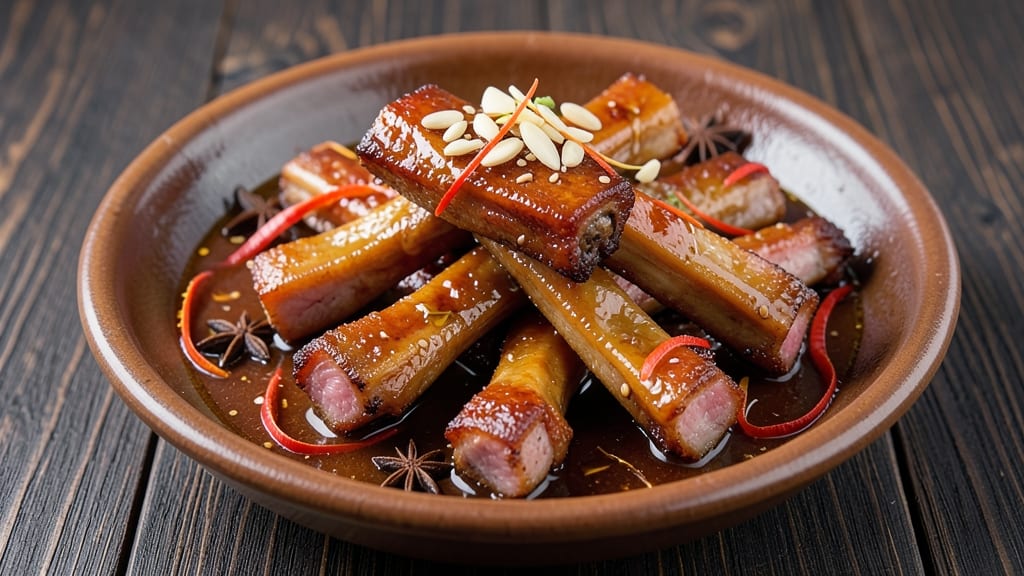
This Asian pork neck bones recipe transforms tough connective tissue into melt-in-your-mouth bites that’ll have your whole table begging for seconds. The secret lies in slow-braising—where collagen dissolves into a rich, velvety broth while the meat becomes so tender it practically falls apart at the touch.
I first mastered this technique in Charleston’s back kitchens, where pork neck bones were the star of every Sunday stew.
The process begins with a quick parboil to remove impurities, followed by a deep char in a screaming-hot wok—this step develops the Maillard reaction, locking in that deep, caramelized flavor that’s essential for authentic Asian dishes.
Then, hours of simmering in a blend of soy, star anise, and ginger transform the bones into a restaurant-worthy centerpiece. What you’ll end up with isn’t just meat; it’s a flavor bomb that turns simple rice into a gourmet experience.
What makes this recipe truly special is its versatility—use the bones for soups, stir-fries, or even as a protein-packed addition to fried rice. The broth alone is worth the effort, rich enough to sip straight from the pot or reduce into a glossy glaze for noodles.
This is the kind of dish that turns weeknight dinners into celebrations, where every bite tells a story of patience and tradition.
Perfect for feeding a crowd or meal prepping for the week, these pork neck bones deliver shatteringly tender results that’ll impress even the most discerning eaters. Let’s get started—your taste buds (and leftovers) will thank you.
Ingredients for asian pork neck bones
Six hours of simmering transforms tough pork neck bones into restaurant-quality bites.
| Ingredient | Amount | Notes |
|---|---|---|
| Pork Neck Bones 🐷 | 3 lb | Raw, with meat still attached |
| Fresh Ginger 🧄 | ½ inch | Corrected to '0.5 inch piece' - peeled, sliced |
| Star Anise Pods 🌿 | 4 whole | Whole, not ground |
| Soy Sauce 🍶 | ½ cup | Light or dark preferred |
| Sesame Oil 🫒 | 1 tbsp | Toasted, for finishing |
| Garlic Cloves 🧄 | 6 cloves | Peeled, smashed |
| Green Onions 🧅 | 4 whole | White and green parts separated |
| Dried Shiitake Mushrooms 🍄 | 4 whole | Rehydrated, sliced |
| Brown Sugar 🍚 | 2 tbsp | Packed, not granulated |
| White Wine 🍷 | ½ cup | Dry, like Sauvignon Blanc |
| Water 💧 | 6 cups | Filtered preferred |
| Kosher Salt 🧂 | 1 ½ tsp | Diamond Crystal preferred |
| Black Peppercorns 🌶️ | 1 tsp | Crushed, not ground |
| Cinnamon Sticks 🌿 | 2 whole | For aroma |
| Vegetable Oil 🫒 | 2 tbsp | High smoke point |
Pork neck bones are the star here—look for fresh, raw bones with meat still attached at your local butcher shop or Asian market. Costco often carries them pre-packaged, but if you're buying whole, ask for the neck section. The ginger should be fresh and vibrant, not woody or shriveled. Star anise pods? Penzeys sells them in bulk, but most grocery stores carry them in the spice aisle. If you can't find shiitake mushrooms, cremini or white mushrooms work in a pinch—just slice them thinner so they cook faster.
No soy sauce? Coconut aminos or tamari are great substitutes. White wine missing? Chicken or vegetable broth works too, though you'll lose some depth. The brown sugar can be swapped for coconut sugar or maple syrup if you're avoiding refined sugar. Fresh ginger is ideal, but dried ginger at half the amount gets you close. For the garlic, if you're in a hurry, garlic powder at one-third the amount works, though fresh is always better. And if you can't find sesame oil, toasted sesame seeds sprinkled at the end add a similar nutty punch.
These bones reheat beautifully—3-4 minutes in a hot pot brings them back to perfection. Store leftovers in the fridge for 4-5 days or freeze for up to 3 months. I always make double batches because the broth alone is worth saving. Portion the meat and broth separately so you can use them in different dishes throughout the week. The broth reduces nicely for glaze, and the meat shatters over rice or noodles.
Why You'll Love This Recipe
- One-Pot Magic: I swear by this recipe when I’m too tired to wash pots—just toss the bones, ginger, and star anise into a single pot, add water, and let it simmer. The pork practically melts off the bone, and the broth thickens into something rich without extra effort.
- Umami Bomb: That first bite? The pork’s deep, caramelized edge paired with the bright ginger and star anise’s subtle sweetness—it’s like a flavor explosion in your mouth. Honestly, the soy sauce and sesame oil finish it with a savory punch that lingers.
- Leftovers That Shine: Between us, this dish begs for seconds, so I always make extra. The next day, I shred the pork into noodles or stir-fry it with rice—no waste, just pure satisfaction. (Yes, even on a Tuesday night.)
- Budget-Friendly Luxury: Pork neck bones are cheap, but they taste like a fancy restaurant dish. A few pods of star anise and a knob of ginger stretch the flavor without breaking the bank. I’ll be real: this is my go-to when I want restaurant-quality food for half the price.
Step-by-step instructions for Asian pork neck bones
Here's how to transform tough pork neck bones into melt-in-your-mouth, restaurant-quality bites.
Prepare the Pork Neck Bones for Maximum Flavor
Start by rinsing the 3 lb pork neck bones under cold water and patting them completely dry with paper towels. This step is crucial—any moisture will prevent the bones from browning properly and developing that deep, caramelized crust we're after. Using a sharp boning knife, trim away any excess fat or connective tissue, leaving about ¼-inch of fat cap intact—this will render down during cooking and baste the meat beautifully.
Next, place the bones in a large bowl and generously season them with 1.5 tsp kosher salt and 1 tsp crushed black peppercorns. Use your hands to massage the seasoning into every nook and cranny, ensuring the meat absorbs the salt deeply. Let them sit at room temperature for 30 minutes while you prepare the aromatics—this helps the seasoning penetrate and the meat cook more evenly.
Build the Flavor Base in the Pot
Heat a large, heavy-bottomed pot or Dutch oven over medium-high heat. Add 2 tbsp vegetable oil and let it get shimmering hot. Working in batches if needed, add the seasoned pork neck bones and sear them until they develop a deep golden brown color on all sides—about 3-4 minutes per side. This step is where the magic begins; the Maillard reaction creates complex flavors that infuse into the meat as it cooks.
Once all the bones are browned, remove them from the pot and set them aside. In the same pot, add 0.5 inch sliced fresh ginger, 6 smashed garlic cloves, 4 whole star anise pods, and 2 whole cinnamon sticks. Stir them around for 30 seconds until fragrant—you should smell the garlic blooming and the spices releasing their essential oils. This aromatic base forms the flavor foundation for the entire dish.
Simmer the Bones Low and Slow
Return the seared pork neck bones to the pot. Add 6 cups water, 0.5 cup soy sauce, 0.5 cup white wine, and 2 tbsp packed brown sugar. Bring everything to a gentle simmer over medium-low heat, then reduce the heat to maintain a barely bubbling simmer. Here's the thing—you want the liquid to move just enough to create a gentle convection current that cooks the bones evenly without boiling them dry.
Cover the pot with a tight-fitting lid and let the bones simmer for 2 hours. Don't be tempted to peek or stir—this gentle, undisturbed cooking is what transforms tough collagen into melt-in-your-mouth gelatin. After 2 hours, check the liquid level; if it's reduced too much, add ½ cup hot water to maintain adequate coverage. The bones should be fork-tender at this stage, with the meat pulling away from the bone in long, silky strands.
Finish with Aromatics and Sesame Oil
Once the pork neck bones are tender, remove them from the pot and set them aside. Strain the cooking liquid through a fine-mesh sieve into a clean bowl, pressing on the solids to extract all the flavor. Discard the solids. Return the strained liquid to the pot and bring it to a gentle simmer over medium heat. Add the white parts of 4 whole green onions and 4 rehydrated, sliced dried shiitake mushrooms, simmering for 5 minutes to infuse their flavors.
Return the pork neck bones to the pot along with their cooking liquid. Increase the heat to medium-high and let the liquid reduce by about one-third, concentrating the flavors. This step intensifies the sauce and creates that glossy, sticky coating we want on each bone. In the final 2 minutes of cooking, stir in 1 tbsp toasted sesame oil and the green parts of the green onions. The sesame oil adds a beautiful aroma and nutty depth to the dish.
Rest and Serve with Confidence
Transfer the pork neck bones to a serving platter and let them rest for 10 minutes before serving. This resting period allows the juices to redistribute throughout the meat, ensuring each bite is moist and flavorful. The bones should be shatteringly tender, with the meat falling away from the bone in long, gelatinous strands when pulled apart. The sauce should coat each bone beautifully, with a perfect balance of sweetness from the brown sugar, saltiness from the soy sauce, and aromatic depth from the spices.
Serve the pork neck bones hot, with the reduced sauce spooned generously over the top. They're perfect as a main course with steamed jasmine rice, or as a hearty appetizer with crusty bread to soak up every last drop of that incredible sauce. The leftovers actually improve the next day as the flavors continue to meld and deepen—just reheat gently with a splash of water to restore moisture.
Pro Tips For Making Asian Pork Neck Bones
- CRACK THE BONES FIRST: I learned this the hard way—skipping the crack isn’t just about tenderness, it’s about flavor. Use a meat mallet or rolling pin to split each bone lengthwise before searing, so the marrow releases faster and soaks up the ginger-soy broth. (Yes, it’s messy, but your stew will taste like it simmered all day.)
- PEEL GINGER LIKE A PRO: That thick, fibrous skin on fresh ginger? It won’t dissolve, and it makes the broth bitter. Use a spoon to scrape off the skin after peeling—don’t just scrub it like you’re washing a potato. Thin slices (no smaller than ¼-inch) keep the heat balanced without turning the dish into ginger-flavored glue.
- DON’T BOIL THE SOY: Soy sauce loses its depth when it boils, turning flat and salty. Add it after the bones are mostly cooked (last 15 minutes) and keep the heat at a gentle simmer—just enough to see tiny bubbles, not a rolling boil. If you’re impatient, reduce it first in a separate pan, but don’t overdo it or you’ll end up with syrup.
- STAR ANISE: CRUSH IT: Whole star anise pods? They’ll just sit there like decorative rocks. Lightly crush them with the flat side of a knife or rolling pin before tossing into the pot—this releases the anise’s oils and lets the flavor seep into the broth. (And no, you can’t just throw in ground anise; the texture’s all wrong.)
Troubleshooting this recipe
Bones Not Tender Enough
If your pork neck bones aren't tender after 2 hours of simmering, don't rush—this is where patience pays off. The collagen needs time to break down completely. I've found that adding ½ cup extra water and extending the cook time by 1-2 hours often does the trick.
The bones should pull apart easily with minimal resistance. If they're still tough, try increasing the simmer time to 4 hours total—this is especially helpful if you're using younger, less fatty cuts. 💪
Broth Too Watery
A watery broth usually means the bones weren't cooked long enough or the liquid wasn't reduced properly. After the initial 2-hour simmer, remove the bones and reduce the broth uncovered over medium-high heat for 15-20 minutes to concentrate the flavors. For an extra boost, I sometimes add 1 tbsp cornstarch mixed with 2 tbsp water to thicken it slightly. Just
Uneven Browning
Uneven browning happens when bones aren't seared properly or when they overlap too much in the pot. Work in batches if needed, and make sure each side gets 3-4 minutes on a screaming-hot pan. If your Dutch oven is too small, sear the bones in a separate skillet first, then transfer them to the pot. A Lodge cast iron skillet is my go-to for this step—it retains heat beautifully and ensures even browning. 🔥
Spices Too Strong
If the star anise or cinnamon flavors overpower the dish, reduce their quantities next time. Start with 2 star anise pods and 1 cinnamon stick instead of the full amounts.
For a more balanced flavor, add 1 tsp fish sauce or an extra ½ cup soy sauce to mellow out the spices. Taste the broth before returning the bones—this helps you adjust seasonings before committing. 🌿
Fat Rendering Too Slow
If the fat isn't rendering properly, your broth may turn cloudy. To fix this, skim off any foam that forms during the initial simmer. For faster rendering, increase the heat slightly to medium-high for the first 30 minutes of cooking, then reduce to a gentle simmer.
If you're concerned about excess fat, use a fat separator after straining the broth. I often reserve some of the rendered fat to finish the dish for extra richness. 💡
Sauce Too Salty
If your sauce tastes too salty, balance it with acidity. A splash of white wine vinegar or rice vinegar (about 1 tbsp) can brighten the flavors. For a sweeter contrast, add 1 tsp honey or maple syrup.
If the saltiness is overwhelming, you can also dilute the sauce slightly by adding ½ cup water or broth. Always taste as you go—this is how pros adjust seasonings in real time. 🧂
Nutrition facts
Frequently asked questions
Can I use pork neck bones with meat still attached or just the bones?
For this recipe, you'll want bones with meat still attached—they're called "pork neck bones" for a reason! The meat provides the tender, flavorful bites you're after, while the bones infuse the broth with rich collagen. If you can only find bare bones, look for pork neck chops instead—they'll give you similar results when cooked properly. Just ask your butcher for the neck section with meat attached.
How do I know when the pork neck bones are fully tender?
The bones should be fork-tender after 2 hours of simmering, with the meat pulling away from the bone in long, silky strands. If you're unsure, insert a fork—it should slide through the meat with minimal resistance. For extra assurance, pull apart a small piece: if it shatters easily, you're good to go. If not, give them another 30-60 minutes of cooking time.
Can I make this recipe in an Instant Pot or pressure cooker?
Pressure cooking cuts the time dramatically—use the high pressure setting for 60 minutes after searing. Just be sure to natural release the pressure for 15 minutes before quick releasing to avoid a watery broth. The bones will still be tender, though the flavor development won't be as deep as with slow simmering. For best results, finish with the same aromatics and sesame oil step.
What's the best way to store and reheat these pork neck bones?
Store leftovers in an airtight container in the fridge for 4-5 days or freeze for up to 3 months. To reheat, place them in a pot with a splash of water or broth and simmer gently for 3-4 minutes until warmed through. The sauce will thicken slightly upon reheating—just add a little water if needed. I always make extra because the broth alone makes an amazing soup base!
Can I substitute pork neck bones with chicken or beef bones?
While you can technically use other bones, pork neck bones are ideal because of their perfect balance of meat and collagen. Chicken bones (like thighs) cook faster but won't give the same rich broth. For beef, try beef marrow bones—they'll work but require longer cooking (3-4 hours) to tenderize. The flavor profile will differ slightly, so adjust your seasonings accordingly. Stick with pork for that authentic Asian depth.