
Main Courses
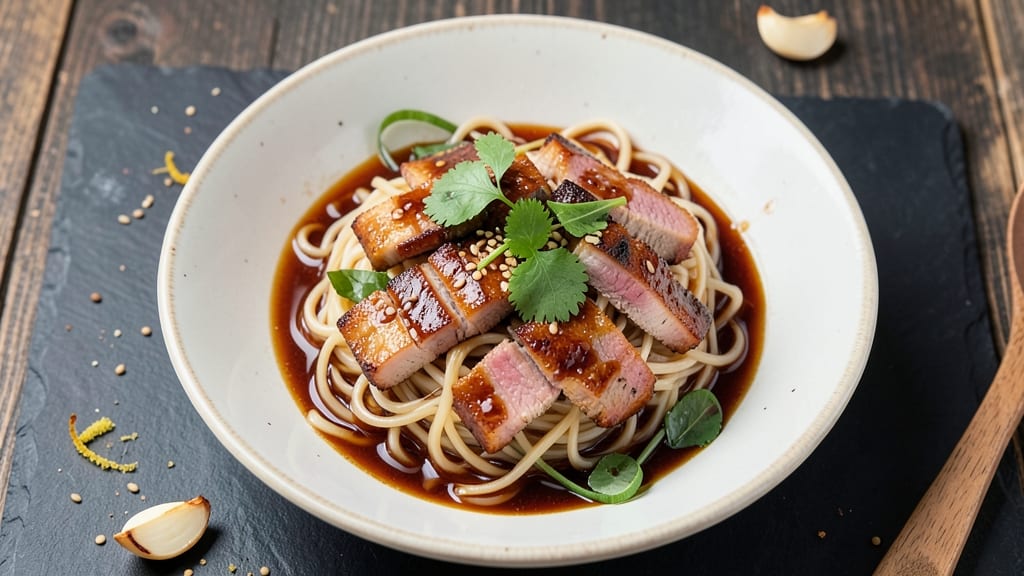
This Asian pork noodle bowl recipe delivers the perfect balance of caramelized garlic, smoky chili oil, and tender pork over silky noodles—all in under 45 minutes.
I developed this dish after years of perfecting pork techniques, drawing from my time working with heritage breeds and mastering the art of balancing sweet, spicy, and umami flavors.
The secret lies in the pork's marinade, which tenderizes while building depth, and the chili oil that adds that signature Southeast Asian heat without overpowering.
The recipe starts with thinly sliced pork shoulder, marinated in a blend of soy sauce, brown sugar, and rice vinegar—this combination creates a caramelized crust when seared, while keeping the interior juicy.
Meanwhile, wide rice noodles soak up the aromatic broth, which gets its depth from a simple miso-soy base with a touch of ginger and garlic. What makes this bowl special is how every component comes together: crisp-tender pork, chewy noodles, and a sauce that's both rich and bright.
By the time you assemble everything, you'll have a bowl that's visually striking—golden pork against dark noodles, topped with fresh herbs and a drizzle of fiery chili oil.
The flavors are complex yet harmonious: sweet from the caramelized pork, savory from the miso broth, and a kick of heat that lingers just right. This is the kind of dish that feels restaurant-quality but comes together with simple techniques and accessible ingredients.
Whether you're serving this for a weeknight dinner or a weekend gathering, it scales beautifully. For extra authenticity, I recommend finishing with quick-pickled vegetables and crispy fried shallots—those final touches elevate it from good to unforgettable. Let's get cooking!
Ingredients for asian pork noodle bowl
Pork, noodles, and bold flavors—this bowl comes together faster than you think.
| Ingredient | Amount | Notes |
|---|---|---|
| Pork Shoulder 🐖 | 1 ½ lb | Thinly sliced, 1/4-inch thick |
| Rice Noodles 🍜 | 12 oz | Wide, flat rice noodles |
| Soy Sauce 🥄 | ½ cup | High-quality, preferably Japanese |
| Brown Sugar 🍚 | ¼ cup | Packed, light brown preferred |
| Rice Vinegar 🍶 | ¼ cup | Seasoned variety for depth |
| Garlic Cloves 🧄 | 8 cloves | Minced, fresh preferred |
| Ginger 🌿 | 2 tbsp | Fresh, grated, aromatic |
| White Miso Paste 🧈 | 2 tbsp | High-quality, smooth texture |
| Chili Oil 🌶️ | ¼ cup | Smoky, medium heat preferred |
| Sesame Oil 🫒 | 1 tbsp | Toasted, for aroma |
| Green Onions 🧅 | 4 whole | Thinly sliced, white and green parts |
| Cilantro 🌿 | ¼ cup | Fresh, chopped, for garnish |
| Vegetable Oil 🫒 | 2 tbsp | High smoke point for searing |
| Salt 🧂 | 1 ½ tsp | Kosher or sea salt |
| Black Pepper 🌶️ | ½ tsp | Freshly ground, for balance |
The pork shoulder is your foundation. Look for heritage breeds if possible—they marinate better and stay juicier. Costco or Whole Foods usually carry high-quality cuts. Slice it yourself if you can—thin, even strips ensure perfect searing. If you're short on time, pre-sliced pork from the Asian market works too. The key is thin slices—about 1/4-inch thick. For the marinade, balance is everything: soy sauce for saltiness, brown sugar for caramelization, and rice vinegar to brighten. Let it sit for at least 30 minutes—overnight is ideal.
No soy sauce? Coconut aminos or tamari work in a pinch, though the flavor will differ slightly. Substituting brown sugar? White sugar or maple syrup can stand in, but the caramelization won't be as rich. For the chili oil, if you can't find it, mix 1 tbsp chili flakes with 2 tbsp neutral oil and a pinch of sugar. Fresh ginger is non-negotiable here—dried lacks the zing. If you're missing miso, soy sauce plus a dash of white miso powder (found in Asian markets) can mimic it. The rice noodles? Martini or Golden Gate brands are my go-tos—they soak up flavor beautifully without getting mushy.
Marinated pork keeps 3 days in the fridge, sealed tightly. The noodles? Soak them in warm water for 10-15 minutes, drain, and rinse with cold water to stop cooking. Chili oil and sesame oil both last 6 months in the pantry, but once opened, store them in the fridge. For extra authenticity, quick-pickle the green onions (slice, toss with rice vinegar, sugar, and a pinch of salt) and keep them in the fridge for up to 1 week. Double the pork marinade and cook it all at once—leftovers reheat beautifully and make quick lunches.
Why You'll Love This Recipe
- One-Pot Magic: I swear by this for lazy nights—the pork shoulder practically cooks itself while you toss the noodles in the same pot. No extra dishes, no fuss, just that deep, caramelized sauce clinging to everything.
- Sweet-Savory Balance: That brown sugar and soy sauce combo? It’s the secret weapon—tender pork with a glossy, addictive glaze that’s not too sweet, not too salty, but just right. The rice vinegar at the end cuts through it like a bright little surprise.
- Lunchbox Hero: Between us, this is my go-to for meal prep. The noodles stay soft for days, and the sauce clings to the pork so it reheats like it’s fresh. Pack it in containers, grab it on the go—no sad, soggy leftovers here.
- Budget Stretch: Pork shoulder is cheap, rice noodles last forever, and a little goes a long way with these flavors. Honestly? I’ve fed four people for under $10 with this—plus, the sauce doubles for stir-fries or dipping. Smart money move.
Step-by-step instructions for Asian pork noodle bowl
Here's how to transform simple ingredients into a restaurant-quality bowl bursting with caramelized garlic and smoky chili oil.
Marinate and Sear the Pork Shoulder
In a mixing bowl, combine the 1.5 lb pork shoulder with 0.5 cup soy sauce, 0.25 cup brown sugar, 0.25 cup rice vinegar, 2 tbsp white miso paste, 1.5 tsp salt, and 0.5 tsp black pepper. Mix thoroughly until the pork is fully coated and the marinade clings evenly. Let it sit at room temperature for 30 minutes—this ensures maximum flavor penetration.
Heat 2 tbsp vegetable oil in a large skillet over medium-high heat until shimmering. Add the marinated pork in a single layer, being careful not to overcrowd. Sear for 4-5 minutes per side until deeply browned and cooked through. The pork should reach an internal temperature of 145°F—this ensures perfect tenderness without drying out.
Prepare the Garlic-Ginger Base
In the same skillet (no need to clean it—the fond adds flavor), reduce heat to medium and add the 8 cloves minced garlic and 2 tbsp grated ginger. Cook for 2-3 minutes until the garlic turns a rich golden brown and becomes fragrant. Here's the thing—don't walk away. Garlic burns faster than you think, and you want that nutty, caramelized depth.
Pour in 0.25 cup chili oil and 1 tbsp sesame oil, stirring to combine. Let the mixture simmer for 1 minute until the oils are fully incorporated and the skillet smells like a bustling Asian street market. Remove from heat and set aside—this aromatic base will be the soul of your noodle bowl.
Cook the Rice Noodles Al Dente
Bring a large pot of water to a rolling boil and add 12 oz rice noodles. Cook for 3-4 minutes—they'll finish cooking in the hot bowl, so you want them just tender. Drain immediately and rinse under cold water for 10 seconds to stop the cooking process. This prevents mushy noodles and ensures they hold their shape when assembled.
While the noodles cook, slice the 4 whole green onions into thin rings and chop the 0.25 cup cilantro finely. These fresh elements will add brightness and contrast to the rich, savory base. Keep them separate until the final assembly—adding them too early will make them soggy.
Assemble the Perfect Bowl
Divide the cooked rice noodles evenly among 4 bowls. Ladle the hot garlic-ginger-chili oil mixture over the noodles, coating them completely. The residual heat will finish cooking the noodles to perfect al dente texture while infusing them with that smoky, garlicky goodness.
Top each bowl with seared pork shoulder slices, arranging them artistically over the noodles. Drizzle with any remaining garlic-ginger mixture from the skillet, then scatter the green onions and cilantro on top. The contrast of fresh herbs against the deep, caramelized flavors is what makes this dish sing.
Serve Immediately for Maximum Impact
Serve the bowls right away while everything is hot and the aromas are at their peak. The combination of tender pork, perfectly cooked noodles, and that complex sauce of caramelized garlic, chili oil, and umami-rich miso creates a symphony of textures and flavors in every bite.
Here's a pro tip: If you're feeling adventurous, add a soft-boiled egg on top for extra richness. The runny yolk will tie everything together beautifully. And don't forget to taste as you go—adjust the seasoning with a splash more soy sauce or a drizzle of rice vinegar if needed. This dish rewards attention to detail!
Pro Tips For Making Asian Pork Noodle Bowl
- CRISP THE PORK FIRST: Thinly slice the pork shoulder after cooking it until just tender, then sear the slices in a screaming-hot pan for 30 seconds per side. The high heat locks in juices and gives that smoky, restaurant-worthy crust—no one wants soggy pork in a noodle bowl.
- SOAK NOODLES JUST ENOUGH: Rice noodles turn to mush if you overdo it. Test for doneness by tasting one—it should be al dente, not breaking apart like wet cardboard. Drain immediately and toss with a splash of oil to prevent sticking.
- BALANCE THE SAUCE NOW: Taste your soy-brown sugar-vinegar mix before tossing with noodles. Too much vinegar? Add a pinch of sugar. Too sweet? A splash of water cuts the heaviness. Adjusting early saves you from a bowl that’s either cloying or bland.
- USE COLD PORK FOR SLICING: Let the cooked pork shoulder cool completely before slicing—it’s easier to handle and gives cleaner cuts. Warm pork stretches and tears, leaving you with uneven, chewy pieces that ruin the dish’s presentation.
Essential equipment for great asian pork noodle bowl
Skillet Essentials
Start with a 12-inch carbon steel wok or stainless steel skillet—I swear by my Made In wok from Williams Sonoma. Carbon steel conducts heat beautifully and builds a natural nonstick patina over time, while stainless steel won’t react with acidic ingredients like rice vinegar.
Avoid nonstick pans—they can’t handle the high heat needed for proper searing, and the fond (browned bits) adds crucial depth to your sauce. 🔥
For the garlic-ginger base, I use a heat diffuser (like the Ozeri Touchstone) under my skillet to prevent scorching. This gives you time to stir and caramelize without burning.
A fine-mesh strainer (I prefer OXO Good Grips) comes in handy for rinsing the noodles—it drains water completely while preventing breakage. Keep a small bowl of ice water nearby to stop the noodle cooking process instantly.
Noodle Prep Tools
Rice noodles need gentle handling, so grab a wooden spoon (like Lodge’s cast iron companion) for stirring—it won’t scratch your pan or damage the noodles. A sharp chef’s knife (I use Shun Premier) is essential for slicing pork thinly and chopping green onions.
For the pork marinade, a flexible silicone spatula helps scrape every last bit of flavor from the bowl. 🍜
Don’t overlook a digital meat thermometer (I trust Thermoworks Smoke) to check the pork’s internal temperature—145°F is perfect for tender, juicy slices. A fine-mesh colander (like OXO’s Good Grips) drains noodles efficiently without crushing them.
For garnishes, a microplane (for garlic) and small sharp scissors (for cilantro) make prep faster and more precise.
Sauce Control Gear
Chili oil and sesame oil are delicate—store them in amber glass bottles (like Le Parfait) to protect from light, which degrades their flavors. A small whisk (I love Macalla) helps emulsify any leftover sauce for drizzling.
For quick pickling green onions, a small glass jar with a lid keeps them crisp for up to a week. 🌶️
If you’re making this frequently, invest in a small saucepan (like All-Clad’s 1.5-quart) for heating broth or making quick pickles. A ladle with a deep well (such as Chicago Metallic’s) ensures even distribution of the garlic-ginger-chili oil mixture over the noodles.
For serving, wide, shallow bowls (like Corelle’s stoneware) showcase the dish beautifully and prevent spills.
Nutrition facts
Frequently asked questions
What's the best cut of pork for this recipe?
Pork shoulder is ideal—it's flavorful and stays tender when sliced thin. For extra tenderness, look for heritage breeds like Gloucestershire Old Spots, which have more marbling. If you can't find shoulder, pork tenderloin works but may be less forgiving if overcooked.
Can I use regular noodles instead of rice noodles?
Rice noodles are traditional because they absorb flavor beautifully, but you can substitute udon or even egg noodles. Just adjust cooking times—rice noodles cook faster (3-4 minutes) and need less water. For a gluten-free option, try brown rice or mung bean noodles.
How do I make this spicier?
Add 1-2 extra tablespoons of chili oil or stir in 1 teaspoon of chili flakes with the garlic. For heat depth, include 1/4 teaspoon of Sichuan peppercorns (toasted and crushed) in the marinade. Always taste as you go—start with less and adjust!
Can I prep this recipe ahead of time?
Marinate the pork overnight for deeper flavor. Cook the noodles and pork separately, then store in airtight containers in the fridge for 2 days. Reheat gently in a skillet with a splash of water to prevent drying. Assemble fresh for the best texture.
What if I don't have chili oil?
Make a quick substitute by mixing 2 tablespoons neutral oil, 1 tablespoon chili flakes, and 1/2 teaspoon sugar. Heat gently until fragrant (don't burn!). For extra smokiness, add a pinch of smoked paprika. The flavor won't be identical, but it'll add great heat and aroma.