
Main Courses
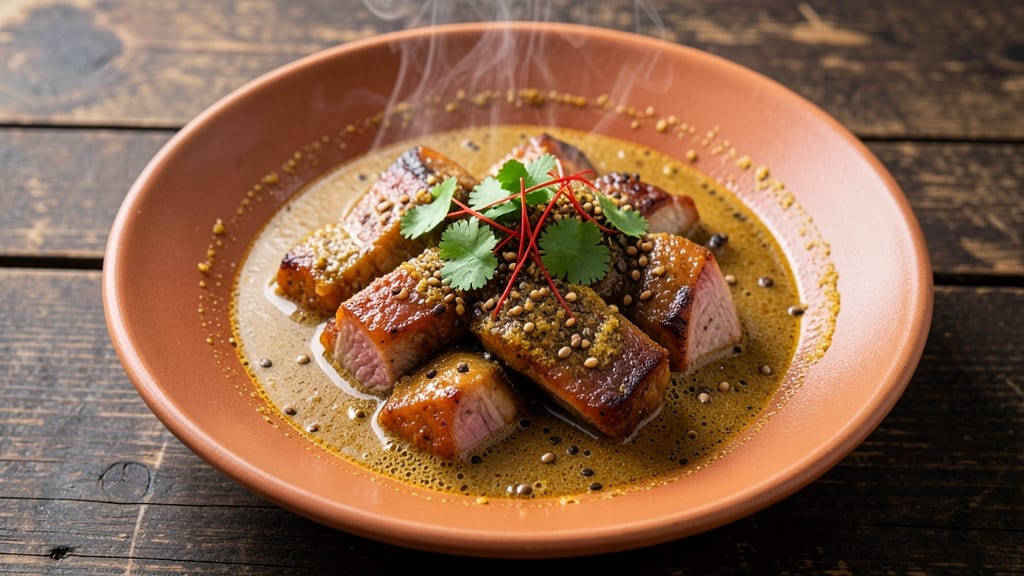
This authentic pork curry recipe brings the rich, spiced flavors of a South Asian kitchen to your table with a yogurt base that deepens complexity.
After years of perfecting regional techniques—from marinating meat in yogurt and spices to balancing heat with coolness—I’ve created a method that delivers restaurant-quality depth without shortcuts. The secret lies in toasting whole spices until fragrant and letting the yogurt mellow the heat, creating a sauce that’s both vibrant and comforting.
The recipe begins with a spiced yogurt marinade that tenderizes the pork while infusing it with aromatic warmth. We’ll build the curry in stages: first, a fragrant paste of ginger, garlic, and green chilies; then a slow simmer that allows flavors to meld into a cohesive, velvety sauce.
This isn’t just a curry—it’s a symphony of textures and tastes, where crisp edges meet tender meat and every spoonful carries layers of tradition. The result? A dish that’s bold enough for a dinner party but simple enough for weeknight cooking.
What sets this recipe apart is its authentic foundation—no powdered spices or bottled sauces here. Instead, you’ll work with whole spices, fresh herbs, and a yogurt base that transforms ordinary pork into something extraordinary.
The dish pairs beautifully with basmati rice or warm naan, but the real magic is in the sauce itself: rich, aromatic, and perfectly balanced between heat and coolness. Whether you’re serving it to family or guests, this curry will leave them asking for seconds.
For those who love regional variations, this recipe serves as a versatile base—adjust the spices for a Thai green curry, add more tomatoes for an Indian Rogan Josh-inspired dish, or slow-cook it longer for a Malaysian rendang-style flavor.
The techniques here are timeless, but the results are undeniably modern. Let’s get cooking.
Ingredients for authentic pork curry
Sixteen ingredients to transform simple pork into restaurant-style curry magic.
| Ingredient | Amount | Notes |
|---|---|---|
| Pork Shoulder 🥩 | 2 ½ lb | Cut into 1.5-inch cubes |
| Plain Yogurt 🥛 | 1 cup | Full-fat, unsweetened |
| Greek Yogurt 🥛 | ½ cup | For extra thickness |
| Whole Milk Yogurt 🥛 | ½ cup | Or sub with more plain yogurt |
| Ginger 🧄 | 2 tbsp | Fresh, grated |
| Garlic Cloves 🧄 | 8 cloves | Peeled, minced |
| Green Chilies 🌶️ | 3 whole | Seeds removed, chopped |
| Cumin Seeds 🌿 | 1 tbsp | Toasted until fragrant |
| Coriander Seeds 🌿 | 1 tbsp | Toasted lightly |
| Cardamom Pods 🌿 | 4 whole | Lightly crushed |
| Cinnamon Sticks 🌿 | 2 whole | 1-inch pieces |
| Cloves 🌿 | 4 whole | Lightly crushed |
| Onion 🧅 | 1 whole | Medium, finely chopped |
| Tomatoes 🍅 | 4 whole | Ripe, chopped (or 1 can diced) |
| Fresh Cilantro 🌿 | ¼ cup | Chopped, for garnish |
| Fresh Mint 🌿 | 0.1 cup | Chopped, optional |
| Garam Masala 🌶️ | 1 tbsp | Store-bought or homemade |
| Turmeric Powder 🌶️ | 1 tsp | For color and warmth |
| Salt 🧂 | 1 ½ tsp | Adjust to taste |
| Vegetable Oil 🫒 | ½ cup | For cooking |
The pork should be shoulder or pork butt—it stays tender and absorbs flavors better than lean cuts. Costco or butcher shops often have it pre-cut, but if buying whole, ask for bone-in pieces for extra flavor. The yogurt is non-negotiable for that signature depth—full-fat Greek yogurt works best, but plain yogurt in a pinch. For the spices, whole spices are a must—they toast beautifully and add layers of aroma. I grab mine from Indian grocery stores or the bulk section at Whole Foods. If you can't find whole cardamom or cloves, crushed versions work too, but toasting them first makes all the difference.
No fresh ginger? Substitute with 1 tbsp ground ginger, but you'll lose that bright, fresh kick. Running low on green chilies? Red jalapeños work in a pinch, but they're hotter, so start with one. The tomatoes can be fresh or canned—San Marzano canned tomatoes are my go-to for that sweet, meaty flavor. For the yogurt marinade, if you don't have Greek yogurt, add an extra 0.25 cup plain yogurt to thicken it up. The garam masala can be tricky—if you don't have it, mix 0.5 tsp each of cumin, coriander, cinnamon, and cardamom. And if you're feeling fancy, swap half the cilantro for fresh mint—it’s a classic pairing in many regional curries.
Marinate the pork for at least 4 hours—overnight is even better. The yogurt marinade keeps 3 days in the fridge, but use it up fast. The curry itself reheats beautifully—2-3 minutes on the stove is all it takes. For leftovers, store in airtight containers for 4 days or freeze for 3 months. Pro tip: Portion into individual containers before freezing so you can grab what you need without thawing the whole batch. The spices lose potency over time, so if you're not using them all, store them in a cool, dark place—they'll stay fresh for 6-12 months.
Why You'll Love This Recipe
- One-Pot Magic: I swear by this—just brown the pork shoulder, toss in the yogurt blend (plain, Greek, whole milk—trust me, the mix is key), and let it slow down. No extra pans, no fuss, just that deep, smoky aroma filling the kitchen while you chop veggies. Honestly, my lazy Sundays thank me.
- Ginger-Yogurt Secret: That fresh ginger—grated right into the yogurt marinade—does something wild. It cuts through the richness of the pork shoulder while keeping the sauce silky, not greasy. The yogurt blend (yes, all three kinds) adds this creamy tang that makes every bite ridiculously good. My picky eaters actually finish their plates.
- Leftover Goldmine: This curry tastes better the next day—seriously. The flavors meld like a dream, and it reheats in minutes. Pack it for work, freeze half for when you’re too tired to cook, or serve it cold with naan. Between us, I’ve fed a houseful of guests with just one pork shoulder and still had leftovers for breakfast.
- Budget Stretch: Pork shoulder is cheap, and a little goes a long way. That yogurt mix (don’t skimp—it’s the hero) adds luxury without breaking the bank. I’ve made this for date nights, family dinners, and even a last-minute potluck, and it’s always the dish people ask for seconds on. Solid. Reliable. My secret weapon.
Step-by-step instructions for authentic spiced yogurt pork curry
Here's how to build this rich, aromatic curry with layers of spice and yogurt depth.
Marinate the Pork Shoulder with Yogurt and Spices
In a large bowl, combine the 2.5 lb pork shoulder cut into 1.5-inch cubes with the 1 cup plain yogurt, 0.5 cup Greek yogurt, and 0.5 cup whole milk yogurt. The yogurt helps tenderize the meat while adding that signature creamy depth. Add the 2 tbsp grated ginger, 8 minced garlic cloves, 3 chopped green chilies, 1 tbsp toasted cumin seeds, 1 tbsp toasted coriander seeds, 4 lightly crushed cardamom pods, 2 cinnamon sticks cut into 1-inch pieces, and 4 lightly crushed cloves. Mix everything thoroughly so the spices cling to the pork.
Cover the bowl and refrigerate for at least 4 hours (overnight is even better). This long marinating time ensures the pork absorbs all the flavors and becomes fork-tender. Don't skip this step—it's what makes this curry authentically rich and flavorful.
Brown the Pork and Build the Spice Base
Heat 0.5 cup vegetable oil in a heavy-bottomed pot over medium-high heat. Working in batches, add the marinated pork and brown on all sides until deeply golden—this takes about 5-7 minutes per batch. Remove the pork and set aside. You want that beautiful caramelization on the meat to form the foundation of your curry.
In the same pot, add the 1 finely chopped onion and cook until soft and golden, about 8-10 minutes. Stir in the 4 chopped tomatoes and cook until they break down into a thick paste, about 5-7 minutes. Add the 1 tsp turmeric powder and 1.5 tsp salt, stirring well to combine. This aromatic base will carry all the flavors of your curry.
Simmer the Curry to Perfection
Return the browned pork to the pot along with any accumulated juices. Pour in 2 cups water (enough to just cover the pork) and bring to a gentle simmer. Partially cover the pot and cook for 1.5 hours on low heat, stirring occasionally. The pork should be tender enough to pull apart with a fork, and the sauce should thicken naturally as it reduces.
Once the pork is tender, stir in the 1 tbsp garam masala and simmer for another 10 minutes to let the spices bloom and infuse the curry. Taste and adjust the seasoning—you might need a bit more salt or garam masala to balance the flavors. The curry should be rich, aromatic, and perfectly balanced between spicy, creamy, and savory.
Finish and Garnish
Remove the pot from heat and let the curry rest for 5 minutes. Stir in the 0.25 cup chopped fresh cilantro and 0.1 cup chopped fresh mint (if using). These herbs add a bright, fresh finish that cuts through the richness of the yogurt and spices. Give everything a final taste and adjust the seasoning one last time if needed.
Serve the curry hot, garnished with extra cilantro and mint if desired. The yogurt base gives it a velvety texture, while the slow-cooked pork makes every bite tender and flavorful. Pair it with steamed basmati rice or warm naan bread for the full experience.
Pro Tips For Making Authentic Pork Curry
- SEAR THE PORK FIRST: Get that Dutch oven screaming hot—cast iron or stainless steel—and brown the pork shoulder in batches. The crust locks in flavor and prevents the meat from turning into a mushy puddle later (yes, even if you’re impatient like me).
- WHISK THE YOGURT: Plain yogurt has lumps, and Greek yogurt is thick—blend them together with a whisk or immersion blender until smooth. Lumpy yogurt curdles when it hits the heat, and nobody wants grainy curry sauce.
- LOW AND SLOW AFTER SEARING: Once the pork is in the sauce, drop the heat to a bare simmer. Too much boiling and the yogurt breaks, turning your rich curry into a thin, soupy mess. Cover it and let it melt in, not boil out.
- GRATE FRESH GINGER: Skip the jarred paste—it’s watery and dull. Use a microplane or fine grater on fresh ginger, then squeeze out the excess liquid with your hands. The difference in brightness and aroma is night and day.
Make-ahead tips for leftovers
Marinade Prep Ahead
Marinate the pork in yogurt and spices for 4 hours minimum—I often do this overnight. Store the marinated pork in an airtight container in the fridge for up to 3 days. The yogurt keeps the meat tender and infuses it with aromatic depth.
For extra convenience, prep the marinade ingredients in a separate bowl and mix with the pork just before refrigerating. This makes assembly a breeze when you're ready to cook. 🥛
Curry Base Prep
Toast your whole spices (cumin, coriander, cardamom, cloves, and cinnamon) in a dry pan over low heat for 2-3 minutes until fragrant. Let them cool completely, then grind them into a fine powder using a mortar and pestle or spice grinder.
Store this spice blend in an airtight container for up to 2 weeks—it's perfect for future curries or rice dishes. This step saves time and ensures consistent flavor every time. 🌿
Slow Cooker Option
For a hands-off approach, brown the pork as directed, then transfer everything (including the spice base and water) to a 6-quart slow cooker. Cook on low for 6-8 hours or high for 3-4 hours.
The slow cooker maintains gentle heat, allowing the pork to become fork-tender while the sauce develops rich, layered flavors. This method is ideal for busy weeknights or meal prep. ⏰
Freezing Leftovers
Let the curry cool completely before portioning into airtight containers or freezer-safe bags. Label with the date and freeze for up to 3 months. When reheating, thaw in the fridge overnight, then warm on the stovetop over medium-low heat for 10-15 minutes, stirring occasionally.
Add a splash of water if the sauce thickens too much. The flavors actually improve after freezing! ❄️
Reheating for Best Texture
For the best results, reheat curry on the stovetop rather than the microwave. Place the curry in a heavy-bottomed pot and warm over medium-low heat for 5-7 minutes, stirring occasionally. Avoid high heat to prevent the yogurt base from curdling.
If the curry seems too thick after reheating, stir in 1-2 tablespoons of water or broth to restore its velvety consistency. 🔥
Meal Prep Timeline
Plan ahead by prepping the marinade the night before and browning the pork in the morning. Simmer the curry during lunch, then let it rest while you prepare sides like rice or naan. Store leftovers in the fridge for up to 4 days or freeze for later.
This timeline ensures minimal last-minute stress and maximum flavor development. The key is letting the curry rest after cooking—this allows the spices to meld and the sauce to thicken naturally. 📅
Nutrition facts
Frequently asked questions
Can I use chicken or beef instead of pork?
This yogurt-based marinade works beautifully with chicken thighs (for extra tenderness) or beef chuck. For chicken, reduce the cooking time to 45-60 minutes after browning. Beef will need 2-2.5 hours of simmering. The yogurt marinade keeps all meats perfectly juicy while infusing them with those signature aromatic spices.
How do I adjust the spice level?
Start by removing the seeds from green chilies for mild heat, or keep them for medium spice. For extra heat, add 1-2 sliced Thai bird's eye chilies with the onions. If it's too spicy, balance it with more yogurt or a splash of coconut milk. The yogurt base naturally cools the heat while maintaining depth.
What's the best rice to serve with this?
Basmati rice is classic, but jasmine rice adds a fragrant complement. For extra richness, try steamed jeera rice (cumin-infused) or lemon rice to brighten the dish. Avoid long-grain white rice—it lacks the stickiness that pairs perfectly with the velvety curry sauce.
Why did my curry turn out too thin?
This usually happens from too much liquid or improper thickening. Simmer uncovered for 10-15 extra minutes to reduce naturally. For thicker sauce, mix 1 tbsp cornstarch with 2 tbsp water, stir into the curry, and simmer 2 minutes. The yogurt base should remain creamy, not grainy.
Can I make this in an Instant Pot?
Yes! Brown the pork as directed, then transfer everything to your Instant Pot. Cook on high pressure for 40 minutes, then natural release. The pressure cooker creates tender pork while developing rich flavors in 40% less time. Just add 1 cup water instead of 2 cups for the simmering step.