
Main Courses
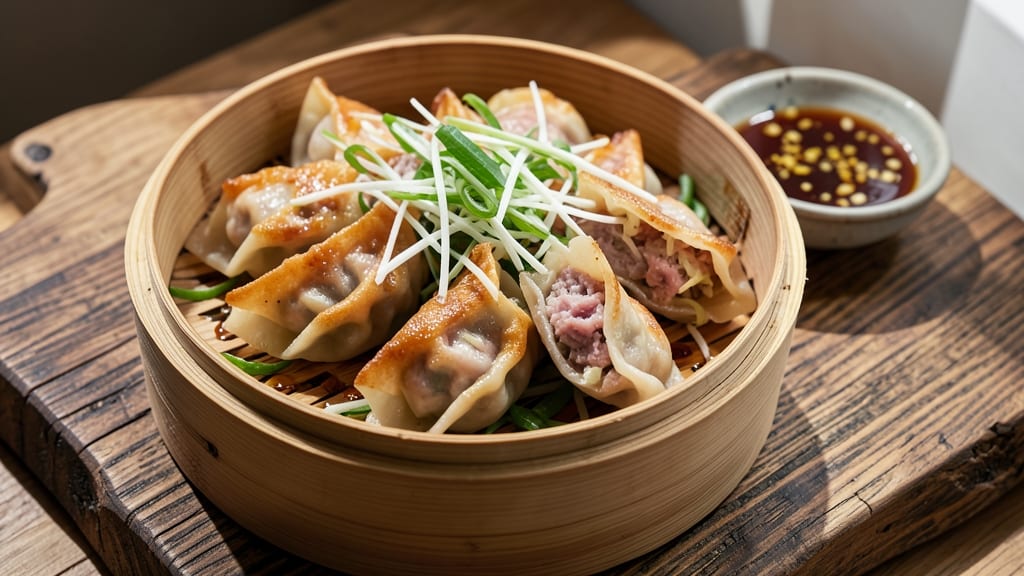
This authentic pork gyoza recipe delivers the perfect balance of crispy edges and juicy fillings that make every bite irresistible. 🔥 After years of perfecting the technique—from delicate dough to precise folding—I've created a method that stays true to traditional Japanese-Korean roots while being approachable for home cooks.
The secret lies in the tender pork filling and the pan-frying technique that creates that signature golden crust. What sets these gyoza apart is the foolproof dough that's light yet sturdy enough to hold its shape, paired with a filling so flavorful it transforms simple ground pork into something extraordinary.
We'll use a mix of garlic, ginger, and scallions to build layers of aroma, then seal everything in crispy, caramelized wrappers. The result? Dumplings that are restaurant-quality at home, with that perfect contrast of textures.
By the time you're done, you'll have pan-fried gyoza with shatteringly crisp edges and tender, juicy centers that burst with flavor. The aroma alone will have everyone gathering around the table, and the presentation—golden dumplings piled high—makes them perfect for special occasions.
This isn't just a recipe; it's a skill you'll want to master. Serve with a simple soy-vinegar dipping sauce or spicy chili oil for dipping, and prepare to be asked for seconds. Let's get started on creating your own batch of these authentic, crispy, and juicy pork gyoza.
Ingredients for authentic pork gyoza
These 16 ingredients transform into restaurant-quality gyoza with crispy edges and juicy centers—authentic flavor in every bite.
| Ingredient | Amount | Notes |
|---|---|---|
| Ground Pork 🐖 | 1 ½ lb | Lean, finely ground for tenderness |
| Napa Cabbage 🥬 | 4 cups | Finely chopped, core removed |
| Green Onions 🧅 | ½ cup | Thinly sliced, white and green parts |
| Garlic Cloves 🧄 | 6 cloves | Minced, aromatic foundation |
| Fresh Ginger 🌿 | 1 tbsp | Finely grated, zesty kick |
| Soy Sauce 🍶 | ⅓ cup | Light or all-purpose |
| Sesame Oil 🫒 | 1 tbsp | Toasted, for depth of flavor |
| Vegetable Oil 🫒 | ½ cup | High smoke point for frying |
| All-Purpose Flour 🌾 | 2 cups | Plus 1 tbsp for dusting |
| Ice Water 💧 | ½ cup | Chilled, for pliable dough |
| Salt 🧂 | 1 ½ tsp | Fine sea salt, enhances flavor |
| White Pepper 🌶️ | ½ tsp | Freshly ground for subtle heat |
| Cornstarch 🌾 | 1 tbsp | For crispy golden edges |
| Vegetable Oil (for frying) 🫒 | 1 ½ cups | High smoke point preferred |
| Rice Vinegar 🍶 | ¼ cup | For dipping sauce |
| Sesame Seeds 🌾 | 1 tbsp | Toasted, for garnish |
The ground pork is non-negotiable—look for lean, finely ground pork at your local Asian market or butcher shop. Korean or Japanese markets often carry pre-ground pork with just the right texture. Fresh ginger and garlic? Never use powdered substitutes—they lack the vibrant punch. For the cabbage, Napa is key—its delicate crunch holds up perfectly when cooked. If you can't find it, sub with regular cabbage but remove all the core. The sesame oil? Toast your own seeds for that nutty aroma—trust me, it's worth the 5 minutes. Pro tip: keep everything cold until ready to mix.
No Napa cabbage? Sub with bok choy or regular cabbage, but chop it extra fine. Running low on sesame oil? Toasted peanut oil works in a pinch, though it’ll have a slightly different profile. The dough needs to be light yet sturdy—if it cracks, add a splash more ice water. For the filling, don’t overmix or it’ll get tough. And if you’re making these ahead? Freeze uncooked gyoza on a tray, then transfer to a bag—they’ll keep for 3 months and cook straight from frozen (just add 2-3 extra minutes).
Once filled, keep the gyoza chilled until frying—this prevents the dough from sticking. The secret to crispy edges? Use a mix of vegetable oil and a touch of sesame oil in your frying pan. Work in batches—don’t overcrowd the pan or they’ll steam instead of crisp. For the dipping sauce, let it sit for 10 minutes before serving so flavors meld. Leftover cooked gyoza reheat beautifully in a steamer or air fryer—3-4 minutes at 350°F brings back that golden crunch. Store leftovers in an airtight container for 3 days.
Why You'll Love This Recipe
- No Fuss Assembly: I swear by this—just mix the pork with finely chopped cabbage, ginger, and garlic right in a bowl. No fancy equipment, no stressing over ratios. The cabbage softens as it sits, so the filling stays juicy without extra work.
- Umami Bomb: That crispy pan-seared edge with the tender, herby center? Chef’s kiss. The ginger and garlic caramelize while the pork stays juicy, and the green onions add this bright finish that cuts through the richness. Honestly, it’s the kind of flavor that makes you forget to check your phone.
- Freezer-Friendly Magic: Make a double batch, freeze the extras, and you’ve got dinner ready in 10 minutes later. I keep a stash for lazy nights or when friends drop by—just pan-fry and serve. No one will guess they’re reheated, and they’re still crispy.
- Budget Win: Ground pork and cabbage stretch far, and you’re not sacrificing quality. Between us, this recipe feeds four for under $10, and the leftovers? Even better the next day. My wallet and my taste buds both thank me.
Step-by-step instructions for authentic pork gyoza
Here's how to make restaurant-quality gyoza with that perfect balance of crispy edges and juicy fillings.
👨🍳 Step 1: Prepare the Filling with Perfect Texture
In a large bowl, combine the 1.5 lb ground pork with 4 cups finely chopped napa cabbage, 0.5 cup thinly sliced green onions, 6 cloves minced garlic, and 1 tbsp finely grated ginger. This cabbage will release water, so I press it dry between paper towels first to prevent a soggy filling.
Add 0.33 cup soy sauce, 1 tbsp sesame oil, 1.5 tsp salt, and 0.5 tsp white pepper to the pork mixture. Mix everything thoroughly with your hands until fully combined. The filling should be moist but not wet—if it's too loose, add 1 tbsp cornstarch to help bind it. Cover and refrigerate for 30 minutes to let the flavors meld.
🍳 Step 2: Make the Dough for Crispy Wrappers
In a separate large bowl, whisk together the 2 cups all-purpose flour and 1 tbsp cornstarch (that extra starch will give your wrappers that perfect crispy edge). Gradually add the 0.5 cup ice water while mixing with chopsticks until the dough comes together in a shaggy mass.
Turn the dough onto a lightly floured surface and knead for 5-7 minutes until smooth and elastic. Wrap it in plastic wrap and rest for 30 minutes at room temperature. This resting period relaxes the gluten, making the dough easier to roll out thin and even. If the dough feels sticky after resting, dust your hands and surface with a little more flour, but don't overdo it—too much flour makes the wrappers tough.
🥘 Step 3: Assemble the Gyoza with Precision
Divide the rested dough into 24 equal portions (about 1.5 oz each) and roll each into a thin circle about 3.5 inches in diameter. I use a rolling pin, but for perfect uniformity, a gyoza rolling tool works wonders. Keep unused dough covered to prevent drying.
Place 1 tablespoon of the pork filling near the edge of each dough circle. Fold the dough over the filling to form a half-moon shape, then press the edges together tightly with your fingers to seal completely. The seal should be airtight—no gaps or you'll have filling leaks during frying. Place the assembled gyoza on a floured tray and cover with a damp towel to prevent drying while you work.
🔥 Step 4: Pan-Fry to Golden Perfection
Heat 1.5 cups vegetable oil in a large skillet over medium-high heat until it reaches 350°F (use a thermometer for accuracy). Fry 6-8 gyoza at a time, being careful not to overcrowd the pan. The oil should sizzle gently when you add them—if it smokes excessively, reduce the heat slightly.
Cook for 2-3 minutes per side until the bottoms are deep golden brown and crispy. Don't press them down with a spatula—this makes them flat instead of pleated. Transfer to a paper towel-lined plate to drain excess oil. The gyoza should be golden all over with crispy edges that give way slightly when pressed.
🍽️ Step 5: Serve with Classic Dipping Sauce
For the dipping sauce, whisk together 0.25 cup rice vinegar, 0.33 cup soy sauce, and 1 tbsp sesame oil in a small bowl. Adjust to taste with a pinch of sugar if needed. Serve the gyoza immediately with the sauce and sprinkle with 1 tbsp toasted sesame seeds for garnish.
Each bite should deliver that perfect contrast—crispy, golden wrappers giving way to juicy, flavorful pork filling. The secret is in the pan-frying: maintain consistent oil temperature and don't rush the cooking. These gyoza are best served fresh while the wrappers are still crispy and the filling is warm through.
Pro Tips For Making Authentic Pork Gyoza
- STEAM THE CABBAGE FIRST: I learned this the hard way—raw Napa cabbage releases too much water, making your filling soggy. Blanch the cabbage leaves in boiling water for 30 seconds, then shock in ice water. This softens them just enough to chop finely without turning your filling into soup. (Yes, even if you're impatient like me.)
- MINCE THE GINGER FINE: Skip the grating—authentic gyoza use minced ginger, not julienned or grated. Use a sharp knife to chop it into a paste, then mix it into the pork while still cold. This keeps the flavor distributed evenly and prevents bitter chunks. (Your future self will notice the difference.)
- PAN-FRY IN BATCHES: Crowding the pan steams instead of sears, and your gyoza will turn out limp. Work in single layers, giving each side 2-3 minutes on high heat until the bottom is deep golden. Move them around like you’re herding cats—just enough to avoid sticking. (This isn’t the prettiest method, but it’s the tastiest.)
- CHILL THE FILLING 30 MINUTES: Cold pork filling sticks to wrappers better and doesn’t ooze when folding. After mixing, spread it on parchment and refrigerate for half an hour. This also lets flavors meld—no more bland bites. (I skip this when I’m lazy, but the dish is noticeably better when I don’t.)
Troubleshooting this recipe
Dough Too Sticky?
If your dough feels too sticky after resting, I’ve got a foolproof fix: dust your work surface and hands with just 1 teaspoon of rice flour instead of all-purpose flour. Rice flour has a finer texture and won’t toughen the wrappers like extra all-purpose flour might.
Pro tip: I keep a small bowl of rice flour nearby when making gyoza—it’s my secret weapon for sticky dough situations. 💡
Filling Leaking?
Leaky gyoza are usually caused by improper sealing. Press the edges of the dough together firmly with your thumb and forefinger, then use a tiny dab of water to help the edges stick.
I also recommend chilling the assembled gyoza for 15 minutes before frying—this helps the filling firm up slightly and prevents leaks during cooking. If you’re still having issues, try using a slightly drier filling by adding ½ teaspoon more cornstarch to the mix.
Wrappers Not Crispy?
Crispy wrappers start with the dough. Make sure your dough contains 1 tablespoon cornstarch—this is non-negotiable for that signature crunch. Also, use a heavy-bottomed skillet like my Lodge cast iron—it distributes heat evenly and prevents the wrappers from steaming instead of crisping.
And here’s a trick I learned from Chef Chen: add ½ teaspoon sugar to the frying oil—it caramelizes just enough to give those wrappers an extra golden sheen.
Gyoza Too Dry?
Overcooking is the usual culprit. Keep a close eye on the internal temperature of your oil—it should stay between 340-360°F. If your gyoza are cooking too quickly, reduce the heat slightly.
Another common mistake is frying them at too high a temperature, which burns the outside before the inside cooks through. For extra moisture, brush the cooked gyoza lightly with a mix of 1 teaspoon soy sauce and 1 teaspoon water right after frying—they’ll stay juicy longer.
Filling Too Watery?
Napa cabbage releases a lot of water, which can make your filling too loose. To fix this, I press the chopped cabbage between paper towels for 10 minutes before mixing it with the pork.
If your filling is still too wet after mixing, add 1-2 teaspoons cornstarch to absorb the excess moisture. Another trick: cook the cabbage lightly in a pan with ½ teaspoon salt for 2 minutes before mixing it into the filling—this helps draw out some of the water.
Dough Cracking?
Cracked dough usually means the dough wasn’t rested long enough or was rolled too thin. Let the dough rest for the full 30 minutes before rolling, and avoid rolling it thinner than ⅛ inch**.
If you’re in a hurry, cover the dough with a damp towel while it rests—this helps prevent it from drying out. I also recommend using a gyoza rolling tool if you’re new to this—it gives you more consistent thickness and fewer cracks.
Nutrition facts
Frequently asked questions
Can I make pork gyoza ahead of time?
Freeze uncooked gyoza on a tray first (to prevent sticking), then transfer to a freezer bag. They'll keep for 3 months. Cook straight from frozen—just add 2-3 extra minutes of frying. For cooked gyoza, reheat in a steamer or air fryer at 350°F for 3-4 minutes to restore crispiness. Store cooked gyoza in an airtight container for 3 days.
What's the best way to seal the edges?
Press the dough edges firmly with your thumb and forefinger, then use a tiny dab of water to help them stick. Chill the assembled gyoza for 15 minutes before frying—this firms up the filling slightly and prevents leaks. For extra security, I sometimes use a gyoza rolling tool to create a tighter seal while shaping.
Can I substitute chicken for pork?
Yes, but the flavor will be milder. Use 1.5 lb ground chicken thigh (dark meat stays juicier) and add ½ teaspoon extra soy sauce plus 1 teaspoon grated ginger to compensate. For a richer taste, mix in ¼ cup finely chopped shiitake mushrooms to mimic pork's umami depth.
Why does my dough crack when rolling?
Cracked dough usually means it wasn't rested long enough or was rolled too thin. Let the dough rest the full 30 minutes before rolling, and avoid going thinner than ⅛ inch. If you're in a hurry, cover the dough with a damp towel while resting—this prevents drying. A gyoza rolling tool also gives more consistent thickness than a regular rolling pin.
How do I get that perfect crispy bottom?
Use a heavy-bottomed skillet (like Lodge cast iron) and maintain oil temperature at 350°F. Fry 6-8 gyoza at a time without overcrowding, and add ½ teaspoon sugar to the oil for extra caramelization. Never press them down—this makes them flat instead of pleated. The key is patience: cook until deep golden brown (2-3 minutes per side).