
Soups & Stews
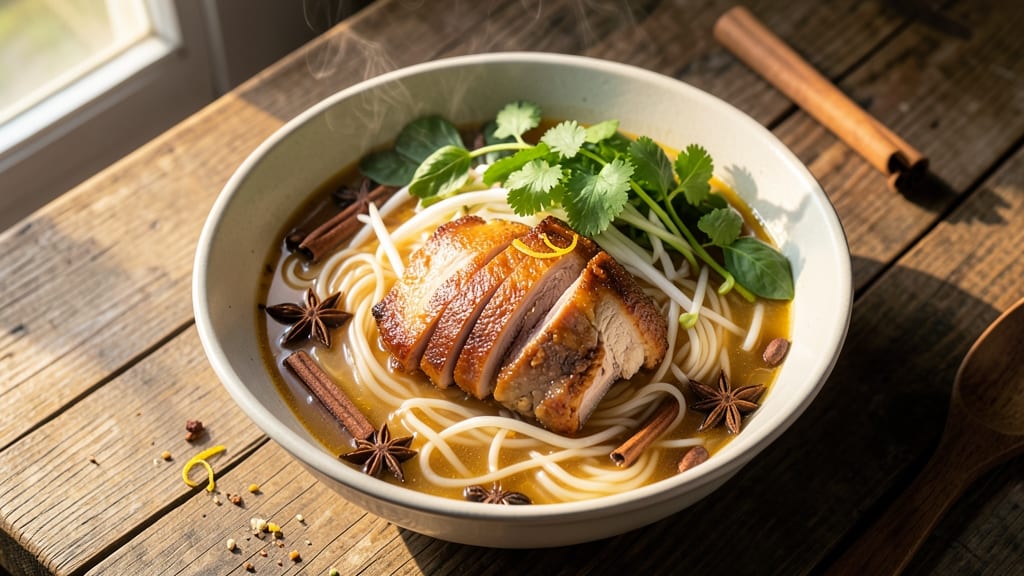
This authentic pork pho recipe transports you straight to the bustling streets of Hanoi with its fragrant broth and tender rice noodles. 🌟 I've spent years perfecting the balance of spices and slow-cooked meat to capture that signature depth—where star anise, cinnamon, and cloves create an aroma that fills your kitchen like a Vietnamese café.
What sets this recipe apart is the foolproof broth-building technique that develops complex flavors through careful spice toasting and long simmering. The pork gets marinated in a blend of fish sauce and sugar for maximum tenderness, while the rice noodles cook in just minutes to achieve that signature silky texture.
Every element comes together to create a bowl that's both comforting and restaurant-quality.
The result is a steaming bowl of pho with a rich, aromatic broth that's perfectly balanced between sweet, salty, and umami. Thinly sliced onions, fresh cilantro, lime wedges, bean sprouts, and chili add layers of texture and brightness to each bite.
This is the kind of dish that becomes a family favorite and leaves everyone asking for seconds.
Perfect for weeknight dinners or special gatherings, this recipe scales beautifully while maintaining its authentic character. The secret lies in the spice blend and proper broth reduction—once you master these, you'll have pho that rivals your favorite Vietnamese restaurant. Let's get cooking!
Ingredients for authentic pork pho
Sixteen ingredients for a restaurant-quality pho bowl that's pure comfort food magic.
| Ingredient | Amount | Notes |
|---|---|---|
| Bone-In Pork Shoulder 🥩 | 2 lb | Cut into 1-inch chunks |
| Fresh Rice Noodles 🍜 | 12 oz | Baan Chai or similar brand |
| Star Anise Pods 🌿 | 2 whole | Whole, not ground |
| Cinnamon Sticks 🌿 | 3 whole | 1-inch pieces |
| Cloves 🌿 | 6 whole | Whole, not ground |
| Cardamom Pods 🌿 | 3 whole | Lightly crushed |
| Onion 🧅 | 1 whole | Yellow, thinly sliced |
| Garlic Cloves 🧄 | 8 cloves | Peeled, smashed |
| Ginger 🧅 | 2 tbsp | Fresh, grated |
| Fish Sauce 💧 | ½ cup | Red Boat preferred |
| Cane Sugar 🍚 | ¼ cup | Or granulated sugar |
| Fresh Cilantro 🌿 | 1 cup | Chopped for garnish |
| Bean Sprouts 🌱 | 2 cups | Fresh or frozen |
| Lime Wedges 🍋 | 4 whole | For serving |
| Red Chili Peppers 🌶️ | 4 whole | Thinly sliced, optional |
| Salt 🧂 | 2 tsp | Kosher or sea salt |
| Black Peppercorns 🌶️ | 1 tsp | Whole, lightly crushed |
The spices are non-negotiable—whole star anise, cinnamon, and cardamom from Penzeys or your local Asian market give that authentic depth. Look for Red Boat fish sauce if you can find it—it's the gold standard, but Three Crabs works too. The pork should have good marbling; Costco or Whole Foods often carry quality cuts. Fresh ginger and garlic? Buy extra—you'll want them for future pho batches. Toast your spices lightly in a dry pan first to wake up their flavors—30 seconds max or they'll burn.
No star anise? 1 tsp ground star anise works in a pinch, but the whole pods are better. Out of fish sauce? Soy sauce plus a dash of sugar gets you close, though it won't be identical. The rice noodles must be fresh—Baan Chai is the brand most Vietnamese restaurants use, but any good-quality rice noodles work. For the chili, Thai bird's eye chilies add serious heat, but regular red peppers work if you prefer mild. The bean sprouts can be subbed with shredded cabbage if you're in a bind, though they add that perfect crunch.
Broth keeps for 5 days in the fridge—flavors actually deepen overnight. Store it in airtight containers with a layer of oil on top to prevent skin. The noodles? Cook them fresh, but you can prep the broth ahead. Freeze broth in 1-cup portions for quick meals—just thaw and reheat. The pork leftovers? Shred them and freeze for future pho or sandwiches. Lime wedges last 1 week in the fridge, so buy fresh ones when you're ready to serve.
Why You'll Love This Recipe
- One-Pot Magic: I swear by this—just toss the bone-in pork shoulder, whole spices (star anise, cinnamon, cloves), and aromatics into a single pot. The broth builds itself while you chop herbs or set the table. No extra pans, no stress.
- Spice-Soaked Richness: That pork shoulder? It melts into the broth, leaving behind layers of depth—earthy from the whole spices, sweet from slow caramelization. The first sip is like wrapping yourself in a warm hug.
- Leftovers That Beg: Pho tastes even better the next day. I make a big batch on Sundays, and by Wednesday, my family’s fighting over the last bowl. The noodles soften just right, the broth gets more concentrated—it’s basically free flavor upgrade.
- Budget-Friendly Feast: Bone-in pork shoulder is cheap, and those whole spices (star anise, cinnamon, cloves) stretch across multiple batches. Feed four for under $15, and you’ll have enough for lunch the next day. My wallet thanks me every time.
Step-by-step instructions for authentic pork pho
Here's how to build that signature Vietnamese aroma and silky broth at home.
🔥 Step 1: Char the Aromatics for Deep Flavor
Heat a dry pot over medium-high heat. Add the 1 whole onion, 8 cloves garlic cloves, and 2 tbsp ginger. Let them char for 5-7 minutes until deeply browned and fragrant—this creates the pho's signature umami depth. Stir occasionally so they don't burn completely.
Once nicely browned, remove the aromatics with a slotted spoon and set aside. You'll add them back later when straining the broth. The charred bits will infuse the broth with incredible complexity. Here's the thing—don't rush this step. The longer they char, the more flavor you'll extract.
🥘 Step 2: Build the Spice Packet and Simmer the Broth
In the same pot, add the 2 lb bone-in pork shoulder cut into 1-inch chunks, the 2 whole star anise pods, 3 whole cinnamon sticks, 6 whole cloves, and 3 whole cardamom pods (lightly crushed). Pour in 12 cups cold water and bring to a boil over high heat.
Once boiling, reduce heat to low and skim off any foam that rises to the surface for the first 10 minutes. This ensures a clear, clean broth. Cover and simmer for 2 hours, maintaining a gentle simmer—not a rolling boil. The pork should be fork-tender and easily pull apart. If it's not, continue cooking until it reaches 200°F internally.
🍳 Step 3: Strain and Season the Broth
Strain the broth through a fine-mesh sieve into a clean pot, pressing on the solids to extract maximum flavor. Return the broth to the stove and add the charred aromatics you set aside earlier. Stir in the 0.5 cup fish sauce and 0.25 cup cane sugar, adjusting to taste—fish sauce should be salty but not overpowering, and the sugar should balance the acidity.
Bring the broth back to a gentle simmer and let it reduce slightly for 10-15 minutes until it coats the back of a spoon. Taste and adjust seasoning—it should be rich, aromatic, and perfectly balanced between salty, sweet, and umami. This is your flavor foundation, so take your time getting it right.
👨🍳 Step 4: Prepare the Noodles and Toppings
While the broth simmers, prepare the 12 oz fresh rice noodles by soaking them in warm water for 10-15 minutes until pliable but still slightly firm. Drain and rinse briefly under cold water to stop the cooking process. They should be tender but not mushy—you'll finish cooking them in the hot broth.
Prep the toppings: Thinly slice the 4 whole red chili peppers (if using), chop the 1 cup fresh cilantro, and have the 2 cups bean sprouts ready. Keep the 4 whole lime wedges chilled for serving. The freshness of these toppings will elevate your pho from good to exceptional.
🥘 Step 5: Assemble and Serve the Pho
Ladle the hot broth into bowls, then add a generous portion of the prepared noodles. Let them soak in the hot liquid for 30 seconds to finish cooking. Top with the bean sprouts, sliced chili peppers, and a sprinkle of fresh cilantro. Serve each bowl with a lime wedge and a small dish of crushed black peppercorns on the side.
Here's the moment that matters: Each diner should customize their bowl by squeezing lime juice, adding extra chili, or grinding fresh black pepper to taste. The contrast of hot broth, fresh herbs, and bright lime creates that perfect balance of flavors that makes pho so addictive. Serve immediately while the broth is steaming hot and the noodles are perfectly al dente.
Pro Tips For Making Authentic Pork Pho
- Char the Spices: Toss whole star anise, cinnamon sticks, and cloves directly into your hot broth pot—don’t crush them. I used to grind them first, but the whole spices infuse deeper and give that slow, smoky aroma without bitterness. Let them sizzle for 30 seconds before adding anything else, or they’ll just stew into oblivion.
- Cut the Shoulder Right: Ask your butcher for a 2–3 pound pork shoulder with the skin on and a thick fat cap. The fat renders down into the broth, and the skin crisps up for texture. If they give you boneless, walk away—bone-in means better flavor and structure.
- Don’t Boil the Broth: Pho broth should simmer hardly above a whisper—just bubbles breaking the surface, not a rolling boil. I learned this the hard way when my broth turned cloudy and lost its clarity. Keep the heat low after the initial char, and stir occasionally to prevent scorching.
- Soak Noodles Cold: Fresh rice noodles need ice-cold water to soak—warm or hot water makes them gummy. Fill a bowl with water, add a handful of ice cubes, then submerge the noodles for 10–15 minutes. Drain just before serving, or they’ll turn to mush while you assemble the bowls.
Best sauces and condiments for this dish
Classic Hoisin Sauce
This sweet and savory sauce is a must-have for pho lovers. I blend 2 tbsp hoisin sauce (like Lee Kum Kee) with 1 tbsp soy sauce and 1 tsp sesame oil for dipping.
The depth of fermented soybeans and dates in hoisin complements the broth beautifully. Serve it in small bowls alongside each serving for that authentic touch. 🍜
Spicy Sriracha Drizzle
For those who crave heat, a drizzle of sriracha takes your pho to the next level. I recommend Red Gate Sriracha—it's smoother than many brands and blends perfectly with pho's umami.
Start with 1 tsp per bowl and let diners add more to taste. The vinegar notes cut through the richness of the broth while adding a bright kick. 🌶️
Fresh Lime and Chili Oil
No pho is complete without fresh lime wedges and chili oil. I make my own chili oil by infusing 1 cup neutral oil (like avocado) with 2 tbsp finely chopped Thai chilies and 1 tsp garlic, then straining.
The heat from the chili oil and tang from lime create that perfect balance that makes pho irresistible. Keep these on the table for customization. 🍋
Fish Sauce Boost
For an extra umami punch, keep a small dish of Red Boat fish sauce on the table. A few drops added to your bowl intensifies the savory depth. I often recommend starting with ½ tsp per bowl—it's salty but not overpowering when balanced with the broth's sweetness.
This is how street vendors in Hanoi elevate their bowls. 💧
Creamy Coconut Milk
For a modern twist, serve a small cup of coconut milk (like Thai Kitchen) on the side. The creamy richness contrasts beautifully with the hot broth, especially when combined with lime and chili. I suggest 1 tbsp per bowl—it adds a luxurious texture without overpowering the dish. 🥥
Sweet Bean Sauce
This lesser-known but essential condiment is made by blending 2 tbsp soy sauce, 1 tbsp sugar, and 1 tsp sesame paste**. The sweet and nutty flavors complement the pho's savory notes perfectly.
I serve it in tiny bowls for those who want to balance the heat with something sweet. 🍯
Nutrition facts
Frequently asked questions
Can I use ground spices instead of whole pods for the aromatic broth?
Whole spices like star anise, cinnamon, and cardamom are essential for authentic pho flavor—they toast beautifully and infuse the broth with deep, complex aromas. If you must use ground spices, reduce to 1/4 tsp each and toast them in the dry pot for 30 seconds before adding to the broth. The difference is noticeable, but it's better than skipping them entirely.
How do I prevent the broth from becoming cloudy or greasy?
Skimming foam for the first 10 minutes of simmering removes impurities, and straining through a fine-mesh sieve ensures clarity. For a cleaner broth, chill it overnight—fat solidifies on top and can be easily removed. If you're short on time, skim fat while the broth cools after simmering.
What’s the best way to reheat leftover pho?
Reheat broth gently on the stove over low heat—never microwave it, as this can make the noodles mushy. Add a splash of water if the broth thickens. For noodles, soak them in warm water for 5 minutes before reheating. Assemble fresh toppings before serving to keep everything crisp.
Can I substitute bone-in pork with chicken or beef?
While traditional pho uses pork, chicken or beef work well—just adjust cooking times. Chicken thighs (bone-in) cook in 45-60 minutes, while beef chuck (bone-in) needs 3-4 hours for tenderness. For chicken, reduce fish sauce to 1/3 cup—it’s milder than pork. Beef pho benefits from a longer simmer to tenderize the meat.
Why does my pho taste too salty or bitter?
Too much fish sauce or over-simmered spices cause bitterness. Taste the broth before seasoning—it should be rich but not overpowering. If salty, dilute with 1/2 cup warm water per bowl. For bitterness, strain again through a fresh sieve or add a pinch of sugar to balance. Always adjust seasoning after the broth reduces.