
Main Courses
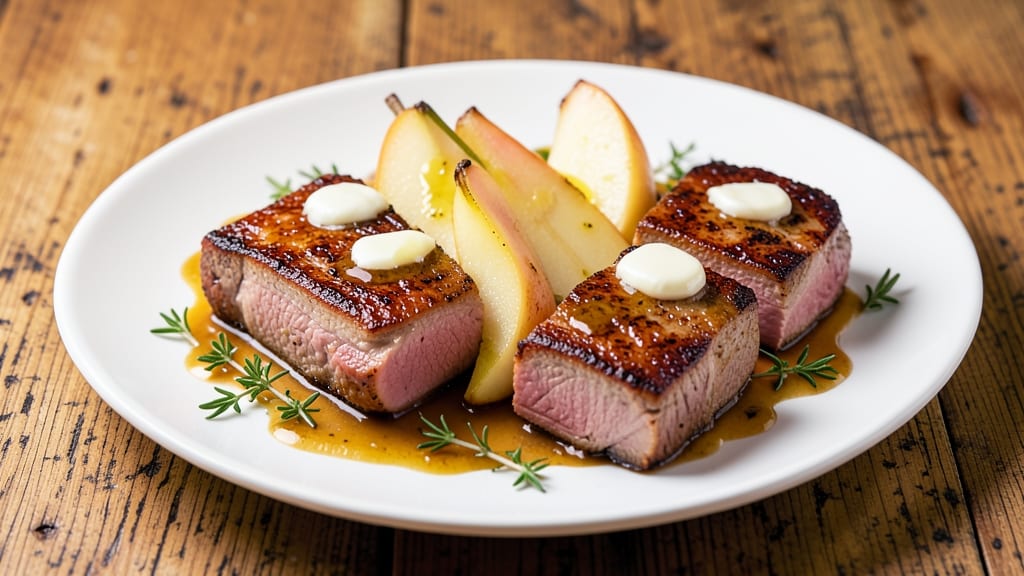
This baked pork chops and pears recipe transforms a simple weeknight dinner into a restaurant-worthy meal with minimal effort. The secret lies in balancing the savory richness of heritage pork chops with the natural sweetness of caramelized pears—creating harmony in every bite.
I developed this technique during a particularly busy season at my restaurant, where we needed dishes that could impress without requiring hours of prep.
The magic happens at 375°F, where the pork chops develop a golden crust while the pears soften into tender, jammy slices. A touch of Dijon mustard and thyme in the pan elevates the pork, while the pears add a subtle sweetness that cuts through the richness.
This one-pan method ensures cleanup is as effortless as the cooking process itself—perfect for home cooks who want restaurant-quality results without the fuss.
What you’ll end up with is perfectly seared pork chops—juicy, tender, and infused with savory depth—paired with pears that caramelize into a silky, almost custard-like texture.
The contrast of flavors and textures makes this dish unforgettable, whether served with a sprinkle of fresh rosemary or a drizzle of balsamic reduction. It’s the kind of meal that turns a simple dinner into an experience.
This recipe scales beautifully, making it ideal for family dinners or intimate gatherings. The balance of sweet and savory ensures it appeals to both meat lovers and those who prefer a touch of fruit in their meals. Let’s get started—your taste buds will thank you.
Ingredients for baked pork chops and pears
Four heritage pork chops and two pears—simple ingredients for a restaurant-worthy weeknight dinner.
| Ingredient | Amount | Notes |
|---|---|---|
| Heritage Pork Chops 🍖 | 4 whole | Bone-in, 1-inch thick preferred |
| Bosc Pears 🍐 | 2 whole | Firm, unripe preferred for caramelizing |
| Dijon Mustard 🍯 | 1 tbsp | For pork marinade |
| Fresh Thyme Leaves 🌿 | ¼ cup | Chopped, stems removed |
| Extra-Virgin Olive Oil 🫒 | 2 tbsp | For searing and basting |
| Unsalted Butter 🧈 | 2 tbsp | Cold, cubed for pan |
| Kosher Salt 🧂 | 1 ½ tsp | Diamond Crystal preferred |
| Freshly Ground Black Pepper 🌶️ | ½ tsp | For seasoning |
| Fresh Rosemary 🌿 | ⅛ cup | Chopped, for garnish |
| Balsamic Glaze 🍷 | 2 tbsp | Optional drizzle |
| Garlic Cloves 🧄 | 2 cloves | Minced for pan |
Heritage pork chops are worth the splurge here—they stay juicier and have more flavor than conventional cuts. Look for bone-in at Whole Foods or your local butcher shop—they're often labeled as 'heritage' or 'dry-aged'. If you can't find them, thick-cut bone-in chops work too. Pears should be firm but ripe enough to caramelize nicely. Bosc pears hold up best to baking, but Anjou or Bartlett will work in a pinch. I always buy a few extra pears—half get baked, half get sliced for salads later. The Dijon mustard adds depth, so grab a good one—Maille or Whole Foods brand are reliable choices.
No Dijon mustard? Yellow mustard at half the amount works in a bind, but you'll lose that tangy complexity. Fresh thyme is ideal, but dried thyme at one-third the amount gets you close. The olive oil matters—use something fruity and peppery for best flavor. California olive oil brands like Corto or Lucini are my go-tos. For the butter, don't use salted—it'll make the dish too salty. If you're feeling fancy, add a pinch of smoked paprika to the pan for extra depth. The garlic cloves can be pre-minced to save time, but fresh is always better.
This dish reheats beautifully—just warm in a 350°F oven for 10 minutes with a splash of water. The pears caramelize best when made ahead, so prep the night before if you can. Store leftovers in the fridge for 3-4 days, covered tightly. The pork chops freeze well for up to 3 months—just thaw overnight in the fridge before reheating. I always make extra pears because they're so versatile—toss them in salads or eat them plain with a drizzle of honey.
Why You'll Love This Recipe
- One-Pan Magic: I swear by this for lazy nights—just toss the pears, pork, and thyme on a sheet, drizzle with olive oil, and let the oven do the work. No flipping, no fussing, just hands-off perfection.
- Sweet-Savory Balance: That caramelized pear glaze cutting through the tender pork? It’s like autumn in a bite—Dijon mustard adds a tangy kick while the pears bring natural sweetness. Honestly, the flavor combo is my new favorite.
- Weeknight to Weekend: Pack it for lunches—leftover pork chops stay juicy, and sliced pears add crunch to salads or wraps. But it’s also impressive enough for dinner guests, so I’ve used it for everything from Tuesdays to Thanksgiving sides.
- Budget-Friendly Luxury: Heritage pork chops feel special without breaking the bank, and Bosc pears last forever in the fridge. Between us, this recipe stretches ingredients smartly—no wasted leftovers, just second helpings.
Step-by-step instructions for baked pork chops and pears
Here's how to create a perfect harmony of savory pork and sweet pears in one elegant pan.
Prep the Pork and Pears for Maximum Flavor
Pat the four whole Heritage pork chops dry with paper towels—this ensures the mustard marinade adheres properly and the skin crisps beautifully. Place them on a plate and spread the 1 tablespoon Dijon Mustard evenly over both sides of each chop. Let them sit at room temperature for 15 minutes while you prepare the pears.
Peel the 2 whole Bosc pears, leaving the stems intact, then slice them into ½-inch thick rounds. Arrange the pear slices in a single layer on a separate plate. This prep ensures even cooking and beautiful caramelization later. The mustard will give the pork a subtle tang that pairs perfectly with the pears' natural sweetness.
Build the Herb Butter and Season the Pan
In a small bowl, combine the 2 tablespoons unsalted butter with the 0.25 cup chopped fresh thyme leaves and 0.125 cup chopped fresh rosemary. Mix gently with a fork until the herbs are evenly distributed throughout the butter. This aromatic butter will infuse the pork with fragrant flavors while keeping it moist during baking.
Preheat your oven to 375°F. Place a large oven-safe skillet over medium-high heat and add the 2 tablespoons extra-virgin olive oil. Once the oil shimmers, add the 2 minced garlic cloves and cook for 30 seconds until fragrant. This creates a flavorful base for your pork chops before adding the butter mixture.
Sear the Pork and Arrange the Pears
Carefully place the mustard-coated pork chops in the skillet, skin-side down. Let them sear undisturbed for 2-3 minutes until golden brown and crispy. This initial sear locks in juices and creates that perfect crust. Flip the chops and sear the other side for another 2-3 minutes, then transfer them to a plate.
Add the herb butter mixture to the skillet, letting it melt and coat the bottom. Arrange the pear slices in a single layer around the pork chops, slightly overlapping if needed. Sprinkle the chops and pears evenly with the 1.5 teaspoons kosher salt and 0.5 teaspoon freshly ground black pepper. The pears will soften beautifully while absorbing the pork's savory flavors.
Bake to Juicy Perfection
Transfer the skillet to the preheated oven and bake for 20-25 minutes. The pork chops are done when they reach an internal temperature of 145°F and the juices run clear. You'll know the pears are tender when they yield slightly to gentle pressure but still hold their shape. The sweet-tart aroma filling your kitchen will be irresistible.
During the last 5 minutes of baking, watch for the pears to soften and the pork to develop a beautiful golden crust. If the pears brown too quickly, tent loosely with foil. Remove from the oven and let everything rest for 5 minutes before serving—this allows the juices to redistribute for maximum tenderness.
Finish with Balsamic Glaze and Garnish
Drizzle the baked pork chops and pears with the 2 tablespoons balsamic glaze, allowing it to pool around the edges. The glaze adds a sophisticated sweetness that complements the natural flavors. Garnish each serving with additional chopped fresh rosemary for a pop of color and fresh aroma.
Serve immediately with the pan juices spooned over the top. The contrast of tender pork with caramelized pears creates a perfect balance of textures and flavors. Each bite delivers juicy pork with sweet, slightly tart pears that melt in your mouth—this dish is pure comfort with a gourmet touch.
Pro Tips For Making Baked Pork Chops And Pears
- Pat the chops dry: I used to skip this, but heritage pork chops stay juicier when you wipe them with paper towels before seasoning—especially if they're thick-cut. Wet surfaces steam instead of sear, and you'll end up with soggy thyme leaves clinging to the meat.
- Slice pears thinly: Don’t eyeball it—Bosc pears should be cut into ¼-inch slices for even cooking. Thicker pieces stay crunchy while the edges turn mushy, and you’ll end up with a messy, uneven bake. A sharp knife and a cutting board make this faster than you’d think.
- Baste with mustard midway: After 15 minutes in the oven, pull the tray out and spoon that Dijon mustard mixture over the chops—it’s not just for flavor, it’s for moisture. The acid helps break down collagen, and the fat in the mustard keeps the meat from drying out while the pears caramelize.
- Use a meat thermometer: Heritage pork chops hit 145°F differently than commercial ones—some stay pink even at 150°F. Pull them when the internal temp reaches 140°F, then let them rest 5 minutes. Overcooking turns them into shoe leather, and undercooking risks dryness. (Yes, even if the pears look done.)
Wine and beer pairings for this dish
Red Wine Pairings
For this dish, I always reach for a Pinot Noir from Oregon or Burgundy—its bright acidity and red fruit notes mirror the pears' natural sweetness while complementing the pork's savory depth.
A 2019 Domaine Drouhin Oregon Pinot Noir is my go-to, with its cherry and spice profile cutting through the butter and mustard. If you prefer something lighter, try a German Spätburgunder from the Pfalz region—it's crisp and floral, perfect for balancing the dish's richness. 🍷
White Wine Options
Don't overlook whites! A dry Riesling from Alsace or Germany offers the perfect balance—its citrus and mineral notes enhance the pears while standing up to the pork. I love Trimbach Gewurztraminer for its lychee and rose aromas, which add an unexpected but delightful complexity.
For something more approachable, a Sauvignon Blanc from New Zealand with its zesty lime finish works beautifully. The acidity keeps the meal feeling fresh.
Beer Pairings
Craft beer lovers shouldn't miss out. A Belgian Witbier like Stella Artois or Hoegaarden brings citrusy coriander notes that brighten the dish, while a German Helles Lager provides a clean, malty backdrop.
For something bolder, try a blonde ale with caramel undertones—Allagash White is a fantastic choice. The subtle sweetness in these beers echoes the pears' caramelization without overpowering the pork. 🍺
Cider and Sparkling
For a non-alcoholic option, a dry sparkling cider like Martinelli's adds effervescence that cleanses the palate between bites. If you're serving this at a brunch, a Prosecco with its crisp apple notes creates a festive atmosphere while harmonizing with the pears.
The bubbles help balance the dish's richness, making it feel lighter. I often serve this at my farm dinners when guests want something refreshing but still sophisticated.
Regional Wine Recommendations
In the Southeast, where I grew up, Georgia's Saperavi reds offer a bold alternative with their dark fruit and spice. For a coastal twist, a California Zinfandel from Paso Robles brings jammy intensity that stands up to the dish's hearty flavors.
If you're in Charleston, ask your local wine shop for a Carignan—it's a hidden gem in the Lowcountry that pairs wonderfully with pork and fruit. Each sip tells a story of where it comes from, just like this dish does. 🌟
Nutrition facts
Frequently asked questions
Can I use regular pork chops instead of heritage?
Yes, but you'll lose some flavor depth. Use thick-cut bone-in chops (at least 1-inch thick) for better juiciness. Look for labels like "center-cut" or "loin chops" at your butcher. The bone helps retain moisture during baking, so don't skip it if possible.
What if my pears turn mushy instead of caramelized?
This usually happens from overcooking or using overly ripe pears. Start with firm Bosc pears and reduce oven time by 5 minutes. They're done when tender but still holding shape—test by gently pressing with a fork. For extra insurance, tent with foil after 15 minutes of baking.
Can I make this ahead of time?
This dish actually tastes better the next day. Assemble everything (including baking) up to 24 hours ahead, then reheat at 350°F for 10 minutes with a splash of water. The flavors meld beautifully overnight, and the pears become even more jammy.
What are good side dishes for this?
For a complete meal, try creamy mashed potatoes or roasted Brussels sprouts—both balance the sweetness. A simple mixed green salad with lemon vinaigrette cuts through the richness, while crusty sourdough bread soaks up all the pan juices.
Why does the recipe call for Dijon mustard?
Dijon adds that signature tangy depth that regular mustard can't match. The 1 tablespoon enhances the pork's flavor without overpowering it. If you're out, use half the amount of yellow mustard, but you'll notice the difference in complexity.