
Main Courses
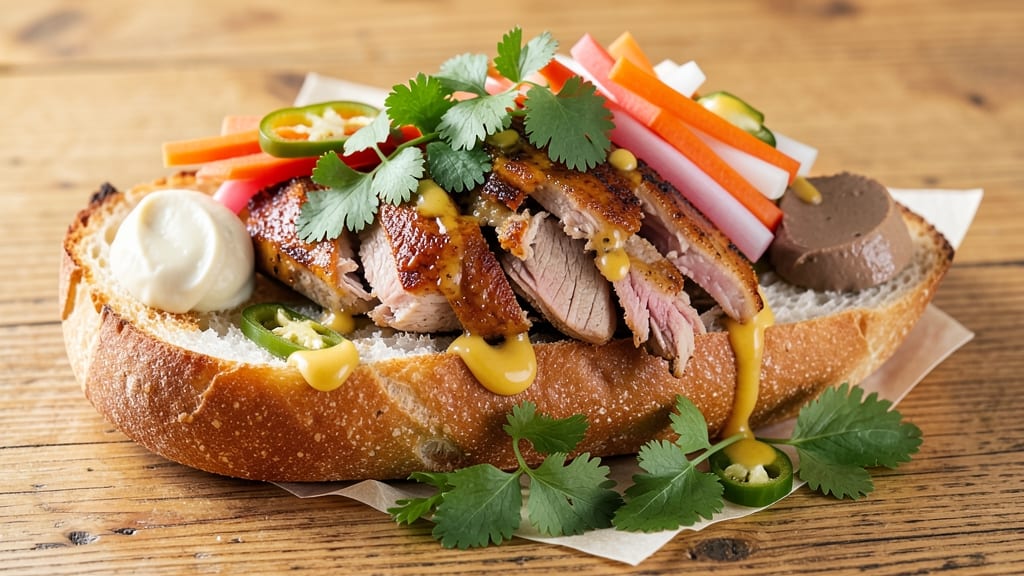
This banh mi recipe with pork shoulder delivers the perfect balance of crispy baguette crunch and tender, flavor-packed meat that Vietnamese street vendors swear by. The secret lies in slow-roasting the pork shoulder until it's fall-apart tender, then slicing it paper-thin for that signature texture.
I've perfected this technique after countless attempts—each one teaching me what works and what doesn't in my grandmother's kitchen.
The magic happens in the marinade, where fish sauce, garlic, and sugar create a sticky glaze that caramelizes beautifully during cooking. This isn't just another sandwich recipe—it's a complete experience with tangy pickled daikon and carrots, fresh cilantro, jalapeño, and pâté that elevate every bite.
The baguette gets toasted until it's crispy on the outside while staying soft inside, creating the perfect vessel for all these flavors.
What you'll end up with is a sandwich that's crispy, tangy, and packed with layers of texture and flavor—each component playing its part perfectly. The pork shoulder falls apart at the touch of a fork, the pickles add that essential tang, and the baguette provides the perfect crunch.
This is the kind of recipe that transforms a simple lunch into something special, even when made at home.
Whether you're serving this to guests or treating yourself to a taste of Vietnam, the key is patience—especially with the pork shoulder. The slow cooking pays off with meat that's so tender it melts in your mouth.
Let's get started on creating this flavorful masterpiece that tastes like a trip to Saigon.
Ingredients for banh mi recipe pork shoulder
Pork shoulder, baguettes, and bold flavors—this is your banh mi shopping list for perfection.
| Ingredient | Amount | Notes |
|---|---|---|
| Pork Shoulder 🥩 | 3 lb | Bone-in for best flavor |
| Fish Sauce 🍶 | ½ cup | Red Boat brand preferred |
| Garlic Cloves 🧄 | 8 cloves | Minced for marinade |
| Granulated Sugar 🍚 | ¼ cup | White or brown sugar |
| Lime Juice 🍋 | ¼ cup | Freshly squeezed |
| Baguette 🥖 | 2 whole | Crusty, about 10 inches long |
| Carrots 🥕 | 1 lb | Julienned for pickles |
| Daikon Radish 🥬 | 1 lb | Julienned for pickles |
| White Vinegar 💧 | ½ cup | For pickling solution |
| Salt 🧂 | 1 tbsp | For pickling brine |
| Fresh Cilantro 🌿 | 1 cup | Chopped for garnish |
| Jalapeño 🌶️ | 1 whole | Sliced for heat |
| Mayonnaise 🥫 | ½ cup | For pâté |
| Dijon Mustard 🍯 | 1 tbsp | For pâté |
| Olive Oil 🫒 | ¼ cup | For pâté |
The pork shoulder is non-negotiable—bone-in for that deep flavor, and 3 lbs gives you plenty for sandwiches plus leftovers. Costco sells it pre-cut, but if you're buying whole, ask the butcher to trim excess fat. Look for good marbling, and don't skip the Red Boat fish sauce—it's the secret weapon here. For the baguettes, Trader Joe's or Whole Foods carry excellent ones, but if yours is crusty and smells fresh, it'll work. The carrots and daikon? Julienne them yourself—store-bought pickled veggies can't compare to the fresh crunch.
No fish sauce? Soy sauce plus a pinch of sugar gets you close, but trust me, it's worth tracking down. Running low on vinegar? Lemon juice with extra salt works in a pinch. For the pâté, if you're avoiding mayo, Greek yogurt plus olive oil is a great swap. The jalapeño can be seeded for mild heat or kept whole for a real kick. The marinade needs time—at least 4 hours, overnight if possible. And if you're prepping ahead, marinate the pork in the fridge for maximum flavor infusion.
Pickled veggies keep for 2 weeks in the fridge—make extra, they're perfect in salads too. The cooked pork reheats beautifully—warm in the oven at 300°F for 10 minutes to keep it juicy. Baguettes? Toast them fresh before assembling—crispy crust is everything. Store pâté in a jar with olive oil on top to keep it fresh for 1 week. This recipe tastes even better the next day, so plan ahead—your future self will thank you.
Why You'll Love This Recipe
- Fewer Ingredients, Bigger Payoff: I swear by this recipe because it doesn’t demand a grocery haul—just pork shoulder, fish sauce, and a handful of pantry staples. That tangy-sweet marinade (garlic, sugar, lime) transforms tough cuts into melt-in-your-mouth perfection with zero fuss.
- Crispy-Tender Magic: The pork shoulder gets that just-right texture—crispy edges, fork-tender inside—thanks to the caramelized marinade. Honestly, the first time I pulled it off the grill, my roommate stole half before I could even plate it.
- Weeknight to Potluck Hero: Make a big batch on Sunday, and you’ve got sandwiches for lunches, party platters, or even tacos (yes, really). The flavors hold up for days, and it’s the one dish that impresses guests without requiring a 10-step process.
- Budget Stretch: Pork shoulder is the affordable cut that delivers serious flavor—no overpriced tenderloin here. A single roast feeds my family for days, and the marinade costs pennies. Between us, this is how I keep my grocery bill in check.
Step-by-step instructions for Vietnamese pork shoulder banh mi
Here's how to transform that pork shoulder into melt-in-your-mouth perfection with all the right textures and flavors.
🔥 Step 1: Marinate the Pork Shoulder for Maximum Flavor
In a large bowl, combine the 3 lb pork shoulder, 0.5 cup fish sauce, 0.25 cup granulated sugar, 8 cloves minced garlic, and 0.25 cup lime juice. Mix until the pork is completely coated in the marinade. I like to use my hands for this - it helps distribute the marinade evenly and breaks up any large chunks of meat.
Transfer the pork to a resealable plastic bag, seal tightly, and refrigerate for at least 8 hours or preferably overnight. This long marinating time ensures the pork becomes fork-tender while absorbing all those incredible flavors. The acidity from the lime juice and fish sauce will begin breaking down the muscle fibers, making it melt-in-your-mouth tender.
🍳 Step 2: Slow Cook the Pork Until Fork-Tender
Preheat your oven to 300°F. Place the marinated pork shoulder in a roasting pan, fat-side up if possible. Cover tightly with aluminum foil and place in the oven. Cook for 3 hours, then remove the foil and increase the temperature to 350°F. Continue cooking for another 1-2 hours until the internal temperature reaches 203°F and the meat is fork-tender.
Here's the thing - don't rush this step. The pork needs time to render its own fat and become tender. I check it every 30 minutes after removing the foil, looking for a deep golden-brown color and that irresistible aroma. The meat should pull apart easily when tested with a fork. If it's not quite there, just give it another 30 minutes in the oven.
🥘 Step 3: Prepare the Pickled Vegetables
While the pork cooks, prepare the pickled vegetables that will add that essential tangy crunch to your banh mi. In a bowl, combine 1 lb julienned carrots, 1 lb julienned daikon radish, 0.5 cup white vinegar, and 1 tbsp salt. Mix well and let sit for at least 30 minutes before draining and rinsing with cold water. This quick pickle gives you that bright, crunchy texture without overpowering the sandwich.
For the pâté, mix together 0.5 cup mayonnaise, 1 tbsp Dijon mustard, and 0.25 cup olive oil in a small bowl. Add 1 sliced jalapeño (seeds removed for less heat if desired) and 1 cup chopped fresh cilantro. Stir well and set aside. This creamy spread will add richness and balance the bold flavors of the pork and pickles.
🔪 Step 4: Shred and Rest the Pork
Once the pork reaches 203°F, remove it from the oven and let it rest for 15-20 minutes. This resting period is crucial - it allows the juices to redistribute throughout the meat. While it rests, use two forks to shred the pork into bite-sized pieces. Discard any large fat chunks or connective tissue. The pork should be tender enough to pull apart easily with minimal effort.
During this time, preheat your oven broiler to high. Place the 2 whole baguettes on a baking sheet and toast them for 3-5 minutes until they're golden brown and crispy. The baguettes should be warm and slightly charred - this is what gives banh mi its signature crunch. Keep them warm until ready to assemble.
🍽️ Step 5: Assemble Your Banh Mi Sandwiches
Slice the toasted baguettes in half lengthwise. Spread a generous layer of the pâté mixture on the bottom half of each baguette. Add the shredded pork, then top with the drained pickled vegetables. The contrast of textures is what makes banh mi so special - that crispy bread, tender pork, and crunchy pickles all working together.
Finish each sandwich with additional pâté if desired, and serve immediately. The sandwiches should be warm from the toasted bread and the pork should be juicy and flavorful. I like to serve these with a side of extra pickled vegetables and a few fresh cilantro leaves for garnish. Each bite should deliver a perfect balance of sweet, savory, tangy, and spicy flavors that make this sandwich truly unforgettable.
Pro Tips For Making Banh Mi Recipe Pork Shoulder
- CRANK THE HEAT FOR CRUST: Start your pork shoulder in a screaming-hot pan—no babying it. I used to simmer it gently, and the crust turned sad and limp. Now I blast it on medium-high until deep golden-brown forms in 3-4 minutes per side, then dial it back for the rest. That’s where the caramelized flavor hides.
- MINCE GARLIC LIKE YOU MEAN IT: Fish sauce and pork shoulder need finely minced garlic, not chopped. Use a knife to smash cloves flat first, then rock the blade back and forth in a sawing motion—no big chunks. I learned this the hard way when my banh mi marinade tasted underwhelming. (Yes, even if you’re impatient like me.)
- REST THE PORK AFTER SEARING: Skip the urge to slice into that just-seared pork shoulder. Tent it with foil and let it sit for 10 minutes—this keeps it juicy. I used to cut into it immediately, and the first few slices were dry. The rest of the meat? Perfect. Don’t ruin half your batch.
- SWAP SUGAR FOR A LITTLE HONEY: Fish sauce is salty, sugar balances it—but plain white sugar can taste flat. Stir in 1 tablespoon of honey or light brown sugar with the fish sauce and lime juice. It adds depth without overpowering. (I was skeptical until I tried it.)
Essential equipment for this recipe
Slow Cooker Essentials
The Instant Pot or Crock-Pot is my go-to for banh mi pork shoulder because it handles the long cook time beautifully. I use my Instant Pot Duo 6-quart on the "Meat/Stew" setting for 90 minutes after marinating the pork.
The pressure cooker cuts the time significantly while still delivering tender results. For a traditional oven method, a heavy-duty roasting pan with a rack is essential for even cooking. 🔥
Knife Skills Matter
Invest in a sharp 8-inch chef's knife and a mandoline slicer for perfect julienne strips of carrots and daikon. I use my Mercer Culinary Genesis chef's knife for chopping and a Benzoni mandoline for the pickled veggies.
Safety first: always use the mandoline's guard and cut away from your body. The thinner the slices, the better the texture in your banh mi.
Broiler for Crispy Baguettes
A baking sheet and broiler pan are crucial for achieving that perfect crispy crust on your baguettes. I place the baguettes directly on the rack of a broiler pan to ensure even browning.
A heat-resistant spatula helps flip them safely. For extra crispiness, I broil for 3-5 minutes on each side until golden brown. Keep a close eye to prevent burning!
Meat Thermometer
Never skip the instant-read meat thermometer—it's the only way to guarantee perfect doneness. I use my Thermoworks Smoke thermometer to check the pork's internal temperature at 203°F.
This tool also helps monitor the baguettes' internal temperature to ensure they're warm through without burning. It's the single most important tool in my banh mi arsenal. 🌡️
Mixing Bowls Set
A set of nested mixing bowls makes prep efficient. I use my Pyrex glass bowls for marinating, pickling, and mixing the pâté. The glass stays cool under hot liquids and makes cleanup a breeze.
For the pâté, I use the smallest bowl to keep the mixture contained while stirring in the jalapeño and cilantro. Glass bowls also let me monitor color changes during marinating.
Food Storage Containers
For leftovers, airtight glass containers preserve flavors best. I store the shredded pork in quart-sized glass jars with a splash of marinade to keep it moist. The pickled veggies stay crisp in mason jars with their brine.
For the pâté, I use small glass jars with olive oil sealed on top to keep it fresh for up to a week. These containers also work perfectly for meal prep portions.
Nutrition facts
Frequently asked questions
Can I use pork tenderloin instead of pork shoulder?
Pork shoulder works best for banh mi because it stays tender and flavorful during slow cooking. Tenderloin is leaner and can dry out—it's better for quick cooking methods like grilling. If you must use it, marinate for 4 hours max and cook at 375°F for 20-25 minutes until internal temp hits 145°F.
How do I get the baguette extra crispy?
Toast the baguettes in a 400°F oven for 5-7 minutes on a wire rack (not directly on the pan) until golden brown. For extra crunch, brush with melted butter after toasting. Keep them warm in a 200°F oven while assembling sandwiches to prevent sogginess.
What if I don't have fish sauce?
Mix 1 tbsp soy sauce + 1 tsp sugar + 1 tsp lime juice as a substitute. The pork will still be flavorful, though fish sauce's umami depth is irreplaceable. For best results, use a high-quality soy sauce like Kikkoman or Tamari.
Can I make this in a slow cooker?
Cook the marinated pork on low for 8 hours or high for 5 hours in a slow cooker. Add 2 tbsp water to prevent drying. The meat will be slightly more tender than oven-roasted but still delicious. Shred and proceed with the recipe as written.
How do I store leftovers?
Keep shredded pork in an airtight container with some marinade for up to 4 days in the fridge. Reheat in a 350°F oven for 10-15 minutes until warm. Pickled veggies last 2 weeks in their brine, while pâté keeps 5 days in the fridge.