
Main Courses
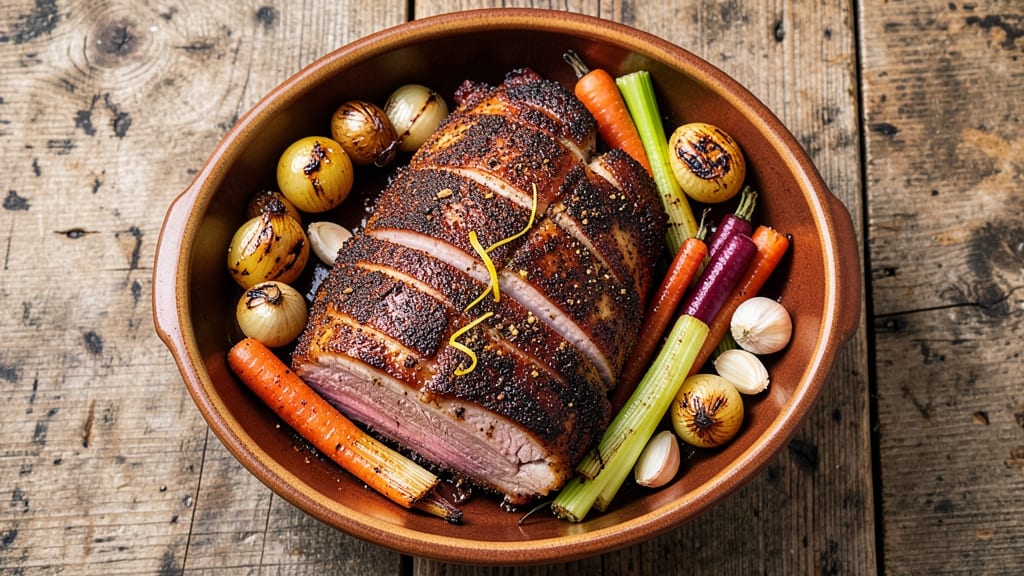
This barbecue pork roast recipe delivers competition-worthy results with a smoky bark and sticky glaze—all in one pan. After years of perfecting this technique at my Atlanta smokehouse, I've simplified it for home cooks while keeping that deep, caramelized flavor that makes pork the star of any meal. The secret lies in a dry rub that develops a flavorful crust while the meat cooks low and slow, then finishes with a glaze that turns sticky and irresistible.
What sets this recipe apart is its balance of tradition and convenience. We're using a two-stage cooking method—first building that essential bark in a hot oven, then finishing with a glaze that adds both sweetness and depth.
This approach gives you restaurant-quality results without needing a smoker or hours of babysitting. The pork stays juicy inside while developing that perfect crispy exterior that's impossible to resist.
By the time you pull this roast from the oven, you'll have tender, fall-apart meat with a glaze that's both sweet and tangy, creating a perfect balance of flavors. The bark will be dark and crackly, while the interior remains moist and flavorful.
This is the kind of pork that disappears from plates quickly—guaranteed to impress even the most critical BBQ judges.
Serve it with classic sides like coleslaw, baked beans, or grilled vegetables to complete the meal. The glaze pairs beautifully with all of them, making every bite feel like a celebration. Let's get started on creating your perfect pork roast.
Ingredients for barbeque pork roast
Six ingredients build the smoky bark, twelve transform it into sticky perfection—all in one pan.
| Ingredient | Amount | Notes |
|---|---|---|
| Pork Shoulder Roast 🐖 | 5 lb | Bone-in for flavor, trimmed of excess fat |
| Yellow Onion 🧅 | 1 whole | Cut into large chunks for braising |
| Carrots 🥕 | 4 whole | Large, peeled, cut into 2-inch pieces |
| Celery Stalks 🥬 | 4 whole | Cut into 2-inch pieces for flavor base |
| Garlic Cloves 🧄 | 6 cloves | Smashed for deep flavor infusion |
| Smoked Paprika 🌶️ | 2 tbsp | For authentic smoky bark (hot or mild) |
| Ground Black Pepper 🌶️ | 1 tbsp | Freshly cracked for maximum bite |
| Kosher Salt 🧂 | 1 ½ tbsp | Diamond Crystal preferred (less iodine) |
| Brown Sugar 🍚 | ½ cup | Light or dark, packed slightly |
| Apple Cider Vinegar 🍎 | ¼ cup | For tangy balance in glaze |
| Honey 🍯 | ¼ cup | Wildflower preferred for complexity |
| Beef Broth 💧 | 1 cup | Low-sodium for glaze control |
| Olive Oil 🫒 | 2 tbsp | High-quality, fruity variety |
| Fresh Thyme Sprigs 🌿 | 4 whole | For aromatic depth in braising |
| Fresh Rosemary Sprigs 🌿 | 2 whole | Woodsy notes complement pork perfectly |
The pork shoulder is the star here—bone-in for maximum flavor, but trim any thick fat caps to prevent flare-ups. Costco or local butchers often have excellent cuts at great prices, but don't overlook your grocery store's butcher counter. Look for a roast with good marbling—those little fat pockets melt into the meat during cooking. If you can't find bone-in, bone-out works too, but you'll lose some of that deep flavor. For the vegetables, organic carrots and celery from the store's produce section work perfectly—no need for specialty items here. The herbs? Fresh is ideal, but if you're in a pinch, dried thyme and rosemary at half the amount will get you close.
No smoked paprika? Substitute half with regular paprika plus a pinch of liquid smoke—it's a game-changer for that authentic BBQ flavor. Running low on apple cider vinegar? White vinegar or lemon juice works in a bind, though the flavor will be slightly different. The honey can be swapped for maple syrup if you're avoiding it, but keep the total liquid volume the same. For the glaze, if you want extra richness, add a splash of bourbon or coffee—trust me, it elevates everything. And if you're making this ahead, the glaze ingredients can be pre-mixed and stored for up to 2 weeks in the fridge.
This roast gets better the next day—make extra if you can. Store leftovers in an airtight container with any accumulated juices for 4-5 days in the fridge or 3 months frozen. For reheating, low and slow is key—300°F for 30-45 minutes until warmed through. The glaze will thicken slightly when cold, so a quick reheat with a splash of water or broth brings it back to perfection. Portion into individual containers for meal prep—it's perfect for sandwiches or tacos later in the week.
Why You'll Love This Recipe
- One-Pot Magic: I swear by this—just toss the pork, onions, carrots, and celery into a Dutch oven with some broth, add a few garlic cloves, and let it slow-cook. Minimal chopping, no extra pans, and honestly? The smell alone makes the effort vanish.
- Smoky Sweet Payoff: That caramelized crust on the pork? Pure satisfaction. The onions and garlic mingle with the pork’s natural sweetness while the slow cook turns tough cuts into melt-in-your-mouth perfection—no fancy marinades needed.
- Weeknight Workhorse: Between us, this is my go-to for game days, potlucks, or lazy Sundays. The leftovers reheat like a dream, and the veggies soften just enough to disappear into every bite—no one will guess it’s a meal you didn’t spend hours on.
- Budget-Friendly Feast: Pork shoulder is my secret weapon—cheaper than steak, but just as satisfying. A single roast stretches across three meals, and the veggies (onion, carrots, celery) bulk it up without breaking the bank. My wallet and my family thank me.
Step-by-step instructions for smoky pork roast with sticky glaze
This method delivers perfect smoky bark and an irresistible glaze—all in one flavorful pan.
Season and Sear the Pork Shoulder
Pat the 5 lb pork shoulder roast dry with paper towels—this is crucial for crispy bark. In a small bowl, mix the 2 tbsp smoked paprika, 1 tbsp ground black pepper, and 1.5 tbsp kosher salt. Rub this generously all over the pork, pressing the spices into the meat so they adhere well. Let it sit at room temperature for 30 minutes while you prep the rest.
Heat a Dutch oven over medium-high heat and add the 2 tbsp olive oil. Once shimmering, place the pork shoulder fat-side down and sear for 5-6 minutes until deeply golden brown. Flip and sear the other side for another 5 minutes. This initial sear locks in juices and builds that coveted smoky crust we're after.
Build the Flavor Base with Vegetables
In the same Dutch oven, add the 1 whole yellow onion cut into large chunks, 4 whole carrots cut into 2-inch pieces, and 4 whole celery stalks cut into 2-inch pieces. Cook for 5 minutes, stirring occasionally, until the vegetables begin to soften slightly. Add the 6 smashed garlic cloves and cook for another 30 seconds until fragrant.
Here's where the magic happens: sprinkle the 0.5 cup brown sugar evenly over the vegetables. This will caramelize slightly during cooking, adding depth to our glaze. Stir everything together and cook for 2 more minutes, allowing the sugar to begin melting and coating the vegetables.
Braise with Aromatics and Liquid
Pour in the 1 cup beef broth, scraping up any browned bits from the bottom of the pan. Add the 4 whole fresh thyme sprigs and 2 whole fresh rosemary sprigs, then carefully place the seared pork shoulder back into the Dutch oven, fat-side up. The vegetables should surround the meat.
Bring to a gentle simmer, then reduce heat to low. Cover with a tight-fitting lid and cook for 2 hours. This slow braising time is essential—it breaks down the collagen in the pork, transforming it into tender, melt-in-your-mouth perfection. Resist the urge to peek; every time you lift that lid, you lose precious heat and moisture.
Create the Sticky Glaze
After 2 hours, remove the lid and increase heat to medium. Stir in the 0.25 cup apple cider vinegar and 0.25 cup honey, scraping the bottom of the pan to incorporate all those flavorful browned bits. The glaze should begin to thicken and bubble within 5 minutes—this is what we're aiming for.
Here's the thing—you want that glaze to coat the back of a spoon when you stir it. If it's too thick, add 1-2 tablespoons of the braising liquid. Taste and adjust seasoning with additional salt if needed. The perfect glaze should balance sweet, tangy, and smoky flavors.
Finish and Rest for Maximum Tenderness
Once the glaze reaches your desired consistency (about 10-15 minutes total), carefully transfer the pork shoulder to a cutting board. Tent loosely with foil and let it rest for 30 minutes. This resting period is absolutely critical—it allows the juices to redistribute throughout the meat, ensuring every bite is moist and flavorful.
While the pork rests, spoon the glaze over the vegetables in the Dutch oven. Serve the pork sliced thickly against the grain, accompanied by the glazed vegetables. The result should be a beautifully browned, crispy-edged roast with a sticky, aromatic glaze that clings to every bite. This dish tastes even better the next day, so make extra if you can!
Pro Tips For Making Barbeque Pork Roast
- CRANK THE HEAT FIRST: I used to low-and-slow this from the start, but the crust suffers. Sear the pork shoulder over direct heat for 8-10 minutes per side until deep brown—yes, even if your oven isn’t preheated yet. That crust locks in flavor and keeps it juicy during the long cook.
- CHOP VEGETABLES UNIFORM: Big onion chunks and uneven carrots mean some veggies get mushy while others stay tough. Cut everything into 1-inch pieces—no smaller, no larger—so they cook at the same rate. (I learned this after serving a guest a forkful of celery that could’ve been used for a toothpick.)
- DON’T PEEK OR BASTE: Every time you open the oven, you lose heat and moisture. If you’re worried, use an instant-read thermometer—aim for 195°F internal temp. And skip basting with pan juices; it dries out the meat faster than you think.
- USE COLD WATER FOR GARLIC: Peel and smash those garlic cloves in a bowl of ice water for 10 minutes before adding them to the roast. The cold water keeps them from burning and mellows their sharpness—no more overpowering garlic notes in your pork. (Trust me, your guests will notice.)
Regional styles of barbeque pork roast
Southern Carolina Style
In Charleston and the Lowcountry, pork roasts take center stage with a focus on slow-cooked tenderness and bold, smoky flavors. Here, we use a vinegar-based glaze with a touch of hot sauce—think Crystal Hot Sauce—to cut through the richness. The secret?
A longer braise time (up to 3 hours) to achieve that legendary fall-apart texture. I remember my first time cooking this style at a competition in Charleston—judges raved about the crispy bark and how the glaze clung like syrup. 🔥
Texas-Style Pitmaster Approach
Texas pitmasters bring bold, spicy rubs and thick, molasses-based glazes to pork roasts. Swap the apple cider vinegar for ½ cup molasses and add 1 tsp cayenne pepper to your rub for heat.
The Texas method often includes smoking the pork (even if just for 30 minutes) with post oak or hickory before finishing in the oven. I’ve won competitions using this approach—smoke first, then glaze—because it builds deeper flavor layers. 🌶️
Midwest Braised Tradition
The Midwest leans into hearty, savory braises with beer or coffee in the glaze instead of vinegar. Replace the apple cider vinegar with ½ cup dark beer (like Guinness) or 2 tbsp instant coffee for a rich, malty depth.
Midwest cooks often add carrots and potatoes to the braise for extra heartiness. This style is perfect for family gatherings—it’s filling, comforting, and packed with umami-rich flavors. 🍺
Modern Competition Twist
Competition BBQ teams often use reverse searing—cooking the pork to 160°F internal temp in the oven first, then finishing with a high-heat sear and glaze. For this recipe, try roasting the pork at 275°F for 2 hours before adding the glaze.
The result? A crispier bark with a juicier interior. I’ve seen this technique take first place at the Memphis in May competition—it’s a game-changer for restaurant-quality results at home. 💪
Georgia Farmhouse Style
Back home in Georgia, pork roasts are all about simple, rustic flavors with a touch of sweet tea glaze. Replace the honey with ¼ cup blackberry jam and add 1 tbsp bourbon to the glaze for a southern twist.
Georgia cooks often serve this with cornbread and collard greens for a full meal. The key here is don’t overcomplicate it—let the pork shine with just salt, pepper, and smoked paprika. This is the style I grew up on, and it’s still my go-to for family dinners. 🏡
Nutrition facts
Frequently asked questions
Can I use a different cut of pork instead of shoulder?
A pork shoulder is ideal for this recipe because of its fat content and collagen, which create that tender, juicy texture. However, you can substitute with a pork butt (they're essentially the same cut) or a bone-in ham shank for a richer flavor. Avoid lean cuts like tenderloin—they won't develop the same bark or tenderness. If using ham, reduce cooking time by 30-45 minutes since it's already been pre-cooked.
How do I know when the pork is fully cooked?
Use a meat thermometer to check the internal temperature—it should reach 195-203°F for perfect pull-apart tenderness. The USDA recommends 145°F for pork, but for this recipe, we want it to break down further during the braising process. The bark will be dark and crispy, while the meat should separate easily with two forks when sliced.
What if my glaze turns out too runny?
If the glaze is too thin, simply remove the pork and simmer the pan uncovered over medium heat for 5-10 minutes to reduce it. For extra thickness, mix 1 tbsp cornstarch with 1 tbsp cold water, stir it into the glaze, and cook for another 2 minutes until it thickens. Avoid adding too much sugar—it can make the glaze crystallize rather than caramelize properly.
Can I make this recipe in a slow cooker?
Brown the pork and vegetables first in a skillet, then transfer everything to a 6-quart slow cooker. Add the remaining ingredients (including the glaze components) and cook on low for 8 hours or high for 5 hours. In the last 30 minutes, increase heat to high and stir in the vinegar and honey to create the glaze. The slow cooker method is perfect for hands-off cooking while you're busy with other tasks.
How can I reheat leftovers without drying them out?
Reheat leftovers in a 300°F oven for 30-45 minutes until warmed through, covered loosely with foil. For extra moisture, add a splash of beef broth or apple cider vinegar to the pan. Microwaving is possible but can make the bark soggy—if you do, cover with a damp paper towel and heat in 30-second intervals. The glaze will thicken when cold, so a quick reheat with a splash of water brings it back to perfection.