
Main Courses
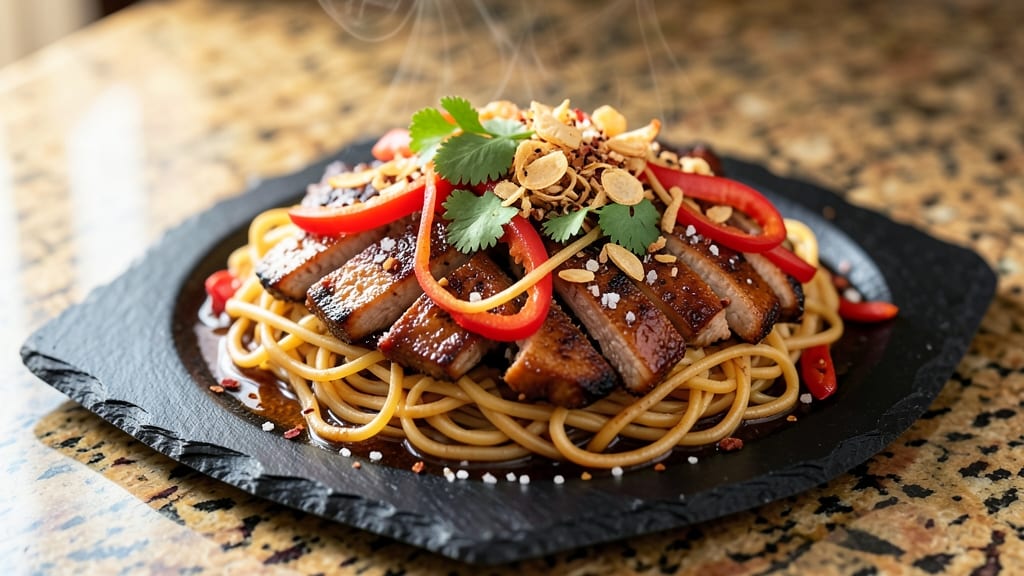
This BBQ pork chow mein recipe delivers the perfect balance of smoky, sweet-spicy flavors and satisfying wok-tossed crunch—just like your favorite takeout, but better. 🔥 The secret lies in slow-braising the pork until it's fork-tender, then tossing it with crisp noodles and a homemade glaze that's tangy, sticky, and packed with umami.
I developed this after years of perfecting my stir-fry technique, blending my love for pitmaster-style slow cooking with the quick, high-heat action of a wok.
The magic happens in two stages: first, the pork gets marinated in a dry rub of five-spice and smoked paprika, then braised until it falls apart easily. Meanwhile, the noodles soak up the BBQ glaze while staying chewy—not mushy—thanks to a quick wok sear.
What you end up with is a dish that's restaurant-quality but built on simple techniques anyone can master. The result? A plate that's vibrant, aromatic, and impossible to resist.
This isn't just another stir-fry—it's a full meal with layers of texture and flavor. The pork stays juicy and tender, the noodles hold their bite, and the glaze caramelizes just enough to coat everything in a glossy, sweet-spicy sheen.
Serve it with quick-pickled cucumbers or a side of steamed bok choy to cut through the richness, and you've got a dish that's perfect for weeknight dinners or impressing guests.
Ready in under an hour, this recipe proves you don't need a wok to achieve wok hei—just a hot skillet and the right technique. The sauce comes together in minutes, the pork braises while you prep, and the final toss is where everything comes alive. Let's get cooking!
Ingredients for bbq pork chow mein
Pork shoulder, five-spice, and egg noodles—just the right ingredients for smoky-sweet chow mein.
| Ingredient | Amount | Notes |
|---|---|---|
| Boneless Pork Shoulder 🍖 | 1 ½ lb | Cut into 1-inch cubes |
| Five-Spice Powder 🌶️ | 1 tbsp | For dry rub |
| Smoked Paprika 🌶️ | 1 tbsp | For smoky depth |
| Kosher Salt 🧂 | 1 ½ tsp | For seasoning |
| Ground Black Pepper 🌶️ | ½ tsp | Freshly cracked |
| Dried Chili Flakes 🔥 | ½ tsp | For heat |
| Egg Noodles 🍜 | 12 oz | Fresh or dried |
| Neutral Oil 🫒 | 2 tbsp | For stir-fry |
| BBQ Sauce 🍯 | ½ cup | Sweet-spicy variety |
| Hoisin Sauce 🍶 | 1 tbsp | For umami balance |
| Rice Vinegar 🍶 | 1 tbsp | For tang |
| Sesame Oil 🫒 | 1 tsp | For aroma |
| Green Onions 🧅 | 3 whole | Sliced, for garnish |
| Sesame Seeds 🌾 | 1 tsp | Toasted, for crunch |
| Garlic Cloves 🧄 | 4 cloves | Minced for marinade |
The pork shoulder is your star—look for well-marbled cuts at the butcher counter or pre-cut sections at Costco. I like to grab mine from Trader Joe's when I'm feeling lazy, but if you're buying a whole shoulder, ask for it cut into 1-inch cubes. The five-spice powder is key here—Penzeys or the bulk bins at Whole Foods have the best quality. If you can't find it, a mix of cinnamon, star anise, cloves, fennel, and Szechuan peppercorns works too. For the BBQ sauce, Sweet Baby Ray's is my go-to, but any sweet-spicy sauce with a little heat will do.
No five-spice powder? Substitute 1/2 tsp each of cinnamon, ginger, and cloves. Running low on hoisin? Mix 1 tbsp soy sauce with 1 tsp sugar for a quick swap. The egg noodles can be fresh or dried—just make sure they're thick enough to hold their shape after stir-frying. If you're using dried noodles, cook them al dente and rinse with cold water to stop the cooking. For extra crunch, toast the sesame seeds in a dry pan for 30 seconds before adding them to the dish.
The pork marinade keeps for 3 days in the fridge, so prep ahead if you're busy. The cooked pork reheats beautifully—just toss it in a hot skillet with a splash of water for 2-3 minutes. Store the glaze components separately and mix fresh before tossing. This dish tastes even better the next day as the flavors meld—double the recipe and freeze half for lazy weeknights. Garnish with green onions right before serving to keep them crisp.
Why You'll Love This Recipe
- One-Pan Magic: That pork shoulder practically cooks itself while you toss together the noodles and veggies. No chopping boards to wash—just one skillet, one spatula, and a smoky-sweet aroma filling your kitchen by the end.
- Smoky-Sweet Addiction: The five-spice powder and smoked paprika give this dish that deep, charred BBQ soul without tasting like a competition rib. My kids fight over the last bite—honestly, I’ve seen them steal it from my plate.
- Lunchbox Hero: Between us, this is my go-to for meal prep. The pork stays tender for days, and I just reheat noodles separately to keep them from getting mushy. Pack it cold or warm—either way, it’s a hit at work or school.
- Budget Stretch: A pound of pork shoulder feeds four, and those spices? A tiny jar lasts forever. I’ll be real: this recipe saved me from takeout nights when my wallet was thin, and it still tasted like a restaurant’s secret menu.
Step-by-step instructions for wok-tossed BBQ pork chow mein
Here's how to make this smoky-sweet chow mein with tender pork and crispy noodles.
🍳 Step 1: Marinate and Cook the Pork
Cut the 1.5 lb boneless pork shoulder into 1-inch cubes and place them in a bowl. In a small bowl, mix together 1 tbsp five-spice powder, 1 tbsp smoked paprika, 1.5 tsp kosher salt, 0.5 tsp ground black pepper, and 0.5 tsp dried chili flakes. Rub this mixture all over the pork cubes until evenly coated.
Heat 2 tbsp neutral oil in a large skillet over medium-high heat. Add the pork and cook for 5-6 minutes, stirring occasionally, until the pork is lightly browned on all sides. This initial sear builds flavor. Transfer the pork to a plate and set aside.
👨🍳 Step 2: Prepare the Sauce Mixture
In a small bowl, whisk together 0.5 cup BBQ sauce, 1 tbsp hoisin sauce, 1 tbsp rice vinegar, and 1 tsp sesame oil. Taste and adjust seasoning if needed—this sauce should be sweet, tangy, and slightly spicy. Set aside for now; you'll use it to finish the dish.
While the sauce rests, mince the 4 cloves garlic and slice the 3 whole green onions into 1-inch pieces. These will add freshness and crunch to the final dish. Keep them separate until the very end.
🔥 Step 3: Cook the Noodles Al Dente
Cook the 12 oz egg noodles according to package instructions until they're al dente—about 2-3 minutes less than the recommended time. Drain and rinse briefly under cold water to stop the cooking process. Toss the noodles with 1 tsp sesame seeds to add texture and aroma.
Here's the thing—overcooked noodles turn mushy when tossed. You want them firm to the bite so they hold up in the wok. Drain them well and shake off excess water before proceeding.
🥘 Step 4: Wok-Toss Everything Together
Return the pork to the same skillet over medium-high heat (no need to add more oil). Pour in the sauce mixture and stir to combine. Let it simmer for 2-3 minutes until the sauce thickens slightly and coats the pork.
Add the cooked noodles to the skillet and toss vigorously for 1-2 minutes until everything is evenly coated and heated through. The high heat is key here—it creates that signature wok-tossed texture. If the noodles seem dry, add 1-2 tablespoons of water to create steam and help distribute the sauce.
🍽️ Step 5: Finish and Serve
Transfer the chow mein to serving plates and garnish with the sliced green onions. The contrast of fresh green onions against the smoky-sweet pork and crispy noodles is what makes this dish pop.
Serve immediately while everything is hot and the noodles still have that perfect bite. The pork should be tender but not falling apart, and the sauce should cling beautifully to each strand of noodle. This dish tastes even better the second day, so make extra if you can!
Pro Tips For Making Bbq Pork Chow Mein
- Sear the Pork First: Hit that pork shoulder with a screaming-hot pan—no oil needed, just the natural fats—until it’s deep brown in spots. I learned this the hard way: skipping the sear means your BBQ pork will taste bland and dry, no matter how long you smoke it later.
- Dry the Meat Overnight: Pat that pork shoulder thoroughly with paper towels, then refrigerate uncovered for 12-24 hours. Sounds weird, but it works: the surface dries out just enough to lock in moisture when you smoke it, and the five-spice powder sticks like glue.
- Skip the Crowded Smoker: Give that pork shoulder space—don’t stack it or cram it in with other meats. I used to rush this, and my pork would steam instead of develop that smoky crust. Leave at least an inch of clearance; the air needs to circulate.
- Blend the Spices Fresh: Don’t just grab the jarred five-spice powder—grind your own mix of star anise, cloves, cinnamon, fennel, and Szechuan peppercorns. The difference is night and day, especially when paired with smoked paprika. (Yes, it’s 10 minutes of work, but it’s worth it.)
Storing and reheating this dish
Refrigerator Storage
Store your leftover BBQ pork chow mein in an airtight container for up to 4 days in the fridge. Let it cool completely before sealing to prevent condensation, which can make the noodles soggy.
I like using glass containers with tight-sealing lids—I grab mine from Pyrex at Target—because they keep the flavors vibrant longer. 🌡️
When reheating, cover the container with a damp paper towel to help steam redistribute evenly. This keeps the noodles from drying out while warming through. If the sauce seems too thick after storage, add 1-2 teaspoons of water or rice vinegar to loosen it up during reheating.
Freezer-Friendly Tips
This dish freezes beautifully for up to 3 months—just portion it into single-serving containers before freezing. I use quart-sized silicone bags from Amazon because they’re stackable and take up less space. Leave ½-inch headspace to prevent freezer burn and label with the date.
To reheat from frozen, transfer the chow mein to a skillet over medium heat and add 2 tablespoons of water. Cover and heat for 5-7 minutes, stirring occasionally, until everything is steaming and heated through. The noodles might soften slightly, but they’ll still hold their texture.
Microwave Revival
For quick reheating, spread the chow mein evenly in a microwave-safe dish and cover loosely with a damp paper towel. Heat on medium power (50%) in 1-minute intervals, stirring between each, until piping hot. This prevents the noodles from turning rubbery. 💫
If the sauce separates, give it a quick stir with ½ teaspoon sesame oil to restore that glossy finish. A sprinkle of toasted sesame seeds before serving adds fresh crunch and brightens up the dish.
Sauce Separation Fix
If the BBQ glaze separates after storage, simply reheat the sauce components separately—BBQ sauce and hoisin—then whisk them together until smooth. A splash of rice vinegar or water helps restore the right consistency.
I keep a small jar of hoisin in my fridge at all times for quick fixes like this.
For extra flavor, add a pinch of five-spice powder or a dash of smoked paprika when reheating. This reminds me of my family’s backyard cookouts, where we’d always toss in a little extra spice to wake up leftovers. 🔥
Nutrition facts
Frequently asked questions
Can I use pre-cooked pork like rotisserie chicken instead of fresh pork shoulder?
Rotisserie chicken or even leftover pulled pork works perfectly—just shred it into bite-sized pieces. The key is to sear the pork first in a hot skillet to get that crispy texture before tossing with the noodles. For extra flavor, toss the pre-cooked pork with a pinch of five-spice powder and smoked paprika before adding it to the wok.
How do I make this recipe without a wok?
No wok? No problem! A large cast-iron skillet or even a deep nonstick pan works perfectly. The secret is to use medium-high heat and keep the ingredients moving constantly. If your pan isn't deep enough, work in batches—toss the noodles first, then add the pork and sauce to finish. The high heat is what creates that signature wok-tossed texture, so keep it hot!
Can I make the BBQ glaze ahead of time?
Yes, you can prep the sauce components separately up to 3 days ahead. Store the BBQ sauce, hoisin, rice vinegar, and sesame oil in small containers in the fridge. When ready to cook, simply whisk everything together and toss it with the hot pork and noodles. This is especially helpful if you're braising the pork in advance—just reheat the sauce components separately and combine at the end.
What if my noodles turn mushy when tossing?
This happens when noodles are overcooked or the pan isn't hot enough. The fix? Cook your noodles al dente (2-3 minutes less than package time), drain well, and rinse with cold water to stop cooking. Then, toss them in a very hot skillet with a little oil for 30 seconds before adding the pork and sauce. This gives them a quick sear to maintain their bite.
Can I add vegetables to this recipe?
Bell peppers, broccoli, or snap peas work beautifully. Just chop them into small, even pieces and stir-fry them with the pork for 1-2 minutes before adding the noodles. For extra crunch, add mushrooms or water chestnuts at the very end. The key is to keep everything moving so nothing gets overcooked—add veggies in stages if needed.