
Main Courses
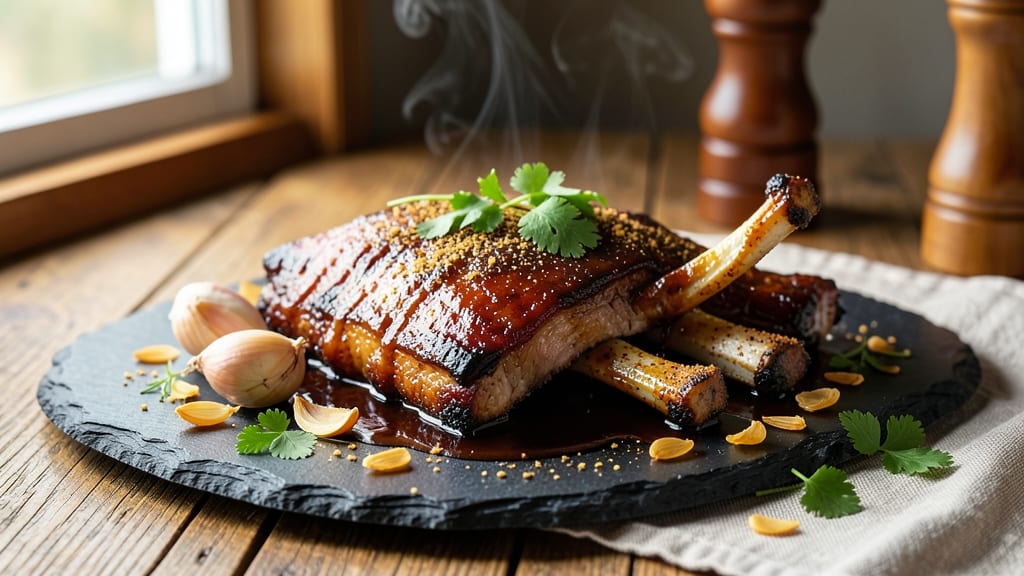
This bean paste pork ribs recipe delivers the perfect balance of five-spice warmth and sticky caramelized edges that make every bite unforgettable. 🔥 After years of perfecting my technique—first in Charleston kitchens, then on my own farm—I've cracked the code for ribs that are tender, aromatic, and irresistibly crispy.
The secret lies in the marinade: a bold blend of fermented bean paste, five-spice powder, and honey that transforms tough cuts into melt-in-your-mouth perfection.
What sets these ribs apart is the two-stage cooking process: an initial low-and-slow braise to tenderize the meat, followed by a high-heat sear that creates those coveted caramelized edges. I use heritage pork ribs from my own farm—Gloucestershire Old Spots—for their rich marbling, but any quality pork ribs will work.
The bean paste adds depth while the five-spice blend (star anise, cinnamon, cloves, fennel, and pepper) creates layers of warmth that linger long after the first bite.
By the time you're done, you'll have ribs that are tender enough to pull apart with your fingers yet crispy enough to stand up to a toothpick.
The glaze is a perfect harmony of sweet, salty, and umami—sticky enough to drip down your chin but balanced enough to let the pork shine. These ribs are restaurant-quality without the fuss, and they'll become your new go-to for weeknight dinners or weekend feasts.
Serve with pickled vegetables to cut through the richness or alongside a simple cucumber salad for balance. The leftovers reheat beautifully, making this a meal that gives back. Let's get cooking—your taste buds will thank you.
Ingredients for bean paste pork ribs
Six pounds of pork ribs transform with just 14 ingredients into sticky, aromatic perfection.
| Ingredient | Amount | Notes |
|---|---|---|
| Pork Ribs (Baby Back) 🥓 | 4 lb | Bone-in, heritage pork preferred |
| Fermented Black Bean Paste 🍲 | ½ cup | Asian market or specialty stores |
| Five-Spice Powder 🌶️ | 1 tbsp | Star anise, cinnamon, cloves, fennel |
| Honey 🍯 | ½ cup | Wildflower preferred for depth |
| Soy Sauce 🍶 | ¼ cup | Kikkoman or Japanese-style |
| Garlic Cloves 🧄 | 6 cloves | Minced for marinade |
| Fresh Ginger 🌿 | 1 tbsp | Grated, aromatic variety |
| Brown Sugar 🍬 | ¼ cup | Dark for caramelization |
| Sesame Oil 🫒 | 1 tbsp | Toasted, for aroma |
| Red Wine Vinegar 🍷 | 1 tbsp | Balances sweetness |
| Vegetable Oil 🫒 | ¼ cup | High smoke point |
| Salt 🧂 | 1 ½ tsp | Diamond Crystal preferred |
| Black Pepper 🌶️ | 1 tsp | Freshly cracked |
| Sesame Seeds 🌾 | 1 tbsp | Toasted for garnish |
The ribs make this recipe—heritage pork like Gloucestershire Old Spots has the marbling for melt-in-your-mouth tenderness, but any quality baby back ribs work. Look for thick slabs with good fat coverage at your butcher or grocery store meat counter. Costco or Whole Foods often carry heritage cuts if you want to splurge. The fermented bean paste is non-negotiable for that deep umami punch—Asian markets have the best selection, but check the international aisle at Walmart or Target for a budget-friendly option. If you can't find it, miso paste plus a splash of soy sauce works in a pinch, though it won't be identical.
No five-spice powder? Mix 1/4 tsp each of ground star anise, cinnamon, cloves, fennel seeds, and black pepper—it's worth the effort. The honey should be wildflower or clover for complexity, but any liquid honey will do. Trader Joe's sells great options at a fraction of the price. For the ginger, freshly grated is ideal, but if you're in a hurry, 1 tsp ground ginger (plus extra salt) gets you close. The sesame oil adds aroma without overpowering—toast it first by heating in a dry pan for 30 seconds to deepen the flavor. And if you're avoiding vinegar, a splash of lemon juice keeps the balance.
Marinate the ribs overnight for maximum flavor penetration, but at least 4 hours if you're short on time. Store the marinade in an airtight container in the fridge. The cooked ribs reheat beautifully—wrap tightly in foil and bake at 300°F for 20 minutes. They keep for 3-4 days in the fridge or 3 months frozen. I always make double batches because these disappear fast—portion into meal-prep containers with a drizzle of extra glaze for easy lunches. The leftovers taste even better the next day as the flavors meld.
Why You'll Love This Recipe
- One-Pan Magic: I swear by this recipe when I’m too tired to wash pots—just ribs, bean paste, and a few pantry staples on one sheet. The five-spice powder does all the work while you sip coffee, and the honey glaze caramelizes into crispy pockets without babysitting the oven.
- Umami Bomb: That fermented black bean paste? It’s the secret weapon—deep, funky, and addictive in the best way. The soy sauce and five-spice powder team up to balance sweetness with this salty, slightly tangy punch that makes regular ribs taste boring.
- Weeknight to Party: I serve these at BBQs, potlucks, and lazy Tuesdays—no one questions why. The sticky-sweet glaze holds up for hours, so they’re perfect for meal prep (yes, even for lunch the next day), and the flavors get better reheated.
- Budget Stretch: A full rack of ribs feeds four for under $15, and the leftovers? Even better cold in sandwiches or fried up the next morning. Honestly, I make this when I’m broke because it’s the only rib recipe that doesn’t break the bank.
Step-by-step instructions for five-spice glazed pork ribs
Here's how to transform simple ribs into sticky, caramelized perfection with a crunchy bean paste crust.
🔥 Step 1: Prepare the Ribs and Marinade Base
Pat the 4 lb pork ribs (baby back) completely dry with paper towels—this is non-negotiable for crispy edges. In a large bowl, combine the 0.5 cup fermented black bean paste, 0.5 cup honey, 0.25 cup soy sauce, 1 tbsp five-spice powder, 6 minced garlic cloves, and 1 tbsp grated fresh ginger. Mix until the black bean paste is fully emulsified and smooth.
Here's the thing—fermented black bean paste has a funky, umami depth that needs to be fully incorporated. Use a whisk or fork to break up any lumps, then add the 0.25 cup brown sugar and 1 tbsp red wine vinegar. The vinegar cuts through the sweetness, balancing the marinade perfectly. Let this mixture sit for 10 minutes while you prep the ribs.
🍳 Step 2: Coat and Rest the Ribs
Place the ribs in a large resealable bag and pour the marinade over them, massaging it into every crevice. Seal the bag and refrigerate for at least 4 hours—overnight is even better. The acid in the vinegar and fermented beans will tenderize the meat while the spices penetrate deeply.
I know it seems like a long wait, but this step is what transforms tough ribs into melt-in-your-mouth perfection. The longer they marinate, the more intense the flavor becomes. If you're short on time, do at least 2 hours, but don't skip this entirely.
🔥 Step 3: Sear for Maximum Crunch
Preheat your oven to 300°F and heat a large oven-safe skillet over medium-high heat. Add 0.25 cup vegetable oil and let it get shimmering hot. Remove the ribs from the marinade (reserve the marinade) and arrange them in a single layer in the hot skillet, bone-side down.
Sear for 3-4 minutes until the meat develops a deep golden brown crust. This isn't just about flavor—it's about creating that textural contrast we're after. The bean paste will caramelize beautifully during this step. Once browned, flip the ribs and cook for another 2 minutes on the other side.
🥘 Step 4: Bake to Sticky Perfection
Transfer the skillet to the preheated oven and pour the reserved marinade over the ribs. Add 1.5 tsp salt and 1 tsp black pepper to the marinade, then cover the skillet tightly with foil. Bake for 2 hours, turning the ribs halfway through, until the meat is fork-tender and pulls away from the bone easily.
Here's where the magic happens—the ribs will develop that signature sticky glaze as the marinade reduces and caramelizes. If the liquid reduces too quickly and the ribs start to dry, add 2-3 tablespoons of water through the foil vent to maintain moisture. The internal temperature should reach 195-203°F when done.
🔥 Step 5: Finish with Sesame Crunch and Glaze
Remove the ribs from the oven and increase the heat to broil. In a small bowl, mix 1 tbsp sesame oil with the 1 tbsp toasted sesame seeds. Brush this mixture over the ribs, then broil for 3-5 minutes until the edges are deeply caramelized and the sesame seeds are toasted.
Watch them carefully—they'll go from sticky perfection to burnt in seconds. The sesame seeds add a nutty crunch that contrasts beautifully with the tender meat. Let the ribs rest for 10 minutes before serving, tented with foil. This resting period ensures every bite is juicy and flavorful.
Pro Tips For Making Bean Paste Pork Ribs
- BLISTER BEAN PASTE FIRST: Slather that fermented black bean paste on the ribs before searing—it’ll caramelize faster and stick like glue. I used to add it later and ended up scraping half off the pan. Trust me, the first 2 minutes of high heat are when the magic happens.
- SALT THE RIBS LONG: Toss the ribs with 1 tablespoon of salt (plus five-spice) and let them sit uncovered in the fridge for at least 30 minutes. This dries the surface slightly so the bean paste crusts properly instead of steaming off. Yes, even if you’re impatient like me.
- LOW AND SLOW AFTER SEAR: After the initial sear and bean paste glaze, drop the heat to 275°F (135°C) and cover loosely with foil. The ribs need 1.5–2 hours to tenderize—rushing this turns them chewy. My grandmother swore by this, and she was right: patience here makes all the difference.
- BALANCE HONEY AND SOY: Add the honey after the ribs have reduced for 20 minutes—it’ll burn if you toss it in too early. For every ½ cup of soy sauce, use 2 tablespoons honey, or the dish gets cloyingly sweet. I learned this the hard way after a sticky, overpowering batch.
Best sauces and condiments for bean paste pork ribs
Bean Paste Glaze
The star of this dish is the fermented black bean paste glaze, which delivers that signature sticky texture and deep umami flavor.
I start with ½ cup fermented black bean paste (available at Asian markets or specialty stores) combined with ½ cup honey and ¼ cup soy sauce to create the base.
The key is to whisk it vigorously until fully emulsified—this ensures a smooth, cohesive glaze that clings beautifully to the ribs. For extra depth, I add 1 tbsp red wine vinegar to balance the sweetness and ¼ cup brown sugar to enhance caramelization. 🍯
When searing the ribs, the bean paste develops a crispy, caramelized crust that contrasts perfectly with the tender meat inside. The glaze reduces during baking, creating that irresistible sticky texture.
If you're short on time, you can simplify the glaze by mixing ¼ cup miso paste with 2 tbsp soy sauce and 1 tbsp honey, though it won’t have the exact same complexity. The fermented bean paste is non-negotiable for that authentic, funky depth.
Sesame Oil Finish
The final touch is a sesame oil and toasted sesame seed drizzle, which adds a nutty crunch and aromatic punch. I mix 1 tbsp toasted sesame oil with 1 tbsp toasted sesame seeds and brush it over the ribs just before broiling.
This step isn’t just for flavor—it creates visual contrast with the glossy glaze and adds texture. For extra flair, sprinkle extra sesame seeds on top right before serving. If you don’t have sesame oil, toasted peanut oil works in a pinch, though the flavor will be slightly different.
Spicy Chili Oil
For a kick of heat, drizzle the ribs with spicy chili oil just before serving. I like to use 2 tbsp chili oil (store-bought or homemade) mixed with 1 tsp gochujang for a smoky-sweet heat.
The oil cuts through the richness of the ribs while adding a fiery contrast that balances the sweet glaze. If you love heat, add ½ tsp chili crisp or 1 tsp sriracha to the glaze before baking.
For a milder version, just use extra sesame oil with a pinch of cayenne pepper. 🌶️
Pickled Vegetable Topping
To cut through the richness, serve the ribs with a quick-pickled vegetable topping. Thinly slice ½ cup radishes, ¼ cup cucumber, and ¼ cup red onion, then toss with 2 tbsp rice vinegar, 1 tsp sugar, and ½ tsp salt.
Let it sit for 15 minutes before serving. The bright acidity and crunch make every bite of the sticky ribs more dynamic. For extra flavor, add 1 tsp toasted sesame seeds or thinly sliced jalapeños to the mix.
Garnish Ideas
Fresh cilantro or scallions add a bright, herbaceous note that elevates the dish. I like to chop ¼ cup cilantro and sprinkle it over the ribs just before serving. For a smoky touch, add crumbled fried shallots or thinly sliced pickled jalapeños.
If you’re feeling fancy, a drizzle of hoisin sauce or extra bean paste glaze adds another layer of umami. Keep garnishes simple—the ribs should be the star, but these finishing touches tie everything together beautifully.
Nutrition facts
Frequently asked questions
Can I use regular black beans instead of fermented bean paste?
Regular black beans won't work—they lack the fermented umami depth that makes this recipe shine. If you absolutely can't find fermented black bean paste, try blending ½ cup cooked black beans with 1 tbsp soy sauce and ½ tsp five-spice powder, then straining through a fine-mesh sieve. It won't be identical, but it'll add some bean flavor. For best results, seek out fermented black bean paste at Asian markets or specialty stores.
How do I know when the ribs are fully cooked?
Use the fork test: The meat should pull apart easily with minimal resistance, and the bone should slide out cleanly. The internal temperature should reach 195-203°F—this is the sticky stage where collagen breaks down. If you're unsure, cut between two bones to check the texture. Overcooking can make them dry, so don't exceed 2 hours 15 minutes of baking time.
Can I make these ribs in a slow cooker?
Yes! Sear the ribs first in a skillet, then transfer them to a slow cooker with the marinade. Cook on low for 6-7 hours or high for 3-4 hours, adding ¼ cup water halfway through if needed. For extra crispiness, broil for 3-5 minutes before serving. The texture will be more tender than oven-baked, but still delicious—just skip the final sesame oil broil step if you're worried about drying.
Why do my ribs turn out dry? Dry ribs usually mean one of two things: either the oven was too hot (keep it at 300°F), or they weren't basted enough during cooking. The key is to turn the ribs and baste with marinade every 30 minutes during baking. Also,
What's the best way to store and reheat leftovers?
Store ribs in an airtight container for up to 4 days in the fridge. To reheat, wrap them tightly in foil and bake at 300°F for 20-25 minutes until warmed through. For extra moisture, drizzle 1 tbsp water or broth over them before reheating. They reheat best when still slightly sticky—if they've dried out, try steaming for 5 minutes first to restore moisture before baking.