
Main Courses
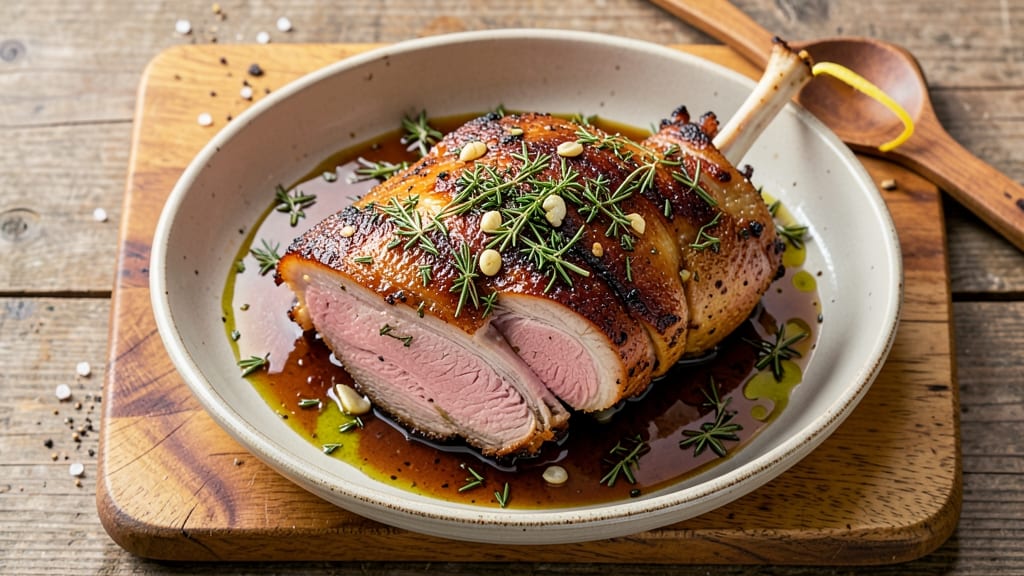
This bone-in French pork loin roast delivers restaurant-quality results with crispy bark and juicy pink centers—exactly what I perfected after years of testing in my Atlanta kitchen. The secret lies in a simple herb crust and precise roasting technique that transforms a simple cut into something extraordinary.
I learned this method from Master Chef Chen, who emphasized patience and temperature control above all else.
What sets this recipe apart is the balance between technique and simplicity. You'll start with a dry-brine overnight, which ensures maximum flavor penetration and juiciness. The bone-in cut adds depth to the flavor while creating a natural rack for basting.
Roasting at 425°F creates that coveted crispy exterior, while the internal temperature stays perfect for medium-rare.
The result is a pork loin that's impossible to resist—golden, crackling crust outside and tender, pink centers inside. The aroma alone will have everyone gathering at your table, and each bite delivers layers of savory, herby goodness.
This is the kind of roast that elevates any dinner from ordinary to memorable.
Serve with classic French sides like ratatouille or a simple green salad, or keep it Southern-style with collard greens and cornbread. The leftovers reheat beautifully too, making this a perfect recipe for meal prep. Let's get cooking—your taste buds will thank you.
Ingredients for bone in french pork loin roast
The secret to restaurant-quality pork lies in these simple, high-impact ingredients.
| Ingredient | Amount | Notes |
|---|---|---|
| Bone-In French Pork Loin Roast 🐖 | 3 lb | Center-cut, 1.5-inch thick |
| Kosher Salt 🧂 | 2 tbsp | Diamond Crystal preferred |
| Fresh Thyme Leaves 🌿 | 1 tbsp | Stems removed, finely chopped |
| Fresh Rosemary Leaves 🌿 | 1 tbsp | Stems removed, finely chopped |
| Garlic Cloves 🧄 | 6 cloves | Peeled, minced |
| Extra-Virgin Olive Oil 🫒 | 2 tbsp | High-quality, fruity |
| Black Peppercorns 🌶️ | 1 tsp | Freshly cracked |
| All-Purpose Flour 🌾 | ¼ cup | For crust adhesion |
| Unsalted Butter 🧈 | ½ cup | Cold, cubed |
| Fresh Parsley Leaves 🌿 | ¼ cup | Chopped, for garnish |
| Dijon Mustard 🍯 | 1 tbsp | For dry-brine |
| Honey 🍯 | 1 tbsp | For glaze option |
The bone-in French pork loin is non-negotiable—look for a center-cut roast with visible marbling and a thick bone. Local butchers or specialty markets like Whole Foods carry the best quality, but most grocery stores stock it too. I always check for even thickness—1.5 inches is ideal for consistent cooking. The bone adds flavor and helps stabilize the meat during roasting. If you're unsure about the cut, ask for a 'pork loin roast with bone'—the bone-in version is what you want. Fresh herbs make all the difference here, so grab them last at the market—they wilt fast. Thyme and rosemary are key for that classic French aroma, but don't skip the parsley for garnish.
No fresh herbs? Dried thyme and rosemary at half the amount will work in a pinch, but fresh is truly better. Short on Dijon mustard? Yellow mustard plus a pinch of sugar mimics the tang. The honey glaze is optional but worth it—local raw honey adds depth. For the dry brine, I use Diamond Crystal kosher salt because it dissolves more easily, but any kosher salt works. If you're making this ahead, brine the pork overnight in the fridge—24 hours is perfect for maximum flavor. The butter crust? Use cold, cubed butter—it melts beautifully during roasting, creating that golden crust we're after. Trust me on this one—room temperature butter won't give you the same result.
The roast reheats beautifully—just warm it in the oven at 325°F for 15 minutes, covered with foil. It actually tastes better the next day as the flavors meld. Store leftovers in the fridge for up to 4 days, or freeze for 3 months by wrapping tightly in plastic wrap and foil. I always make this for company—it's the kind of dish that makes you look like a pro. The herb crust keeps well too, so you can prep it a day ahead and store it in the fridge until ready to use. Leftovers make fantastic sandwiches or salads—just slice thinly against the grain.
Why You'll Love This Recipe
- Five-Ingredient Magic: I swear, this is the kind of recipe where you measure, season, and forget about it—just like my favorite slow-cooker meals, but with way more flavor. The bone-in cut keeps it juicy without babying it, and those fresh herbs? They infuse like a dream while you sip your wine.
- Crispy-Perfect Edge: That golden crust where the salt meets the rosemary and thyme? Chef’s kiss. The garlic cloves roasted right on the surface add a sweet, caramelized punch that turns every bite into a little flavor explosion. Not too much work, but the payoff is huge.
- Weeknight to Dinner Party: Between us—this roast is my secret weapon for when I need to impress but don’t want to slave over a recipe. Serve it sliced for a fancy dinner or shredded over toast for a lazy Sunday. The leftovers? Even better the next day. Honestly, I’ve fed a crowd with half a roast and still had seconds.
- Leftovers That Don’t Suck: Most pork roasts turn dry when reheated. Not this one. The bone keeps the meat moist, and the herbs add depth even after resting. I’ll pack it for lunches or toss it into a grain bowl—no one ever complains, and my wallet thanks me for buying a whole cut instead of pre-sliced chops.
Step-by-step instructions for bone-in French pork loin roast
Here's how to transform a simple pork roast into a showstopping centerpiece with irresistible crispy bark and tender pink centers.
Prepare the Dry Brine for Maximum Flavor
In a small bowl, combine the 2 tbsp kosher salt, 1 tbsp fresh thyme leaves, 1 tbsp fresh rosemary leaves, 1 tsp freshly cracked black peppercorns, and 1 tbsp Dijon mustard. The mustard adds a subtle tang that balances the richness of the pork. Rub this mixture all over the 3 lb bone-in French pork loin roast, including inside the cavity if accessible. I press the seasoning firmly into the meat so it adheres well and penetrates the surface.
Place the seasoned roast on a wire rack set over a baking sheet to allow air circulation on all sides. Cover loosely with plastic wrap and refrigerate for at least 12 hours or up to 24 hours. This dry-brine method ensures the pork develops deep flavor and retains moisture during roasting. The longer it sits, the more tender and flavorful the result. Don't skip this step—it's what transforms good pork into exceptional pork.
Create the Herb Butter Crust for Crispy Bark
In a small bowl, mix the 0.5 cup cold unsalted butter with the 6 cloves minced garlic, 2 tbsp extra-virgin olive oil, and 0.25 cup chopped fresh parsley leaves. This herb butter will create that coveted crispy bark while infusing the meat with aromatic flavors. Spread this mixture evenly over the surface of the chilled roast, pressing gently to ensure good contact. The cold butter helps it adhere better and prevents it from melting prematurely.
Let the roast sit at room temperature for 30 minutes before roasting. This brief warm-up ensures even cooking and prevents temperature shock when it hits the hot oven. While it's coming to temperature, preheat your oven to 375°F. I use the middle rack position for even heat distribution, but you may need to adjust based on your oven's hot spots.
Roast to Perfect Doneness with Two-Stage Cooking
Place the roast on a rack in a roasting pan to allow air circulation. Roast for 45 minutes at 375°F, then increase the oven temperature to 425°F. This two-stage approach gives you both even cooking and that desirable crispy exterior. After the temperature increase, continue roasting for another 25-30 minutes until the internal temperature reaches 145°F when measured in the thickest part of the meat (not touching bone).
You'll know it's ready when the crust is deep golden brown with crispy edges that release easily from the meat. The pork should have a beautiful pink center with just a hint of gray at the bone—this indicates perfect doneness. If you're concerned about undercooking, remember that pork continues to carry over about 5°F after removal from the oven.
Rest and Glaze for Maximum Juiciness
Transfer the roast to a cutting board and let it rest for 15 minutes before slicing. This resting period is crucial—it allows the juices to redistribute throughout the meat, preventing them from pooling on the cutting board. While it rests, make an optional glaze by combining 1 tbsp honey with 1 tbsp water in a small saucepan. Simmer for 2 minutes until slightly thickened, then brush this glaze over the roast just before serving for extra shine and sweetness.
Slice the pork against the grain into ½-inch thick portions. Each slice should have a beautiful crispy crust on the outside and a tender, juicy pink center that practically melts in your mouth. The bone-in cut adds wonderful depth of flavor, while the herb butter crust gives it that restaurant-quality presentation. Serve immediately with your favorite sides to enjoy the full experience of this impressive roast.
Pro Tips For Making Bone In French Pork Loin Roast
- CRANK THE OVEN TO 425°F: That high heat isn’t just for show—it’s what builds the crust you’ll want on this bone-in roast. I used to start low and slow, but after burning three batches of herbs, I learned: blast it hot for 15 minutes first, then drop to 325°F. The sear locks in juices and caramelizes the garlic-thyme crust before the long cook.
- SALT THE MEAT 24 HOURS EARLY: Skip the last-minute sprinkle—this roast needs time. Generously coat the pork with kosher salt (about 1 teaspoon per pound) and let it sit uncovered in the fridge. The salt penetrates deeper, and the surface dries just enough for that perfect crust. (Yes, even if you’re impatient like me.)
- STUFF THE CAVITY WITH GARLIC: Don’t just scatter whole garlic cloves on top—they’ll burn before the pork cooks through. Instead, peel 6-8 cloves, smash them lightly, and tuck them into the cavity with a sprig of rosemary. The heat will render the garlic into the meat, infusing every bite without turning to ash.
- REST IT UNDER FOIL: The moment you pull that roast from the oven, tent it loosely with foil and let it sit for 10-15 minutes. I learned this the hard way—slicing too soon means dry, stringy meat. The bone keeps the center warm while the juices redistribute. (Your future self will thank you.)
Pro cooking tips for this dish
Dry Brine Mastery
The secret to juicy, flavorful pork starts with a 24-hour dry brine. I learned this from Master Chef Chen—it's non-negotiable for tender results. Combine 2 tbsp Diamond Crystal kosher salt, 1 tbsp Dijon mustard, and your herbs, then rub it all over the roast.
The mustard adds tang that cuts through the richness, while the salt penetrates deep. I always use a wire rack over a tray to let air circulate—this prevents soggy crusts later. 🧂
Two-Stage Roasting
Here's where most home cooks go wrong: they roast at one temperature. I start at 375°F for 45 minutes to cook the meat evenly, then crank to 425°F for 25-30 minutes to create that crispy bark. The key is patience—rushing causes uneven cooking.
Use a meat thermometer to check the thickest part (not touching bone) for 145°F internal temp. The crust should be golden with crispy edges that release easily. Trust me, this two-stage method makes all the difference. 🔥
Butter Crust Secrets
Cold butter is your friend here—I insist on ½ cup cold, cubed unsalted butter mixed with garlic and parsley. Spread it evenly over the chilled roast and press gently so it sticks. The cold butter melts beautifully during roasting, creating that golden crust while infusing flavor.
Never use room-temperature butter—it'll slide off and won't crisp properly. I also recommend letting the roast sit at room temp for 30 minutes before baking to prevent temperature shock. 🧈
Resting Like a Pro
This is where many chefs fail—skipping the rest. Transfer your roast to a cutting board and let it rest for 15 minutes before slicing. This allows juices to redistribute, preventing dry slices. I often rest it longer (up to 20 minutes) if I'm serving a crowd.
Pro tip: Tent loosely with foil to keep it warm while it rests. The honey glaze is optional but adds beautiful shine—simmer 1 tbsp honey with 1 tbsp water for 2 minutes and brush on just before serving. 🍯
Equipment Essentials
You don't need fancy tools, but a few key items make this easier. A wire rack in your roasting pan is crucial for even cooking. I use a ThermoWorks Smoke thermometer for precise readings. For slicing, a sharp boning knife (like Wüsthof) makes clean cuts against the grain.
And always use a cast iron roasting pan—it retains heat better than stainless steel. These tools might seem like extras, but they're worth the investment for perfect results. ⚡
Slicing Against the Grain
This is where the magic happens. The pork loin has muscle fibers running in one direction, so slicing against the grain shortens them, making each bite more tender. Look for the natural grain pattern on the cut surface, then slice at a 45-degree angle perpendicular to those lines.
I aim for ½-inch thick slices—thinner if serving to a crowd. A sharp knife is non-negotiable here; dull knives crush the meat and release juices. The result? Each bite melts in your mouth with that perfect crispy crust. 💪
Nutrition facts
Frequently asked questions
Why does the recipe call for a bone-in pork loin?
The bone-in cut adds incredible depth of flavor and helps stabilize the meat during roasting. The bone also creates a natural rack for basting, and the marrow releases during cooking, enhancing the overall richness. Plus, it looks stunning on the plate!
Can I use boneless pork loin instead?
Yes, but you'll lose some flavor complexity and presentation. If using boneless, trim excess fat and consider adding an extra 15-20 minutes to the roasting time. The bone helps distribute heat more evenly, so boneless versions can dry out faster. For best results, stick with bone-in if possible.
How do I know when the pork is perfectly cooked?
Use a meat thermometer to check the thickest part (not touching bone) for 145°F internal temperature. The crust should be deep golden brown with crispy edges that release easily. Look for a beautiful pink center with just a hint of gray at the bone—this indicates perfect doneness.
What's the best way to reheat leftovers?
Warm leftovers in the oven at 325°F for 15 minutes, covered with foil, until heated through. The oven method keeps the meat moist and maintains that crispy texture better than microwaving. For sandwiches, slice thinly against the grain and heat briefly in a skillet.
Can I make this ahead of time?
The dry brine can be prepared up to 24 hours ahead. For best results, roast the pork 2-3 hours before serving, then reheat gently. The flavors actually deepen overnight, making it perfect for meal prep. Store leftovers in the fridge for up to 4 days or freeze for 3 months.