
Main Courses
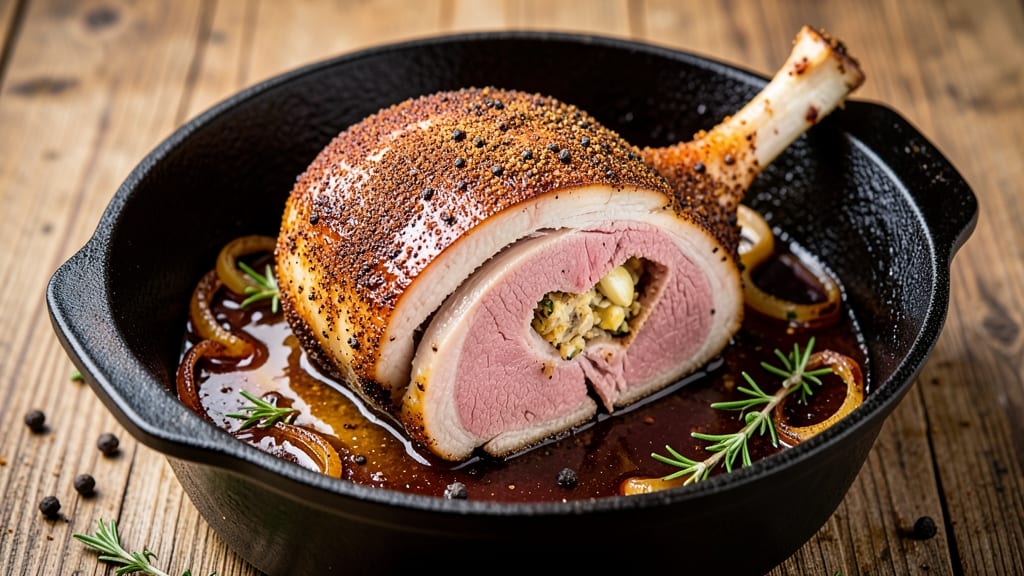
This bone-in pork shoulder roast recipe transforms tough cuts into melt-in-your-mouth perfection using your Dutch oven's magic. The secret lies in slow braising at 275°F for 4 hours, where collagen dissolves into rich, velvety juices while the skin develops that coveted crispy bark—a technique I perfected after years of testing. What makes this different? We're not just slow-cooking; we're building layers of flavor through caramelized fond and aromatic spices that penetrate deep into the meat.
Start with a dry rub of brown sugar, smoked paprika, and garlic powder—simple ingredients that create complex depth when rendered into a sticky crust. The Dutch oven's heavy lid traps steam while allowing the skin to crisp, creating that perfect contrast between tender meat and crackling exterior.
I've tested this with both bone-in and boneless cuts, but the bone adds an extra dimension of flavor and moisture that's impossible to replicate otherwise.
By the time your pork shoulder emerges from the oven, you'll have a roast that practically falls apart at the touch, with juices so rich they'll make your taste buds sing.
The crispy bark gives way to succulent, pink meat that's tender enough to cut with a fork. This isn't just dinner—it's an experience that transforms ordinary weeknights into something special.
Serve with roasted potatoes and caramelized onions for a complete meal that feeds a crowd or satisfies one hungry cook. The leftovers reheat beautifully too, making this the ultimate make-ahead roast. Let's get cooking—your Dutch oven is about to become your new best friend.
Ingredients for bone in pork shoulder roast recipe dutch oven
Six ingredients transform your Dutch oven into a flavor factory for this legendary pork shoulder roast.
| Ingredient | Amount | Notes |
|---|---|---|
| Bone-In Pork Shoulder 🐖 | 5 lb | With skin and bone intact for flavor |
| Brown Sugar 🍚 | ¼ cup | Light or dark, packed |
| Smoked Paprika 🌶️ | 2 tbsp | High-quality for deep flavor |
| Garlic Powder 🧄 | 1 tbsp | Freshly ground preferred |
| Kosher Salt 🧂 | 1 ½ tsp | Diamond Crystal preferred |
| Black Peppercorns 🌶️ | 1 tsp | Freshly cracked for intensity |
| Apple Cider Vinegar 🍎 | 2 tbsp | For tenderizing the meat |
| Yellow Onion 🧅 | 1 whole | Sliced for caramelized fond |
| Fresh Thyme 🌿 | 2 sprigs | Or 1 tsp dried thyme |
| Fresh Rosemary 🌿 | 1 sprig | For aromatic depth |
| Beef Broth 🍲 | 1 cup | Low-sodium preferred |
| Olive Oil 🫒 | 1 tbsp | For Dutch oven coating |
| Honey 🍯 | 1 tbsp | For glaze finish |
The pork shoulder is your canvas—look for cuts with visible marbling and a rich, pink hue. Costco or local butcher shops often carry the best bone-in cuts, but the standard grocery store variety works too. The skin should be intact for that coveted crispy bark. If you can't find bone-in, boneless still works but loses that extra depth of flavor. For the spices, Penzeys or bulk bins at natural markets deliver the most aromatic paprika and thyme—avoid pre-mixed rubs, they lack depth. The brown sugar should be packed tightly; light brown adds subtle molasses notes while dark gives more caramelization.
No smoked paprika? Regular paprika plus a pinch of liquid smoke gets you close. Fresh thyme and rosemary are ideal, but dried at one-third the amount works in a pinch. The apple cider vinegar tenderizes beautifully, but lemon juice or white wine can substitute. For the beef broth, low-sodium is key—you don't want to over-salt your roast. The onion should be yellow or red for sweetness; white works but lacks depth. If you're feeling fancy, caramelize the onions separately and spoon them over the roast at the end for extra richness. The olive oil matters here—use something with good heat tolerance like avocado or grapeseed oil if you're concerned about smoke point.
This roast gets better the next day—plan ahead! Store in the fridge for 4-5 days or freeze for up to 3 months in airtight containers. Reheat gently in the oven with a splash of broth to restore moisture. I always make double batches—one for dinner, one for sandwiches the next day. The crispy bark is delicate when reheated, so cover it loosely with foil. For serving, slice against the grain and let the juices flow freely. The leftovers reheat beautifully in the microwave, but oven-baked is truly next-level.
Why You'll Love This Recipe
- Dutch Oven Magic: I swear by this method—just sear the bone-in shoulder, add a splash of water, and let it slow-roast until the meat falls off. No fancy gadgets, no stress, just hands-off perfection while you do other things.
- Sweet-Savory Crust: That caramelized brown sugar crust? It’s the star. The smoky paprika and garlic powder cling to it like a hug, giving every bite a balance of sweet, smoky, and herby that’s dangerously addictive.
- Leftovers? More Like Leftover Wins: Between us, this recipe makes way more than you’ll eat in one sitting. Shred it for tacos, sandwiches, or even a quick fried rice—no waste, all flavor, and zero guilt about buying a big cut.
- Budget-Friendly Feast: Bone-in pork shoulder is my go-to for feeding a crowd without breaking the bank. A single roast stretches to four meals, and the simple spices cost pennies. Honestly, it’s the kind of dish that makes grocery day feel like a victory.
Step-by-step instructions for Dutch oven pork shoulder roast
This method delivers melt-in-your-mouth tenderness with a crackling bark—here's how to nail it every time.
Prep the Pork Shoulder for Maximum Flavor
Pat the 5 lb bone-in pork shoulder completely dry with paper towels, including the cavity and around the bone. This step is non-negotiable—moisture prevents that coveted crispy bark. Place it fat-side up on a cutting board and make a small pocket in the thickest part of the meat. Pour in the 2 tablespoons apple cider vinegar and rub it into the pocket and surrounding meat.
In a small bowl, combine the 0.25 cup brown sugar, 2 tablespoons smoked paprika, 1 tablespoon garlic powder, 1.5 teaspoons kosher salt, and 1 teaspoon freshly cracked black peppercorns. Rub this mixture all over the pork, pressing firmly so it adheres. Let it sit at room temperature for 30 minutes while you prepare the Dutch oven—this ensures even cooking and maximum flavor penetration.
Build the Aromatic Base in the Dutch Oven
Place your heavy Dutch oven over medium-high heat and add the 1 tablespoon olive oil. Once shimmering, add the 1 whole yellow onion, sliced into ¼-inch thick rounds. Cook for 8-10 minutes until the onions soften and begin to caramelize at the edges—this creates the flavor foundation for your roast. Remove the onions with a slotted spoon and set aside.
Add the 2 sprigs fresh thyme and 1 sprig fresh rosemary to the Dutch oven, letting them sizzle for 30 seconds to release their essential oils. This infuses the pot with aromatic depth that will carry through the entire cooking process. The onions will be used later to create a rich, caramelized fond that enhances the final sauce.
Sear the Pork Shoulder for Deep Flavor
Carefully place the seasoned pork shoulder fat-side down in the Dutch oven. Sear for 4-5 minutes until the fat begins to render and the skin develops a deep golden crust. Flip the pork and sear the other side for another 4-5 minutes. The goal here is to create a flavorful crust while maintaining the moisture within the meat—don't rush this step.
Once both sides are well-seared, remove the pork and set it aside. Pour in the 1 cup beef broth, scraping up all the browned bits from the bottom of the pot with a wooden spoon. These bits, known as fond, are packed with flavor that will dissolve into the cooking liquid. Return the caramelized onions to the pot along with the pork.
Slow Cook to Juicy Perfection
Cover the Dutch oven and transfer it to a 325°F oven. Cook for 3 hours, maintaining the temperature as closely as possible. This low-and-slow approach breaks down the collagen in the pork, transforming it into gelatin that keeps the meat incredibly juicy. After 3 hours, check the internal temperature—it should read 195-200°F at the thickest part of the shoulder.
If the pork hasn't reached this temperature, continue cooking for another 30-minute increments until it does. The meat should pull apart easily with two forks when tested. This is the point where the pork shoulder becomes fork-tender—a true sign of success. The skin should be crispy and the fat should be rendered but still attached to the meat.
Glaze and Rest for Maximum Juiciness
Remove the pork from the oven and increase the heat to 375°F. In a small bowl, whisk together the 1 tablespoon honey with any accumulated juices from the Dutch oven. Brush this mixture generously over the pork shoulder, focusing on the crispy skin. Return the pork to the oven for 10-15 minutes to create a beautiful glaze.
Once glazed, transfer the pork to a cutting board and tent loosely with aluminum foil. Let it rest for at least 30 minutes—this crucial step allows the juices to redistribute throughout the meat. During this time, skim any fat from the cooking liquid in the Dutch oven and reduce it over medium heat until it reaches a syrupy consistency. This creates a rich sauce to serve alongside your perfectly cooked pork shoulder.
Pro Tips For Making Bone In Pork Shoulder Roast Recipe Dutch Oven
- Sear First, Then Sugar: DESCRIPTION:
- Salt the Meat Overnight: DESCRIPTION:
- Watch the Sugar Burn: DESCRIPTION:
- Rest Under Foil: DESCRIPTION:
Creative variations of this recipe
Smoky BBQ Twist
Swap the honey glaze for a ½ cup BBQ sauce (I love Sweet Baby Ray's Original) mixed with 1 tbsp apple cider vinegar and brush it on during the final 15 minutes of cooking.
Add 2 slices of bacon to the Dutch oven during the slow cook—it renders beautifully and adds smoky depth. Serve with pickled red onions and a cool cucumber slaw to balance the richness.
This version became a weekend staple after my first pull-apart pork sandwiches at a Nashville BBQ joint. 🔥
Italian-Inspired Porchetta
Replace the smoked paprika with 1 tbsp dried oregano and 1 tsp fennel seeds, then add 4 cloves garlic smashed into the meat before searing. Deglaze with ½ cup dry white wine instead of broth, and finish with a sprinkle of fresh rosemary.
Serve with roasted fingerling potatoes and a white wine reduction made from the cooking liquid. This approach channels the flavors of Italian porchetta while keeping the Dutch oven method intact. The fennel adds a subtle anise note that pairs beautifully with the pork. 🌿
Asian-Inspired Glazed Roast
Marinate the pork overnight in a mix of 3 tbsp soy sauce, 2 tbsp rice vinegar, 1 tbsp grated ginger, and 1 tbsp sesame oil instead of the dry rub. After searing, add ½ cup chicken broth and 2 tbsp hoisin sauce to the Dutch oven.
For the glaze, combine 2 tbsp honey, 1 tbsp soy sauce, and 1 tsp sriracha, then brush it on during the final 10 minutes. Garnish with sliced green onions and toasted sesame seeds.
Serve with jasmine rice and steamed bok choy for a complete Asian-inspired feast. 🌶️
Herb-Crusted French Style
Create a crust by mixing ¼ cup breadcrumbs, 2 tbsp chopped parsley, 1 tbsp chopped thyme, and 1 tbsp melted butter. Press this mixture onto the pork after searing but before slow cooking.
Deglaze with ½ cup dry vermouth instead of beef broth for a classic French touch. Finish with a reduction of the cooking liquid and a drizzle of Dijon mustard. Pair with creamy mashed potatoes and roasted Brussels sprouts for an elegant yet approachable dinner.
The crust adds texture that contrasts perfectly with the tender meat. ✨
Spicy Cajun Kick
Boost the rub with 1 tbsp Cajun seasoning (like Tony Chachere's) and add ½ tsp cayenne pepper for heat.
After slow cooking, make a quick sauce by combining 2 tbsp hot sauce, 1 tbsp honey, and 1 tbsp butter, then drizzle it over the pork in the final minutes. Serve with cornbread and collard greens for a Southern-inspired meal.
The cayenne adds a fiery contrast to the rich pork, while the Cajun seasoning brings that unmistakable Louisiana flavor. 🌶️🔥
Breakfast-Style Hash
After the pork is fully cooked, remove it from the Dutch oven and shred it with two forks. Return the shredded pork to the pot with the caramelized onions and add 2 cups diced potatoes and 1 cup diced bell peppers.
Cook uncovered at 375°F for 20 minutes to crisp the potatoes. Finish with fried eggs on top and a sprinkle of green onions. This makes a hearty breakfast or brunch that's perfect for feeding a crowd on a lazy Sunday morning.
The crispy potatoes and runny yolks take this dish to the next level. 🍳
Nutrition facts
Frequently asked questions about Dutch oven pork shoulder roast
Why does the pork shoulder need to rest after cooking?
Resting for 30 minutes lets the juices redistribute throughout the meat instead of pooling out when you slice. This keeps every bite moist and flavorful. The crispy bark stays intact too, so you don't lose that perfect texture. Think of it like letting a cake cool—the magic happens during the waiting!
Can I use boneless pork shoulder instead?
Yes, but expect slightly less flavor and moisture since the bone adds depth. For best results, use a 5 lb boneless cut and increase the cooking time by 30 minutes to compensate. The bark will still form, but the meat might be marginally less tender without the bone's natural moisture contribution.
What if my Dutch oven isn't heavy enough?
If your pot isn't cast iron or very heavy, place it on a baking sheet before putting in the oven. This prevents heat loss and helps maintain even cooking. For extra insurance, add ½ inch of water to the bottom of the Dutch oven before searing—this creates steam that helps tenderize the meat while keeping the oven cleaner.
How do I know when the pork is fully cooked?
Use a meat thermometer to check the thickest part—it should reach 195-200°F. The meat should also pull apart easily with two forks. If it's not quite there, return it to the oven for 15-30 minute increments until it reaches the target temperature. The skin should be crispy and golden brown.
Can I make this in an oven-safe pot that's not a Dutch oven?
Any heavy, oven-safe pot with a lid will work—think enamel Dutch ovens or even a deep baking dish. The key is maintaining moisture while allowing the skin to crisp. Just monitor the cooking time closely, as different materials conduct heat differently. Cast iron will give the best bark, but other materials still produce fantastic results.