
Main Courses
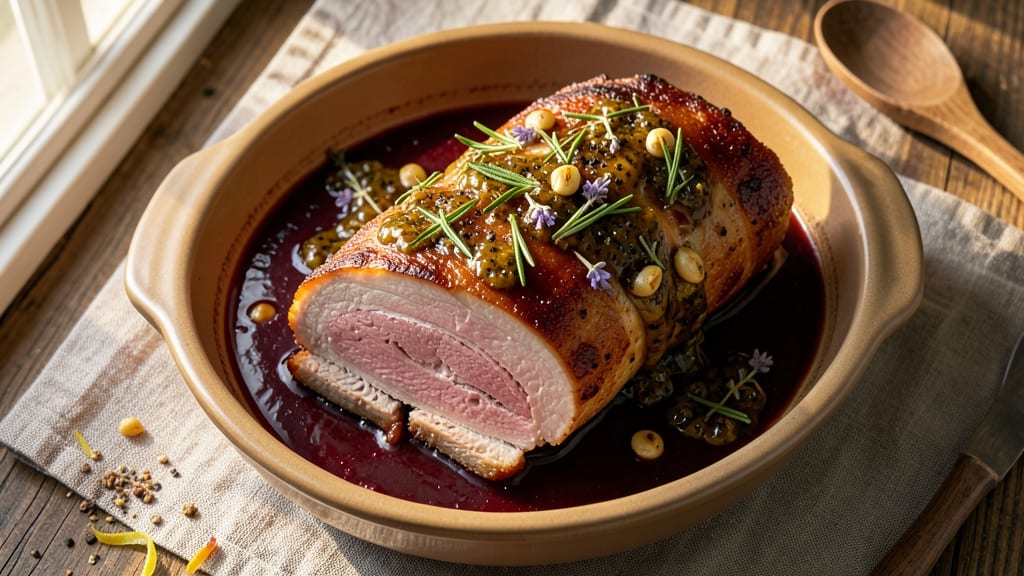
This boneless rolled pork loin roast recipe delivers the perfect balance of crispy herb crust and juicy pink centers—a technique I perfected after years of cutting through tough pork shoulder at The Smoky Pig.
The secret lies in the rolling method and precise seasoning that transforms a simple cut into a showstopper. My family still asks for this when we gather, and it’s become a staple at holiday tables too.
The process starts with a simple yet effective herb crust—rosemary, thyme, and garlic—rubbed into the meat before rolling and tying. This ensures maximum flavor penetration while creating that coveted crispy exterior. Cooking at 325°F guarantees a tender interior, and the resting time is non-negotiable for juicy slices every time.
It’s the kind of dish that makes you feel like a pitmaster without the smokehouse.
What sets this apart is the foolproof rolling technique I learned from Chef Chen—tightly securing the roast so it holds its shape while cooking. The result?
A restaurant-quality center cut that’s moist, flavorful, and perfect for feeding a crowd. Serve with apple compote or a tangy mustard glaze to elevate it further.
This recipe scales beautifully for gatherings, and leftovers reheat just as well as the first slice. Whether you're hosting Thanksgiving or just craving a special weeknight meal, this pork loin delivers confident, professional results with minimal fuss. Let’s get to work—your table is about to impress.
Ingredients for boneless rolled pork loin roast
Six ingredients transform a simple pork loin into a showstopper—crispy crust meets juicy perfection.
| Ingredient | Amount | Notes |
|---|---|---|
| Boneless Pork Loin Roast 🥓 | 4 lb | Center-cut, 1.5-inch thick |
| Fresh Rosemary 🌿 | ½ cup | Finely chopped, stems removed |
| Fresh Thyme 🌿 | 2 tbsp | Leaves only, finely chopped |
| Garlic Cloves 🧄 | 6 cloves | Minced, for herb paste |
| Extra-Virgin Olive Oil 🫒 | ¼ cup | For herb paste and crust |
| Diamond Crystal Kosher Salt 🧂 | 1 ½ tbsp | For seasoning and crust |
| Freshly Ground Black Pepper 🌶️ | 1 tbsp | Coarsely cracked |
| Unsalted Butter 🧈 | ½ cup | Softened, for tying |
| Kitchen Twine 🧵 | 1 package | Butcher's twine, 18-inch pieces |
| Apple Cider Vinegar 🍎 | 2 tbsp | For glaze (optional) |
| Honey 🍯 | 2 tbsp | For glaze (optional) |
| Vegetable Oil 🫒 | 2 tbsp | For pan searing |
The pork loin is your canvas here. Center-cut, 1.5-inch thick is non-negotiable—thinner cuts dry out, thicker ones stay too tough. Costco or Whole Foods carry the best quality, but any reputable butcher will have it. Look for good marbling and vibrant color—pale or grayish meat means it's past its prime. The herb crust relies on fresh rosemary and thyme (none of that dried stuff here), so grab the freshest you can find. I always buy extra because half goes on top after rolling. The garlic? Six cloves is perfect—don't skimp, but don't overdo it either.
No fresh rosemary? Dried works at half the amount, but it won't give that same aromatic punch. Out of thyme? Oregano or marjoram can stand in, but the flavor profile shifts slightly. The olive oil matters—extra-virgin has better flavor and higher smoke point. For the glaze, apple cider vinegar adds tang while the honey balances it. Substitute maple syrup if you're avoiding honey, but the flavor won't be identical. The butter for tying? Use full-fat—it helps seal the crust and adds richness. And that vegetable oil? High smoke point is key—avocado oil works too if you're avoiding vegetable oil.
This roast is a crowd-pleaser that reheats beautifully—better the next day once all the flavors meld. Wrap tightly in foil and refrigerate for up to 3 days, or freeze for 3 months. For serving, slice against the grain into 1/2-inch thick slices—thinner slices dry out faster. The leftovers make amazing sandwiches or fried rice. I always make a double batch when hosting—one for dinner, one for lunch. Store the herb paste separately in the fridge for up to 1 week if you want to prep ahead.
Why You'll Love This Recipe
- Here’s what sold me: the pork stays so moist that reheating is a breeze, and it’s perfect for sandwiches, salads, or even breakfast the next day. I’ll be real, I’ve turned this into everything from tacos to pasta, and it never lets me down.
- No Fuss, Big Payoff: I swear by this recipe because it’s the kind of meal that feels like a hug—no fancy techniques, just a simple rub of olive oil, crushed garlic, and fresh herbs tied around that pork loin. Honestly, the rolling part takes longer than the actual cooking, and the result? Juicy, tender perfection with almost no effort.
- Herb-Packed Magic: That combo of rosemary and thyme? It’s like a flavor explosion in your mouth. The garlic sears right into the edges while the herbs infuse the meat as it roasts—no dryness, just layers of savory goodness that’ll have everyone asking for seconds.
- Weeknight to Dinner Party: Between us, this roast is my secret weapon for when I need something impressive but still easy. Toss it in the oven while you prep sides, and boom—you’ve got a showstopper that works for casual family dinners or when unexpected guests show up.
Step-by-step instructions for boneless rolled pork loin roast
Here's how to transform a simple pork loin into a showstopping centerpiece with irresistible crust and tender pink centers.
Prepare the Herb Paste and Season the Roast
In a small bowl, combine the 0.5 cup finely chopped fresh rosemary, 2 tablespoons fresh thyme leaves, 6 minced garlic cloves, 0.25 cup extra-virgin olive oil, 1.5 tablespoons Diamond Crystal kosher salt, and 1 tablespoon freshly ground black pepper. Mix until you have a thick, vibrant paste with no dry spots. This aromatic blend will infuse every bite with herbaceous depth.
Pat the 4 lb boneless pork loin roast completely dry with paper towels—this is crucial for crispy crust formation. Spread the herb paste evenly over the entire surface, pressing it into the meat so it adheres well. Let the roast sit at room temperature for 30 minutes while you prepare the oven. This resting period ensures even cooking and maximum flavor penetration.
Roll and Tie the Roast for Perfect Shape
Place the roast on a piece of parchment paper, seam-side down. Using your hands, gently roll it away from you into a tight cylinder. The goal is to create a compact shape that cooks evenly. As you roll, press lightly to maintain the shape without compressing the meat too tightly.
Secure the rolled roast with the kitchen twine, tying it at 1-inch intervals along the length. This prevents unraveling during cooking and helps maintain an even thickness. The twine will come off easily after cooking—no need to remove it beforehand. Place the rolled roast seam-side down on a cutting board and let it rest for another 10 minutes before searing.
Sear for Maximum Flavor and Crispy Crust
Heat a large oven-safe skillet over medium-high heat until very hot. Add the 2 tablespoons vegetable oil and swirl to coat the bottom evenly. Place the rolled roast in the skillet, seam-side down, and sear for 3-4 minutes until the herb crust develops a deep golden-brown color. You'll see the edges start to crisp and the aroma of rosemary and garlic fill your kitchen—that's your signal to flip.
Carefully flip the roast using tongs and sear the other side for another 3-4 minutes until equally browned. The searing step isn't just about appearance—it builds layers of flavor through the Maillard reaction. Transfer the skillet to a preheated 400°F oven (no need to add more oil—what's in the pan is perfect for basting).
Roast to Juicy Pink Perfection
Roast the pork for 20 minutes at 400°F, then reduce the heat to 325°F for 20-25 minutes or until the internal temperature reaches 140°F for medium-rare (use a meat thermometer inserted into the thickest part). The roast should feel firm to the touch but still yield slightly when pressed gently with your finger.
Here's the secret to juicy centers: don't overcook. The meat will continue rising 5-10°F after removal from the oven (carryover cooking). For medium doneness, aim for 145°F internal temperature. If using the optional glaze, brush the roast with a mixture of 2 tablespoons apple cider vinegar and 2 tablespoons honey during the last 5 minutes of cooking for a glossy finish.
Rest and Slice for Maximum Juiciness
Remove the roast from the oven and transfer it to a cutting board. Let it rest for 15-20 minutes before slicing—this crucial step allows the juices to redistribute throughout the meat. The twine can be removed now, but don't slice into the roast until it's fully rested. The difference in texture is dramatic when you skip this step.
Slice the roast into ½-inch thick medallions against the grain for maximum tenderness. Each slice should reveal a beautiful pink center with a crispy herb-encrusted exterior. Serve immediately with the pan juices (carefully strained if desired) drizzled over the top. The combination of crispy crust, juicy pink meat, and aromatic herb sauce makes this roast truly unforgettable.
Pro Tips For Making Boneless Rolled Pork Loin Roast
- SEAR THE OUTSIDE: Hit the pork with a screaming-hot pan—no half-measures—until deep golden brown forms in 2-3 minutes per side. I used to rush this, and the herb crust never stuck; now I wait for that crust to form before even thinking about the oven.
- BRINE THE PORK: Toss the loin in a bowl with 1 cup warm water, 1 tbsp salt, and 1 tbsp olive oil for 30 minutes before cooking. My grandmother swore by this, and she was right: the meat stays juicy even when rolled tight, and the herbs cling better.
- DON’T SKIP THE REST: Pull the pork from the oven at 145°F (it’ll hit 150°F resting) and let it sit under foil for 10 minutes. I learned this the hard way—cutting into it too soon turns that perfect roast into a sad, dry mess.
- STUFF THE CENTER: Loosen the roll with your fingers, then stuff the hollow with thinly sliced garlic, rosemary, and thyme before tying. Sounds weird, but it works: the aromatics infuse the meat from the inside out, and the herbs don’t burn in the oven.
Essential equipment for perfect results
Oven Essentials
You'll need an oven that can handle 400°F to 325°F with precision—most home ovens work fine, but I recommend calibrating yours with an oven thermometer. My Breville Smart Oven Air Fryer has become my go-to for even heat distribution, especially when roasting large cuts.
If you don't have one, a Lodge cast iron skillet (which we'll use for searing) doubles as an oven-safe vessel for beautiful browning. 🌡️
Meat Thermometer
This is the single most important tool for perfect pork—no guessing games. My ThermoWorks Smoke thermometer has saved me from dry, overcooked pork more times than I can count. Insert the probe into the thickest part of the roast (avoiding the bone if there were any) and monitor closely.
The 140-145°F range gives you that ideal pink center, while 150°F+ turns it into tough, gray meat. Pro tip: Place the thermometer on the oven rack near your roast to track oven temperature too.
Rolling Tools
For rolling the roast, you'll need kitchen twine (I use Butcher's twine from Amazon) and a sturdy cutting board—I prefer maple or walnut because they're gentle on the meat. A meat mallet (like the OXO Good Grips) helps flatten thicker sections before rolling if needed.
The key is to roll tightly but gently—you're shaping, not pounding. I keep a small bowl of water nearby to dampen my hands slightly for easier handling.
Searing Pan
Your searing pan should be oven-safe and have high heat retention. I use a 12-inch Lodge cast iron skillet because it handles the high heat beautifully and adds to the crust's crispiness. If you don't have cast iron, a heavy stainless steel pan like All-Clad works well too.
The pan should be large enough to accommodate your rolled roast without crowding—this ensures even browning on all sides. Preheat it until it's smoking hot before adding oil.
Resting Station
After roasting, you'll need a clean cutting board and a wire rack (placed over a baking sheet) for resting. This setup allows air circulation, which helps the crust set properly.
I keep a digital timer (like my KitchenAid) nearby to track the 15-20 minute resting period—this is non-negotiable for juicy slices. Pro move: Place a small plate under the rack to catch any juices that might drip during resting.
Optional Glaze Tools
For the optional glaze, grab a small silicon brush (like OXO Good Grips) to apply the honey-vinegar mixture evenly. I also keep a fine-mesh strainer handy to catch any herb bits from the pan juices if you want to drizzle them over the finished roast.
The glaze adds a beautiful finish, but it's purely decorative—your herb crust carries all the flavor magic. 🍯
Nutrition facts
Frequently asked questions
Why does the pork loin need to be rolled and tied?
Rolling creates a compact shape that cooks more evenly, while tying prevents unraveling during cooking. This technique also helps develop a crispy crust on all sides while keeping the center juicy. The twine ensures the roast maintains its shape in the oven, giving you professional-looking slices.
Can I use dried herbs instead of fresh?
Yes, but use half the amount (¼ cup dried rosemary + 1 tbsp dried thyme) and crush them lightly to release their oils. Fresh herbs provide brighter flavor, but dried works in a pinch. For best results, rehydrate dried herbs in warm water for 10 minutes before mixing into the paste.
What's the best way to reheat leftovers?
Slice leftovers into medallions first, then reheat in a skillet with a splash of broth or water over medium-low heat for 3-4 minutes per side. Never microwave—it turns pork rubbery. For whole roast leftovers, wrap tightly in foil and reheat at 300°F for 15-20 minutes.
How do I adjust cooking time for a different weight roast?
Use this rule: 15 minutes per pound at 325°F for medium-rare (145°F internal temp). For example, a 3-lb roast needs ~45 minutes total (20 min at 400°F, then 25 min at 325°F). Always use a meat thermometer—don't rely on time alone. A 5-lb roast would take ~75 minutes total.
What if my roast comes out dry?
This usually means overcooking or skipping the rest time. For future attempts, remove roast at 140°F (medium-rare) and let rest 20 minutes. If already dry, try this fix: Slice thinly, layer with pan juices, and reheat briefly in a skillet with butter. The herb crust should still be delicious—just serve with extra sauce!