
Main Courses
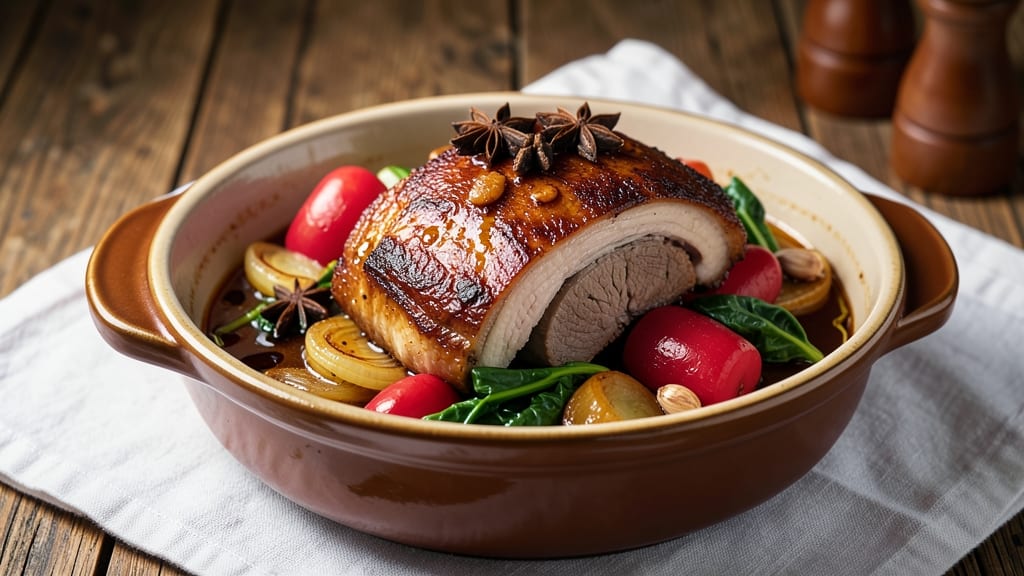
This braised pork belly with preserved vegetables delivers restaurant-quality depth in a single pot—rich, caramelized pork that melts in your mouth alongside tangy, crunchy vegetables. I first perfected this technique while working in Charleston, where slow-cooked pork transforms tough cuts into tender, flavorful masterpieces.
The preserved vegetables—whether salted mustard greens or daikon—add layers of umami that elevate every bite.
The secret lies in the braising process: searing the pork belly first creates a flavorful crust, while slow cooking in liquid breaks down the collagen for tender, fall-apart texture. Preserved vegetables require minimal prep but pack maximum flavor, cutting through the pork’s richness with their bright, briny notes.
This method works equally well in a Dutch oven or Instant Pot, making it accessible for home cooks while delivering professional results.
By the time you serve this dish, you’ll have golden, crisp-edged pork belly with tender centers, surrounded by vegetables that’ve absorbed the braising liquid into a silky, flavorful broth. The aroma alone—smoky, savory, and slightly sweet—will have everyone at the table anticipating the first bite.
It’s the kind of meal that feels special yet comes together with simple, time-honored techniques.
Pair it with steamed jasmine rice or crusty bread to soak up every drop of that umami-rich sauce, and don’t forget to save leftovers—the flavors only deepen overnight. Whether you’re cooking for a family gathering or a quiet weeknight dinner, this dish delivers satisfaction in every bite.
Ingredients for braised pork belly with preserved vegetables
Rich pork belly meets preserved vegetables for a dish that tastes like a Charleston restaurant secret.
| Ingredient | Amount | Notes |
|---|---|---|
| Pork Belly 🥓 | 2 lb | Skin-on, thick-cut preferred |
| Preserved Vegetables 🥬 | 1 jar | Salted mustard greens or daikon |
| Yellow Onion 🧅 | 1 whole | Sliced into wedges |
| Garlic Cloves 🧄 | 6 cloves | Smashed with side of knife |
| Fresh Ginger 🌿 | 1 ½ tbsp | Finely grated, fresh |
| Star Anise 🌶️ | 2 whole | Lightly crushed |
| Cinnamon Stick 🌿 | 1 whole | 2-inch length |
| Bay Leaves 🍃 | 2 whole | Dried, standard size |
| Dry Sherry 🍷 | 1 cup | Or substitute with apple cider |
| Chicken Stock 💧 | 2 cups | Homemade preferred |
| Dark Soy Sauce 🥄 | 2 tbsp | For depth of flavor |
| Brown Sugar 🍚 | 2 tbsp | Packed lightly |
| Olive Oil 🫒 | 2 tbsp | For searing |
| Salt 🧂 | 1 ½ tsp | Kosher or sea salt |
| Black Peppercorns 🌶️ | 10 whole | Crushed lightly |
The pork belly is non-negotiable here—look for thick-cut, skin-on pieces from a butcher or high-quality grocery store like Whole Foods or Eataly. The skin should be crackling and the fat should have good marbling. Preserved vegetables? Trader Joe's has great salted mustard greens, but any jarred preserved veggies will work—just rinse them well to reduce saltiness. Fresh ginger is a must for that bright, zesty kick, so grab it from the produce section while it's still firm. Star anise and cinnamon add depth, so don't skip them—Penzeys has great whole spices if you want to splurge.
No sherry? Apple cider or dry white wine works just as well. Chicken stock can be store-bought, but homemade tastes better—Pacific Foods brand is solid if you're in a pinch. Dark soy sauce is key for that umami punch, but if you only have light soy, reduce it by half. The brown sugar caramelizes beautifully, so don't substitute with white—it won't give the same depth. For the preserved vegetables, if you can't find salted mustard greens, kimchi or salted radishes add a different but delicious twist. The garlic and ginger should be freshly grated or smashed—pre-minced just won't cut it.
This dish tastes even better the next day, so make extra. Store leftovers in an airtight container in the fridge for up to 5 days, or freeze for 3 months. The pork belly keeps its texture beautifully when reheated—just warm it gently in the braising liquid. For serving, I like to crisp up the skin in the oven at 425°F for 5-7 minutes before plating. The preserved vegetables will soften further, soaking up all that rich, savory sauce—perfect for spooning over jasmine rice or crusty bread.
Why You'll Love This Recipe
- One-Pan Magic: That pork belly practically braises itself while you chop onions—no fancy equipment, just a deep skillet and 30 minutes of simmering. Honestly, the preserved veggies do half the work by adding tangy depth without extra effort.
- Umami Bomb: The combo of caramelized pork belly, funky preserved veggies, and fresh ginger? It’s like a flavor explosion in your mouth. That crispy skin with tender meat underneath—once you try it, you’ll crave it every week.
- Meal Prep Hero: This keeps for days in the fridge, so I make a big batch on Sundays and reheat it for lunches. The flavors actually get better overnight, and it’s perfect for packed lunches or lazy weeknight dinners.
- Budget-Friendly Luxury: Pork belly feels fancy, but it stretches far when braised—plus, preserved veggies add shelf-stable flavor without breaking the bank. Between us, this is my go-to when I want restaurant-quality food without the splurge.
Step-by-step instructions for braised pork belly with preserved vegetables
This one-pot braise delivers melt-in-your-mouth pork belly with vibrant preserved vegetables.
Sear the Pork Belly for Maximum Flavor
Pat the 2 lb pork belly completely dry with paper towels—this ensures maximum crispiness. Heat the 2 tablespoons olive oil in a heavy Dutch oven over medium-high heat until shimmering. Place the pork belly skin-side down and let it sear undisturbed for 8-10 minutes until the skin turns deep golden brown and crispy.
Here's the thing—don't press down on the pork belly during searing. I've learned the hard way that pressing causes the fat to render too quickly, resulting in less crispy skin. Once the skin is beautifully browned, flip the pork belly and sear the other side for another 4-5 minutes until golden. Remove it from the pot and set aside on a plate.
Build the Aromatic Base with Onion and Ginger
In the same Dutch oven, reduce the heat to medium and add the sliced 1 whole yellow onion and 1.5 tablespoons finely grated fresh ginger. Cook for 5-6 minutes until the onions soften and turn translucent, stirring occasionally. You'll notice the kitchen filling with that sweet, caramelized onion aroma—this is your signal that the base is developing properly.
Add the 6 cloves smashed garlic cloves and cook for another 30 seconds until fragrant. Be careful not to let the garlic burn—it should just perfume the onions without turning dark. This aromatic base forms the flavor foundation for your braise, so take your time here. The onions should be tender but not browned, and the ginger should be fully incorporated into the mixture.
Toast the Spices and Deglaze with Sherry
Add the lightly crushed 2 whole star anise, 1 whole cinnamon stick, and 2 whole bay leaves to the pot. Stir for 30 seconds to toast the spices lightly—you'll see them release their essential oils and fill the kitchen with warm, earthy aromatics. This step is crucial for developing depth of flavor in your braise.
Pour in the 1 cup dry sherry and scrape up any browned bits from the bottom of the pot with a wooden spoon. This deglazing step captures all that concentrated flavor that would otherwise stick to the pot. Let the sherry simmer for 2-3 minutes until it reduces by about half and the alcohol burns off. You'll smell the rich, fruity notes of the sherry melding with the spices—this is when the magic really starts happening.
Braise with Liquid and Preserved Vegetables
Return the pork belly to the pot, skin-side up. Add the 1 jar preserved vegetables, 2 cups chicken stock, 2 tablespoons dark soy sauce, 2 tablespoons brown sugar, 1.5 teaspoons salt, and 10 whole lightly crushed black peppercorns. Stir gently to combine all the ingredients.
Bring the mixture to a gentle simmer, then reduce the heat to maintain a barely perceptible bubble at the surface. Cover the pot with a tight-fitting lid and let it cook for 2 hours. I know it seems like a long time, but patience is key here—this slow cooking transforms the tough pork belly into tender, melt-in-your-mouth perfection. The preserved vegetables will soften and absorb all those rich braising flavors.
Finish and Rest for Optimal Texture
After 2 hours, check the pork belly for doneness. It should be fork-tender with a probe sliding in easily. If it's not quite there, continue braising for another 30 minutes to 1 hour. The skin should be crispy and the meat should pull apart effortlessly. Remove the pork belly from the pot and let it rest on a cutting board for 15 minutes—this resting period allows the juices to redistribute throughout the meat.
While the pork belly rests, skim any excess fat from the surface of the braising liquid. You can reduce the sauce further if you prefer a thicker consistency, or leave it as is for a more sauce-like presentation. Return the pork belly to the pot, spooning some of the braising liquid over it to keep it moist. Serve immediately with the preserved vegetables and sauce spooned over the top for that restaurant-quality presentation.
Pro Tips For Making Braised Pork Belly With Preserved Vegetables
- SCORE THE BELLY FIRST: Use a sharp knife to cut shallow crosshatch marks (about ¼-inch deep) on the pork belly’s fatty side before searing. This keeps the fat from sliding off in one sheet and renders it evenly—no more greasy mess or uneven browning.
- RINSE THE PRESERVED VEGETABLES: Drain the preserved vegetables and give them a quick rinse under cold water, then pat very dry with a towel. The salt and vinegar in them can make the braising liquid too briny, and soggy veggies just won’t crisp up later.
- LOW AND SLOW AFTER SEARING: Once the pork belly is golden and the onions are caramelized, drop the heat to actual low—think 275°F (135°C) if your oven has that setting. Too high, and the fat will turn to grease before the pork gets tender. Patience here makes the difference.
- DEGLAZE WITH A SPLASH OF BEER: After searing the pork and onions, hit the pan with ¼ cup of light beer (or dry white wine) instead of just stock. The alcohol burns off, but the maltiness cuts through the richness of the pork belly and balances the preserved veg’s tang. (Yes, even if you’re not a beer drinker.)
Wine and beer pairings for this braised pork belly with preserved vegetables
Red Wine Classics
For this rich, umami-packed dish, I always reach for a Spanish Rioja Reserva—specifically a Tempranillo-based wine from the Rioja Alta region. The wine’s earthy notes and subtle oak complement the pork’s deep flavors while standing up to the preserved vegetables’ tang.
Look for Muga or La Rioja Alta—both deliver that perfect balance of acidity and structure. Serve slightly chilled to let the wine’s fruitiness shine through the dish’s complexity. 🍷
Fortified Wine Pairings
Since we’re using sherry in the braise, why not continue the theme? A dry Amontillado sherry from Andalusia mirrors the cooking liquid’s profile beautifully. The nutty, oxidative character of Amontillado enhances the pork’s caramelized edges and the preserved vegetables’ briny notes.
I keep a bottle of Fundador or Lustau on hand specifically for this dish—it’s like having a flavor bridge between the braise and the wine. Sip it slightly chilled to appreciate its full complexity.
Beer Complements
For beer lovers, a Belgian Dubbel like Westmalle Dubbel or Chimay Red offers the perfect contrast. The malt-forward sweetness and subtle spice notes cut through the pork’s richness while complementing the preserved vegetables’ acidity.
If you prefer something lighter, a German Dunkel with its toasty malt character works wonderfully. Just avoid hop-heavy IPAs—they’ll overpower the delicate balance of this dish. 🍺
Non-Alcoholic Options
Don’t skip the pairing just because you’re avoiding alcohol! A sparkling hibiscus tea (like Jamaican sorrel) adds bright acidity and floral notes that mirror the preserved vegetables. For something richer, try a ginger-infused sparkling water with a squeeze of lime—it cleanses the palate beautifully.
I often serve this with a side of pickled vegetables to enhance the contrast between the braise’s richness and the drink’s refreshing tang.
Serving Temperature Tips
Wine and beer should be served at the right temperature to highlight their flavors. Red wines like Rioja should be 60-65°F—too warm and they’ll lose their fruitiness. Beer should be 45-50°F for lagers and 50-55°F for darker styles like Dubbels.
I keep my wines in a wine cooler (like the Le Neige) and use an ice bucket for quick chilling. For beer, I recommend a beer tower to maintain optimal serving temperatures throughout the meal.
Nutrition facts
Frequently asked questions
How do I choose the best pork belly for this recipe?
Look for thick-cut, skin-on pork belly with good marbling—this ensures tender meat and crispy skin. I recommend buying from a butcher shop or specialty store like Whole Foods, where they can cut it to your preferred thickness. The skin should be crackling and firm, not slimy or discolored.
Can I substitute regular soy sauce for dark soy sauce?
Dark soy sauce adds depth of color and flavor, but if you only have light soy, reduce it by half and add 1 teaspoon of molasses or brown sugar to mimic the depth. The dish will still taste great, though the sauce won't be as richly colored. For best results, use dark soy sauce if possible.
What if my preserved vegetables are too salty?
Rinse them thoroughly under cold water before adding to the braise. If they're still too salty, soak them in water for 10-15 minutes to draw out excess salt, then drain well. The braising liquid will dilute the saltiness further, so don't worry about overcorrecting—just taste as you go.
How can I make this recipe in an Instant Pot?
Sear the pork belly as directed, then sauté onions, ginger, and garlic in the Instant Pot. Add all remaining ingredients (including the pork belly) and cook on High Pressure for 40 minutes. Let the pressure release naturally for 10 minutes before opening. The texture will be slightly different but still delicious—just check for doneness and add extra liquid if needed.
Why is my pork belly still tough after braising?
This usually happens if the pork wasn't cooked long enough or the heat wasn't low enough. The pork belly should simmer gently—if it's boiling vigorously, reduce the heat. For extra tenderness, extend the braising time to 2.5-3 hours or add 1 cup more liquid. The key is patience—tough pork belly won't become tender overnight!