
Sauces & Condiments
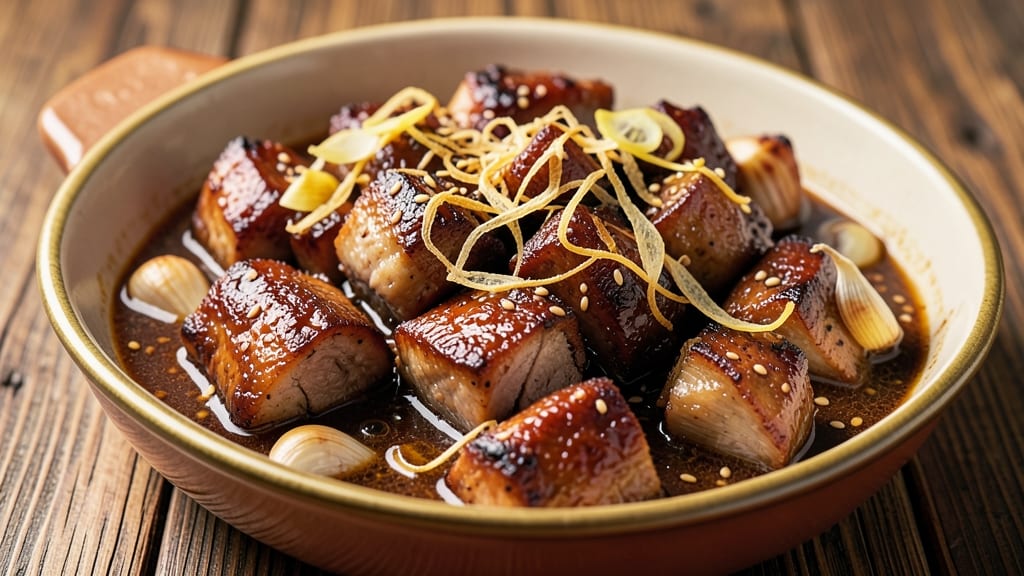
This braised pork in soy sauce recipe transforms tough cuts into melt-in-your-mouth perfection through slow cooking and aromatic glazes. As someone who's cooked thousands of pounds of pork, I know the difference between good and extraordinary lies in patience and technique.
The soy sauce creates that signature sticky-sweet glaze while tenderizing the meat over hours of gentle heat.
What makes this recipe special is how it balances traditional methods with modern convenience. You'll start with a simple marinade of soy sauce, garlic, and ginger that infuses the meat, then braise it until fork-tender.
The aromatics - star anise, cinnamon, and bay leaves - build deep, complex flavors that elevate this dish from ordinary to remarkable. Even beginners will achieve restaurant-quality results.
The final result is pork so tender it falls apart at the touch of a fork, coated in a glossy, caramelized glaze that's both savory and slightly sweet. Each bite delivers layers of umami from the soy sauce, warmth from the spices, and natural richness from the pork.
This is the kind of dish that makes you want to slow down and savor every mouthful.
Perfect for feeding a crowd or meal prepping for the week, this braised pork pairs beautifully with steamed jasmine rice or stir-fried greens. The leftovers actually taste better the next day as the flavors continue to meld. Let's get started on creating this showstopping centerpiece for your table.
Ingredients for braised pork in soy sauce
Sixteen ingredients for a dish that tastes like home after hours of slow cooking.
| Ingredient | Amount | Notes |
|---|---|---|
| Pork Shoulder (Boston Butt) 🥩 | 3 lb | Cut into 2-inch chunks, bone-in preferred |
| Light Soy Sauce 🍶 | ½ cup | Kikkoman or similar preferred |
| Dark Soy Sauce 🍶 | ¼ cup | For deeper flavor and color |
| Garlic Cloves 🧄 | 6 cloves | Minced or finely chopped |
| Fresh Ginger 🌿 | ½ cup | Finely grated, peeled |
| Brown Sugar 🍚 | ¼ cup | Light or dark works |
| Star Anise Pods 🌟 | 2 whole | Lightly crushed |
| Cinnamon Sticks 🌿 | 2 whole | 2-inch pieces |
| Bay Leaves 🍃 | 4 whole | Fresh or dried |
| Red Wine 🍷 | ½ cup | Dry, bold red like Cabernet |
| Onion 🧅 | 1 whole | Yellow or red, sliced |
| Carrots 🥕 | 2 whole | Medium, cut into chunks |
| Vegetable Oil 🫒 | 2 tbsp | For searing |
| Salt 🧂 | 1 ½ tsp | Kosher or sea salt |
| Black Pepper 🌶️ | 1 tsp | Freshly ground |
The pork shoulder is non-negotiable here—bone-in cuts stay juicier, and you can find them pre-cut at Costco or your butcher. Look for good marbling, not too much fat, and ask for it to be cut into 2-inch chunks if they don't do it for you. Soy sauce matters too—Kikkoman light and dark is my go-to, but any good brand works. The aromatics (star anise, cinnamon, bay leaves) are what turn this from good to extraordinary—don't skip them. I always grab extra star anise because it's cheap and adds that signature depth.
No red wine? Dry sherry or extra chicken broth works in a pinch. Fresh ginger is ideal, but dried ginger at half the amount gets you close. Running low on brown sugar? Honey or maple syrup works too, though the color will be lighter. The onions and carrots can be swapped for celery or mushrooms if you're feeling fancy. For the pork, if you can't find a 3-pound shoulder, two 2-pound cuts work perfectly—just adjust the braising liquid slightly if needed.
This dish tastes even better the next day, so make extra. Store leftovers in the fridge for 5-6 days or freeze for 3 months. I always portion mine into containers with rice so lunches are sorted for the week. The braising liquid reduces down to a glorious glaze—save some for next time. If you're short on time, use an Instant Pot—it cuts the cooking time in half, though the flavors develop differently.
Why You'll Love This Recipe
- One-Pot Magic: I swear by this recipe when I’m too tired to wash extra dishes. Toss everything—pork, soy sauces, garlic, ginger—into one pot and let the stove do the work while I chop veggies for the side. The dark soy sauce caramelizes into a glossy glaze that practically coats itself.
- Umami Bomb: That combo of light and dark soy sauce? It’s like a flavor explosion in your mouth—salty, sweet, and deep all at once. The garlic and ginger infuse the pork until every bite tastes like it’s been kissed by a wok. (Yes, even my picky husband finishes his plate.)
- Budget Stretch: Pork shoulder is cheap, but it feels fancy. A single cut feeds four for under $15, and the soy sauces stretch further than you’d think. Between us, this is my go-to when I need to impress guests without breaking the bank. (They’ll never know it’s my secret weapon.)
Step-by-step instructions for braised pork in soy sauce
Here's how to transform tough pork shoulder into melt-in-your-mouth tender meat with a glossy, sticky-sweet glaze.
Sear the Pork Shoulder for Maximum Flavor
Pat the 3 lb Pork Shoulder (Boston Butt) dry with paper towels—this helps create that golden crust we're after. Heat 2 tablespoons vegetable oil in a large Dutch oven over medium-high heat until shimmering. Working in batches if needed, add the pork chunks and sear for 3-4 minutes per side until deeply browned. You want that caramelized crust on every piece—it's the flavor foundation.
Don't rush this step. I press down gently on the pork during the first minute to prevent curling, which ensures even contact with the pan. Once browned, transfer the pork to a plate and set aside. The browned bits in the pan will become the rich base for our braising liquid, so don't scrape them out.
Build the Aromatic Braising Base
In the same Dutch oven, add the sliced 1 whole onion and cut 2 whole carrots and cook for 5 minutes until softened. Add the 6 cloves minced garlic and ½ cup finely grated fresh ginger, stirring for 30 seconds until fragrant. This is where all the flavors start to meld together—don't skip this step.
Now add the spices: 2 whole star anise pods, 2 whole cinnamon sticks, and 4 whole bay leaves. Stir for 10 seconds to coat everything in these warm spices. Pour in the ½ cup red wine and scrape up all those browned bits from the bottom of the pan with a wooden spoon. This deglazing step captures all that meaty flavor that would otherwise be lost.
Combine All Ingredients for Braising
Return the browned pork to the Dutch oven. Add the ½ cup light soy sauce, ¼ cup dark soy sauce, ¼ cup brown sugar, 1½ teaspoons salt, and 1 teaspoon black pepper. Stir everything together until the pork is well-coated in the sauce mixture. The pork should be mostly submerged in the liquid—if not, add a little water to help it along.
Bring the mixture to a gentle simmer over medium heat, then reduce heat to low to maintain a slow, steady simmer. Cover the Dutch oven with a tight-fitting lid and let it cook for 2 hours. This low-and-slow approach is crucial—it breaks down the connective tissue in the pork, transforming tough meat into something silky and tender.
Finish with Glossy, Sticky Perfection
After 2 hours, check the pork for tenderness. It should be fork-tender with no resistance when pierced. If the sauce has reduced too much and looks thick, add ¼ cup water to maintain moisture. Return to a simmer and cook uncovered for another 15-20 minutes to let the sauce reduce and develop that beautiful glossy consistency.
Taste and adjust seasoning if needed—you might want to add a bit more soy sauce for saltiness or a touch of brown sugar for sweetness. The pork is done when it's falling apart easily and the sauce has thickened into a sticky glaze that coats everything beautifully. Let it rest for 10 minutes before serving to allow the juices to redistribute throughout the meat.
Pro Tips For Making Braised Pork In Soy Sauce
- Brown the Pork First: Don’t skip the sear—get that pork shoulder screaming hot in a dry pan until it’s deep golden. I used to rush this, and the braise would taste flat. Two minutes per side with a heavy pan and medium-high heat makes all the difference.
- Use Both Soy Sauces: Light soy sauce adds flavor; dark soy sauce adds color. Mix them (start with 2:1 light to dark) and reduce the sauce to a glossy, syrupy consistency before adding it back. Trust me, the contrast in color and depth of flavor is worth the extra 5 minutes.
- Don’t Overcrowd the Pan: When searing garlic and ginger, keep it tight but not packed. Overcrowding steams instead of sizzles, and you’ll end up with raw, bitter bits. Work in batches if needed—better to wait than to ruin the aromatic base.
- Finish with Ginger Tea: After braising, simmer the pork in a cup of strong ginger tea (steep 2 slices of fresh ginger in hot water for 10 minutes). It cuts through the saltiness and adds a bright, clean finish. Sounds weird, but it works—my grandmother swore by it.
Troubleshooting great braised pork in soy sauce
Pork Too Tough?
If your pork isn't tender after braising, you likely didn't cook it long enough or didn't use the right cut. I always recommend pork shoulder (Boston Butt)—it's designed for slow cooking.
If using a different cut like pork loin, reduce cooking time to 1 hour and watch closely. The internal temperature should reach 203°F for perfect tenderness. 💡
Sauce Too Thin?
Thin sauce happens when you don't reduce it enough or add too much liquid. After the initial 2-hour braise, uncover the pot and simmer uncovered for 15-20 minutes to thicken. If it's still too thin, remove the lid and cook on medium heat for another 5-10 minutes.
Stir occasionally to prevent burning. Remember, the sauce should coat the back of a spoon.
Browned Bits Burning?
Burnt bits ruin the flavor profile. Always deglaze with the ½ cup red wine immediately after searing to lift those browned bits from the pan. If you notice bits sticking, add ¼ cup water during braising to keep everything moist.
I also recommend using a Dutch oven—it distributes heat evenly and prevents hot spots that cause burning.
Overpowering Soy Flavor?
Too much soy sauce can make the dish taste salty or one-note. Start with the ½ cup light soy sauce and ¼ cup dark soy sauce as written, then taste before serving.
If needed, balance with a splash of water or broth to dilute slightly. For a sweeter profile, add 1 tablespoon honey or maple syrup during the final 15 minutes of cooking.
Spices Too Strong?
Star anise and cinnamon are potent—if they overpower, reduce them to 1 pod each or remove them after 1 hour of braising. For a milder flavor, use ground spices instead of whole pods (½ teaspoon each).
I also recommend tasting the braising liquid after 1 hour—this helps you adjust seasoning before it's too late. 🌶️
Pork Drying Out?
Dry pork happens when the heat is too high or the lid isn't sealed tightly. Maintain a low simmer (small bubbles, not a rolling boil) and ensure the lid fits snugly.
If the sauce reduces too much, add ¼ cup water or broth during braising. I also recommend resting the pork for 10 minutes after cooking—this keeps juices inside the meat.
Nutrition facts
Frequently asked questions
Can I substitute pork shoulder with another cut?
While pork shoulder (Boston Butt) is ideal, you can use pork loin for a quicker cook (1 hour instead of 2 hours). For extra tenderness, try pork belly—it renders fat beautifully but requires 3 hours of braising. Avoid lean cuts like tenderloin, as they dry out during slow cooking.
How do I make this dish gluten-free?
Replace soy sauce with tamari or coconut aminos (use ¾ cup total). For depth, add 1 teaspoon gluten-free fish sauce or ½ teaspoon mushroom powder. The texture and flavor will be slightly different but still delicious. Always check labels—some tamari contains wheat.
What's the best way to reheat leftovers?
Reheat in a skillet over low heat with 1 tablespoon water or broth to prevent drying. Cover and cook for 5-7 minutes until warmed through. For microwave reheating, use 30-second intervals on medium power, adding a splash of water between each. Never reheat to a boil—it destroys the tender texture.
Can I make this in an Instant Pot?
Yes! Sear the pork first, then add all ingredients except 1 cup water. Cook on high pressure for 45 minutes, then natural release for 15 minutes. The sauce will be thinner—reduce it uncovered on the stove for 10 minutes after pressure cooking. You'll get 80% of the flavor in 1/3 the time.
What if I don't have star anise or cinnamon?
Skip them entirely—the dish will still be flavorful. For star anise, use ½ teaspoon ground anise or 1 bay leaf. For cinnamon, add ¼ teaspoon ground cinnamon with the other spices. The warm spices enhance the soy sauce's depth, but the dish won't fall apart without them.