
Main Courses
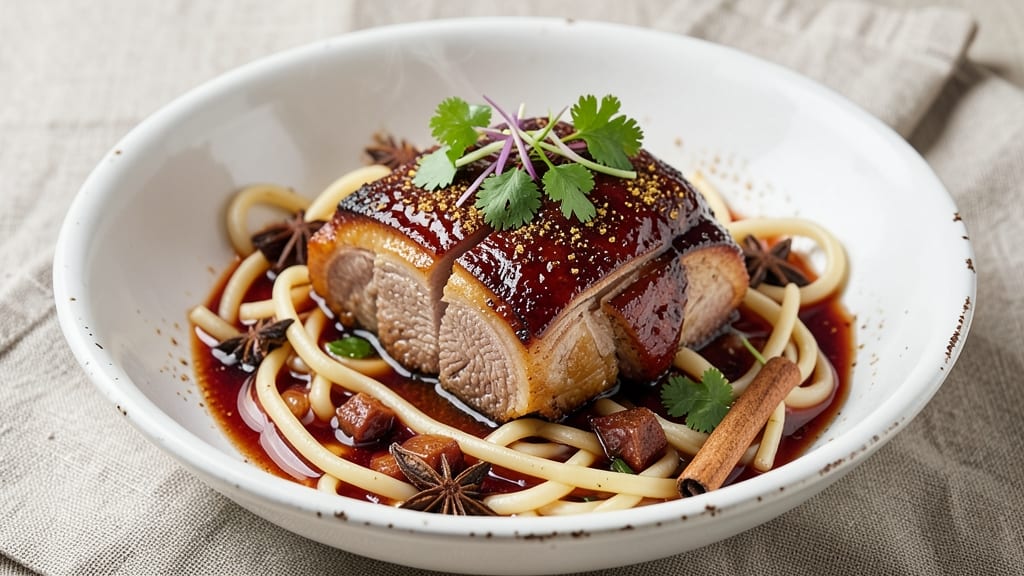
This braised pork noodles recipe transforms simple ingredients into a restaurant-quality bowl that balances tender pork, silky noodles, and a fragrant five-spice broth. I developed this version after years of perfecting the balance between deep umami flavors and comforting textures—something I first mastered while cooking in Charleston’s historic markets. The secret lies in slow-braising the pork until it’s fork-tender while building layers of aromatic complexity through star anise, cinnamon, and soy.
The process begins with searing pork belly or shoulder until golden, then simmering it low and slow in a rich broth infused with five-spice powder and other warming spices. Meanwhile, fresh egg noodles cook just until al dente, ensuring they hold their shape when tossed with the pork and sauce.
What makes this dish special is how the pork’s fat renders into the broth, creating a naturally emulsified sauce that clings to every noodle without needing heavy cream.
What you’ll end up with is a harmonious bowl of tender pork slices swimming in a glossy, spice-infused broth, all resting on a bed of silky noodles. The aroma alone—warming spices mingling with caramelized pork—will have everyone gathered around your table.
This is the kind of dish that tastes even better the next day, making it perfect for meal prep or feeding a crowd.
Serve with quick-pickled vegetables for brightness or steamed bok choy to cut through the richness. The key to plating is arranging the noodles first, then draping the pork on top with a generous ladle of broth.
Garnish with fresh cilantro or green onions for a pop of color and freshness. Let’s get cooking!
Ingredients for braised pork noodles
Pork, noodles, and warming spices—this bowl comes together with just 17 ingredients.
| Ingredient | Amount | Notes |
|---|---|---|
| Pork Shoulder 🥩 | 1 ½ lb | Bone-in for flavor, cut into 1-inch chunks |
| Fresh Egg Noodles 🍜 | 12 oz | Wide or medium egg noodles preferred |
| Five-Spice Powder 🌶️ | 1 tbsp | Store-bought or homemade blend |
| Star Anise 🌿 | 2 whole | For deep aromatic flavor |
| Cinnamon Stick 🌿 | 1 whole | For warmth and depth |
| Soy Sauce 🥄 | ½ cup | High-quality, like Kikkoman |
| Honey 🍯 | 1 tbsp | For balancing umami |
| Garlic Cloves 🧄 | 4 cloves | Minced for aromatic base |
| Ginger 🌿 | 1 tbsp | Freshly grated, peeled |
| Onion 🧅 | 1 whole | Yellow or brown, sliced |
| Carrot 🥕 | 1 whole | Medium, sliced into rounds |
| Vegetable Oil 🫒 | 2 tbsp | For searing pork |
| Water 💧 | 3 cups | For simmering broth |
| Salt 🧂 | 1 ½ tsp | Kosher or sea salt |
| Black Pepper 🌶️ | ½ tsp | Freshly ground |
| Green Onions 🧅 | 3 whole | Sliced for garnish |
| Cilantro 🌿 | ¼ cup | Chopped, for garnish |
Pork shoulder is your best bet for tender, flavorful slices—bone-in adds depth. Grab a 3-4 lb cut from the butcher counter if you're feeding more, but for this recipe, 1.5 lbs is perfect. Look for good marbling—it’ll render into the broth for richness. If you can’t find fresh star anise or cinnamon sticks, ground versions work in a pinch (use half the amount). For the noodles, fresh egg noodles hold up best to the braising, but dried will work if that’s all you’ve got.
No five-spice powder? Mix 1 tsp each of cinnamon, cloves, fennel seeds, and star anise—toast the spices first for extra aroma. Soy sauce substitutes? Tamari or coconut aminos add depth, but they’re pricier. Fresh ginger and garlic are non-negotiable for flavor, but powdered versions at half the amount are better than skipping them. The carrots can be baby carrots if that’s what’s in the fridge—just slice them evenly. For the honey, maple syrup works in a pinch, though it’ll taste slightly different.
Pork keeps raw in the fridge for 3-4 days if vacuum-sealed, but use it within 2 days for best texture. Fresh ginger and garlic last 1 week in the fridge, wrapped in damp paper towels. The braised pork and noodles reheat beautifully—just add a splash of water or broth to the pan. Portion into containers for 4-5 days of easy lunches. Garnishes like cilantro and green onions can be prepped ahead and stored in the fridge for 3 days.
Why You'll Love This Recipe
- Pork Cuts the Work: The pork shoulder does all the heavy lifting—just sear, braise, and shred. No fussy chopping or last-minute prep; the slow cooking turns tough meat into melt-in-your-mouth goodness while you toss noodles in a pan.
- Spice Bomb Magic: Five-spice, star anise, and cinnamon stick? That’s not just flavor—that’s aroma therapy in a bowl. The warm, earthy notes seep into the pork, then bloom into a cozy, slightly sweet depth that makes every bite feel like a hug.
- Budget Meal That Feeds: Pork shoulder stretches across multiple meals, and egg noodles are cheap but satisfying. Here’s what sold me: a full meal for under $10 per serving, with enough left to freeze for lazy days. (Yes, even on a Tuesday night.)
Step-by-step instructions for braised pork noodles
Here's how to create tender pork and silky noodles in a fragrant five-spice broth.
Sear the Pork Shoulder for Deep Flavor
Heat the 2 tablespoons vegetable oil in a large Dutch oven over medium-high heat until shimmering. Add the 1.5 lb pork shoulder cut into 1-inch chunks, working in batches if needed to avoid crowding. Let each piece sear undisturbed for 3-4 minutes until it develops a deep golden-brown crust.
This step is crucial—it locks in juices and builds rich flavor. You'll know it's ready when the pork releases easily from the pan. Transfer the seared pork to a plate and set aside. If the oil starts smoking, reduce the heat slightly to maintain control.
Build the Aromatic Broth Base
In the same Dutch oven, add the 1 whole sliced onion and 1 whole sliced carrot. Cook for 4-5 minutes until softened and slightly caramelized. Add the 4 cloves minced garlic and 1 tablespoon freshly grated ginger, cooking for 30 seconds until fragrant—this releases their full flavor potential.
Stir in the 1 tablespoon five-spice powder, 2 whole star anise, and 1 whole cinnamon stick, toasting for 1 minute until the spices release their warm, earthy aroma. Pour in the 0.5 cup soy sauce and 1 tablespoon honey, stirring to combine. The mixture should smell rich and complex—this is your flavor foundation.
Simmer the Pork in Spiced Broth
Return the seared pork to the pot. Add the 3 cups water, 1.5 teaspoons salt, and 0.5 teaspoon black pepper. Bring to a gentle boil, then reduce heat to low and cover partially. Simmer for 1 hour 15 minutes, turning the pork occasionally, until it's fork-tender and nearly falling apart.
Here's the thing—don't rush this step. The long simmer breaks down collagen in the pork, creating a velvety texture. If the broth reduces too much, add hot water 1 tablespoon at a time to maintain a good cooking liquid level. The pork should be so tender that a fork slides in with minimal resistance.
Prepare and Cook the Noodles
While the pork braises, bring a separate pot of salted water to a boil. Add the 12 oz fresh egg noodles and cook for 2 minutes less than package instructions—they'll finish cooking in the hot broth. Drain and set aside, reserving 1 cup pasta water for adjusting consistency later.
Once the pork is tender, remove it from the broth using tongs and transfer to a cutting board. Skim any fat from the surface of the broth, then return the broth to medium heat. Add the cooked noodles and toss gently to coat. If the sauce is too thick, add pasta water 1 tablespoon at a time until it reaches a silky, clinging consistency.
Finish and Serve with Fresh Herbs
Shred the pork using two forks, discarding any large fat chunks or connective tissue. Return the shredded pork to the pot and stir to combine with the noodles. Taste and adjust seasoning—you might need a touch more salt or soy sauce to balance flavors.
Divide the braised pork noodles among bowls. Garnish each serving with 3 sliced green onions and 0.25 cup chopped cilantro for fresh contrast. Serve immediately with extra soy sauce on the side for dipping. The noodles should be tender yet still hold their shape, coated in a rich, aromatic broth with tender pork in every bite.
Pro Tips For Making Braised Pork Noodles
- Sear the Pork Shoulder First: Pork shoulder needs a deep, caramelized crust for flavor—don’t skip the high-heat sear. After patting it dry, hit it with a hot pan (no oil yet) until the edges turn golden brown. That’s where the real taste hides, and it won’t dissolve when braising.
- Toast the Spices Low and Slow: Star anise and cinnamon stick can burn fast, turning bitter. Toss them in the pot with the pork after searing, then add just enough liquid to deglaze—about ½ cup. Keep the heat low and let them simmer for 5 minutes before adding more. Sounds weird, but it works: you’ll smell the spices bloom without scorching.
- Don’t Overcrowd the Pot: I learned this the hard way—dumping everything in at once means the pork steams instead of braises. Sear the pork first, then remove it while you sauté aromatics (ginger, garlic, maybe a bit of chili). Return the pork to the pot after the veggies are cooked, or you’ll end up with soggy meat.
- Save the Noodle Water: Fresh egg noodles release starch when cooked, which thickens the braising liquid into a silky sauce. Reserve 1 cup of that starchy water before draining, then swirl it into the pork at the end. It’s the cheat code for a restaurant-worthy finish—no extra cornstarch needed.
Wine and beer pairings for this recipe
Red Wine Pairings
For this dish, I always reach for a dry Chinese red wine like Cabernet Sauvignon or Shiraz—their bold tannins stand up to the pork’s richness while complementing the five-spice complexity.
A Pinot Noir from China’s Yunnan region is my go-to; its bright acidity cuts through the fat without overpowering the delicate broth. 🍷
If you prefer something lighter, try a Gewürztraminer—its lychee and floral notes mirror the honey and star anise in the braise. Just avoid heavy, oaky wines like Bordeaux; they’ll clash with the dish’s umami-forward profile.
Beer Pairings
A crisp, dry lager like Tsingtao or Sapporo cleanses the palate between bites, balancing the dish’s richness. The subtle malt sweetness enhances the honey in the broth without competing.
For a local twist, I’ve had great success with Atlanta’s SweetWater 420 IPA—its citrusy hop bitterness cuts through the pork’s fat beautifully. 🍺
Avoid heavy stouts or dark ales; their roasted malt flavors will overpower the delicate spices. Instead, opt for Japanese Sapporo or German Pilsner—their clean, crisp profiles let the dish shine.
Non-Alcoholic Options
For a refreshing non-alcoholic match, I recommend sparkling yuzu soda—its citrusy brightness contrasts the pork’s richness. Or try hibiscus iced tea (brewed with rose petals), which adds floral notes that complement the five-spice blend. Both options elevate the dish without alcohol’s interference.
If you’re serving kids or prefer no alcohol, ginger beer (like Feather’s) works surprisingly well—its spicy kick mirrors the ginger in the recipe. Just skip the added sugar; opt for a dry ginger beer like BrewDog’s Ginger Beer instead.
Regional Adaptations
In Charleston, I’ve seen this dish paired with Muller-Thurgau—a German white with subtle spice notes that bridge the gap between pork and noodles. Meanwhile, Atlanta’s craft beer scene leans toward wheat beers with a touch of coriander, like Southern Tier’s Seasonal Wheat. 🌟
For a Southeast BBQ twist, swap the wine for a sweet tea spritzer (½ tea, ½ sparkling water) with a splash of lemon juice—it’s a local favorite that keeps the dish’s soul intact.
Nutrition facts
Frequently asked questions
Can I use pork belly instead of pork shoulder?
Pork belly adds incredible richness due to its higher fat content. For this recipe, use 1 lb pork belly instead of the shoulder, and reduce the braising time to 45-60 minutes—it cooks faster. The fat will render beautifully into the broth, creating a naturally velvety sauce. Just be sure to skim excess fat from the surface before adding the noodles.
How do I make this dish gluten-free?
Swap the soy sauce for tamari or coconut aminos (use the same amount) and ensure your noodles are certified gluten-free. For extra flavor, add 1 teaspoon gluten-free oyster sauce to the braising liquid. Test your noodles first—they should hold up well when tossed with the rich broth.
Why did my pork turn out tough instead of tender?
The most common reason is rushing the braising time. Pork shoulder needs at least 1.5 hours of slow cooking to break down collagen. If your pork is still chewy, return it to the pot with ½ cup water, cover, and simmer for 30-45 more minutes. Another tip: Don't overcrowd the pan when searing—this traps steam and prevents proper browning.
Can I prep this ahead of time?
This dish actually tastes better the next day! Braise the pork completely, then refrigerate it in the broth. When ready to serve, reheat gently on the stove, add fresh noodles cooked al dente, and toss. The flavors meld even more overnight. Store for up to 4 days in the fridge—just add a splash of water or broth when reheating to prevent drying.
What's the best way to reheat leftovers?
Reheat in a skillet over medium-low heat with 2 tablespoons water to prevent drying. Stir frequently and add more liquid if needed—just 1-2 minutes is enough. For microwave reheating, cover with a damp paper towel and heat in 30-second intervals, stirring between each. The noodles should stay tender, and the pork will regain its juiciness.