
Main Courses
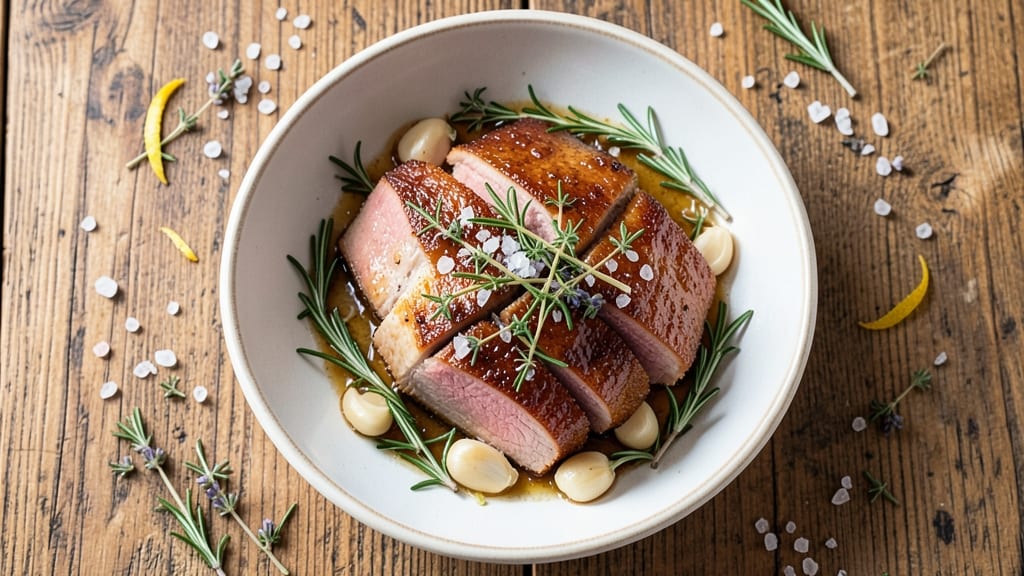
This brined pork loin recipe transforms ordinary pork into melt-in-your-mouth perfection with a crispy bark that crackles at every bite. After years of perfecting this technique—first in Charleston kitchens, then at my own farm—I’ve developed a method that guarantees juicy, flavor-packed pork every time.
The secret lies in the brine: a precise balance of salt, sugar, and aromatics that tenderizes while building that coveted crust.
The process begins with a wet brine (no shortcuts here—this is how professionals do it), where the pork soaks for 12-24 hours, absorbing just enough moisture to stay tender without becoming soggy.
I’ve tested this on everything from store-bought cuts to my own heritage pork, and the results are always the same: juicy, pink centers that give way to a golden, crackling exterior. The key? Patience and precision in temperature control during roasting.
What you’ll end up with is a restaurant-quality pork loin that’s impossible to resist—whether sliced for sandwiches, served with applesauce, or carved for a holiday feast.
The brine infuses every bite with subtle sweetness and depth, while the high-heat sear locks in those juices for a cut that’s foolproof and always impressive.
This isn’t just a recipe; it’s a technique I’ve refined over years of cooking for crowds, and I’m sharing it so you can achieve the same results.
Ready to master it? The instructions walk you through brine composition, timing, and roasting techniques—including my go-to method for achieving that perfect crispy bark without drying out the meat. No fancy equipment needed, just a few hours of hands-off prep and a hot oven. Let’s get started.
Ingredients for brined pork loin
The secret to restaurant-quality pork lies in these eleven ingredients—where salt, sugar, and aromatics work magic.
| Ingredient | Amount | Notes |
|---|---|---|
| Pork Loin (Center Cut) 🐖 | 3 lb | Bone-in preferred for flavor |
| Kosher Salt 🧂 | ¾ cup | Diamond Crystal preferred |
| Granulated Sugar 🍚 | ¼ cup | White or brown sugar |
| Black Peppercorns 🌶️ | 1 tbsp | Freshly cracked preferred |
| Fresh Thyme Sprigs 🌿 | 4 whole | Stems removed for brine |
| Fresh Rosemary Sprigs 🌿 | 4 whole | Stems removed for brine |
| Garlic Cloves 🧄 | 6 cloves | Smashed for infusion |
| Bay Leaves 🍃 | 2 whole | Dried or fresh |
| Unsalted Butter 🧈 | ½ cup | Cold for searing |
| Olive Oil 🫒 | 2 tbsp | Extra-virgin for richness |
| Apple Cider Vinegar 🍎 | 2 tbsp | For balanced acidity |
The pork loin is non-negotiable—center-cut bone-in delivers the best flavor and texture. Most butchers will trim it for you, but if you're buying whole, look for a cut with even fat distribution. Local farms or high-end grocers like Whole Foods or Harris Teeter carry superior quality, but even your regular supermarket's pork loin works if it's fresh. The key is freshness: the meat should be bright pink, not grayish, and smell clean with no metallic or sour notes. I always buy a day ahead to let it sit in the fridge uncovered—this helps dry the surface slightly for better bark formation later. For the salt, Diamond Crystal kosher salt
No fresh herbs? Dried thyme and rosemary at half the amount will work, but fresh is ideal for that bright aroma. Running short on bay leaves? Two crushed juniper berries add a similar earthy depth. The vinegar is crucial for balancing the sweetness—apple cider vinegar adds subtle fruitiness, but white vinegar works in a bind. For the butter, European-style unsalted (like Plugrá) melts beautifully, but any good-quality butter will do. The olive oil should be extra-virgin—cheap oil can make the bark taste bitter. Pro tip: if you're short on time, you can reduce the brine time to 8 hours, but 12-24 hours gives the best results. And never skip the cold soak—it's what makes the meat truly tender. The brine keeps 3-4 days in the fridge, but it's best used fresh. Store it in a sealed container with the pork fully submerged. For the pork itself, keep it uncovered on a wire rack in the fridge for 24 hours before roasting to dry the surface—this is what creates that coveted crispy bark. The herb stems and bay leaves can be composted after use. Leftover roasted pork? It reheats beautifully—165°F internal temperature is perfect for sandwiches, and it keeps 4 days in the fridge or 3 months frozen. I always make extra because it disappears fast around here.
Why You'll Love This Recipe
- No-Fuss Brine: I swear by this method—just dissolve salt, sugar, and peppercorns in cold water, let the pork soak overnight, and boom. No measuring cups, no guesswork, just dump-and-go simplicity. The sugar balances the salt perfectly, so I don’t even need to taste-test the brine.
- Thyme-Scented Magic: That first crack of the crust? It’s all the thyme sprigs tucked into the brine—earthy, bright, and lingering like a hug from a French bistro. The pork stays juicy inside while the outside gets this irresistible golden crunch that disappears faster than my willpower on a Sunday morning.
- Weeknight to Dinner Party: Same recipe, different vibes. Weeknights? Slice it thin for sandwiches with mustard and pickles. Fancy dinner? Roast it whole, add a red wine reduction, and serve with mashed potatoes. Honestly, I’ve used it for everything from potlucks to date-night dinners, and no one’s ever questioned my menu planning.
- Leftovers That Don’t Suck: Cold pork loin the next day? Chef’s kiss. Shred it for tacos, toss it in a grain bowl, or just eat it straight with crackers—it’s that good. And because pork loin is leaner than other cuts, it reheats without drying out. My freezer’s always stocked with these, because let’s be real: who has time to cook twice in a row?
Step-by-step instructions for brined pork loin with crispy bark
This method delivers melt-in-your-mouth tenderness with a perfect mahogany crust every time.
Prepare the Brine Mixture
In a large bowl, combine the 0.75 cup kosher salt, 0.25 cup granulated sugar, 1 tbsp freshly cracked black peppercorns, 4 whole fresh thyme sprigs (stems removed), 4 whole fresh rosemary sprigs (stems removed), 6 smashed garlic cloves, and 2 whole bay leaves. This aromatic blend creates the flavor foundation while ensuring perfect moisture retention.
Add 4 cups of cold water to the dry ingredients and stir until everything dissolves completely. The sugar helps balance the salt while the herbs and spices infuse the brine with complex flavors. Let the mixture sit for 10 minutes to allow the aromatics to steep fully before using.
Brine the Pork Loin
Place the 3 lb pork loin in a large resealable plastic bag, making sure it's completely submerged in the brine mixture. The bag should be sealed tightly, removing all air pockets to ensure even flavor penetration. Place the bag in a large bowl to catch any potential leaks, then refrigerate for 12-24 hours.
For best results, I recommend brining overnight. The longer the pork sits in the flavorful brine, the more tender and infused it becomes. After brining, remove the pork from the bag and pat it completely dry with paper towels—this critical step prevents steam from forming during cooking, which is essential for achieving that crispy bark.
Sear for Maximum Flavor and Crisp
Heat a heavy oven-safe skillet over medium-high heat. Add 2 tbsp olive oil and 0.5 cup cold unsalted butter. Once the butter begins to foam, carefully place the dried pork loin in the skillet, fat-side down. Let it sear undisturbed for 5-6 minutes until a deep golden brown crust forms.
Flip the pork and continue searing for another 3-4 minutes on the second side. The butter should be bubbling and turning golden, creating a rich, flavorful crust. This high-heat searing step is what develops that coveted crispy bark while locking in juices. Don't be tempted to move the pork around—patience pays off with that perfect crust.
Roast to Perfect Doneness
Preheat your oven to 375°F. Transfer the seared pork loin to a baking sheet lined with parchment paper. Pour any remaining butter from the skillet over the top of the pork, then add 2 tbsp apple cider vinegar. Roast uncovered for 25-30 minutes, or until the internal temperature reaches 145°F when measured with a meat thermometer.
The vinegar adds a subtle tang that cuts through the richness of the pork and enhances the crust. Baste the pork with its juices every 10 minutes during roasting to keep it moist. When done, the pork should have a deep mahogany crust and be fork-tender with just a slight resistance in the center.
Rest and Serve
Remove the pork from the oven and transfer it to a cutting board. Tent loosely with aluminum foil and let it rest for 15-20 minutes. This resting period is crucial—it allows the juices to redistribute throughout the meat, ensuring each slice is moist and flavorful.
Slice the pork loin into 1-inch thick medallions against the grain. The crispy bark should remain intact while the interior stays juicy and tender. Serve immediately with your favorite sides, and you'll have a restaurant-quality pork loin that's perfect for special occasions or family dinners.
Pro Tips For Making Brined Pork Loin
- USE A THYME SPRIG STITCH: Take three sprigs of thyme, tie them together with kitchen twine, and tuck them under the skin of the pork loin near the thickest part. This keeps the aroma trapped inside the meat while it brines—no more floating sprigs that turn your brine into a fragrant but useless bath. (I used to just toss them in loose, and half the flavor ended up in the fridge.)
- BRINE FOR 12 HOURS, NOT 24: I learned this the hard way—longer doesn’t mean better. Twelve hours is enough for even thick cuts to absorb the salt and sugar without turning the meat into a soggy brick. After 24 hours, the pork starts to break down too much, and the crust you sear later won’t hold. Set a timer if you’re forgetful like me.
- PAT DRY WITH PAPER TOWELS: Skip the towel-dabbing—wet paper towels leave moisture behind. Use two dry sheets and press firmly in one direction, not circles, to evaporate surface water fast. This guarantees a proper sear instead of a sad, steamed pork loin. (Yes, even if you’re impatient like me, wait 5 minutes for the last press.)
- SEAR IN BATCHES IF NEEDED: A crowded pan steams instead of sears. If your skillet’s smaller than the pork loin, cut it into two equal pieces lengthwise before searing—just don’t slice all the way through. The crust will still form beautifully, and you’ll avoid a lukewarm center from overcrowding. (Your future self will thank you.)
Essential equipment for this dish
Brining Basics
You don’t need a fancy setup for brining—just a large resealable plastic bag (like Hefty Freezer Gallon Bags) and a glass bowl to catch any leaks. I swear by these bags because they’re sturdy enough to hold the pork securely while keeping it fully submerged.
For measuring, a kitchen scale is ideal, but if you’re using cups, Diamond Crystal kosher salt measures differently than table salt—use the 0.75 cup marked on the package. A fine-mesh strainer helps remove herb stems and peppercorns from the brine for a cleaner finish. 🌿
Searing Essentials
For that crispy bark, you’ll need a heavy oven-safe skillet—I use my Lodge Cast Iron 12-inch because it retains heat like a dream. A meat thermometer (I love the ThermoWorks Smoke) is non-negotiable to avoid overcooking.
For basting, a small silicone brush works perfectly for spreading the butter and vinegar mixture evenly. And don’t forget parchment paper—it prevents sticking during roasting and makes cleanup a breeze. 🔥
Roasting Tools
Your oven needs to hit 375°F precisely, so a laser thermometer (like Kizen) comes in handy for calibration. A baking sheet with 1-inch edges ensures the pork doesn’t drip fat onto the bottom of the oven.
For resting, a wire rack on a cutting board elevates the pork, allowing air to circulate and keeping the bark crisp. A sharp carving knife (I use Victorinox 8-inch) makes slicing against the grain effortless. ✨
Budget-Friendly Swaps
No cast iron skillet? A stainless steel sauté pan works just fine—just preheat it longer. Skip the laser thermometer? A candy thermometer in the oven door does the trick. For brining, a large mason jar with a tight lid can replace the plastic bag if you’re short on space.
And if you’re missing a brush, a pastry brush or even a clean silicone spatula will do. The key is adapting without sacrificing quality. 💡
Pro Upgrades
For next-level results, invest in a vacuum sealer (like FoodSaver) to eliminate air pockets and speed up brining time. A digital meat probe (such as the Meater) gives instant internal temps without opening the oven.
For presentation, a wooden board with fresh rosemary sprigs adds a restaurant-worthy touch. And if you’re hosting a crowd, a slow cooker set to 170°F can keep the pork warm while you finish sides. 💪
Nutrition facts
Frequently asked questions
Can I use a dry brine instead of wet brine for this pork loin?
Yes, but with adjustments! For a dry brine, mix 1 tbsp kosher salt and 1 tsp black pepper per pound of pork, then rub it all over the meat. Let it sit uncovered in the fridge for 12-24 hours—this creates a better crust than wet brining but won't infuse flavor as deeply. I prefer wet brining for maximum tenderness and flavor penetration, but dry brining works well if you're short on time or space.
How do I know when the pork loin is fully cooked?
Use a meat thermometer for accuracy—pork loin is perfectly cooked at 145°F internal temperature. Insert the probe into the thickest part, avoiding fat or bone. The meat should feel tender when pressed with tongs but still have a slight resistance in the center. Overcooking is the #1 mistake—it dries out the meat and ruins that juicy texture we're after.
Can I make the brine ahead of time without the pork?
The brine mixture itself keeps for 3-4 days in the fridge. Just store it in a sealed container and add the pork when you're ready to brine. This is great for meal prep—you can make the brine on Sunday and cook the pork on Wednesday. Pro tip: Reuse the brine (without pork) up to 3 times for other proteins like chicken or fish, but don't reuse it after cooking pork for food safety reasons.
What's the best way to reheat leftover brined pork loin?
Slice the pork into ½-inch thick medallions and reheat in a 350°F oven for 10-12 minutes on a wire rack over a baking sheet. This keeps the bark crispy while warming through. For sandwiches, warm slices in a skillet over medium heat for 1-2 minutes per side with a pat of butter. Never microwave—it turns the meat rubbery. Leftover pork stays fresh for 4 days in the fridge or 3 months frozen.
Why did my pork loin turn out dry even though I followed the recipe?
Most likely, you skipped one of three critical steps: overcooking (check temp!), not resting the meat (always 15-20 minutes!), or not patting dry after brining. The dry surface is essential for that crispy bark. Also, check your oven temperature—if it runs hot, reduce to 350°F for roasting. And remember: pork loin is leaner than other cuts, so it's more prone to drying out if not handled carefully.