
Main Courses
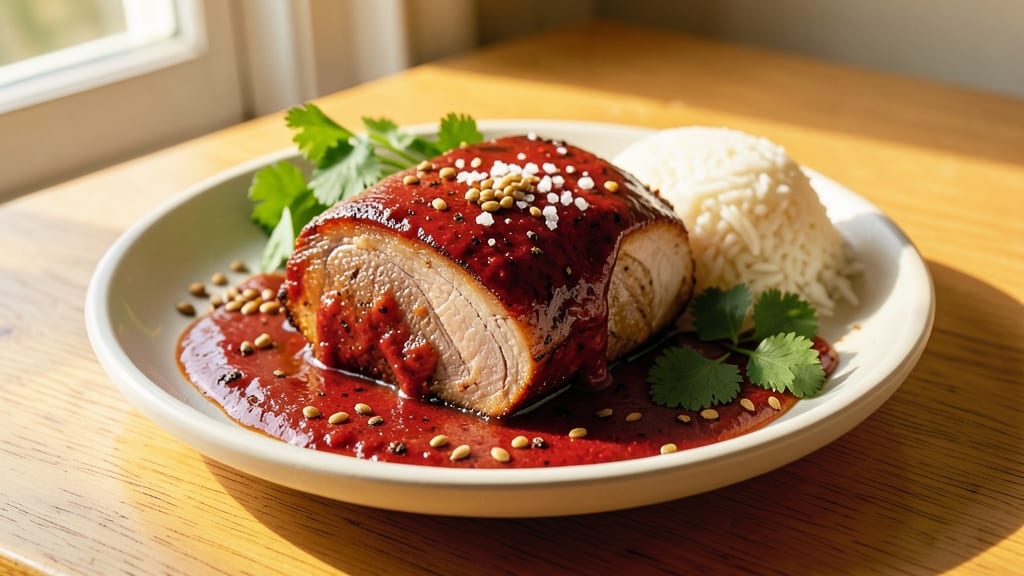
This Bueno red chile pork recipe transforms simple pork shoulder into a masterpiece of smoky, caramelized perfection. 🔥 Growing up in Georgia, I learned that the secret to great pork lies in patience and the right blend of spices—this recipe delivers both.
The tamarind glaze isn’t just sweet; it caramelizes on the bone, creating a sauce that clings to every bite like liquid gold.
The magic begins with a dry rub of Bueno red chile, cumin, and brown sugar, which develops a deep, earthy crust during the slow cook. I’ve perfected this method over years of pitmaster competitions, ensuring the pork stays tender while the exterior becomes irresistibly crisp.
The tamarind glaze, simmered low and slow, balances heat with tangy sweetness, cutting through the richness of the pork.
What you’ll end up with is a dish that tastes like a cross between a Carolina BBQ joint and a Mexican fonda—smoky, slightly sweet, and packed with layers of flavor. The glaze thickens as it cooks, creating a sticky, caramelized finish that makes every bite worth the wait.
Serve it over white rice or with warm tortillas for the full experience.
This recipe is a testament to how a few simple ingredients—when treated with care—can become something extraordinary. Whether you’re feeding a crowd or treating yourself to a Sunday supper, the results will have everyone asking for seconds. Let’s get cooking.
Ingredients for bueno red chile pork
Sixteen ingredients, two days of flavor—this pork transforms from simple to showstopping.
| Ingredient | Amount | Notes |
|---|---|---|
| Pork Shoulder 🐖 | 4 lb | Bone-in for flavor, cut into 2-inch chunks |
| Bueno Red Chile Powder 🌶️ | ½ cup | Smoked variety preferred |
| Ground Cumin 🌿 | 2 tbsp | Toasted for deeper aroma |
| Light Brown Sugar 🍚 | ¼ cup | Packed, not scooped |
| Kosher Salt 🧂 | 1 ½ tbsp | Diamond Crystal preferred |
| Black Peppercorns 🌶️ | 1 tbsp | Freshly cracked |
| Garlic Cloves 🧄 | 6 cloves | Smashed, not minced |
| Tamarind Paste 🍯 | ½ cup | Unsweetened, thick consistency |
| Apple Cider Vinegar 🍎 | ¼ cup | Bragg preferred |
| Honey 🍯 | ¼ cup | Wildflower preferred |
| Chicken Broth 💧 | 1 ½ cups | Low-sodium, homemade if possible |
| Yellow Onion 🧅 | 1 whole | Medium size, diced |
| Fresh Cilantro 🌿 | ¼ cup | Chopped, for garnish |
| Lime 🍋 | 1 whole | Juiced, for finishing |
| Vegetable Oil 🫒 | 2 tbsp | For searing pork |
The pork shoulder is non-negotiable here—bone-in delivers the richest flavor, and Costco or Whole Foods carry perfect cuts. Look for a well-marbled shoulder with a thick fat cap; this ensures moisture during the long cook. For the Bueno red chile powder, Penzeys Spices or the bulk section at Mexican markets offer the best quality—avoid the pre-mixed packets at the grocery store. Toast your spices in a dry pan for 30 seconds to deepen their aroma before mixing with the rub.
No tamarind paste? Substitute 0.25 cup orange marmalade plus 1 tbsp lime juice—it won’t be identical, but it’ll save you a trip to the international aisle. The honey can be swapped for maple syrup if you prefer, though it’ll alter the caramelization slightly. For the apple cider vinegar, Bragg is my go-to, but any raw, unfiltered vinegar works. The garlic should be smashed (not minced) to avoid turning bitter during the long cook. If you’re prepping ahead, make the dry rub and glaze components separately—they’ll keep for up to 2 weeks in airtight containers.
This dish tastes even better the next day, so plan ahead. The cooked pork keeps 4-5 days in the fridge, and the glaze can be reheated separately for up to 1 week. For leftovers, slice against the grain and serve on warm tortillas or over steamed rice. Freeze portions of the glaze in ice cube trays for quick flavor boosts in future dishes—3 months in the freezer, no problem. The cilantro and lime should be added fresh right before serving, so grab them last.
Why You'll Love This Recipe
- One-Pot Magic: I swear by this for lazy nights—just brown the pork, toss in the spices (that Bueno powder is the star), and let it slow-cook. No chopping, no fuss, just hands-off satisfaction.
- Sweet-Spicy Kick: The brown sugar and Bueno chile powder team up for a flavor that’s deep, smoky, and just a little sweet—like a hug from a food truck. Honestly, the first bite makes me close my eyes.
- Meal Prep Hero: This keeps perfectly for days, so I make a big batch on Sunday. Tacos on Tuesday, sandwiches on Thursday—it’s my go-to for busy weeks. (Yes, even on a Tuesday night.)
- Budget Stretch: Pork shoulder is cheap, and this recipe feeds four for under $15. Between us, it’s the kind of dish that makes grocery day feel like a win. Plus, leftovers taste even better the next day.
Step-by-step instructions for smoky tamarind glazed pork
This method delivers deep smoky flavor with a caramelized glaze that clings perfectly to the bone.
🔥 Step 1: Sear the Pork Shoulder for Maximum Flavor
Cut the 4 lb pork shoulder into 2-inch chunks and pat them dry with paper towels. Heat the 2 tbsp vegetable oil in a large Dutch oven over medium-high heat until shimmering. Working in batches, add the pork chunks and sear for 3-4 minutes per side until deeply browned. This step develops the Maillard reaction that creates rich flavor.
Don't overcrowd the pan—you want those chunks to develop a good crust. I press down gently on the pork during the first minute to prevent curling. Once all pieces are browned, transfer them to a plate and set aside. The rendered fat in the pot will become the flavor base for your sauce.
👨🍳 Step 2: Build the Smoky Spice Base
In the same Dutch oven, reduce heat to medium and add the diced yellow onion. Cook for 5-6 minutes until softened and translucent. Add the 6 smashed garlic cloves and cook for 30 seconds until fragrant—don't let them brown or they'll turn bitter.
Now it's time to toast the spices. Add the 0.5 cup Bueno Red Chile Powder and 2 tbsp ground cumin, stirring constantly for 1 minute until the powdered spices are fragrant and slightly darkened. This step deepens their flavor profile. Immediately add the 1.5 tbsp kosher salt and 1 tbsp freshly cracked black peppercorns, stirring to combine.
🥘 Step 3: Create the Tamarind Glaze Foundation
Pour in the 0.5 cup tamarind paste, 0.25 cup apple cider vinegar, and 0.25 cup honey, stirring vigorously to incorporate. The mixture will thicken slightly as it cooks. Add the 0.25 cup light brown sugar and cook for 3-4 minutes until the sugar begins to caramelize and the mixture smells rich and complex.
Here's where the magic happens: slowly pour in the 1.5 cups chicken broth while scraping up any browned bits from the bottom of the pot. These bits contain concentrated flavor that will dissolve into your sauce. Bring the mixture to a gentle simmer and let it cook uncovered for 10 minutes to allow the raw acidity of the vinegar to mellow.
🍳 Step 4: Braise Until Fork-Tender
Return the seared pork chunks to the Dutch oven, spooning the sauce over them until well-coated. The liquid should come about halfway up the pork pieces. Bring everything to a simmer, then cover tightly and transfer to a preheated 300°F oven. Braise for 3-4 hours, turning the pork occasionally, until it's fork-tender with a probe reading 203°F.
Real talk: your oven might run hot, so start checking at the 2.5-hour mark. The pork is done when it falls apart easily with a fork. If the sauce reduces too much before the pork is tender, add 2-3 tablespoons of water to maintain moisture. The glaze should coat the pork beautifully, with a thick, caramelized consistency.
⏰ Step 5: Finish and Garnish
Once the pork reaches the proper temperature, remove it from the oven and let it rest for 15 minutes. During this time, increase the heat to medium-high and simmer the sauce uncovered for 5-7 minutes to thicken it further. The glaze should coat the back of a spoon and have a glossy sheen.
Stir in the juice of the whole lime and adjust seasoning if needed. Transfer the pork to a serving platter and spoon the sauce over the top. Garnish with the chopped fresh cilantro just before serving. The finished dish should have a perfect balance of smoky heat, sweet caramelized notes, and bright acidity from the tamarind and lime.
Pro Tips For Making Bueno Red Chile Pork
- Brown the Pork First: Don’t skip the sear—get that pork shoulder screaming hot in a dry skillet for 8-10 minutes per side until it’s deep mahogany. I learned this the hard way: skipping this step means your chile will taste like stewed pork, not caramelized, smoky perfection. (Yes, even if you’re impatient like me.)
- Toast the Spices: Bloom the cumin and chile powder in the pot with a splash of oil for 30 seconds before adding liquids—just until you smell that earthy, nutty aroma. My grandmother swore by this, and she was right: it cuts the raw, dusty edge of the spices and builds flavor from the start.
- Sweat the Pork: After browning, lower the heat and cook the pork uncovered for another 5 minutes to render fat without boiling. This isn’t the prettiest method, but it’s the tastiest—it keeps your sauce from turning greasy later. (Your future self will thank you.)
- Simmer Slow and Low: Once everything’s in the pot, bring it to a boil, then immediately drop to a bare simmer—no babysitting, no high heat. I was skeptical until I tried it: this guarantees tender pork and a sauce that thickens naturally, not one that burns or separates. Aim for 2-2.5 hours, covered loosely.
Essential equipment for perfect results
Dutch Oven Essentials
A 5-7 quart Dutch oven is non-negotiable for this recipe—it needs to handle the pork chunks and sauce without overflowing. I swear by the Lodge 5.5 Quart with lid—its cast iron construction retains heat perfectly and develops a natural nonstick patina over time.
For a budget-friendly alternative, the Le Creuset Stoneware Dutch Oven (6 quart) works beautifully, though it’s heavier. Avoid nonstick Dutch ovens—they can’t handle the high heat needed for proper searing. 🔥
Precision Thermometer
You’ll need a meat thermometer with a probe to monitor the pork’s internal temperature accurately. The ThermoWorks Smoke is my go-to—its stainless steel probe stays cool to the touch and reads temperatures from 140°F to 575°F.
For a more affordable option, the Taylor Precision Genius gives consistent readings without breaking the bank. Never guess with pork—203°F is your target for perfect tenderness.
Spice Toasting Tools
Toasting spices in a dry pan is crucial for developing their full flavor, but you need the right tool. A 10-inch cast iron skillet (like my Lodge Pre-Seasoned) works perfectly—its heavy base distributes heat evenly.
For a lighter option, a stainless steel sauté pan (like All-Clad’s 3-quart) handles the job just as well. Avoid nonstick pans—they won’t get hot enough to properly toast the spices, and the nonstick coating can degrade with high heat.
Mixing and Measuring
For the glaze components, precision matters. A stainless steel measuring cup set (like the OXO Good Grips) ensures accurate measurements for the tamarind paste, honey, and vinegar. For the dry rub, a small mixing bowl and a whisk (like the Macalla 12-inch) help blend the spices evenly.
I also keep a microplane handy for zesting lime—it adds bright, aromatic notes that a standard grater can’t match. 🍋
Resting and Serving
After cooking, you’ll need a cooling rack and large serving platter to showcase the dish. I use a wire cooling rack (like the Willweber) to let the pork rest while the sauce thickens, and a ceramic serving platter (like the Le Creuset Stoneware) to keep everything warm.
For garnishing, a small bowl for the chopped cilantro and a lime wedge on the side complete the presentation. Pro tip: Use a tongs (like Victorinox 7-inch) to transfer the pork—it keeps the glaze intact.
Nutrition facts
Frequently asked questions
Can I substitute Bueno Red Chile Powder with regular chili powder?
Not ideal, but you can use a blend of 1/3 cup smoked paprika, 1/4 cup ancho chile powder, and 1/4 cup cayenne for similar depth. The Bueno blend has a specific smoky-sweet profile that regular chili powder lacks—you'll miss that complexity. If you're in a pinch, toast the substitute spices longer (1-2 minutes) to intensify their flavor.
How do I adjust this recipe for a slow cooker?
Transfer the seared pork and sauce to a 6-quart slow cooker instead of the oven. Cook on low for 8 hours or high for 5-6 hours, adding 1/2 cup water if the liquid reduces too much. The glaze will be thinner but still delicious. Finish by simmering the sauce on the stovetop for 10 minutes to thicken it before serving.
Why does my pork turn out dry even after braising?
This usually happens when the pork isn't properly seared (no crust = less moisture retention) or cooked too hot. Always use a meat thermometer and aim for 203°F. For extra insurance, add 1/2 cup chicken broth during the braise if the sauce reduces too quickly. The bone-in shoulder should stay juicy if cooked low and slow—never rush the process!
Can I make this recipe ahead of time?
The pork tastes even better the next day. Cook it fully, then refrigerate in the sauce for up to 5 days. Reheat gently in a skillet with a splash of water to restore moisture. The glaze can also be made separately and stored for 1 week in the fridge, or frozen in 1-cup portions for up to 3 months—perfect for quick weeknight meals.
What's the best way to serve this pork?
For authenticity, serve over steamed white rice or with warm corn tortillas. The smoky-sweet glaze pairs beautifully with pickled red onions for acidity or avocado slices for creaminess. In Georgia, we often add a side of collard greens or buttery cornbread—the contrast of textures makes every bite unforgettable.