
Main Courses
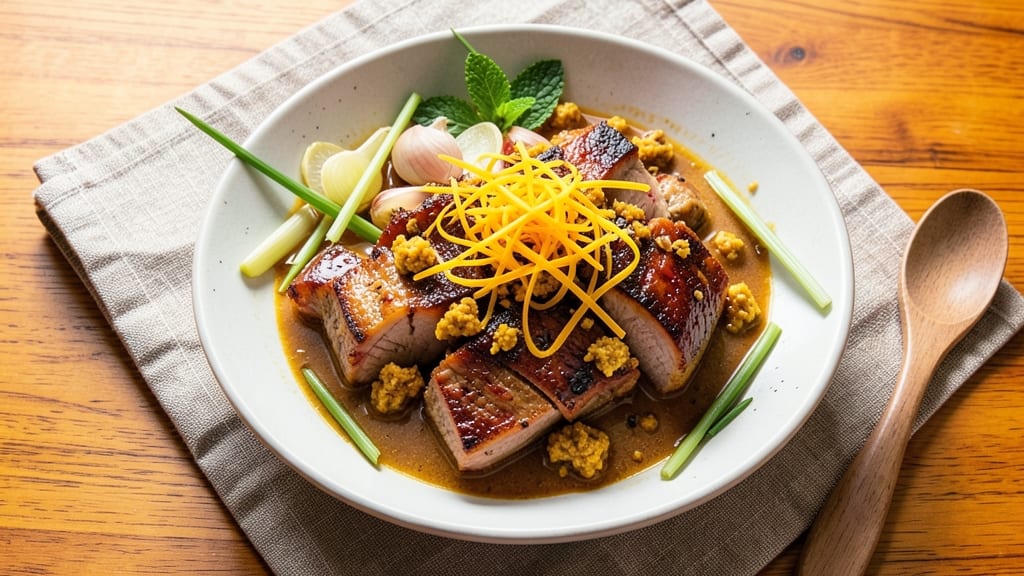
This Burmese pork curry recipe brings the aromatic streets of Yangon to your kitchen with its signature balance of fragrant lemongrass, zesty galangal, and slow-cooked pork that melts in your mouth. 🌟 The secret lies in the slow simmering of the curry paste, which develops deep, complex flavors that transform tough pork into tender, flavorful bites.
I first discovered this technique while studying Southeast Asian cuisine, and it quickly became a staple in my home—especially when I wanted to recreate the bold, comforting flavors of my travels.
The recipe begins with a marinade of turmeric, garlic, and tamarind that tenderizes the pork while infusing it with bright, tangy notes. As the curry simmers, the galangal and lemongrass release their essential oils, creating an aroma that fills your home with warmth.
The key to authenticity is balancing the heat—just enough chili to add depth without overpowering the dish, while the coconut milk rounds out the flavors into a creamy, velvety sauce. This isn’t just a curry; it’s a taste of tradition, built layer by layer.
By the time you serve it, you’ll have a dish that’s rich, aromatic, and perfectly balanced—tender pork swimming in a sauce that’s both spicy and subtly sweet.
The texture is where the magic happens: the pork should pull apart easily, while the sauce clings to every bite, delivering bursts of galangal’s citrusy bite and lemongrass’s floral notes.
Serve it with steamed jasmine rice and a side of pickled vegetables to cut through the richness, and you’ve got a meal that’s as satisfying as it is authentic.
This recipe is designed to be approachable yet deeply flavorful, making it perfect for weeknight dinners or special occasions. The techniques are straightforward, but the results are anything but ordinary.
Whether you're feeding a family or treating yourself to a taste of Burma, this curry delivers the kind of depth and warmth that turns a simple meal into something memorable. Let’s get cooking—your taste buds are in for a treat.
Ingredients for burmese pork curry
Fragrant lemongrass, zesty galangal, and tender pork—just 15 ingredients for bold Burmese flavors.
| Ingredient | Amount | Notes |
|---|---|---|
| Pork Shoulder 🐖 | 1 ½ lb | Cut into 1.5-inch cubes |
| Lemongrass 🌿 | 1 whole | Bruised stems only, cut into 2-inch pieces |
| Galangal 🌿 | 3 inch | Peel and slice thinly |
| Yellow Curry Paste 🌶️ | 3 tbsp | Store-bought or homemade |
| Garlic Cloves 🧄 | 6 cloves | Minced finely |
| Fresh Turmeric 🌿 | 1 inch | Peel and slice thinly |
| Tamarind Paste 🍯 | 1 ½ tbsp | Adjust for tanginess |
| Fish Sauce 🥫 | 2 tbsp | Red Boat preferred |
| Coconut Milk 🥥 | 13 ½ oz | Full-fat canned, well-shaken |
| Red Chili Peppers 🌶️ | 2 whole | Thai or bird's eye, chopped |
| Shallots 🧅 | 3 whole | Peel and finely chopped |
| Fresh Cilantro 🌿 | ¼ cup | Stems removed, chopped |
| Jasmine Rice 🌾 | 1 ½ cups | Uncooked, long-grain |
| Vegetable Oil 🫒 | 2 tbsp | For frying pork |
| Salt 🧂 | 1 tsp | Kosher or sea salt |
Lemongrass and galangal are the heart of this curry—fresh is non-negotiable. Look for galangal in the produce section at Asian markets or well-stocked grocery stores like Whole Foods. If you can't find fresh galangal, ginger works in a pinch but won't be identical. The pork shoulder is key—it stays tender through the long cooking. Buy it from the butcher counter if possible, or grab pre-cut cubes from Costco for convenience. For the curry paste, Maesri or Thai Kitchen brands are reliable if you're not making your own.
No tamarind paste? Lime juice plus a pinch of sugar gets you close, though it won't be exactly the same. Fish sauce is essential here—Red Boat or Three Crabs are the gold standards. If you're avoiding fish sauce, soy sauce plus a splash of vinegar works as a substitute. The coconut milk should be full-fat for that creamy texture—no light versions here. For heat, Thai or bird's eye chilies pack the most punch, but any fresh chili will do. The shallots can be swapped for regular onions if needed, though they add a slightly sweeter note.
This curry tastes even better the next day as the flavors meld. Store leftovers in the fridge for 4-5 days or freeze for 3 months. The sauce thickens as it cools, so stir in a splash of water or coconut milk when reheating. For serving, I always make extra rice—jasmine rice is ideal, but basmati works too. Garnish with fresh cilantro right before serving to keep it vibrant. The aromas alone will have your whole house smelling like a Yangon street market.
Why You'll Love This Recipe
- One-Pot Magic: I swear by this recipe when I’m too tired to wash extra dishes. Toss everything—pork, curry paste, lemongrass—into one pot, and let the galangal and garlic work their flavor while you stir. No chopping boards left in the sink, no fuss.
- Umami Bomb: That yellow curry paste packed with garlic and galangal? It’s the secret weapon. The pork gets tender and infused with a deep, earthy richness that lingers—like a hug for your taste buds, but better.
- Leftover Goldmine: Make a double batch and thank me later. This curry tastes even better the next day, especially with rice. (Between us, I’ve reheated portions for lunch all week without getting bored—it’s that good.)
- Budget-Friendly Feast: Pork shoulder stretches for miles, and the ingredients are affordable without sacrificing flavor. Honestly, I’ve served this to picky eaters, and they’ve all come back for seconds. That’s a win.
Step-by-step instructions for Burmese pork curry
Let's build this aromatic curry with layers of lemongrass, galangal, and just the right amount of heat.
🔥 Step 1: Sear the Pork Shoulder for Deep Flavor
Heat 2 tablespoons vegetable oil in a heavy pot over medium-high heat until shimmering. Add the 1.5 lb pork shoulder cut into 1.5-inch cubes in a single layer, leaving space between pieces. Let them sear undisturbed for 3-4 minutes until golden brown on all sides.
This initial searing creates a flavorful crust that prevents the meat from turning mushy later. I press down gently on the pork cubes during the first minute—this prevents them from curling and ensures even contact with the pan. Once all sides are browned, transfer the pork to a plate and set aside.
🍳 Step 2: Build the Aromatic Curry Base
In the same pot, reduce heat to medium and add 3 whole shallots (peeled and finely chopped), 6 cloves garlic (minced), 1 inch fresh turmeric (peeled and sliced), and 2 whole red chili peppers (chopped). Sauté for 3-4 minutes until the shallots soften and the garlic becomes fragrant—don't let it brown or it'll turn bitter.
Add the 3 tbsp yellow curry paste and stir for 1 minute to toast its flavors. Here's the thing—don't rush this step. The paste contains spices that need time to bloom and release their aroma. After a minute, pour in 13.5 oz coconut milk and stir to combine, letting it simmer gently for 5 minutes to warm through.
🥘 Step 3: Simmer the Pork in Spiced Coconut Milk
Return the seared pork to the pot along with the 1 whole lemongrass (bruised and cut into 2-inch pieces), 3 inch galangal (peeled and sliced thinly), 1.5 tbsp tamarind paste, and 2 tbsp fish sauce. Bring everything to a gentle simmer, then reduce heat to low and cover partially.
Let the curry cook for 1 hour to 1 hour 15 minutes until the pork is fork-tender and falls apart easily. I check for doneness by piercing a piece with a fork—if it slides in smoothly, it's ready. If the sauce looks too thin, uncover and simmer for another 10 minutes to thicken slightly. The pork should be moist but not falling apart completely.
🔪 Step 4: Finish with Fresh Herbs and Adjust Seasoning
Once the pork is tender, stir in the 1 tsp salt and 0.25 cup fresh cilantro (stems removed and chopped). Taste the curry and adjust seasoning if needed—you might want to add a bit more fish sauce for saltiness or tamarind paste for tanginess. The curry should balance sweet, sour, spicy, and umami flavors.
Remove the lemongrass and galangal pieces (they've done their job) and discard them. Give the curry a final stir and let it sit off heat for 5 minutes to allow the flavors to meld together. Real talk: this is the moment that matters—the curry needs time to rest and develop its full complexity.
🍚 Step 5: Serve Over Jasmine Rice
While the curry rests, cook the 1.5 cups jasmine rice according to package instructions until fluffy and tender. Serve the curry hot over the rice, garnished with additional cilantro if desired. Each bite should deliver tender pork swimming in a rich, aromatic coconut sauce with just the right amount of heat.
This curry tastes even better the next day, so don't hesitate to make extra. The flavors deepen as the spices continue to infuse the meat and sauce overnight. Store leftovers in the refrigerator for up to 3 days or freeze for 3 months for a quick meal later.
Pro Tips For Making Burmese Pork Curry
- BLANCH THE PORK FIRST: I learned this the hard way—skipping the quick sear in hot oil before slow cooking turns your pork shoulder into a sad, greasy mess. Sear it 2-3 minutes per side in a smoking-hot pan until the outside crisps, then proceed with the curry. The crust locks in flavor and keeps it from falling apart later.
- GRATE THE GALANGAL: Yes, even if it looks like a weird, knobby ginger root. Fresh galangal has a citrusy, piney kick that freezes up if you just chop it. Use a box grater or fine-disk mandoline, then squeeze out excess moisture with your hands—wet galangal dulls the curry’s punch. (Pro tip: Store extra grated galangal in the freezer for future batches.)
- LOW AND SLOW WINS: Your pork shoulder needs time—don’t rush it. After browning, simmer the curry at a gentle bubble (180–200°F) for at least 2 hours, covered. I used to crank the heat to speed things up, but that turns the meat rubbery. Check occasionally, add water if needed, and let it work its magic.
- TOAST THE CURRY PASTE: This isn’t optional. Heat your yellow curry paste in a dry pan for 1–2 minutes until fragrant and slightly darkened—it deepens the flavors and cuts the raw taste. Skip this, and your curry will taste like paste instead of a complex, layered dish. (Bonus: Toast the minced garlic cloves with it for extra aroma.)
Storing and reheating your leftovers
Refrigerator Storage
Let your Burmese pork curry cool completely before transferring to airtight glass containers—I swear by Pyrex with snap-on lids for this. Store in the fridge for up to 4 days, though I find the flavors actually improve after 24 hours as the spices meld.
The sauce will thicken slightly overnight, so stir in 1-2 tablespoons of water or coconut milk when reheating to restore its velvety texture. 🌟
Freezer Storage
For longer storage, freeze the curry in quart-sized freezer bags, leaving 1 inch headspace for expansion. Press out excess air to prevent freezer burn, and label with the date. This curry keeps for 3 months without losing its aromatic punch.
When ready to eat, thaw overnight in the fridge, then reheat gently on the stovetop with a splash of water. Never microwave directly from frozen—it’ll make the sauce watery.
Stovetop Reheating
My preferred method is stovetop reheating over medium-low heat. Transfer the curry to a heavy pot and add ¼ cup water or coconut milk to prevent sticking. Simmer uncovered for 10-15 minutes, stirring occasionally, until heated through (165°F internal temperature).
Taste and adjust seasoning—you might need an extra ½ teaspoon fish sauce or a squeeze of lime juice to brighten flavors. The pork should remain tender, not rubbery.
Microwave Reheating
For quick meals, microwave in 2-minute intervals on 50% power, stirring between each interval. Cover loosely with a microwave-safe lid to retain moisture. Add 1-2 tablespoons of water if the sauce looks dry.
Avoid high power—it’ll cook the pork unevenly and make the sauce break. This method works best for single servings rather than the whole pot. 💫
Reheating Tips
Always reheat curry until steaming hot—this kills any bacteria and ensures food safety. If the pork seems dry after reheating, shred it slightly and stir in 1 tablespoon coconut milk to restore moisture.
Garnish with fresh cilantro right before serving to keep it vibrant. Pro tip: Reheat only what you’ll eat in 2-3 days to maintain peak flavor and texture.
Nutrition facts
Frequently asked questions
What's the difference between Burmese pork curry and Thai green curry?
Burmese pork curry uses galangal and lemongrass as its aromatic base, giving it a citrusy, peppery depth that's more complex than Thai green curry's lime-leaf and kaffir lime leaf profile. The Burmese version also incorporates tamarind for tanginess and relies on a longer simmer time to tenderize the pork. Thai green curry is brighter and often includes bamboo shoots or bell peppers, while Burmese curry leans into earthy, fermented flavors from fish sauce.
Can I substitute galangal with ginger?
Yes, but expect a different flavor profile. Fresh galangal has a citrusy, peppery bite that's essential for authentic Burmese curry. If substituting, use equal parts ginger but add an extra ½ teaspoon of lime zest to mimic the citrus notes. For best results, find fresh galangal at Asian markets—it's worth seeking out for this dish.
How do I adjust the spice level?
Start by removing the seeds from the chilies before chopping for milder heat. For extra spice, add 1-2 chopped Thai chilies or a pinch of cayenne pepper at the end. Remember, the curry paste already contains heat—taste as you go! If it's too spicy, balance with more coconut milk or a splash of fish sauce.
Why did my pork turn out tough?
This usually happens from overcooking or not searing the pork properly first. The recipe calls for 1 hour to 1 hour 15 minutes of simmering—any longer and the meat will dry out. Always sear the pork first to create a flavorful crust, and use a meat thermometer to check doneness (203°F internal temp for pulled pork texture).
What's the best rice to serve with this curry?
Jasmine rice is ideal—its floral aroma complements the curry beautifully. For extra authenticity, try Burmese rice (paddy rice) if available. Avoid long-grain white rice as it lacks the fragrant, slightly sticky texture that pairs perfectly. Cook the rice separately and serve it hot and fluffy to soak up the rich curry sauce.