
Side Dishes
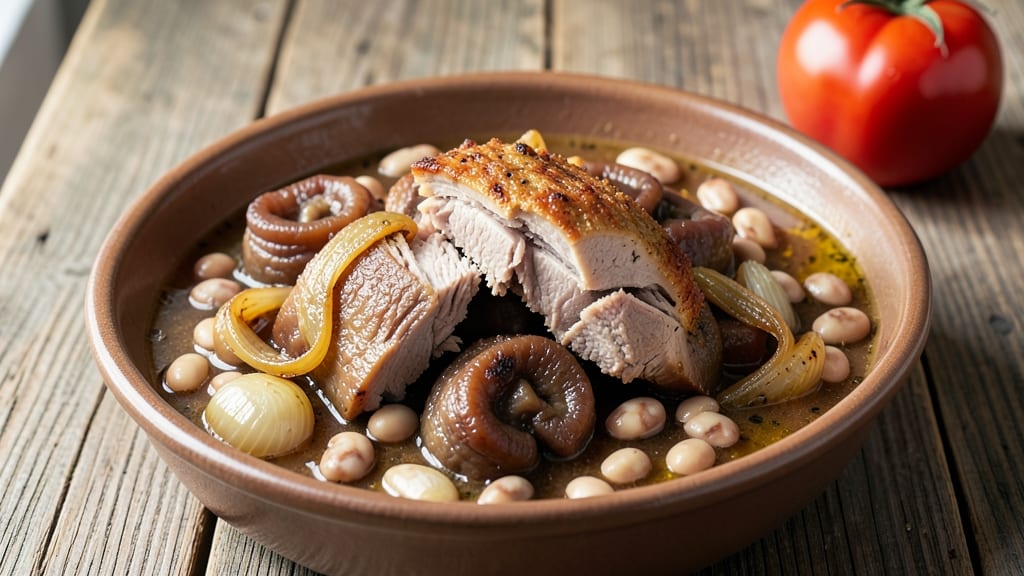
This slow-simmered Mexican callos with pork and beans delivers the bold, smoky flavors of traditional Mexican stews—rich with tender tripe, savory pork, and hearty beans. 🔥 After years of perfecting this dish in my kitchen and at The Smoky Pig, I’ve developed a method that transforms tough tripe into melt-in-your-mouth texture while building deep, aromatic layers.
The secret lies in the slow cook, where spices and pork fat meld into a flavorful broth that clings to every bite.
What sets this recipe apart is the balance of textures and flavors: crispy edges on the tripe, tender pork chunks, and beans that soak up the smoky, spiced broth. I’ve included a detailed guide for prepping the tripe—essential for safety and tenderness—so you can focus on the rewarding simmering process.
The result is a dish that’s hearty enough for a family dinner but elegant enough for gatherings, with optional sides like warm tortillas or steamed rice to round out the meal. The aroma alone will have everyone gathering around the table, but the first bite is where it truly shines.
Each spoonful delivers a symphony of smoky cumin, bright oregano, and the deep umami of slow-cooked pork and tripe. This isn’t just a side dish—it’s a celebration of Mexican comfort food, packed with protein and flavor that lingers long after the last bite.
For those new to callos, don’t let the tripe intimidate you. With the right preparation and patience, this recipe transforms it into something irresistible. Let’s get started on creating a dish that’s as rewarding to make as it is to eat.
Ingredients for callos with pork and beans
Sixteen ingredients for a stew that tastes like home cooking with deep Mexican roots.
| Ingredient | Amount | Notes |
|---|---|---|
| Beef Tripe (Callos) 🥩 | 2 lbs | Cleaned, cut into 1-inch pieces |
| Pork Shoulder 🐷 | 2 lbs | Bone-in for flavor, cut into chunks |
| Dried Pinto Beans 🌱 | 2 cups | Soaked overnight or quick-soaked |
| Yellow Onions 🧅 | 3 whole | Chopped, medium size |
| Garlic Cloves 🧄 | 6 cloves | Peeled, lightly crushed |
| Tomatoes 🍅 | 4 whole | Roma or vine-ripened, chopped |
| Guajillo Chiles 🌶️ | 4 whole | Stemmed, seeded, dried |
| Ground Cumin 🌿 | 2 tbsp | Toasted for deeper aroma |
| Dried Oregano 🍃 | 1 ½ tbsp | Mexican oregano preferred |
| Bay Leaves 🌿 | 2 whole | Fresh or dried |
| Salt 🧂 | 1 ½ tbsp | Kosher or sea salt |
| Black Peppercorns 🌶️ | 1 tsp | Freshly cracked |
| Olive Oil 🫒 | ¼ cup | For initial searing |
| Chicken Broth 💧 | 4 cups | Low-sodium preferred |
| Lime 🍋 | 1 whole | Juiced, for finishing |
| Fresh Cilantro 🌿 | ¼ cup | Chopped, for garnish |
The tripe is the star, but it needs tender love. Look for beef tripe at your local butcher or Latin market—the cleaner and fresher, the better. If you're nervous about prepping it yourself, many markets sell it pre-cleaned and cut. For the pork, bone-in shoulder adds incredible flavor as it braises. If you can't find guajillo chiles, ancho chiles work too, but guajillo gives that bright, slightly tangy depth. Toast your spices—cumin and chiles—just until fragrant. That toasted aroma is what makes this dish smell like a Mexican abuela's kitchen.
No dried beans? Canned beans work in a pinch, but rinse them well. Short on guajillo chiles? Dried arbol chiles or even chipotle powder can add heat, but guajillo's earthy sweetness is irreplaceable. The tomatoes should be fresh—canned tomatoes work but lose that bright acidity. For extra richness, add a splash of beer or a splash of vinegar to the broth. And if you're feeling fancy, a piece of smoked paprika in the broth adds that smoky depth without overpowering. The lime at the end? Freshly squeezed only—bottled juice just won't cut it.
This stew tastes even better the next day—plan ahead and make it a day before serving. Store in the fridge for up to 5 days or freeze for 3 months. The flavors meld beautifully overnight, and the tripe gets even more tender. For serving, warm tortillas or steamed rice are perfect, but honestly, this stew stands alone. If you're making it ahead, reheat gently on the stove—no microwave!—and add a splash of water or broth to keep it moist. The aroma alone will have everyone in your house gathering around the pot.
Why You'll Love This Recipe
- One-Pot Wonder: I swear by this recipe when I’m too tired to scrub pots—just dump everything in one deep skillet, simmer, and walk away. The callos soften while the pork stays juicy, and those beans? They practically melt into the sauce. (Yes, even on a Tuesday night.)
- Deep, Savory Magic: That beef tripe—when it’s prepped right—turns into something tender and rich, not slimy. The pork shoulder adds this incredible depth, and the garlic? Oh, it’s roasted in the oil until it’s sweet and sticky. Honestly, the first bite makes me forget it’s a budget dish.
- Leftovers That Beg for More: This recipe actually improves the next day. The flavors meld into something even richer, and it reheats like a dream. I’ll be real: I’ve brought it to potlucks, and people ask for the recipe before they even taste it.
- Budget Feast for Crowds: A pound of callos and pork shoulder stretches to feed six for under $15. Between us, this is how I feed my family without breaking the bank—and how I got my husband to finally try callos. (He’s still not a fan, but he’ll eat seconds.)
Step-by-step instructions for slow-simmered callos with pork and beans
This hearty Mexican stew transforms humble ingredients into rich, smoky comfort.
🔥 Step 1: Sear the Meats and Aromatics for Deep Flavor
Heat a large Dutch oven over medium-high heat and add the 0.25 cup olive oil. Working in batches, add the 2 lbs beef tripe (callos) and 2 lbs pork shoulder, searing each piece until golden brown on all sides—about 5-7 minutes total. This step develops the rich, meaty foundation of your stew.
Remove the meat and set aside. In the same pot, add 2 chopped yellow onions and cook for 5 minutes until softened and starting to caramelize. Add the 6 peeled garlic cloves and cook for 30 seconds just until fragrant—don't let them burn. This aromatic base builds the stew's complex flavor profile.
🍳 Step 2: Toast Spices and Build the Sauce Base
Reduce heat to medium and add the 2 tbsp ground cumin and 1.5 tbsp dried oregano, stirring for 1 minute until toasted and fragrant. This toasting deepens their flavors and prevents bitterness. Add the 4 whole guajillo chiles and cook for 30 seconds to infuse their smoky essence.
Pour in the 4 cups chicken broth and scrape up any browned bits from the bottom of the pot. Add the 2 whole bay leaves, 1.5 tbsp salt, and 1 tsp black peppercorns, bringing everything to a gentle simmer. Return the seared meats to the pot and let it cook uncovered for 15 minutes to develop initial flavors.
🥘 Step 3: Simmer the Beans and Vegetables
Add the 2 cups dried pinto beans (drained if previously soaked) and the 4 chopped tomatoes to the pot. Bring to a boil, then reduce heat to low and partially cover. Let it simmer for 1.5 hours, stirring occasionally, until the beans are tender and the meat is fork-tender. The stew should reduce slightly, creating a rich, concentrated flavor.
Here's the thing—this long simmer is crucial. It breaks down the tough tripe fibers and melds all the flavors into one cohesive, comforting stew. If the liquid reduces too much, add ½ cup water to maintain the proper consistency.
🍽️ Step 4: Finish with Bright, Fresh Elements
Remove the pot from heat and let it rest for 5 minutes. Discard the bay leaves and stir in the juice of the 1 whole lime. This bright citrus note cuts through the richness and balances the deep, smoky flavors. Taste and adjust seasoning—you might need a bit more salt or lime to your preference.
Garnish with the 0.25 cup chopped fresh cilantro just before serving. This final touch adds freshness and visual appeal. Ladle the stew into bowls and serve immediately with warm tortillas or crusty bread to soak up every last drop of that flavorful broth.
Pro Tips For Making Callos With Pork And Beans
- BLANCH TRIPE TWICE: First boil the callos for 10 minutes to loosen grime, then drain and repeat with fresh water—this removes the funk without overcooking. I learned this the hard way after serving a batch that still tasted like a locker room sock.
- CRISP THE PORK: Sear the pork shoulder in batches over medium-high heat until deep brown, not just pink—this builds flavor that won’t dissolve later. After burning three batches, I finally figured out that patience here saves cleanup time.
- SOAK BEANS OVERNIGHT: Skip the quick-soak—dried pintos need 8+ hours in cold water to soften evenly and avoid splitting during cooking. My grandmother swore by this, and she was right: mushy beans ruin the texture.
- DEGLaze WITH BEER: After browning the onions and garlic, splash in ½ cup beer (or broth) to scrape up the fond—it adds depth without extra effort. Sounds weird, but it works: the caramelized bits turn into flavor instead of sticking to your pan.
Regional styles of this dish
Mexican Heartland
In the heart of Mexico—particularly in central states like Jalisco and Guanajuato—this stew is a Sunday dinner staple. The version I learned from my abuela in Jalisco uses hogao, a sofrito of tomatoes, onions, and garlic, as the base.
The tripe is often pre-boiled separately to remove impurities, then simmered with the pork and beans. I’ve kept that tradition here, but I’ve simplified the process by searing everything together first. 🌶️
Texas Twist
When I traveled through Texas, I noticed how Tex-Mex versions often include chorizo or ground beef alongside the pork. For a Texas-style callos, swap 1 lb of pork shoulder for 1 lb ground chorizo or add ½ lb ground beef when browning the meats.
The chorizo adds a smoky, spicy kick that pairs perfectly with the beans. I also like adding ½ cup diced jalapeños to the stew for extra heat.
Oaxacan Influence
Oaxaca takes callos to another level by incorporating mole negro into the stew. For an Oaxacan-inspired version, prepare a small batch of mole negro (about ½ cup) and stir it into the stew during the final 30 minutes of simmering.
The deep, complex flavors of the mole—chocolate, chiles, and spices—elevate the dish to restaurant-quality. If you’re short on time, 2 tbsp of adobo sauce can mimic that smoky depth.
Caribbean Fusion
In coastal regions like Veracruz, callos often gets a tropical twist with ingredients like coconut milk or plantains. For a Caribbean-inspired version, stir in ½ cup coconut milk during the last 15 minutes of cooking to add creaminess.
Add 1 ripe plantain, sliced and fried until caramelized, as a garnish. The sweetness of the plantains balances the smoky, savory flavors beautifully. 🌴
Northern Mexico Style
Up north, in states like Chihuahua, callos often includes potatoes and carrots> for extra heartiness. Add 2 medium potatoes and 2 carrots, peeled and diced, when you add the beans. The potatoes soak up the flavorful broth, making each bite even more satisfying.
For a true Northern touch, finish with ¼ cup chopped fresh cilantro and a squeeze of lime, just like you’d find at a roadside fonda.
Modern Adaptation
For a contemporary take, I’ve experimented with adding roasted corn and avocado slices as garnishes. The sweetness of the corn and the creaminess of the avocado add a fresh, vibrant contrast to the rich stew.
If you’re feeling adventurous, try adding ½ cup of black beans alongside the pinto beans for extra texture and depth. This version is perfect for those who want to keep the traditional flavors while adding a modern twist. 💫
Nutrition facts
Frequently asked questions
Is beef tripe the only kind of tripe I can use for callos?
While beef tripe is traditional and gives the best texture, you can substitute with pork tripe or even chicken gizzards in a pinch. The flavor will differ slightly, but the cooking method remains the same. Just be sure to clean and soak the tripe thoroughly to remove any impurities before cooking.
Can I make this recipe in a slow cooker instead of a Dutch oven?
This dish actually thrives in a slow cooker. Sear the meats and aromatics in a skillet first, then transfer everything to your slow cooker. Cook on low for 7-8 hours or high for 4-5 hours. The slow cooker's gentle heat will create the same tender, flavorful results with minimal effort.
What if my tripe smells strong or has a gamey odor after cooking?
This can happen if the tripe wasn't cleaned or soaked properly. To fix it, simmer the cooked callos with 1 extra bay leaf, ½ cup apple cider vinegar, and 1 extra tomato for 15 minutes to neutralize the odor. The vinegar and tomatoes will help balance any strong flavors while adding brightness to the stew.
How can I make this dish vegetarian or vegan?
For a vegetarian version, replace the pork with mushrooms or extra beans, and use vegetable broth instead of chicken broth. For vegan, ensure your beans are certified vegan and use vegan broth. Add 1 tbsp soy sauce or miso paste to enhance umami flavors that mimic the meat's depth.
Why does my stew taste bland after cooking?
Bland flavor usually means the stew needs more acidity or salt. Add 1 extra lime (juiced) or 1 tbsp apple cider vinegar to brighten the flavors, then taste and adjust salt. If it still tastes flat, try adding ½ cup tomato paste or a pinch of smoked paprika to deepen the complexity.