
Main Courses
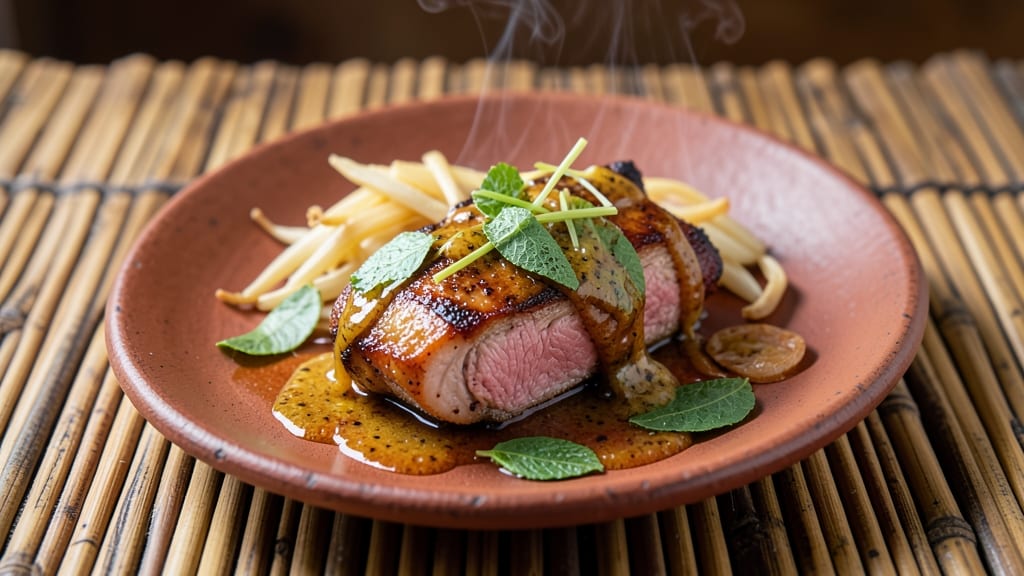
This Cambodian pork chop recipe brings the aromatic streets of Phnom Penh to your kitchen with just a few key ingredients and a technique that transforms simple pork chops into restaurant-quality masterpieces. ✨ The secret lies in the fragrant marinade—lemongrass, kaffir lime leaves, and galangal—creating layers of citrusy, herbal complexity that elevates even the most basic cut of pork.
What makes this recipe special is its balance of simplicity and depth. You'll spend about 30 minutes marinating the pork, then just 10 minutes searing them in a hot pan until golden and perfectly tender inside.
The kroeung paste—a traditional Cambodian spice blend—adds earthy warmth that pairs beautifully with the bright citrus notes, while a touch of fish sauce and palm sugar creates the perfect balance of savory and slightly sweet.
By the time you serve these pork chops, you'll have a dish that's rich in flavor and cultural authenticity. The pork emerges with a caramelized crust, fragrant steam rising from the plate, and a tender interior that practically melts in your mouth.
Serve them over steamed jasmine rice with a side of quick-pickled vegetables to complete the meal—every bite tells a story of Cambodia's vibrant culinary traditions.
This recipe works equally well for weeknight dinners or special occasions, and the marinade can be made ahead, making it a versatile addition to your cooking repertoire.
Whether you're introducing Cambodian flavors to your table or perfecting a dish for a cultural celebration, these pork chops will deliver restaurant-quality results at home.
Ingredients for cambodian pork chop
These aromatic Cambodian ingredients transform simple pork chops into fragrant, restaurant-quality masterpieces.
| Ingredient | Amount | Notes |
|---|---|---|
| Pork Chops 🥩 | 1 ½ lb | Bone-in, 1-inch thick preferred |
| Lemongrass Stems 🌿 | 3 whole | Bruised for maximum flavor |
| Kaffir Lime Leaves 🍃 | 4 whole | Fresh, outer leaves preferred |
| Galangal 🌿 | ½ cup | Freshly grated, like ginger |
| Fish Sauce 🍶 | 2 tbsp | Red Boat brand recommended |
| Palm Sugar 🍯 | 2 tbsp | Or substitute brown sugar |
| Kroeung Paste 🌶️ | 2 tbsp | Homemade or store-bought |
| Garlic Cloves 🧄 | 6 cloves | Minced for marinade |
| Shallots 🧅 | 2 whole | Minced, about 0.25 cup |
| Vegetable Oil 🫒 | 2 tbsp | High smoke point preferred |
| Jasmine Rice 🍚 | 1 ½ cups | Uncooked, for serving |
| Salt 🧂 | 1 tsp | Kosher or sea salt |
| Black Pepper 🌶️ | ½ tsp | Freshly ground |
Lemongrass and kaffir lime leaves are the stars here—look for fresh, vibrant stalks at your local Asian market. Thai & Thai or 99 Ranch Market usually stock them, but if you can't find fresh, frozen works in a pinch. Galangal should smell citrusy and peppery—never old or musty. For the kroeung paste, homemade is ideal (toasted shallots, garlic, lemongrass, galangal), but Maesri brand from the Asian aisle is a solid shortcut. Pork chops should be bone-in and 1-inch thick—thicker cuts stay juicier during searing.
No lemongrass? Substitute half the amount of lime zest plus 1 tbsp lime juice. Kaffir lime leaves can be swapped for 2 tbsp lime zest plus 1 tbsp lime juice, but you'll lose that unique floral aroma. Galangal unavailable? Ginger works at half the amount, though it's not identical. Palm sugar hard to find? Brown sugar is a perfect substitute. For the fish sauce, Red Boat is the gold standard, but any reputable brand (like Tiparoo) will do. The kroeung paste can be made ahead—store it in the fridge for up to 2 weeks or freeze for 6 months.
Marinate the pork for at least 30 minutes (overnight is even better). The marinade keeps 3 days in the fridge—double it if you're making extra. Leftover pork chops reheat beautifully in a skillet with a splash of water for 2-3 minutes. The kroeung paste freezes well—portion into ice cube trays for easy use later. Serve immediately after searing for that perfect caramelized crust, but the pork stays tender for 3-4 days in the fridge.
Why You'll Love This Recipe
- One-Pot Magic: I swear by this recipe—just sear the pork, toss in the lemongrass and galangal, and let the fish sauce work its savory spell. No extra dishes, no stress, and the aromas alone make the kitchen feel like a Cambodian street stall.
- Umami Bomb: That first bite? The fish sauce caramelizes into something deep and salty, while the galangal adds a peppery kick. It’s not just flavor—it’s a full sensory experience, and honestly, I’ve never had pork chops taste this alive.
- Weeknight to Dinner Party: Make a double batch on a Tuesday and reheat for Thursday—still tastes fresh. Or serve it at your next gathering with jasmine rice and a simple cucumber salad. It’s the kind of dish that feels fancy but won’t make you late.
- Budget Stretch: Pork chops are affordable, and the aromatics (lemongrass, lime leaves) go a long way. I’ve fed four people for under $15, and the leftovers? Even better the next day. My wallet and taste buds win.
Step-by-step instructions for Cambodian pork chops
Here's how to create restaurant-quality Cambodian pork chops with aromatic lemongrass and bright kaffir lime notes.
👨🍳 Step 1: Prepare the Fragrant Marinade
In a food processor, combine the 3 whole lemongrass stems (bruised by pounding with a rolling pin), 4 whole kaffir lime leaves, 0.5 cup freshly grated galangal, 6 cloves minced garlic, 2 whole minced shallots, 2 tbsp kroeung paste, 2 tbsp fish sauce, 2 tbsp palm sugar, 1 tsp salt, and 0.5 tsp black pepper. Pulse until you get a thick, aromatic paste—this is where all the flavors come together.
Transfer the marinade to a bowl and give it a quick whisk to ensure everything is evenly distributed. The mixture should have a vibrant green hue from the galangal and kaffir lime, with the lemongrass adding a citrusy aroma. This marinade packs a punch of Cambodian flavors, so don't be shy with the amounts.
🍳 Step 2: Coat and Rest the Pork Chops
Place the 1.5 lb bone-in pork chops in a shallow dish and spread the marinade evenly over both sides, pressing it into the meat so it adheres well. Let the pork chops rest for at least 30 minutes (I prefer 1 hour if you have time) at room temperature. This resting period allows the marinade to penetrate deeply, ensuring each bite is infused with those bright, aromatic flavors.
While the pork chops rest, take a moment to appreciate the transformation—they'll go from plain to vibrantly coated. If you're short on time, even 15 minutes of marinating will help, but longer is always better for maximum flavor absorption.
🔥 Step 3: Pan-Sear for Perfect Crispiness
Heat 2 tbsp vegetable oil in a large skillet over medium-high heat until it shimmers but isn't smoking. Add the pork chops and sear for 3-4 minutes per side until they develop a deep golden-brown crust. You'll know they're ready when the edges are crispy and the internal temperature reaches 145°F—use a meat thermometer for accuracy.
Resist the urge to move them around too much while they cook. Let them develop that beautiful crust undisturbed, and only flip once. The searing step is crucial—it locks in the juices and creates that irresistible caramelized exterior that balances the bright marinade flavors.
🥘 Step 4: Finish with Jasmine Rice
While the pork chops rest for 5 minutes (covered loosely with foil), cook the 1.5 cups jasmine rice according to package instructions. The rice should be fluffy and slightly sticky—perfect for soaking up the delicious marinade juices that will accumulate in the pan.
To serve, plate the pork chops alongside the jasmine rice, spooning any pan juices over the top. The combination of tender, crispy pork chops with fragrant rice creates a harmonious Cambodian meal that's both comforting and exciting. The bright, citrusy notes from the lemongrass and kaffir lime will dance on your palate with every bite.
Pro Tips For Making Cambodian Pork Chop
- CHAR THE GALANGAL: Pound it into a paste with fish sauce first—this isn’t just for flavor, it’s for texture. I used to slice it thin and end up with a dish that tasted like a missed opportunity; now it dissolves into the sauce, giving that deep, peppery bite without chunks.
- SALT THE PORK TWICE: Season the chops 1 hour before cooking, then again right before searing—this guarantees they stay juicy. I learned this the hard way when my first batch turned out dry; the first salting lets the seasoning penetrate, while the second keeps it from overcooking.
- STOP WHEN IT’S 155°F: Pull the pork at 155°F (68°C) internal temp—it’ll rise to 160°F while resting, and that’s where you want it. I was skeptical until I tried it; the meat stays tender but still holds its shape, and the juices don’t escape like they do if you overcook.
- USE FROZEN LEMONGRASS: Toss the lemongrass stems in the freezer for 15 minutes before slicing—it’s easier to handle and won’t bleed bitter juice all over your cutting board. I know, I know, it sounds weird, but it works, and your knife will thank you.
Wine and beer pairings for this recipe
Cambodian Red Wine
For a bold pairing, reach for a Cambodian red wine like Chamkar Monivong, a locally produced Cabernet Sauvignon. Its dark fruit notes and subtle spice complement the pork's caramelized crust while the wine's earthy undertones mirror the kroeung paste's depth.
Serve slightly chilled—around 60°F—to enhance the lemongrass's citrus brightness. 🍷
Thai White Wine
A crisp Thai white wine, such as Ouidah Sauvignon Blanc from Thailand, provides the perfect balance. Its herbal and citrusy profile harmonizes with the kaffir lime and lemongrass, while the wine's acidity cuts through the pork's richness. Keep it well-chilled at 45°F to preserve its refreshing qualities.
Asian-Inspired Beer
For beer lovers, a Thai lager like Singha or Leo works beautifully. Their light, clean flavors won’t overpower the dish, while the subtle malt sweetness enhances the palm sugar in the marinade. Serve at 40°F to keep it crisp and refreshing alongside the aromatic pork.
Local Cambodian Options
If you're in Cambodia, try Angkor Beer, the country's national lager. Its smooth, slightly malty profile pairs wonderfully with the dish's bright and savory elements. For a non-alcoholic option, Cambodian coconut water (like Sokha) adds a refreshing, tropical contrast to the rich pork flavors.
Pro Tip for Pairing
Let the wine or beer breathe for 5-10 minutes after opening to release its aromas. This enhances the pairing by allowing the drink's flavors to complement the dish's complexity. I always pour a small taste first—sometimes the perfect match surprises you! ✨
Nutrition facts
Frequently asked questions
What makes this Cambodian pork chop recipe different from regular pork chops?
The magic lies in the aromatic marinade featuring lemongrass, kaffir lime leaves, and galangal—these ingredients create a bright, citrusy depth you won't find in standard recipes. The kroeung paste adds earthy warmth, while fish sauce and palm sugar balance the flavors perfectly. It's all about that fragrant complexity!
Can I substitute any of the specialty ingredients?
For galangal, use ginger at half the amount. If you can't find kaffir lime leaves, try 2 tbsp lime zest + 1 tbsp lime juice. Palm sugar can be swapped for brown sugar, and Red Boat fish sauce works best, but any quality brand will do. The dish will still taste amazing!
How do I know when the pork chops are fully cooked?
Use a meat thermometer to check the internal temperature—it should reach 145°F. The edges should be deep golden-brown and crispy, while the center remains juicy. If you don't have a thermometer, cut into the thickest part—it should be slightly pink in the middle with no red juice.
Can I make this ahead of time?
Yes! Marinate the pork chops overnight for maximum flavor. You can also prep the kroeung paste ahead and store it in the fridge for 2 weeks or freeze it for 6 months. For leftovers, reheat in a skillet with a splash of water for 2-3 minutes to keep them tender.
What sides pair best with these Cambodian pork chops?
Serve with steamed jasmine rice to soak up the delicious marinade juices. For extra freshness, add quick-pickled vegetables (like cucumbers or carrots) or a simple green papaya salad. The bright acidity cuts through the rich, savory pork beautifully!