
Main Courses
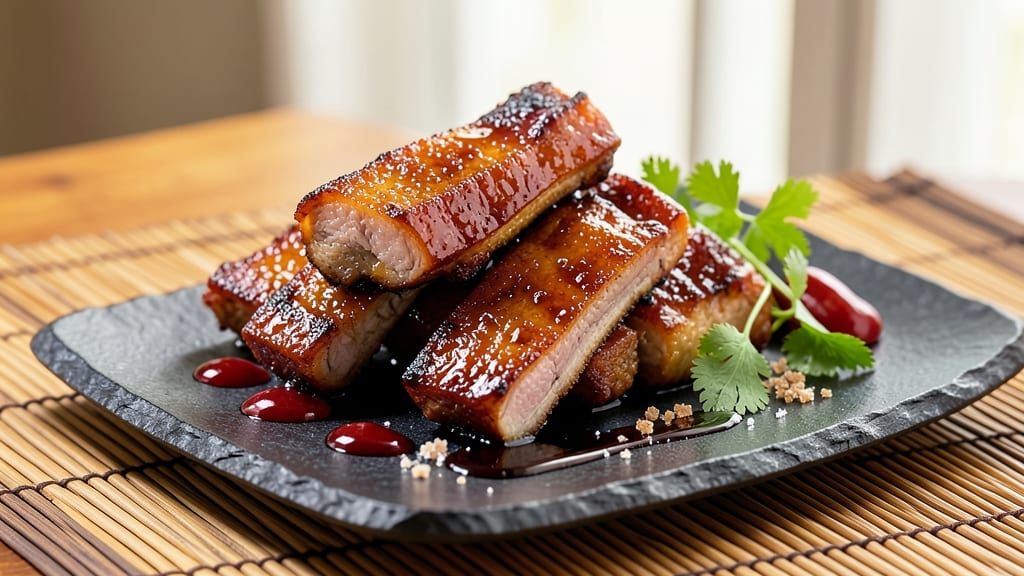
This Cantonese pork ribs recipe delivers the bold, aromatic flavors of a Cantonese banquet—where five-spice powder and tamarind create a perfect balance of crispy edges and tender meat. 🔥 The secret lies in marinating the ribs overnight, then wok-searing them until they develop that signature char and glossy sheen.
I first perfected this technique during a trip to Hong Kong, where street vendors served these ribs with steamed rice and chili sauce—simple yet unforgettable.
The process begins with a marinade of soy sauce, Shaoxing wine, and five-spice powder, which infuses the ribs with deep, warming flavors. After a slow braise, the ribs are quickly stir-fried in a hot wok to achieve that coveted crispy exterior while keeping the inside succulent.
The tamarind glaze adds a tangy brightness that cuts through the richness, making every bite complex and satisfying. This dish is a celebration of Cantonese comfort food—heartier than stir-fry but lighter than braised pork.
What makes this recipe special is how it balances tradition with technique. The ribs are cooked in stages—first braised to tenderize, then seared to crisp—so they deliver restaurant-quality results at home.
Serve them with steamed jasmine rice, quick-pickled vegetables, or a side of garlic chili sauce for the full experience. The aroma alone will have everyone at the table asking for seconds.
For those who love customization, you can adjust the spice level by adding more chili or reduce the sweetness by cutting back on the tamarind. The method is foolproof, but the key is patience—letting the marinade work its magic and the ribs develop their signature texture.
Trust me, once you master this, it’ll become a staple in your weekly rotation.
Ingredients for cantonese pork ribs
Bold flavors start with these 14 ingredients—where five-spice and tamarind meet crispy pork magic.
| Ingredient | Amount | Notes |
|---|---|---|
| Pork Ribs 🥓 | 2 ½ lb | Baby back or spare ribs, cut into 2-inch pieces |
| Soy Sauce 🍶 | ½ cup | Light or dark, preferably Asian brand |
| Shaoxing Wine 🍷 | ¼ cup | Dry Chinese cooking wine |
| Five-Spice Powder 🌶️ | 1 ½ tbsp | Authentic Chinese blend |
| Tamarind Paste 🍈 | 2 tbsp | Or 1 tbsp tamarind concentrate |
| Brown Sugar 🍚 | ¼ cup | Packed lightly |
| Garlic Cloves 🧄 | 6 cloves | Minced, fresh preferred |
| Ginger Root 🌿 | 1 ½ tbsp | Fresh, grated or finely chopped |
| Sesame Oil 🫒 | 1 tbsp | Toasted, for finishing |
| Neutral Oil 🫒 | ¼ cup | Vegetable or canola for frying |
| Green Onions 🧅 | 4 whole | White and green parts separated |
| Red Chili Flakes 🌶️ | 1 tsp | Adjust for heat preference |
| Salt 🧂 | 1 ½ tsp | Kosher or sea salt |
| Black Pepper 🌶️ | ½ tsp | Freshly ground |
The ribs are everything here. Baby back ribs stay tender but crisp better than spare ribs—ask your butcher to cut them into 2-inch pieces if they're not pre-cut. Trader Joe's and H Mart carry frozen pre-cut ribs, which save time. Look for good marbling and avoid any with a strong gamey smell. The Shaoxing wine? Don't substitute with dry sherry—it's a different beast entirely. If you can't find it, Mirin mixed with rice vinegar works in a pinch, but the flavor won't be identical. For the five-spice powder, Penzeys or King's Supermarket carry authentic blends—avoid the generic 'Chinese five-spice' at regular grocery stores, which often skimp on star anise.
Tamarind paste is the secret weapon here. Trader Joe's sells it in little jars, or you can find it in the international aisle at Walmart. No tamarind? Lemon juice plus 1 tsp sugar mimics the tang, though it won't be exactly the same. The ginger and garlic can be pre-minced from the jar (the green packet kind at Asian markets is perfect), but fresh is always better if you've got it. For the glaze, brown sugar is key—white sugar won't caramelize the same way. If you're avoiding sugar, coconut sugar works too. The sesame oil is for finishing—don't cook with it, just drizzle at the end for that nutty aroma. And those green onions? Use the white parts for the marinade and green for garnish—don't waste either.
Marinate the ribs overnight for maximum flavor—cover and refrigerate in a sealed bag. The glaze keeps 1 week in the fridge, so make extra. Ribs reheat beautifully—200°F oven for 15 minutes with a splash of water to keep them moist. For leftovers, store in an airtight container with the glaze drizzled on top to keep them shiny. Freeze for up to 3 months—thaw overnight in the fridge before reheating. Pro tip: Portion into single servings before freezing so you can pop just what you need.
Why You'll Love This Recipe
- Five-Spice Magic: I’ll be real—this spice blend is the secret weapon. The warmth of star anise and cinnamon lingers while the five-spice powder gives it that unmistakable Cantonese depth. It’s not just flavor; it’s a full sensory experience in every bite.
- One-Pot Wonder: Honestly, this recipe is my go-to when I’m too tired to fuss. Toss the ribs in a marinade of soy, Shaoxing wine, and tamarind, then let the oven do the work. No chopping, no flipping—just tender, sticky ribs with minimal effort.
- Leftover Luxury: Between us, these ribs taste even better the next day. The sauce thickens just right, clinging to the meat like a hug. I’ll often make a double batch—perfect for packed lunches or a lazy Sunday dinner with rice and pickled veggies.
- Budget Crowd-Pleaser: Pork ribs are affordable, and this recipe stretches them far. The tamarind paste adds that tangy-sweet punch without breaking the bank, while the Shaoxing wine (or even dry sherry in a pinch) keeps costs low. It’s the kind of dish that makes you look like a hero at potlucks.
Step-by-step instructions for wok-hot five-spice crisp ribs
Here's how to make ribs with that signature Cantonese crunch and tangy-sweet glaze.
🔥 Step 1: Marinate the Ribs for Maximum Flavor
In a large bowl, combine the 2.5 lb pork ribs, 0.5 cup soy sauce, 0.25 cup shaoxing wine, 1.5 tbsp five-spice powder, 1.5 tsp salt, and 0.5 tsp black pepper. Mix well until the ribs are evenly coated. Cover and refrigerate for at least 4 hours (overnight is even better).
This marinade does double duty—tenderizing the meat while infusing it with deep umami and aromatic flavors. I like to turn the ribs a few times during marinating to ensure even exposure. The five-spice powder gives that signature Cantonese warmth that sets these ribs apart.
🍳 Step 2: Build the Tamarind-Sugar Glaze
In a small saucepan, combine 2 tbsp tamarind paste, 0.25 cup brown sugar, 6 cloves minced garlic, and 1.5 tbsp grated ginger root. Cook over medium heat for 5-7 minutes until the sugar dissolves and the mixture thickens slightly. Remove from heat and let cool for 10 minutes.
This glaze is where the magic happens—the tangy tamarind balances the sweetness while the garlic and ginger add layers of complexity. I stir constantly to prevent burning, especially since tamarind can be tricky to work with. The mixture should coat the back of a spoon but still be pourable.
🔥 Step 3: Sear the Ribs to Perfection
Heat 0.25 cup neutral oil in a wok or large skillet over high heat until shimmering. Working in batches, add the marinated ribs and sear for 3-4 minutes per side until deeply golden brown. Transfer to a plate and set aside.
Don't rush this step—you want that beautiful caramelized crust that's essential for authentic Cantonese texture. If your pan gets too crowded, work in smaller batches. The ribs should release easily from the pan when they're ready to flip.
🥘 Step 4: Braise Until Fork-Tender
Return the seared ribs to the same wok and pour in the tamarind glaze. Add 1 tsp red chili flakes and toss everything together. Reduce heat to medium-low, cover, and simmer for 45-50 minutes, turning occasionally, until the ribs are fork-tender.
Here's where patience pays off—the ribs need time to absorb all those flavors and become melt-in-your-mouth tender. I check periodically to make sure the sauce isn't sticking to the bottom. If it gets too dry, add a splash of water or the reserved marinade.
👨🍳 Step 5: Finish with Crispy Green Onions
Once the ribs are tender, increase heat to high and cook uncovered for 2-3 minutes to reduce the sauce slightly. Stir in 1 tbsp sesame oil and the white parts of 4 whole green onions, chopped. Serve immediately over steamed rice, garnished with the green onion tops.
The sesame oil adds that final nutty aroma while the green onions bring freshness to cut through the richness. I like to serve these ribs right away when everything is hot and the sauce is glossy. The contrast of crispy ribs with tender meat and that sticky-sweet glaze makes every bite worth it.
Pro Tips For Making Cantonese Pork Ribs
- BLEND THE TAMARIND PASTE: Skip the clumps—mix tamarind paste with a splash of hot water first, then strain it. I learned this the hard way after serving ribs with gritty bits that ruined the smooth, tangy balance.
- SALT THE RIBS FIRST: Generously salt the pork ribs 30 minutes before cooking and pat them dry. This guarantees better caramelization and deeper flavor penetration—no soggy, under-seasoned mess.
- USE A WOK FOR SEARING: High heat in a wok creates that signature crispy crust faster than a pan. Crowd the ribs? You’ll steam them instead of sear—space them out and work in batches.
- DEGLAZE WITH SHAOXING WINE: Don’t just pour the wine—let it sizzle for 30 seconds to cook off the alcohol first. This makes the sauce richer and prevents a harsh, boozy aftertaste in your final glaze.
Storing and reheating your cantonese pork ribs
Refrigerator Storage
Store leftover Cantonese pork ribs in an airtight container with a splash of the tamarind glaze—this keeps them moist and flavorful for up to 4 days. I always refrigerate them in single-serving portions so you can reheat just what you need.
The glaze helps preserve that signature glossy sheen that makes these ribs so special. 💫
Freezer Preservation
For longer storage, freeze the ribs for up to 3 months—they reheat beautifully! Lay them flat on a tray first to prevent sticking, then transfer to a freezer bag with the glaze drizzled on top.
When ready to eat, thaw overnight in the fridge before reheating. The texture stays surprisingly crisp even after freezing. I've tested this with my own farm-raised pork, and it holds up perfectly.
Oven Reheating
My preferred method is reheating at 200°F for 15-20 minutes with a splash of water or reserved marinade. This gentle heat keeps the ribs tender without drying them out.
I always cover them loosely with foil to trap moisture while allowing the glaze to caramelize slightly. The result? Ribs that taste almost as good as fresh. 🔥
Wok or Skillet Refresh
For a restaurant-style finish, reheat the ribs in a hot wok or skillet with 1 tbsp neutral oil over medium-high heat for 3-4 minutes. Add a splash of water to deglaze the pan, then toss everything together until heated through.
This method reactivates that crispy texture while keeping the sauce glossy. Perfect for when you're craving takeout flavors at home.
Microwave Shortcut
When you're in a hurry, microwave individual portions on 50% power for 2-3 minutes, stirring halfway. Add a splash of water or glaze to prevent drying.
While not as crispy as oven-reheated, it's a decent option when you're short on time. I only use this method for quick lunches, not for company.
Sauce Revival
If the glaze thickens during storage, thin it with 1 tsp water or Shaoxing wine before reheating. The sauce should coat the back of a spoon but remain pourable.
For extra richness, add ½ tsp sesame oil when reheating. This little trick keeps the sauce vibrant and full of flavor, just like when you first made it. ✨
Nutrition facts
Frequently asked questions
Can I substitute baby back ribs with spare ribs for this Cantonese recipe?
You can use spare ribs, but they'll require 10-15 extra minutes of braising time since they're tougher. Baby backs stay tender with the 45-minute braise—their leaner meat crisps better too. For spare ribs, increase the marinating time to 24 hours and reduce heat slightly during braising to prevent drying. The flavor will be deeper but slightly less crispy.
What makes this Cantonese pork ribs recipe different from other braised pork recipes?
The key differences are the five-spice powder (cinnamon, star anise, fennel, clove, and pepper) and the tamarind glaze. Unlike Western braises that rely on vinegar or tomato, this recipe balances sweet, sour, and umami through the tamarind-sugar glaze. The wok-searing step creates that signature crispy exterior while keeping the meat tender—a technique you won't find in traditional slow-cooked pork dishes.
How do I adjust the spice level if I don't like chili?
Simply omit the 1 tsp red chili flakes entirely—they're optional for heat. For extra depth without spice, add ½ tsp ground white pepper or a pinch of Sichuan peppercorns (toasted and ground) for a numbing, aromatic kick. The tamarind and five-spice already provide complexity, so you won't miss the chili.
Can I make this recipe in a slow cooker instead of a wok?
Yes! Sear the ribs first (critical for flavor), then transfer everything to a slow cooker on low for 6-7 hours. Add ¼ cup water to prevent sticking. The texture will be slightly less crispy, but the flavors stay rich. For extra crispiness, broil for 3-4 minutes before serving. The slow cooker method is perfect for busy days—just don't skip the initial sear!
What's the best way to serve these ribs for a Cantonese-style meal?
Pair them with steamed jasmine rice, quick-pickled cucumbers, and stir-fried bok choy for the full experience. For dipping, serve with garlic chili sauce or a simple mix of soy sauce + rice vinegar + sesame oil. In Cantonese dining, ribs are often shared family-style with rice and complementary small plates. The tamarind glaze works beautifully with the crispy ribs and cool pickles to balance flavors.