
Main Courses
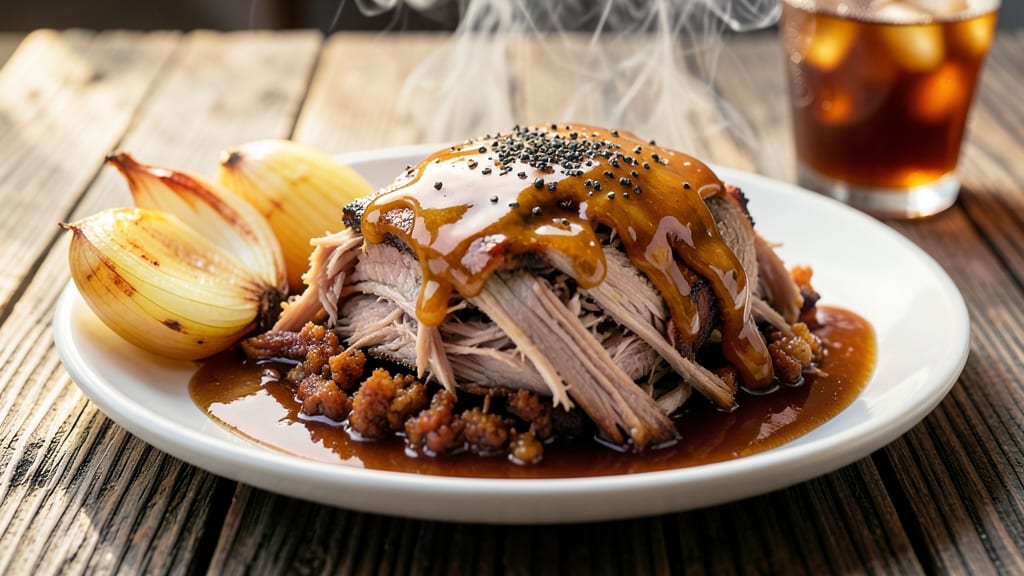
This Carolina pulled pork recipe transforms a simple smoker into your secret weapon for restaurant-quality barbecue. 🔥 The five-spice crust locks in juices while creating that signature smoky bark, and I'll show you exactly how to achieve it without guesswork.
What makes this recipe special is the balance between tradition and foolproof technique—no more dried-out pork or uneven cooking.
The process starts with trimming the pork shoulder just right, then applying a dry rub that blends Carolina heat with aromatic spices. We'll smoke it low and slow using hickory wood, then wrap it in butcher paper to lock in moisture.
This method ensures tender, pull-apart perfection every time, even for beginners. The key is patience—smoking at the right temperature transforms tough meat into melt-in-your-mouth goodness.
By the time you're done, you'll have pulled pork so tender it falls apart at the touch, with that perfect smoky crust that makes every bite irresistible. Serve it on toasted buns with tangy vinegar-based sauce or classic Carolina mustard sauce, and don't forget the crisp coleslaw.
This is the kind of pulled pork that turns casual dinners into memorable gatherings.
The best part? Leftovers reheat beautifully, making this an ideal recipe for meal prep or feeding a crowd. Whether you're hosting a backyard cookout or just craving smoky comfort food, this Carolina pulled pork delivers results that'll have everyone asking for seconds. Let's get started on creating your smoker masterpiece.
Ingredients for carolina pulled pork recipe smoker
Here's everything you need to create restaurant-quality Carolina pulled pork with smoky five-spice crust.
| Ingredient | Amount | Notes |
|---|---|---|
| Pork Shoulder (Boston Butt) 🥩 | 6 lb | Bone-in, well-marbled preferred |
| Yellow Onion 🧅 | 1 whole | Medium, peeled and quartered |
| Garlic Cloves 🧄 | 6 cloves | Peeled, smashed slightly |
| Brown Sugar 🍚 | ½ cup | Light or dark variety |
| Smoked Paprika 🌶️ | 2 tbsp | For authentic Carolina flavor |
| Ground Black Pepper 🌶️ | 1 tbsp | Freshly cracked preferred |
| Ground Cumin 🌿 | 1 tbsp | Toasted for deeper flavor |
| Salt 🧂 | 1 ½ tbsp | Kosher or sea salt |
| Hickory Wood Chips 🌳 | 2 cups | Unsoaked, for smoker |
| Apple Cider Vinegar 🍎 | ½ cup | For tangy Carolina sauce |
| Tomato Paste 🍅 | ¼ cup | Smooth, not chunky |
| Butcher Paper 📄 | 1 sheet | For moisture retention |
| Green Cabbage 🥬 | ½ lb | Shredded for coleslaw |
| Carrots 🥕 | 1 lb | Shredded or julienned |
| Mayonnaise 🥛 | ½ cup | For creamy dressing |
| White Vinegar 🍋 | ¼ cup | For tangy dressing |
The pork shoulder is the star—look for a bone-in, well-marbled cut at your local butcher or Costco for the best value. A 6-pound shoulder feeds a crowd and gives you plenty of leftovers. For the five-spice rub, smoked paprika is non-negotiable—it gives that signature Carolina flavor. I grab mine from Penzeys when I'm stocking up, but the regular grocery store stuff works fine. The hickory wood chips? Unsoaked is key—they burn slower and give you that authentic smoky flavor. If you can't find hickory, oak is a good backup, but it's not the same.
No smoked paprika? Mix 1 tbsp regular paprika with 1 tsp liquid smoke—it's not perfect, but it gets you close. Running short on cumin? Ground coriander at half the amount works in a pinch. For the coleslaw, green cabbage should be crisp—if it feels limp, soak it in ice water for 10 minutes to revive it. The carrots can be baby carrots if that's what's in the fridge, but julienned gives you that classic look. The vinegar-based sauce needs to be tangy—if you're not a fan of apple cider vinegar, white vinegar works just as well. Just don't skip it; that tang balances the sweetness perfectly.
The pork shoulder keeps beautifully—3-4 days in the fridge wrapped tightly. For longer storage, freeze in portions for up to 3 months. The coleslaw dressing? Make it fresh the day you serve it, but you can prep the shredded veggies ahead and store them separately. The rub? Double the batch and store it in an airtight container for up to 6 months—perfect for future smoker sessions. Leftovers reheat beautifully; just add a splash of water or broth to keep them moist.
Why You'll Love This Recipe
- Foolproof Prep: I swear, the hardest part is deciding when to pull it from the smoker. One big cut, a few rubs—no fancy knife skills needed. That brown sugar and smoked paprika mix takes two minutes to slather on, and suddenly you’ve got a dish that tastes like it simmered all day.
- Sweet-Smoky Magic: Between us, the combo of brown sugar caramelizing on the outside and that deep, smoky paprika flavor? It’s the kind of taste that makes people ask, “What’s in this?” (Spoiler: mostly garlic and patience.) The onions and garlic turn tender, soaking up all that smoky goodness like a sponge.
- Tailgate to Tuesday: Honestly, this is my go-to for everything—game days, lazy Sundays, or when I’m too tired to cook. Shred it for sandwiches, toss it in tacos, or just eat it straight from the pit. My kids beg for leftovers, and my husband steals the last slice before I can pack it for lunch.
- Budget Hero: A whole pork shoulder feeds my family for days—breakfast hash, pulled pork nachos, even breakfast burritos. I’ve spent $15 on a cut that gives me five meals, and the flavor? Worth every penny. Plus, the smoker does all the work while I’m doing nothing.
Step-by-step instructions for smoky five-spice pulled pork
Here's how to transform a simple pork shoulder into melt-in-your-mouth pulled pork with that signature Carolina tang.
🔥 Step 1: Prep and Season the Pork Shoulder
Start by patting the 6 lb Pork Shoulder (Boston Butt) completely dry with paper towels—this is crucial for that perfect bark. Trim any large fat deposits down to about ¼-inch thickness, leaving some fat for flavor and moisture.
In a small bowl, mix together the 0.5 cup Brown Sugar, 2 tbsp Smoked Paprika, 1 tbsp Ground Black Pepper, 1 tbsp Ground Cumin, and 1.5 tbsp Salt. Rub this mixture all over the pork, pressing it into every nook and cranny. Let it sit uncovered in the refrigerator for at least 1 hour (up to 24 hours for deeper flavor penetration).
🔥 Step 2: Smoke the Pork Low and Slow
Set up your smoker with 2 cups Hickory Wood Chips and preheat to 225°F. Place the seasoned pork shoulder fat-side up on the smoker grate. Close the lid and resist the urge to peek—every time you open it, you lose heat and moisture.
Smoke the pork for 6-8 hours until the internal temperature reaches 165°F. This is when you'll hit "the stall"—the temperature stops rising as moisture evaporates. Don't worry, this is normal. The bark should be deep mahogany and crispy, and the meat should pull apart easily with tongs.
🥘 Step 3: Wrap and Finish Cooking
When the pork hits 165°F, remove it from the smoker and wrap it tightly in the 1 sheet Butcher Paper (not foil—it breathes better). Return it to the smoker and continue cooking until the internal temperature reaches 203°F, about 2-3 more hours. This technique, called the "Texas crutch," helps break down collagen while maintaining that crispy bark.
Let the pork rest for 1 hour wrapped in the butcher paper. This resting period allows the juices to redistribute, ensuring every bite is tender and moist. Real talk: Skipping this step means dry, stringy pork.
🍳 Step 4: Make the Carolina Sauce
While the pork rests, make the tangy sauce. In a saucepan, combine the 0.5 cup Apple Cider Vinegar, 0.25 cup Tomato Paste, 1 whole Yellow Onion (chopped), and 6 cloves Garlic Cloves (minced). Simmer over medium heat for 15-20 minutes until the onion and garlic are soft and the sauce thickens slightly. Season with 1 tbsp Salt and 1 tbsp Black Pepper to taste.
For the coleslaw, shred the 0.5 lb Green Cabbage and 1 lb Carrots into a large bowl. In a small bowl, whisk together the 0.5 cup Mayonnaise and 0.25 cup White Vinegar. Pour the dressing over the cabbage and carrots and toss gently to combine.
🍽️ Step 5: Shred and Serve
Unwrap the pork and shred it using two forks or a meat claw. Discard any large fat chunks. Toss the shredded pork with the Carolina sauce until fully coated. Serve immediately over toasted buns with the coleslaw on the side. You'll love how the smoky, sweet, and tangy flavors come together in every bite.
Pro tip: If the pork seems a little dry after shredding, mix in a splash of the cooking juices from the butcher paper to keep it moist. Leftovers keep well in the fridge for up to 5 days—just reheat with a splash of water or broth to restore moisture.
Pro Tips For Making Carolina Pulled Pork Recipe Smoker
- USE THE PEELER FOR ONIONS: I used to chop onions for the rub and end up with a watery mess that diluted the spices. Now I just run a vegetable peeler down the whole onion, then chop the strips—keeps everything dry and lets the brown sugar stick better to the meat.
- SALT THE MEAT 24 HOURS EARLY: That Boston butt needs time to lose moisture and develop flavor. Toss it with 1-2 tablespoons of kosher salt (no rub yet) and let it sit uncovered in the fridge overnight. The crust will be crispier, and the smoke will cling deeper.
- DON’T OPEN THE SMOKER UNTIL 165°F: I learned this the hard way—peeking early makes the meat dry out. Let it cook undisturbed until the internal temp hits 165°F, then wrap it in foil with a splash of apple cider vinegar to keep it tender while it rests. (Yes, even if it looks raw.)
- SWAP BROWN SUGAR FOR GRANULATED + SMOKED PAPRIKA: Brown sugar burns faster than you think, especially on a hot smoker. Use half granulated sugar and double the smoked paprika—it adds sweetness without sticking to the ribs or clogging your smoker’s airflow. (I keep a small bowl of the mix ready to reapply.)
Make-ahead tips for carolina pulled pork recipe smoker
Prep Ahead
Start your prep the night before for maximum flavor - I swear by this trick. Mix your dry rub ingredients (0.5 cup brown sugar, 2 tbsp smoked paprika, etc.) and store in an airtight container.
Trim your 6 lb pork shoulder and pat it dry, then refrigerate uncovered on a wire rack overnight. This drying step is non-negotiable for that perfect bark. 💪
For the sauce components, chop your 1 onion and mince your 6 garlic cloves ahead of time. Store them in separate containers in the fridge - this saves 15 minutes of prep day-of. The apple cider vinegar and tomato paste can stay in your pantry until ready to use.
Smoker Prep
Set up your smoker the night before if possible. Load your 2 cups hickory wood chips into the smoker box and let them soak in water for 30 minutes (if your smoker requires it). Preheat to 225°F for 15 minutes to burn off any residual flavors.
I like to do this prep while I'm making dinner the night before - it's ready to go when I wake up. ⏰
Keep your pork shoulder in the fridge until you're ready to smoke it. The cold meat will help maintain a steady temperature in your smoker. Pro tip: Place a small water pan in your smoker to add moisture to the air - this helps prevent dry bark.
Portion Control
For crowd feeding, divide your pulled pork into 16-ounce portions before serving. Store each portion in a separate airtight container with a splash of the Carolina sauce. This makes it easy to reheat individual servings without overcooking.
I like to label these with the date - 3-4 days is the sweet spot for fridge storage. 📅
Prep your coleslaw components separately. Shred the 0.5 lb cabbage and 1 lb carrots and store them in one container. Keep the dressing (0.5 cup mayo + 0.25 cup vinegar) separate until ready to serve. This keeps everything crisp and fresh.
Reheating Secrets
For the best results, reheat your pulled pork in a skillet over medium-low heat with a splash of water or broth. This prevents drying out the meat.
I find 2-3 minutes per side is perfect - just until it's warmed through. Add a pinch of salt if needed to brighten the flavors. 🔥
If you're short on time, microwave reheating works too. Cover the pork with a damp paper towel and heat in 1-minute intervals on 70% power. Stir between intervals to distribute heat evenly. The butcher paper wrapping helps keep the meat moist during reheating.
Freezer Strategy
For long-term storage, portion your pulled pork into quart-sized freezer bags. Squeeze out excess air before sealing to prevent freezer burn. These portions will keep for up to 3 months without significant quality loss.
I like to flatten the bags before freezing - they take up less space and thaw faster. 🥶
When ready to use frozen pork, thaw it overnight in the fridge. Then reheat using the skillet method above. The texture remains tender when properly stored - no more dry, tough pulled pork from freezer mishaps.
Nutrition facts
Frequently asked questions
What's the best cut of pork for Carolina pulled pork?
Always use a bone-in pork shoulder (Boston Butt)—it's the gold standard for pulled pork. The bone helps retain moisture, and the fat marbling keeps the meat juicy during that long smoke. A 6-pound shoulder is ideal for feeding a crowd and gives you plenty of leftovers.
Why does my pulled pork turn out dry?
Dry pork usually means you skipped the resting period or didn't wrap it properly. Always let the pork rest for 1 hour after reaching 203°F—this lets juices redistribute. Wrap it in butcher paper (not foil) when it hits 165°F to lock in moisture while keeping that crispy bark.
Can I use a grill instead of a smoker?
Yes! If you don't have a smoker, use a charcoal grill with a water pan for indirect heat. Maintain 225°F by adjusting the vents, and add wood chips to the coals for smoke. Just expect slightly less smoke flavor than a dedicated smoker. For gas grills, use a smoker box with wood chips.
How do I know when the pork is done?
Use a meat thermometer—the pork is done when it reaches 203°F internally. The bark should be deep mahogany, and it should pull apart easily with tongs. If it's not shredding easily at 165°F, wrap it and let it cook longer—this is normal for tough cuts.
What's the difference between Carolina and Texas pulled pork?
Carolina style uses a vinegar-based sauce (tangy and sweet) while Texas style is often tomato-heavy with a sweeter profile. Carolina also typically uses a dry rub with smoked paprika and brown sugar, while Texas might include chili powder. The cooking method is similar—low and slow—but the sauces define the regional difference.