
Main Courses
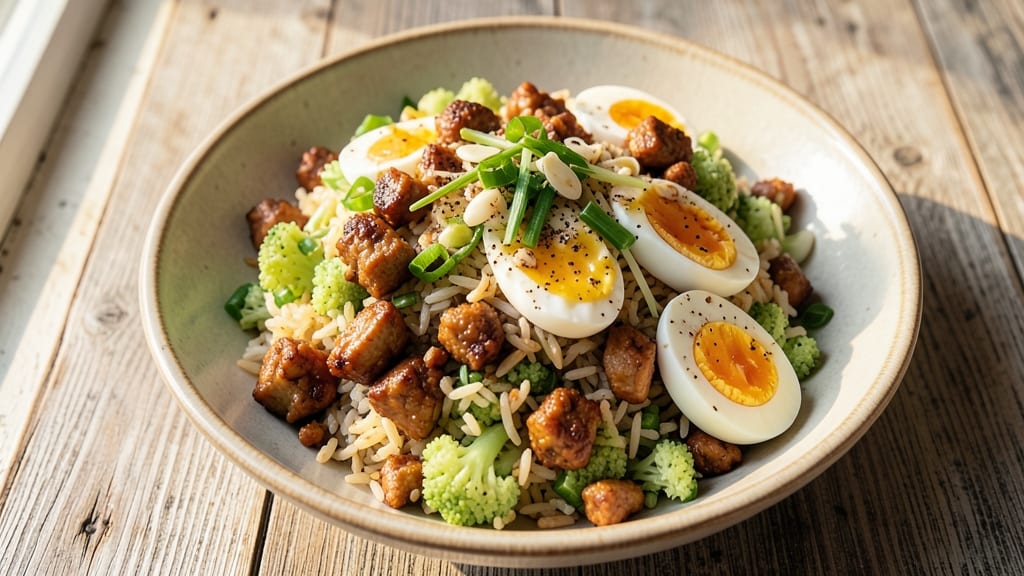
This cauliflower pork fried rice recipe delivers the perfect balance of crispy rice and juicy pork bites—a modern twist on a classic comfort dish.
The secret lies in properly searing the pork for maximum flavor and texture, while the cauliflower rice absorbs the savory sauce without losing its slight crunch. This version keeps all the hearty satisfaction of traditional fried rice but with a lighter, low-carb foundation that still feels indulgent.
With just 30 minutes of active cooking time, you’ll create a dish packed with bold flavors—garlicky, umami-rich, and perfectly seasoned. The pork stays tender and juicy, while the rice achieves that signature wok-fried crispiness at the edges.
Whether you're adapting this for dietary preferences or simply craving a restaurant-quality meal at home, this recipe delivers restaurant-quality results without the fuss. Let’s get started!
Ingredients for cauliflower pork fried rice
Restaurant-quality pork fried rice starts with these carefully chosen ingredients for perfect crispy texture and juicy bites.
| Ingredient | Amount | Notes |
|---|---|---|
| Ground Pork 🐖 | 1 lb | 90% lean for juiciness |
| Fresh Cauliflower Rice 🥬 | 4 cups | Riced or pulsed, not pre-frozen |
| Long-Grain White Rice 🍚 | ½ cup | Uncooked, jasmine preferred |
| Large Eggs 🥚 | 2 whole | Freshly beaten for scrambling |
| Garlic Cloves 🧄 | 6 cloves | Minced for aromatic depth |
| Green Onions 🧅 | ½ cup | Sliced, white and green parts |
| Sesame Oil 🫒 | 1 tbsp | Toasted, for aroma |
| Light Soy Sauce 🥄 | 3 tbsp | Low-sodium preferred |
| Dark Soy Sauce 🥄 | 1 tbsp | For color and depth |
| Oyster Sauce 🍜 | 2 tbsp | High-quality, gluten-free if needed |
| Vegetable Oil 🫒 | 2 tbsp | High smoke point |
| Sesame Seeds 🌾 | 1 tsp | Toasted for garnish |
| Diamond Crystal Kosher Salt 🧂 | ½ tsp | Adjust to taste |
| Ground Black Pepper 🌶️ | ¼ tsp | Freshly cracked |
The ground pork is non-negotiable for texture—90% lean ensures juiciness without excess fat. Trader Joe's or Costco carry excellent quality, but any well-marbled ground pork works. Fresh cauliflower rice is key: pre-frozen varieties lose texture, so pulse a head of cauliflower yourself or buy the fresh pre-riced kind. For the rice base, jasmine rice absorbs flavors better than basmati, though either works. The eggs should be cold from the fridge—room temperature makes them too runny when scrambled.
No sesame oil? Avocado oil at half the amount mimics the toasted aroma. Substitute light soy sauce with coconut aminos plus an extra pinch of salt. For the oyster sauce, vegetarian oyster sauce or hoisin sauce works in a pinch. Green onions can be swapped for scallions or chives, though they won't have the same mild onion-green onion balance. The garlic can be garlic powder at one-third the amount, but fresh is worth the extra minute of mincing. If you're avoiding gluten, tamari or coconut aminos replace the soy sauces perfectly.
Pre-riced cauliflower keeps for 3 days in the fridge sealed in a container, while ground pork should be used within 2 days for best texture. The cooked fried rice reheats beautifully—microwave for 1-2 minutes with a splash of water to restore crispiness. Portion into airtight containers for meal prep, and store for up to 4 days. Freeze portions for 3 months by spreading on a tray first to prevent clumping. The sesame seeds toast in 30 seconds in a dry pan—do this fresh before serving for maximum aroma.
Why You'll Love This Recipe
- No Rice Hack: I swap half the rice for cauliflower rice—same texture, way fewer carbs. The pork stays juicy, the eggs get that perfect runny yolk, and honestly? You’ll never taste the difference unless I tell you.
- Garlic-Pork Magic: That moment when the ground pork hits the pan with minced garlic? Pure flavor explosion. The pork browns fast, soaks up all the garlic aroma, and the cauliflower rice picks it up like a sponge—no bland bites here.
- Lunchbox Hero: Make a big batch on Sunday, and I’ve got weeknight lunches sorted. Cold or reheated, it’s still solid—just toss in a fried egg on top when you’re lazy. My kids pack it in their thermoses without complaint.
- Budget Win: Ground pork is cheap, cauliflower rice stretches the meal, and eggs add protein without breaking the bank. A single pan, 20 minutes max, and I’ve fed my family a filling dinner for under $10.
Step-by-step instructions for cauliflower pork fried rice
Master the perfect balance of texture and flavor with this professional technique.
Prepare the Pork and Rice Mixture
In a large bowl, combine the 1 lb ground pork with the 4 cups fresh cauliflower rice, 0.5 cup long-grain white rice, 6 cloves minced garlic, and 0.5 cup sliced green onions. Use your hands to break up the pork into small, even crumbles—this ensures juicy pork bites throughout. The cauliflower rice should be evenly distributed to prevent clumping. Sprinkle with the 0.5 tsp Diamond Crystal kosher salt and 0.25 tsp freshly cracked ground black pepper, then mix thoroughly.
Here's the thing—don't overmix or pack the mixture too tightly. You want the ingredients to stay loose so they cook evenly and develop that perfect crispy texture. Set this mixture aside while you prepare the eggs and aromatics. This step is where the foundational flavors begin to meld, so take your time to ensure everything is evenly distributed.
Scramble the Eggs and Toast the Garlic
In a separate bowl, beat the 2 whole large eggs until just combined—no need to overbeat them, just enough to create a uniform texture. Heat 1 tablespoon of the 2 tbsp vegetable oil in a large skillet or wok over medium-high heat until shimmering. Pour in the beaten eggs and let them cook undisturbed for about 20 seconds until they begin to set at the edges. Then, gently push the eggs around with a spatula, folding them into soft, slightly curdled pieces. Remove the eggs from the skillet and set aside.
In the same skillet, add the remaining 1 tablespoon vegetable oil and swirl to coat. Add the minced garlic and stir constantly for about 30 seconds until fragrant but not browned—this prevents bitterness. The garlic should smell intensely aromatic, filling your kitchen with that classic fried rice scent. This quick toasting step is crucial for building flavor without overpowering the dish.
Cook the Pork Mixture to Perfect Doneness
Return the skillet with the garlic to medium-high heat and add the pork and rice mixture. Let it cook undisturbed for 2-3 minutes until the pork begins to brown and pull away from the edges. This initial searing creates those crispy bits that add texture to every bite. Use a wooden spoon to gently break up any large clumps, working the mixture from the bottom to prevent sticking.
Once the pork is about 70% cooked—you'll see it changing from pink to a golden-brown color—pour in the 3 tbsp light soy sauce, 1 tbsp dark soy sauce, and 2 tbsp oyster sauce. Stir well to distribute the sauces evenly. The dark soy sauce will give your fried rice that classic mahogany color, while the oyster sauce adds depth of flavor. Cook for another 2-3 minutes until the mixture is heated through and the rice begins to soften slightly.
Combine and Finish with Sesame Oil
Return the scrambled eggs to the skillet and stir everything together vigorously for about 1 minute. The residual heat will finish cooking the eggs while incorporating them into the rice mixture. At this point, the dish should look vibrant with pockets of crispy pork and tender rice. Taste and adjust seasoning if needed—you might want to add a touch more light soy sauce for saltiness or a pinch of black pepper for heat.
Remove the skillet from heat and drizzle in the 1 tbsp toasted sesame oil. Toss gently to coat the rice evenly. The sesame oil adds a nutty aroma that elevates the dish. Let the fried rice sit off heat for 1-2 minutes to allow the flavors to meld completely. This resting period is crucial for developing that restaurant-quality taste.
Serve Immediately with Garnish
Transfer the cauliflower pork fried rice to serving plates while it's still hot. Garnish each serving with the 1 tsp toasted sesame seeds, sprinkled evenly over the top. The contrast of the crispy sesame seeds against the tender rice and juicy pork creates both visual appeal and textural interest. Serve immediately—fried rice is best enjoyed fresh while the rice maintains its perfect crisp-tender texture and the pork remains juicy.
Real talk: if you let it sit too long, the rice will start to soften and lose that coveted crispy edge. Each bite should deliver a perfect balance of textures—crispy rice, juicy pork, and silky eggs—all bound together by that savory-sweet sauce. This dish proves you don't need meat to create a satisfying fried rice experience that rivals traditional versions.
Pro Tips For Making Cauliflower Pork Fried Rice
- Cook Pork Until Crispy: Don’t stop at pink—push the pork until it’s golden and slightly crispy at the edges. I used to pull it out too soon, and the dish always felt underwhelming. A quick sear in the last 30 seconds on high heat makes all the difference.
- Prep Cauliflower Rice Right: Rinse fresh cauliflower rice in cold water, then spin it dry in a clean kitchen towel. Skipping this step means soggy rice—especially when mixed with the eggs later. (Yes, even if you’re impatient like me.)
- Scramble Eggs Separately: Cook the eggs first in a small pan until just set, then set them aside. Adding them raw to the rice mix makes the dish greasy and uneven. This keeps the texture light and the flavors balanced.
- Use Cold Rice: Spread your cooked rice on a tray and refrigerate for 10 minutes before stir-frying. Cold rice releases faster and absorbs the pork and garlic flavors better. I learned this the hard way—warm rice turns mushy when you try to mix everything together.
Essential equipment for perfect results
Wok or Skillet
A 14-inch carbon steel wok is my go-to for this recipe—its sloped sides and high heat retention create that signature wok hei (breath of the wok) flavor.
If you don’t own a wok, a 12-inch cast iron skillet works beautifully, though you may need to stir more frequently to prevent sticking. Avoid non-stick pans—they can’t handle the high heat needed for proper searing.
For budget-friendly options, a well-seasoned stainless steel pan with a flat bottom also works, but watch for hot spots. 🔥
High-Heat Oil
Use vegetable oil or avocado oil with a smoke point of 400°F+—these oils handle the high heat without breaking down. I avoid olive oil (even light varieties) because it burns too easily and imparts a bitter flavor.
For extra crispiness, I like Kirkland Signature vegetable oil from Costco—it’s affordable and performs consistently. Keep about 2 tablespoons on hand for each batch, as you’ll use it in two stages (for eggs and pork).
Wooden Spoon
A heat-resistant wooden spoon (like OXO Good Grips) is essential for stirring without scratching your pan. Wood distributes heat evenly and prevents the rice from sticking to the bottom. Avoid metal utensils—they can react with the acidic soy sauces and leave a metallic taste.
For extra durability, I soak my wooden spoon in hot water for 10 minutes before use to prevent cracking from sudden heat changes. Pro tip: Keep it near your stove for quick access during cooking.
Fine-Mesh Strainer
If you’re using fresh cauliflower rice, a fine-mesh strainer (like OXO Good Grips) helps remove excess moisture before cooking. Drain the cauliflower rice thoroughly—even a little water can turn your fried rice into a soggy mess.
For pre-riced cauliflower, skip this step, but pat it dry with a paper towel to ensure crispiness. A strainer also comes in handy for rinsing the green onions if you prefer a milder flavor. 🥬
Digital Thermometer
A laser thermometer (like ThermoWorks IR Thermometer) helps monitor your pan’s heat—aim for medium-high (375°F) for searing pork and high (425°F) for quick stir-frying. This prevents burning while ensuring the pork cooks evenly. For pork safety, use an instant-read thermometer to confirm it reaches 160°F internal temperature.
Overcooking ground pork turns it rubbery, so timing is everything. I keep my thermometer on the counter for quick checks during cooking.
Sesame Oil Toaster
Toasted sesame oil adds depth to your dish, but toasting it at home is easy with a small saucepan or even a dry skillet. Heat 1 tablespoon sesame oil over low heat for 30-45 seconds until it smells nutty and aromatic.
Immediately remove from heat and let it cool slightly before drizzling—this prevents overpowering the dish. Store the leftover oil in a dark glass bottle in your fridge for up to 2 weeks to preserve its flavor. 🌾
Nutrition facts
Frequently asked questions
Can I use pre-riced cauliflower instead of fresh?
Yes, but with a key adjustment: pat it completely dry with a paper towel first to remove all moisture. Pre-riced cauliflower often contains excess water, which can make your fried rice soggy. If using frozen cauliflower rice, thaw it first and drain thoroughly. Freshly riced cauliflower gives the best texture, but pre-riced works in a pinch when you're short on time.
How do I prevent the pork from getting rubbery?
Keep the heat at medium-high (375°F) and cook the pork in two batches if needed to avoid overcrowding. Use an instant-read thermometer to ensure it reaches 160°F—any hotter and it'll dry out. Also, break the pork into small, even crumbles before cooking so each piece sears properly. The secret is quick cooking with high heat!
Can I make this recipe ahead of time?
Store leftovers in an airtight container in the fridge for up to 4 days. To reheat, microwave for 1-2 minutes with a splash of water to restore crispiness. For freezing, spread portions on a tray first to prevent clumping, then transfer to a bag for up to 3 months. The texture stays best when reheated quickly over high heat in a skillet.
What can I substitute for oyster sauce?
Try vegetarian oyster sauce, hoisin sauce, or a mix of soy sauce plus a pinch of sugar. For a gluten-free option, use coconut aminos plus a splash of fish sauce (if you eat fish). The key is balancing umami and sweetness—oyster sauce adds depth that's hard to replicate, but these substitutes work in a pinch.
Why does my cauliflower rice turn mushy?
This usually happens from too much moisture or overcooking. Always drain fresh cauliflower rice well, and avoid adding extra water during cooking. Stir-fry on high heat for just 2-3 minutes total—cauliflower rice cooks faster than regular rice. If it's still too soft, spread it on a tray and broil for 1-2 minutes to crisp it up.