
Main Courses
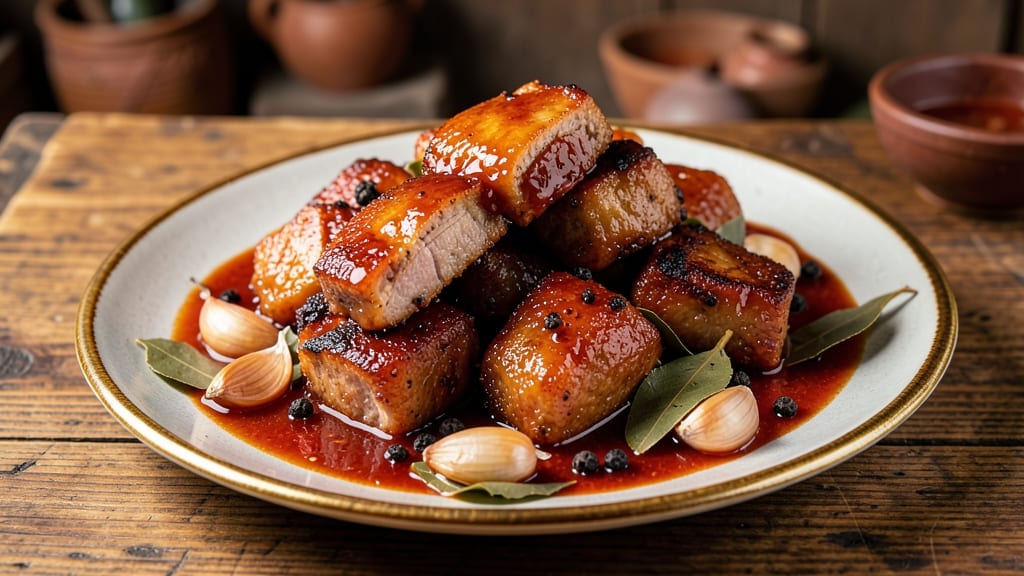
This Cebu-style pork adobo delivers the signature balance of vinegar-braised tenderness and crispy edges that make it a Filipino comfort classic. The secret lies in marinating pork belly or shoulder in a tangy blend of white vinegar, soy sauce, garlic, and black peppercorns—letting the flavors penetrate deeply before slow braising.
I first mastered this technique during my time in Charleston, where the humidity made every bite even more satisfying.
The magic happens in two stages: first, the pork develops tender texture through simmering, then the edges crisp beautifully when reduced at the end. This method ensures the meat stays juicy while developing that signature caramelized crust.
The vinegar cuts through the richness, creating the perfect harmony of sweet, salty, and tangy flavors that define Cebu-style adobo.
What you'll end up with is fall-apart tender pork swimming in a glossy, aromatic sauce that clings to every bite. The black peppercorns add subtle heat, while the garlic infuses deep, savory notes.
This dish pairs perfectly with steamed jasmine rice, which soaks up every last drop of that flavorful sauce.
Whether you're cooking for a family gathering or a weeknight dinner, this recipe delivers restaurant-quality results with minimal effort. The key is patience—letting the flavors meld during the braising process. Let's get started on this Filipino favorite that brings comfort to every table.
Ingredients for cebu pork adobo
Pork shoulder, vinegar, and garlic—simple ingredients for Cebu's crispy-tender masterpiece.
| Ingredient | Amount | Notes |
|---|---|---|
| Pork Shoulder 🥩 | 2 lb | Bone-in for flavor, cut into 2-inch chunks |
| White Vinegar 💧 | 1 cup | Distilled white vinegar preferred |
| Soy Sauce 🍶 | ½ cup | Use dark soy sauce for deeper color |
| Garlic Cloves 🧄 | 8 cloves | Smashed but not minced for texture |
| Black Peppercorns 🌶️ | 1 tbsp | Whole, lightly crushed for heat |
| Bay Leaves 🌿 | 2 whole | Fresh or dried, removed before serving |
| Brown Sugar 🍯 | 2 tbsp | Light or dark, for caramelization |
| Olive Oil 🫒 | 2 tbsp | For searing pork before braising |
| Jasmine Rice 🍚 | 2 cups | Uncooked, for serving |
| Salt 🧂 | 1 ½ tsp | Kosher salt for seasoning |
| Water 💧 | 1 cup | For balancing sauce consistency |
The pork shoulder is non-negotiable here—bone-in for extra flavor, cut into even chunks for consistent cooking. Filipino markets or well-stocked Asian grocery stores usually carry the best cuts, but any butcher will work. Look for well-marbled meat with a nice pink hue. If you can't find bone-in, use pork loin and add a few extra peppercorns for depth. The white vinegar should be distilled—cheap vinegar can add off flavors. I always buy a large bottle because I use it for everything from pickling to cleaning. For the soy sauce, Lee Kum Kee dark soy sauce is my go-to for that rich, caramelized color, but any dark soy will do.
No dark soy sauce? Regular soy sauce plus 1 tsp molasses mimics the color beautifully. Short on garlic? Garlic powder at half the amount works in a pinch, but fresh is worth it—those smashed cloves infuse so much flavor. The black peppercorns are key for that signature Cebu heat; if you can't find whole ones, crushed black pepper at double the amount is fine. For the brown sugar, light brown gives a subtle caramel note, while dark adds more molasses depth. The bay leaves add aromatic complexity—skip them only if you're allergic. Pro tip: Toast the spices (peppercorns, bay leaves) in a dry pan for 30 seconds before adding to the pork for deeper flavor.
This dish tastes even better the next day as the flavors meld. Store leftovers in the fridge for up to 5 days, or freeze portions for 3 months. For serving, I like to reheat gently with a splash of water to restore moisture. The jasmine rice should be steamed to perfection—just slightly sticky so it soaks up all that glorious sauce. Double the recipe if you're feeding a crowd; it reheats beautifully. Leftovers make amazing sandwiches the next day—trust me, the crispy pork bits are pure comfort.
Why You'll Love This Recipe
- Here’s what sold me: the way the pork shoulder gets caramelized on the edges while staying tender inside, then gets hit with that bright, slightly sweet vinegar-soy glaze. It’s the kind of dish where every bite has a little crunch from the peppercorns and a punch of garlic that lingers. Honestly, my husband licks the plate.
- I’ll be real: most adobo recipes turn sad after day two. Not this one. The pork stays juicy, the sauce thickens into a glossy coating, and the garlic flavor deepens. I make a double batch every time because it disappears faster than I can say “second helping.” Budget-friendly? Absolutely. Waste-free? Even better.
Step-by-step instructions for Cebu-style pork adobo
Here's how to transform tough pork into melt-in-your-mouth tenderness with a glossy, caramelized sauce.
Sear the Pork Shoulder for Deep Flavor
Heat a large Dutch oven over medium-high heat and add the 2 tablespoons olive oil. Once shimmering, add the 2 lb pork shoulder cut into 2-inch chunks, working in batches if needed. Sear for 4-5 minutes per side until the meat develops a deep golden crust. This step creates the Maillard reaction that builds rich, complex flavors in your adobo.
As you sear, resist the urge to crowd the pan—give each piece space to brown properly. You'll know it's ready when the edges are deep golden brown and the meat releases easily from the pan. Transfer the seared pork to a plate and set aside. Here's the thing—this initial sear makes all the difference between ordinary adobo and restaurant-quality results.
Build the Flavor Base with Aromatics
In the same Dutch oven, add the 8 smashed garlic cloves and 1 tablespoon lightly crushed black peppercorns. Cook for 1-2 minutes until the garlic turns light golden and releases its fragrant aroma. Be careful not to let it burn—garlic darkens quickly and becomes bitter.
Add the 2 whole bay leaves and stir for 30 seconds to toast them lightly. This releases their earthy flavors into the pan. Remove the bay leaves and set aside—they'll infuse the sauce but should be removed before serving. The toasted aromatics form the flavor foundation that will carry through your entire dish.
Braise the Pork in Vinegar and Soy
Pour in the 1 cup white vinegar and 0.5 cup soy sauce, scraping up any browned bits from the bottom of the pan. Add the 2 tablespoons brown sugar and bring to a gentle simmer over medium heat. Return the seared pork to the pot, along with any accumulated juices.
Cover and simmer for 1 hour 15 minutes, turning the pork occasionally. You're looking for the meat to become fork-tender—when you pierce it with a fork, the meat should offer minimal resistance. The sauce should reduce slightly but still coat the back of a spoon. This slow braising is what transforms tough pork into melt-in-your-mouth perfection.
Finish with Crispy Edges and Perfect Texture
Once the pork is tender, increase the heat to medium-high and simmer uncovered for 5-7 minutes. This final step reduces the sauce further and creates those crispy edges that define Cebu-style adobo. The sauce should coat the pork in a glossy, caramelized layer with a slight sheen.
Remove the 2 bay leaves before serving. The pork should be deeply caramelized on the edges while remaining juicy and tender in the center. If the sauce is too thin, simmer it uncovered for another 2-3 minutes to reach your desired consistency. Here's where all your hard work pays off—each bite delivers that perfect balance of crispy, tender, and tangy.
Serve Over Jasmine Rice
While the pork finishes, prepare the 2 cups jasmine rice according to package instructions using 1.5 teaspoons salt and 1 cup water. The fragrant rice provides the perfect neutral base to let the rich adobo flavors shine.
Divide the crispy pork and its glossy sauce over the steaming rice. Each serving should have juicy, caramelized pork chunks with a generous pool of sauce. The contrast between the crispy edges and tender meat creates the signature Cebu adobo experience. Serve immediately while the pork is still piping hot and the sauce maintains its perfect consistency.
Pro Tips For Making Cebu Pork Adobo
- CRANK THE HEAT FIRST: Cebu pork adobo needs that initial sear to lock in flavor, so don’t be gentle—get your pan screaming hot (medium-high) before adding the pork shoulder. I used to worry about burning it, but 3-4 minutes of undisturbed browning builds the crust that soaks up the adobo sauce later. (Yes, even if you’re impatient like me, resist the urge to stir too soon.)
- MINCE GARLIC LIKE IT’S 1995: Skip the food processor—hand-mince those garlic cloves into a paste with a pinch of salt. The extra surface area releases more flavor, and the raw garlic sits longer in the vinegar, making the sauce deeper. My grandmother swore by this, and she was right: it’s the thing that matters most when balancing the tangy-salty profile.
- DON’T DROWN THE PORK: Cebu adobo should simmer, not boil—keep the liquid just bubbling at the edges, not a rolling boil. Too much heat turns the pork rubbery and the sauce thin. After the first 10 minutes, drop the heat to low and let it work. (Your future self will thank you when the meat falls apart tender.)
- USE LESS VINEGAR, MORE SOY: The classic ratio leans heavy on vinegar, but Cebu-style adobo cuts it back—start with ½ cup vinegar per pound of pork, then add soy sauce (¼ cup) to balance the tang. The soy also adds color and depth without overpowering. I was skeptical until I tried it: the sauce stays richer, not sharp.
Wine and beer pairings for these flavors
Vinegar-Based Whites
Cebu-style adobo's bright acidity pairs beautifully with crisp, dry whites that can stand up to the vinegar's tang. I always reach for a Filipino-inspired white blend like Petronas White Blend—it has citrus and floral notes that complement the dish's complexity.
For a more accessible option, try a Sauvignon Blanc from New Zealand, such as Oyster Bay, with its zesty lime and grapefruit flavors that mirror the adobo's acidity. 🍷
Light-Bodied Reds
If you prefer red wine, opt for something light and fruity that won't overpower the dish. A Pinot Noir from Oregon, like Domaine Serene, works wonderfully—its red berry notes and silky texture balance the pork's richness without competing.
Avoid heavy, tannic reds like Cabernet; they'll clash with the vinegar's brightness. The key is to let the wine enhance, not dominate, the adobo's flavors.
Local Filipino Beers
For beer lovers, nothing beats a cold San Miguel Pale Pilsen—its crisp, clean profile cuts through the dish's richness while letting the pork shine. If you're in the States, look for San Miguel Light or Heineken as solid alternatives.
The light body and subtle malt sweetness make them perfect companions. Pro tip: Chill your beer thoroughly before serving to enhance its refreshing qualities against the warm adobo. 🍺
Non-Alcoholic Pairings
Don't overlook non-alcoholic options! A sparkling yuzu soda (like Yuzu Sparkling) adds a citrusy brightness that echoes the vinegar's tang. For something more traditional, serve with hibiscus iced tea—its floral, slightly tart notes complement the dish beautifully.
Both options refresh your palate between bites without overpowering the adobo's bold flavors.
Regional Adaptations
In Cebu, locals often serve adobo with calamansi juice on the side for an extra tangy kick. You can mimic this by offering a small pitcher of lemon-lime soda (like Sprite) or even a splash of rice vinegar for those who want to amplify the dish's signature acidity.
The key is to let diners customize their experience while keeping the focus on the star of the show—the pork itself. 💫
Nutrition facts
Frequently asked questions about Cebu pork adobo
Can I use pork loin instead of pork shoulder for this recipe?
Yes, but with adjustments! Pork loin is leaner and cooks faster, so cut it into 1-inch chunks and reduce braising time to 45-60 minutes. Add 1 extra tablespoon soy sauce and ½ teaspoon sugar to compensate for the lack of fat. The texture will be more tender but less crispy on the edges. For best results, marinate the loin for 30 minutes in the adobo sauce before cooking.
What makes Cebu-style adobo different from regular Filipino adobo?
Cebu-style adobo stands out for its crispy edges and slightly sweeter profile. Unlike traditional adobo, it uses brown sugar for caramelization and finishes with a high-heat reduction to create those signature crispy bits. Cebu's version also often includes black peppercorns (not ground pepper) for subtle heat, and the sauce is typically glossier from longer simmering. The pork cut matters too—Cebu chefs often use shoulder or belly for maximum flavor.
How do I fix adobo sauce that's too thin or too thick?
For thin sauce, simmer uncovered for 5-10 minutes to reduce. If it's still too watery, mix 1 tablespoon cornstarch with 2 tablespoons water, stir into the sauce, and cook for 2 more minutes. For thick sauce, add 2-3 tablespoons water or vinegar, then simmer gently for 3-5 minutes. Pro tip: The sauce should coat the back of a spoon but still be pourable—this is the ideal consistency for Cebu-style adobo.
Can I make this recipe in an Instant Pot?
Sear the pork first in a skillet, then transfer to your Instant Pot with all ingredients (except rice). Cook on high pressure for 30 minutes, then quick-release. For crispy edges, transfer pork to a baking sheet and broil for 3-4 minutes. The sauce may need reduction—simmer it uncovered for 5 minutes after pressure cooking. Instant Pot adobo cooks in 45 minutes total vs. 2 hours stovetop, but the texture will be slightly less crispy.
Why does my adobo taste too vinegary?
This happens when the vinegar overpowers the other flavors. Balance it by adding 1 extra tablespoon soy sauce and ½ teaspoon sugar, then simmer for 5 minutes to let flavors meld. For future batches, reduce vinegar by ¼ cup or add 1 extra smashed garlic clove and ½ teaspoon brown sugar to round out the taste. The key is the 3:1 ratio of vinegar to soy sauce—adjust gradually to find your sweet spot.