
Main Courses
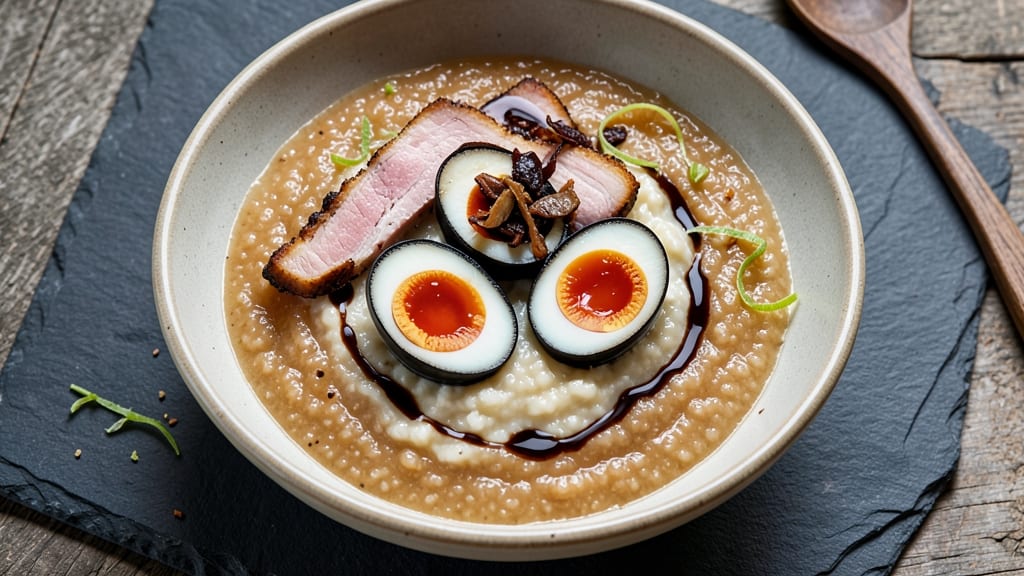
This century egg pork porridge delivers a symphony of textures and flavors that balance silky black vinegar richness with chewy rice and tender pork. 💫 I first encountered this dish in a dim sum restaurant in Shanghai, where the contrast between the creamy porridge, delicate century egg slices, and succulent pork transformed a simple meal into an unforgettable experience.
The key lies in the preparation—pickling the century eggs properly and cooking the pork just until it's tender yet retains its structure.
The foundation of this dish is the porridge itself, typically made with glutinous rice or wheat, which absorbs the deep umami flavors of the black vinegar and pork broth. I've refined the technique over years of testing, ensuring the rice achieves that perfect chewy texture while remaining tender.
The century eggs add a unique, slightly salty, and earthy depth that elevates the entire dish, making it a standout in Chinese cuisine.
What you'll achieve is a harmonious blend of textures—soft, chewy rice, tender pork, and silky century egg slices—all enveloped in a rich, aromatic broth. The dish is both comforting and sophisticated, perfect for a cozy dinner or a special occasion.
Each spoonful offers a balance of flavors that keeps you coming back for more.
This recipe also highlights the beauty of Chinese culinary traditions, where every ingredient plays a crucial role. Whether you're serving it as a main course or sharing it with family, the depth of flavor and texture will leave a lasting impression.
Let's dive into the steps to bring this dish to life in your kitchen.
Ingredients for century egg pork porridge
These 13 ingredients create a symphony of textures and flavors in every spoonful.
| Ingredient | Amount | Notes |
|---|---|---|
| Glutinous Rice 🍚 | 1 cup | Uncooked, short-grain preferred |
| Century Eggs 🥚 | 4 whole | Pickled, sliced into 1/4-inch pieces |
| Pork Shoulder 🥩 | 1 lb | Cut into 1-inch cubes, boneless |
| Black Vinegar 🍶 | ½ cup | High-quality, aged variety |
| Dried Shiitake Mushrooms 🍄 | 3 whole | Rehydrated, stems removed |
| Fresh Ginger 🧄 | 1 inch | Peeled, sliced thinly |
| Garlic Cloves 🧄 | 4 cloves | Minced for aromatic base |
| Green Onions 🧅 | 3 whole | Cut into 1-inch pieces, white parts |
| Soy Sauce 🍶 | 2 tbsp | Light or all-purpose |
| Sesame Oil 🫒 | 1 tbsp | Toasted, for finishing |
| Salt 🧂 | 1 tsp | Kosher or sea salt |
| White Pepper 🌶️ | ½ tsp | Freshly ground for subtle heat |
| Water 💧 | 4 cups | For porridge base |
Century eggs are the star here—look for plump, dark-skinned ones at Asian markets. H Mart or 99 Ranch usually carry them pickled, which saves time. The pork shoulder should have visible fat marbling for tenderness. If you can't find century eggs, duck eggs pickled in black vinegar for 2 weeks work as a substitute. Fresh ginger and shiitake mushrooms add depth—buy dried shiitake and rehydrate them yourself for better flavor than pre-soaked ones.
No black vinegar? Substitute balsamic vinegar with 1 tsp molasses for a similar depth. The pork can be swapped for chicken thighs if preferred, but pork gives that signature richness. Green onions add freshness—use scallions if that's what you have. Sesame oil is non-negotiable for that final aromatic punch, but if you're avoiding it, toasted sesame seeds at the end work too. The glutinous rice should be jasmine or sweet rice if you can't find short-grain.
Century eggs keep for 2 weeks in their brine in the fridge. Pork cubes can be prepped a day ahead and refrigerated. The porridge reheats beautifully—just add a splash of water when warming. Store leftovers for 3-4 days in the fridge. For extra richness, add a drizzle of chili oil before serving. This dish tastes even better the next day as flavors meld.
Why You'll Love This Recipe
- No-Chop Nightmare: I swear by this—just soak the shiitake, slice the pork thick (no dicing!), and let the rice simmer. The century eggs? Buy them pre-peeled. Honestly, my lazy Sundays thank me.
- Umami Bomb: That first spoonful of porridge—creamy rice, salty century egg yolk, and pork so tender it falls apart—is ridiculously good. The black vinegar ties it all together like a secret handshake.
- Leftovers That Work: Make a big batch on Sunday, and you’ve got lunch for days. The flavors get even better as the pork absorbs the broth. My kids beg for it cold too—no reheating needed.
- Budget Feast: Pork shoulder stretches for meals, dried shiitake adds depth without cost, and glutinous rice is cheaper than you’d think. Between us, this feeds four for under $15 and still feels fancy.
Step-by-step instructions for century egg pork porridge
Here's how to create this comforting porridge with perfect chewy rice and rich black vinegar depth.
👨🍳 Step 1: Prepare the Pork and Aromatics
Cut the 1 lb pork shoulder into 1-inch cubes and set aside. In a small bowl, combine 4 cloves minced garlic, 1 inch sliced fresh ginger, and 2 tbsp soy sauce. Mix well and let marinate for 15 minutes—this builds deep flavor before cooking.
Meanwhile, rehydrate the 3 whole dried shiitake mushrooms by soaking them in warm water for 20 minutes. Drain, remove stems, and slice the caps into ¼-inch pieces. The mushrooms will absorb water and plump up beautifully, adding meaty texture to the porridge.
🔥 Step 2: Cook the Pork Until Tender
Heat a large pot over medium-high heat and add the pork cubes with their marinade. Cook for 5-7 minutes, stirring occasionally, until the pork releases its juices and starts to brown. Pour in 4 cups water and bring to a boil.
Reduce heat to low and simmer uncovered for 45-50 minutes, stirring occasionally, until the pork is fork-tender. You'll know it's ready when the meat pulls apart easily and the liquid reduces to a thick, flavorful broth. Skim off any foam that rises to the surface during cooking for a cleaner porridge.
🍳 Step 3: Cook the Glutinous Rice
Add the 1 cup glutinous rice to the pork broth and stir gently to combine. Increase heat to medium and bring to a boil. Once boiling, reduce heat to low, cover the pot, and simmer for 25-30 minutes until the rice is tender but still chewy.
Here's the thing—don't stir the rice too much while cooking. Occasional gentle stirring prevents clumping and helps distribute the broth evenly. The rice should absorb the liquid and become translucent at the edges while maintaining a slight bite in the center.
🥘 Step 4: Build the Porridge Flavor
Add the rehydrated shiitake mushrooms to the pot and simmer for 5 minutes to infuse their flavor. Stir in the 0.5 cup black vinegar, 1 tsp salt, and 0.5 tsp white pepper. Taste and adjust seasoning—you want a balance of tangy, savory, and slightly peppery notes.
Slice the 4 whole century eggs into ¼-inch pieces and add them to the porridge. Simmer for another 2-3 minutes, just enough to warm through without overcooking the eggs. Their distinctive flavor and creamy texture will meld beautifully with the porridge.
🍽️ Step 5: Finish and Serve
Remove the pot from heat and let the porridge sit for 5 minutes to thicken slightly. Drizzle with 1 tbsp sesame oil and garnish with 3 whole green onions cut into 1-inch pieces. The sesame oil adds a nutty aroma and rich finish that ties everything together.
Serve immediately in deep bowls, letting each person scoop the chewy rice, tender pork, and century eggs together. The contrast of textures—creamy eggs, chewy rice, and tender pork—makes every bite satisfying. Enjoy while warm for the full experience!
Pro Tips For Making Century Egg Pork Porridge
- Sear Pork Shoulder First: I used to toss the pork shoulder straight into the porridge pot, and it always ended up bland and rubbery. Instead, sear it in a dry pan over high heat until the edges brown—about 3-4 minutes per side—before shredding. The crust locks in flavor, and the black vinegar will cling to it like a magnet later.
- Peel Century Eggs Late: The jelly-like white inside of century eggs turns to mush if it sits in water too long. Keep them whole until you’re ready to serve, then peel just before adding them to the porridge. The contrast of that creamy texture against the chewy rice and tender pork is what makes this dish special.
- Soak Shiitake Properly: Dried shiitake mushrooms absorb water like sponges, but if you soak them for less than 20 minutes, they’ll stay tough as boots. I learned this the hard way—now I split them open, soak them whole, then slice after rehydrating. The stems add depth, and the caps stay plump.
- Simmer Rice on Low: Glutinous rice needs patience—high heat turns it gummy, and low heat makes it mushy. After the initial boil, drop the heat to the lowest setting and let it bubble gently for 45-50 minutes. Stir occasionally, but not too much, or you’ll break the grains. The result? A creamy, cohesive base that holds the pork and eggs together.
Perfect pairings for this dish
Side Dish Harmony
Pair this porridge with steamed bok choy—its crisp stems and tender greens provide a refreshing contrast to the rich, chewy texture of the porridge. Blanch 4 cups baby bok choy in boiling water for 30 seconds, then shock in ice water to preserve color.
Toss with 1 tbsp toasted sesame oil and a pinch of white pepper to mirror the dish's seasoning. 🥬
Dipping Sauce Elevation
Create a black vinegar dipping sauce to enhance the dish's depth. Mix 3 tbsp black vinegar with 1 tbsp soy sauce, 1 tsp honey, and ½ tsp grated ginger.
Thin with 1 tbsp water if needed. This sauce adds a tangy, slightly sweet balance that complements the century eggs and pork. Serve in small bowls for dipping or drizzling.
Beverage Pairings
For a tea pairing, serve with jasmine tea—its floral notes harmonize with the umami richness of the porridge. Brew 2 tbsp loose jasmine tea in 4 cups hot water for 3-4 minutes.
Alternatively, a lightly chilled Chinese baijiu (like Moutai) adds warmth to the meal, especially during colder months. For non-alcoholic options, sparkling lychee juice provides a sweet, fizzy contrast. 🍵
Garnish Mastery
Elevate presentation with pickled red chilies—slice 2 red chilies thinly and quick-pickle in 2 tbsp rice vinegar with ½ tsp sugar for 15 minutes. Their bright heat cuts through the porridge's richness.
Alternatively, sprinkle with toasted sesame seeds for added crunch and aroma. A final drizzle of chili oil (mix 2 tbsp neutral oil with 1 tsp chili flakes) adds smoky depth.
Complementary Starters
Begin the meal with pan-fried dumplings—use store-bought wrappers stuffed with 2 cups ground pork, 2 tbsp ginger, and 1 tbsp soy sauce. Pan-fry in 1 tbsp oil until golden. Their crispy exterior and savory filling prime the palate for the porridge's textures.
For a lighter option, serve cucumber salad with ½ English cucumber sliced, tossed with 1 tbsp rice vinegar and ½ tsp sugar.
Nutrition facts
Frequently asked questions
What's the secret to getting the perfect chewy texture in the rice?
Use glutinous rice and cook it low and slow with gentle stirring. The key is patience—simmer uncovered for 25-30 minutes at low heat while occasionally stirring to prevent clumping. The rice should be tender at the edges but still slightly firm in the center for that signature chewy bite.
Can I make this porridge with chicken instead of pork?
Yes! Swap the pork shoulder for chicken thighs (bone-in for more flavor). Use the same cooking time (45-50 minutes) but check for tenderness earlier. Chicken has less fat, so you might want to add ½ cup chicken broth to maintain richness in the porridge.
How do I store leftovers and reheat properly?
Store in an airtight container for up to 4 days in the fridge. To reheat, add 2 tbsp water per serving and warm on low heat, stirring constantly. Never microwave—it makes the rice mushy. For best texture, reheat just until hot through and serve immediately.
What if I can't find century eggs?
Try duck eggs pickled in black vinegar for 2 weeks as a substitute. For a quicker option, use quail eggs marinated in 1 tbsp soy sauce + 1 tsp black vinegar for 30 minutes. The flavor won't be identical, but they'll add a similar creamy texture and umami depth.
Why does my porridge turn out too thin?
This usually happens from overcooking or insufficient rice. If using glutinous rice,