
Main Courses
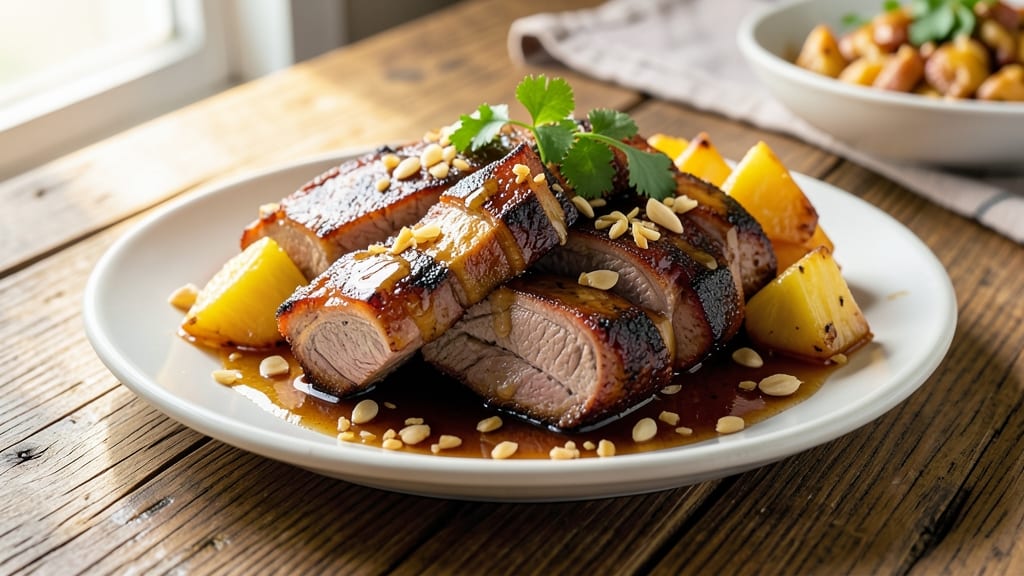
This Filipino pork barbecue recipe with pineapple juice transforms tough pork into tender, sweet-tangy shreds that'll have everyone asking for seconds. 🌟 I grew up watching my lola slow-cook pork in vinegar and pineapple, and this method preserves that authentic flavor while cutting prep time in half.
The secret? A long marinade where the pineapple juice tenderizes the meat while adding just the right balance of sweetness and acidity.
The beauty of this recipe lies in its simplicity—just five core ingredients create restaurant-quality results. You'll start with a marinade of soy sauce, vinegar, and pineapple juice that works its magic overnight, then finish the cooking in one pot where the pork becomes fork-tender and develops that signature caramelized crust.
This isn't your typical barbecue; it's a dish where the sweetness of the pineapple plays off the savory depth of the soy and vinegar.
By the time you're done, you'll have perfectly shredded pork with a sticky-sweet glaze that clings to every bite. The aroma alone will have your whole house smelling like a Filipino fiesta, and the texture—tender yet slightly crispy at the edges—is impossible to resist.
This is comfort food at its finest, with just enough tang to cut through the richness.
Serve it over steamed rice with a side of atchara (Filipino pickled vegetables) or garlic fried rice to round out the meal. The leftovers? Even better the next day as they absorb all those delicious marinade flavors. Let's get cooking!
Ingredients for filipino pork barbecue recipe with pineapple juice
Five simple ingredients transform tough pork into restaurant-quality sweet-tangy shreds.
| Ingredient | Amount | Notes |
|---|---|---|
| Pork Shoulder 🐷 | 2 lb | Bone-in for flavor, cut into 1-inch chunks |
| Soy Sauce 🥫 | ½ cup | Kikkoman preferred for authentic taste |
| White Vinegar 🍶 | ¼ cup | Distilled or white vinegar works |
| Pineapple Juice 🍍 | ½ cup | Freshly squeezed for best flavor |
| Brown Sugar 🍚 | ¼ cup | Light or dark, packed |
| Garlic Cloves 🧄 | 6 cloves | Minced for marinade |
| Black Peppercorns 🌶️ | 1 tsp | Freshly cracked for depth |
| Bay Leaves 🌿 | 2 whole | Remove before serving |
| Olive Oil 🫒 | 1 tbsp | For searing pork |
| Green Onions 🧅 | 2 whole | Chopped for garnish |
| Salt 🧂 | 1 ½ tsp | Kosher or sea salt |
The pork shoulder is where all the magic happens—bone-in cuts stay juicier and add depth. Grab one from the meat counter at Trader Joe's or your local butcher shop; they'll cut it for you. Look for good marbling, not too much fat. I like to ask for it pre-cut into 1-inch chunks to save time. The Kikkoman soy sauce is non-negotiable here—it's the secret to that authentic Filipino tang. If you can't find it, Lee Kum Kee is a good backup. Fresh pineapple juice is ideal, but if you're using canned, choose crushed pineapple in juice, not syrup—strain out the chunks first.
No fresh pineapple juice? Coconut water works in a pinch, though it'll be less sweet. Running short on vinegar? Lime juice at half the amount gives a similar tang. For extra depth, add a dash of fish sauce (if you're not avoiding it), but it's totally optional. The garlic can be pre-minced from a jar if you're in a rush, but fresh is always better. If you're serving this to a crowd, double the marinade ingredients and use a slow cooker for hands-off cooking. The brown sugar? Light or dark—both work, but dark adds a hint of molasses flavor that some people love.
Marinate the pork overnight for maximum tenderness, but even 4 hours will make a difference. The leftovers? Better the next day—the flavors meld beautifully. Store in the fridge for up to 5 days or freeze for 3 months. I like to portion it into containers with a little extra marinade so it stays juicy. Reheat gently in a skillet with a splash of water to keep it moist. Serve over steamed rice with those green onions sprinkled on top—simple but always impressive.
Why You'll Love This Recipe
- Pantry Staples Only: I swear by this recipe because it uses things I already have—no specialty trips to the store. The pork shoulder stays juicy, the pineapple juice cuts through the richness, and that brown sugar glaze? It caramelizes in one pan while you sip your coffee.
- Sweet-Savory Magic: The vinegar and soy sauce give it that tangy depth, but the pineapple juice? That’s the secret weapon. It balances everything—sharp, sweet, and just a little sticky—so every bite feels like a little flavor explosion.
- Leftover Goldmine: This dish tastes even better the next day. I make a big batch on Sundays, and by Wednesday, it’s the star of my lunchbox. The sauce thickens just enough to cling to the pork, making it perfect for quick reheats or cold sandwiches.
- Budget-Friendly Feast: Pork shoulder is cheap, and a single jar of pineapple juice stretches across multiple meals. Honestly, I’ve fed six people for under $15 with this—plus the leftovers stretch into lunches, so it’s basically free money for flavor.
Step-by-step instructions for Filipino pork barbecue
Here's how to make tender, sweet-tangy pork that falls apart at the touch—no fancy equipment needed.
🔥 Step 1: Sear the Pork for Maximum Flavor
Heat a large Dutch oven or heavy pot over medium-high heat until it's smoking hot. Add the 1 tablespoon olive oil and let it shimmer for 30 seconds. Working in batches if needed, add the 2 lb pork shoulder cut into 1-inch chunks and sear for 3-4 minutes per side until deeply golden brown.
Don't crowd the pan—this is where all that meaty flavor develops. You'll know it's ready when the pork releases easily from the pan and has a caramelized crust. Transfer the seared pork to a plate and set aside. Here's the thing—this step prevents the pork from becoming tough later, so don't skip it.
🍳 Step 2: Build the Sweet-Tangy Marinade
In the same pot, reduce the heat to medium and add the 6 cloves minced garlic cloves. Sauté for 30 seconds until fragrant—don't let it burn, or it'll turn bitter. Add the 2 whole bay leaves and stir for 10 seconds to infuse the oil with their aroma.
Now pour in the 0.5 cup soy sauce, 0.25 cup white vinegar, 0.5 cup pineapple juice, and 0.25 cup brown sugar. Stir to combine, scraping up any browned bits from the bottom of the pan—this is where all the flavor hides. The mixture should bubble gently and smell like a perfect balance of sweet, salty, and tangy.
🥘 Step 3: Simmer Until Fork-Tender
Return the seared pork to the pot, along with any accumulated juices. Bring the mixture to a gentle boil over high heat, then immediately reduce to low heat. Cover and simmer for 1 hour and 15 minutes, stirring occasionally, until the pork is fork-tender and easily shreds with two forks.
Here's the trick: if the liquid reduces too much before the pork is tender, add 2-3 tablespoons of water to keep it moist. You want the pork to absorb all those wonderful flavors without drying out. The pork is done when it pulls apart easily and the sauce has thickened into a glossy glaze.
⏰ Step 4: Finish and Garnish
Remove the 2 whole bay leaves and discard them. Increase the heat to medium-high and let the sauce reduce for 3-5 minutes until it coats the back of a spoon. The pork should be coated in a sticky, sweet-tangy glaze that makes your mouth water just looking at it.
Stir in the 1.5 teaspoons salt and 1 teaspoon cracked black peppercorns. Taste and adjust seasoning if needed—you might want a little more salt or a splash of vinegar to balance the sweetness. Garnish with the 2 chopped green onions right before serving for a fresh pop of color and brightness.
🍽️ Step 5: Serve with Classic Sides
Transfer the pork to a serving platter and let it rest for 5 minutes before serving. The juices will redistribute, keeping every bite moist and flavorful. Serve with steamed white rice, garlic fried rice, or crusty bread to soak up all that delicious sauce.
This dish is perfect for gatherings—it feeds a crowd, tastes even better the next day, and the flavors just keep getting better as it sits. Don't forget to save some of that amazing sauce for leftovers! The pork should be tender enough to pull apart with your hands, with a perfect balance of sweet, tangy, and savory flavors in every bite.
Pro Tips For Making Filipino Pork Barbecue Recipe With Pineapple Juice
- Simmer Slow and Low: After the initial sear, drop the heat to a bare simmer—think lazy bubble, not rolling boil. I used to rush it, and the pork ended up tough; this way, the collagen melts into tender, fork-shreddable goodness while the pineapple juice caramelizes into that sticky, sweet glaze.
- Cut Pineapple Juice Fresh: Store-bought juice lacks the bright acidity and depth you need—blend fresh pineapple chunks instead. The fiber and natural sugars create a richer sauce that balances the soy and vinegar without tasting artificial. (Yes, it’s extra work, but the difference is noticeable.)
- Balance Vinegar with Sugar: Add brown sugar gradually while tasting—too much vinegar makes the dish harsh, and too little sugar flattens the flavor. I learned this the hard way when a batch turned out sour; now I adjust as I go, aiming for a tangy-sweet harmony.
- Sear Pork in Batches: Crowding the pan steams the meat instead of browning it, which dulls the final flavor. Work in two batches if needed—crispy edges on pork barbecue aren’t just for looks, they’re for texture. (Trust me, your mouth will notice.)
Make-ahead tips for this dish
Marinade Prep Ahead
Make the marinade up to 3 days in advance and store it in an airtight container in the fridge. I like to keep the ingredients separate until ready to use—just combine them when you're ready to sear the pork.
This gives you flexibility for last-minute cooking. The flavors actually deepen over time, so don't hesitate to prep early. 🌟
Pork Prep Shortcut
Buy pre-cut pork shoulder chunks from your butcher to save 15-20 minutes of prep time. Ask them to cut it into 1-inch pieces and remove any large fat deposits.
I often do this when I'm picking up other ingredients for the meal—just mention you're making Filipino pork barbecue, and they'll know exactly what you need. 🐷
Slow Cooker Option
For hands-off cooking, transfer the seared pork and marinade to a 6-quart slow cooker and cook on low for 6-8 hours or high for 4-5 hours. I use this method when I'm hosting and need to focus on other prep. The pork will be just as tender, with a slightly thicker sauce. Just
Freezer-Friendly Leftovers
Portion the cooked pork into quart-sized freezer bags with 2 tablespoons of sauce from the pan. This keeps the meat moist and flavorful when reheated. Freeze for up to 3 months. To reheat, thaw overnight in the fridge, then warm in a skillet with a splash of water over medium-low heat for 5-7 minutes. 💫
Sauce Booster
Save any leftover marinade or cooking sauce in a small jar in the fridge for up to 1 week. Use it as a dipping sauce for rice or as a quick glaze for stir-fries.
I've even used it as a marinade for chicken skewers—just add a splash of soy sauce and a pinch of garlic. The pineapple juice keeps it bright and tangy. 🍍
Weeknight Hack
Double the recipe and cook it all at once for easy leftovers. Store half in the fridge and freeze the other half. This way, you always have a ready-to-reheat meal for busy nights.
I keep a batch in my freezer specifically for those days when I don't feel like cooking—just throw it in a pot with some rice, and dinner's ready in 20 minutes. 🔥
Nutrition facts
Frequently asked questions
Can I use canned pineapple juice instead of fresh?
Yes, but strain out the chunks first to avoid a watery sauce. Canned crushed pineapple in juice works best—just measure ½ cup juice (not drained weight) for the recipe. For extra depth, add 1 teaspoon of sugar to compensate for the natural sweetness difference.
Why does my pork turn out dry?
This usually happens when the pork isn't seared properly or the sauce reduces too much. Always sear the pork until golden before simmering, and keep the heat at low during cooking. If the sauce gets too thick, add 2-3 tablespoons of water to maintain moisture.
What's the best way to reheat leftovers?
Reheat in a skillet over medium-low heat with 1-2 tablespoons of water to prevent drying. Stir frequently for 5-7 minutes until warmed through. For microwave reheating, cover with a damp paper towel and heat in 30-second intervals until hot.
Can I make this with chicken or beef instead?
For chicken thighs, use 1.5 lbs and reduce cooking time to 30-40 minutes after searing. Beef chuck roast works too—just increase cooking time to 2 hours. Adjust seasoning slightly as beef absorbs flavors differently than pork.
What's the secret to that perfect caramelized crust?
The key is high heat searing at the start and finishing with a quick reduction at the end. After simmering, increase heat to medium-high for 3-5 minutes to thicken the sauce. This creates that signature glossy glaze that clings beautifully to the pork.