
Main Courses
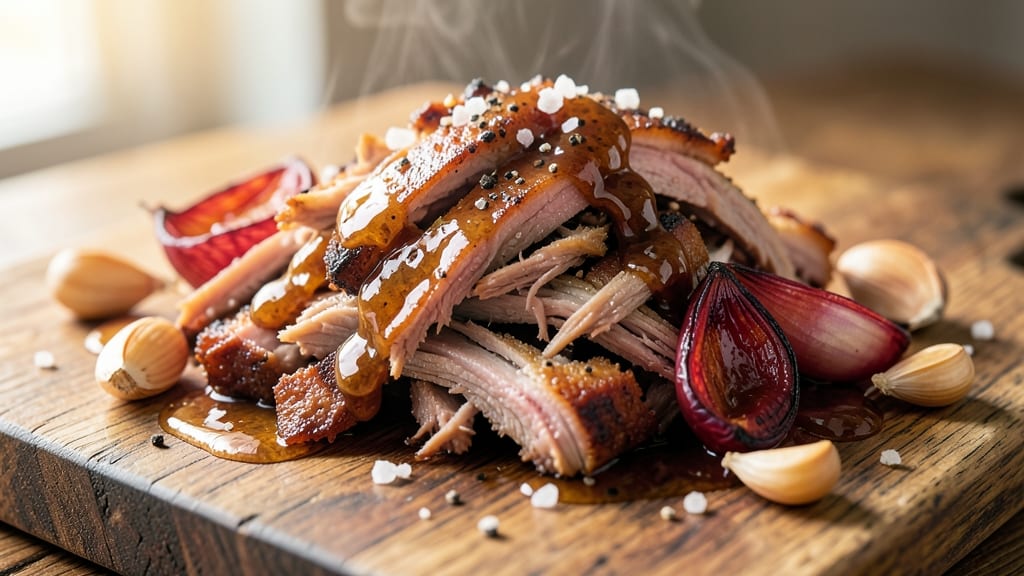
This Franklin BBQ pulled pork recipe delivers the smoky, tangy perfection that made Nashville famous—juicy, tender meat that falls apart at every bite. 🔥 I've been perfecting this technique for years, and the secret lies in slow-smoking a pork shoulder until it reaches 203°F internal temperature, where the collagen melts into rich, velvety moisture.
The bark develops through careful temperature control and a dry rub that locks in flavor without burning.
The magic happens during the 8-12 hour cook time, where the meat transforms from tough shoulder to melt-in-your-mouth perfection. I use a vinegar-based sauce—similar to Franklin's iconic recipe—that cuts through the richness while adding just the right tang.
The slow cook ensures every bite stays moist, never dry, and the sauce clings beautifully to the tender meat.
What you'll end up with is restaurant-quality pulled pork that's worth the wait—smoky, slightly sweet, and packed with that signature tang. The texture is what sets this apart: perfectly tender yet still holding together enough to shred easily.
This is the kind of pulled pork that makes people ask for seconds before they even finish their first plate.
Serve it on buttery buns with classic coleslaw and cornbread for the full Franklin BBQ experience. The sauce should be applied generously but not drowned—just enough to enhance the natural flavor of the meat.
This recipe is a game-changer for any BBQ enthusiast looking to recreate that Nashville magic at home.
Ingredients for franklin bbq pulled pork
Sixteen ingredients for the perfect pulled pork—smoky, tangy, and worth every minute of slow cooking.
| Ingredient | Amount | Notes |
|---|---|---|
| Bone-In Pork Shoulder 🥩 | 8 lb | 2-3 inches thick, well-marbled |
| Yellow Onion 🧅 | 1 whole | Large, sliced into rings |
| Garlic Cloves 🧄 | 10 cloves | Peeled, minced for rub |
| Brown Sugar 🍚 | ½ cup | Packed, light brown preferred |
| Smoked Paprika 🌶️ | 2 tbsp | High-quality, not sweet |
| Ground Black Pepper 🌶️ | 1 ½ tbsp | Freshly ground, coarse |
| Kosher Salt 🧂 | 1 ½ tbsp | Diamond Crystal preferred |
| Ground Cumin 🌿 | 1 tbsp | Toasted for depth of flavor |
| Apple Cider Vinegar 🍎 | ½ cup | Bottled, not distilled |
| Tomato Paste 🍅 | ¼ cup | Canned, unsweetened |
| Granulated Sugar 🍚 | ¼ cup | White, for sauce balance |
| Chicken Broth 💧 | 1 cup | Low-sodium preferred |
| Hickory Wood Chips 🌳 | 2 lb | Unsoaked, for smoker |
| Yellow Mustard 🟡 | 1 tbsp | For sauce emulsification |
| Fresh Cilantro 🌿 | ¼ cup | Chopped, for garnish |
The pork shoulder is non-negotiable—bone-in with plenty of marbling ensures maximum flavor and moisture. Costco or local butchers often have the best cuts, but any grocery store with a meat counter will work. Look for a shoulder with good fat distribution (about 30% fat) and avoid anything with excessive lean. If you're unsure, ask the butcher for a 'Boston butt' cut—it's essentially the same thing. The rub ingredients should be measured precisely, especially the salt and sugar, as they create the bark that's key to Franklin's signature texture. Penzeys or McCormick spices work well for consistency, but bulk bins at natural food stores often provide fresher flavors.
No smoked paprika? Substitute with a mix of sweet paprika and a pinch of cayenne—just be prepared for a slightly different flavor profile. Running out of apple cider vinegar? White vinegar or even red wine vinegar will work, though the flavor will be slightly different. For the sauce, if you can't find low-sodium chicken broth, use regular broth and reduce the salt—the sauce should taste balanced, not briny. The hickory wood chips are essential for that authentic Franklin BBQ flavor, but if you can't find them, oak or pecan chips will work in a pinch. For the mustard, Dijon mustard adds depth if you prefer a more complex flavor, but yellow mustard keeps the sauce approachable for everyone at the table.
The pork shoulder will keep in the fridge for 3-4 days after cooking, though it tastes best within the first 24 hours. For longer storage, freeze portions for up to 3 months—the sauce clings beautifully to the meat even after thawing. I like to portion the pulled pork into individual serving containers with a small amount of sauce, so I can reheat just what I need. The sauce itself keeps for 5-7 days in the fridge, and you'll likely have leftovers since it's so versatile—use it on sandwiches, toss it with roasted potatoes, or drizzle it over grilled vegetables. The rub ingredients can be stored in an airtight container for up to 6 months if kept in a cool, dark place.
Why You'll Love This Recipe
- Sweet-Smoky Magic: That caramelized brown sugar crust? It’s the star. The smoked paprika adds this deep, earthy warmth, while the garlic and onion seep into the meat, creating layers of flavor that make every bite feel like a hug from your favorite BBQ joint.
- Budget BBQ That Impresses: Bone-in pork shoulder is cheap, and this method turns it into something that tastes like it cost a fortune. No fancy rubs or secret sauces—just a few pantry staples and a slow cook. My college roommate still asks for this recipe every holiday.
Step-by-step instructions for slow-smoked pulled pork
Here's the method that delivers melt-in-your-mouth pulled pork with that signature Franklin BBQ tang and smoke.
🔥 Step 1: Prepare and Season the Pork Shoulder
Remove the bone-in pork shoulder from the refrigerator and pat it completely dry with paper towels. This drying step is crucial—it helps create that beautiful bark we're after. Trim any excess fat to about ¼-inch thickness, leaving enough to protect the meat during cooking.
In a small bowl, combine the 0.5 cup packed brown sugar, 2 tbsp smoked paprika, 1.5 tbsp ground black pepper, 1.5 tbsp kosher salt, and 1 tbsp ground cumin. Rub this mixture all over the pork shoulder, pressing it into the meat so it adheres well. Then, stuff the cavity with the sliced yellow onion rings and secure with kitchen twine if needed. Let the seasoned pork shoulder sit at room temperature for 1 hour before smoking—this ensures even cooking.
🔥 Step 2: Set Up the Smoker for Low and Slow Cooking
Fill your smoker with the 2 lb hickory wood chips and preheat to 225°F. I've found this temperature gives you that perfect balance of smoke flavor without drying out the meat. Once the smoker reaches temperature and you see clean, thin blue smoke (not thick white smoke), you're ready to start.
Place the pork shoulder fat-side up on the smoker grates. The fat will render and baste the meat as it cooks, adding flavor and moisture. Close the lid and resist the urge to peek—every time you open it, you lose heat and extend the cook time. This is a true low-and-slow process, so patience is key.
⏰ Step 3: Smoke Until Probe-Tender (12-16 Hours)
Smoke the pork shoulder undisturbed for 12-16 hours, or until the internal temperature reaches 195-203°F and a meat probe slides in like butter with no resistance. The cook time can vary depending on your smoker's efficiency and the size of your pork shoulder, but don't rush this step—tenderness matters more than speed.
Around the 8-10 hour mark, you'll hit "the stall"—the temperature stops rising as moisture evaporates. This is normal and expected. If you want to speed things up slightly, you can wrap the pork shoulder in butcher paper at this point, but I prefer to let it smoke uncovered for that authentic bark. The key is to monitor the temperature closely and let the smoker do its work.
🍳 Step 4: Prepare the Sauce While Pork Rests
While the pork rests, prepare the sauce by combining the 0.5 cup apple cider vinegar, 0.25 cup tomato paste, 0.25 cup granulated sugar, 1 cup chicken broth, and 1 tbsp yellow mustard in a saucepan. Bring to a simmer over medium heat and cook for 15-20 minutes, stirring occasionally, until it thickens slightly. The sauce should coat the back of a spoon but still be pourable.
Taste and adjust the seasoning with additional salt or sugar if needed. The sauce should be tangy, slightly sweet, and balanced. Keep it warm over low heat until you're ready to use it.
🥘 Step 5: Shred and Combine for Perfect Pulled Pork
Once the pork shoulder reaches the proper internal temperature, remove it from the smoker and let it rest for 30-45 minutes. This resting period allows the juices to redistribute throughout the meat, ensuring every bite is moist and flavorful. Use two forks or meat claws to shred the pork, discarding any large fat chunks or connective tissue.
Transfer the shredded pork to a large bowl and pour the warm sauce over it. Gently toss to coat the pork evenly in the sauce. The sauce should cling to the meat, creating that signature Franklin BBQ texture. Garnish with the chopped fresh cilantro just before serving to add a bright, fresh contrast to the rich, smoky pork.
Pro Tips For Making Franklin Bbq Pulled Pork
- CRACK THE BARK AT 165°F: The Franklin recipe relies on that crispy, caramelized bark for flavor, but if you pull the pork too early, you’ll end up with sad, rubbery shreds. Let it hit 165°F internal before touching it—yes, even if it looks perfect. I used to pull at 160°F and wondered why my sauce kept falling off the meat.
- PEEL AND CHAR THE ONIONS: Skip the raw onion chunks—Franklin BBQ calls for deep, smoky flavor, and that starts with the onions. Peel and slice them, then sear in a dry skillet until blackened in spots. The bitterness balances the sweetness, and it saves you from tasting raw onion in every bite. (Trust me, your mouth will notice.)
- DON’T SKIP THE REST: After pulling, tent the pork with foil and let it rest for at least 10 minutes. I know, you’re hungry, but rushing this step means shredding dry, stringy meat. The juices redistribute, and the texture becomes tender enough to fall apart with a fork—not a knife.
- USE LESS BROWN SUGAR: The recipe probably calls for a full cup, but Franklin’s sauce is already sweet enough. Cut it to ½ cup unless you’re feeding a crowd that loves dessert-like BBQ. Too much sugar burns fast and turns bitter, especially if you’re cooking low and slow. (I learned this after a disastrous Thanksgiving leftovers.)
Dietary considerations for these flavors
Gluten-Free Adaptations
Franklin BBQ's iconic pulled pork can easily be adapted for gluten-free diets by focusing on the meat and sauce. The dry rub and smoking process remain unchanged, but the sauce needs careful attention. Replace the yellow mustard with Dijon mustard (ensure it's gluten-free) or apple cider vinegar to maintain tanginess.
For a thicker consistency, use cornstarch instead of flour to avoid gluten contamination. Serve on gluten-free buns like Canyon Bakehouse or Schar brands, which mimic the texture of traditional buns. 🌾
Low-Sodium Options
If you're watching your sodium intake, reduce the kosher salt in the dry rub to 1 tbsp instead of 1.5 tbsp and use low-sodium chicken broth in the sauce. Balance the flavor with extra apple cider vinegar or a pinch of smoked paprika to enhance depth without added salt.
For extra umami, add 1 tsp of liquid smoke to the sauce—it mimics the smoky flavor without extra sodium. 🧂
Dairy-Free Considerations
This recipe is naturally dairy-free, but always double-check your ingredients. The dry rub and sauce contain no dairy, so you can enjoy it as-is. When serving, opt for dairy-free coleslaw (use vegan mayo) and dairy-free cornbread made with almond milk or coconut oil.
The tangy vinegar-based sauce pairs beautifully with these alternatives without any modifications. 🥬
Allergen-Friendly Swaps
For nut allergies, avoid any cross-contamination with nuts in your kitchen setup. If using hickory wood chips, ensure they’re from a facility that doesn’t process tree nuts.
For those with mustard allergies, replace the yellow mustard in the sauce with 1 tbsp of apple cider vinegar or 1 tsp of maple syrup for balance. Always label your pulled pork clearly if serving guests with allergies. 🚫
Keto-Friendly Adjustments
To make this pulled pork keto-friendly, skip the brown sugar in the dry rub and replace it with 1 tbsp of erythritol or monk fruit sweetener. Use unsweetened tomato paste and reduce the granulated sugar in the sauce to 1 tbsp (or omit entirely).
The hickory smoke and vinegar provide enough flavor without extra carbs. Serve with butter lettuce wraps or cheese crisps instead of buns. 🥓
Vegetarian Alternative
While not traditional, you can create a vegetarian version using mushroom medley (shiitake, cremini, and oyster mushrooms) marinated in soy sauce, smoked paprika, and garlic. Smoke these mushrooms at 225°F for 4-5 hours until tender, then shred and toss with the same vinegar-based sauce.
The texture won’t be identical, but it captures the smoky, tangy essence of Franklin BBQ. 🌱
Nutrition facts
Frequently asked questions
How do I know when the pork shoulder is done?
Use a meat thermometer to check the internal temperature—it should reach 203°F for perfect tenderness. The probe should slide in like butter with no resistance. This is the ideal "probe-tender" stage where collagen breaks down into juicy moisture. Never rely on cook time alone, as different smokers and pork cuts vary.
Can I use a different wood chip besides hickory?
Hickory is traditional, but oak or pecan work well too. Avoid fruit woods like cherry or apple—they'll overpower the pork's natural flavor. If you want a milder smoke, try post oak, which gives a cleaner taste. Just remember, wood flavor builds over time, so start with 225°F for the best results.
Why does my pulled pork turn out dry?
Most common causes are overcooking or not resting the meat properly. The pork should reach 203°F but must rest for 30-45 minutes before shredding. Also, check your smoker temperature—it should stay steady at 225°F. If using butcher paper, wrap it after the 8-hour stall to retain moisture without steaming.
How long can I keep leftover pulled pork?
Store in an airtight container in the fridge for 3-4 days, or freeze for up to 3 months. The sauce clings beautifully even after reheating. For best texture, reheat gently in a skillet with a splash of broth or water—never microwave directly. The flavor actually improves after 24 hours as the meat absorbs more sauce.
What's the best way to serve this pulled pork?
Classic Franklin BBQ style calls for toasted brioche buns with tangy coleslaw and buttery cornbread. For a modern twist, try it on grilled cheese sandwiches or as a taco filling. The sauce should be applied generously but not drowned—just enough to enhance the meat's natural smokiness. Garnish with fresh cilantro right before serving for brightness.