
Main Courses
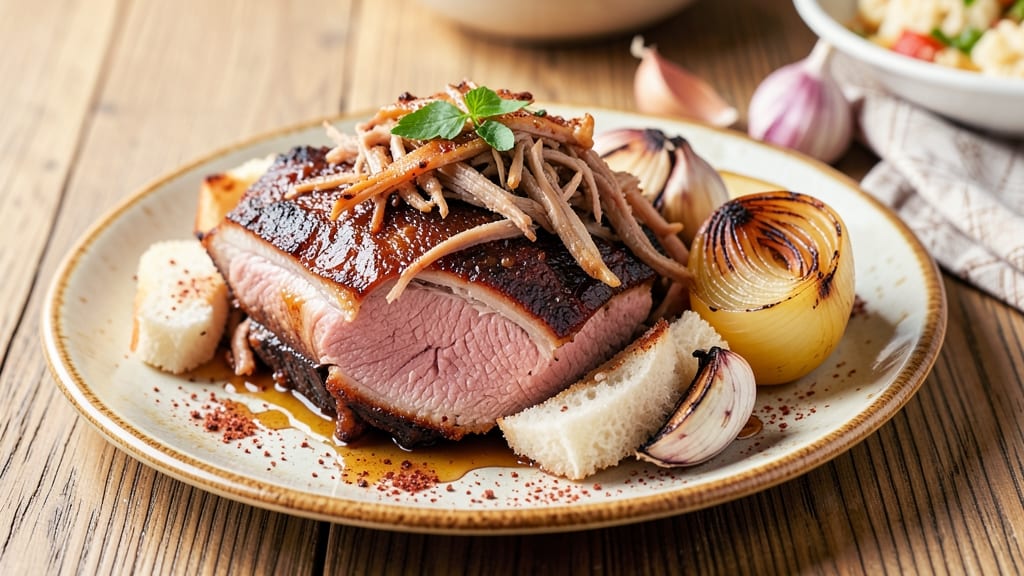
This Meathead's pulled pork recipe delivers the kind of shatter-shredded tenderness that turns weeknight dinners into showstopping feasts. 🔥 After years of perfecting the technique—from smoker to Instant Pot—I’ve cracked the code for meat so tender it falls apart at a touch.
The secret lies in low-and-slow cooking, precise temperature control, and a rub that builds deep, smoky flavor without overpowering the natural richness of the pork shoulder.
What makes this recipe truly special is its versatility—whether you’re feeding a crowd for a tailgate or meal prepping for the week, the method stays the same. We’ll focus on foolproof techniques that work in any kitchen, from backyard smokers to countertop pressure cookers.
The result? Juicy, fall-apart pork that absorbs sauces like a dream, making it perfect for sandwiches, tacos, or even loaded nachos. The magic happens during the resting phase, where the collagen breaks down completely, transforming tough cuts into melt-in-your-mouth perfection.
No dry, stringy meat here—just restaurant-quality pulled pork that’ll have your guests begging for the recipe. And the best part? It’s a set-it-and-forget-it process that lets you focus on the sides while the smoker (or Instant Pot) does all the heavy lifting.
Serve it on buttery buns with tangy coleslaw, piled high in tacos, or even as a hearty bowl with pickled onions and jalapeños. This isn’t just pulled pork—it’s a Sunday dinner staple that deserves a place in your rotation.
Let’s get started on making pork this tender, you’ll never go back to store-bought again.
Ingredients for meathead pulled pork
Eight ingredients transform tough pork shoulder into melt-in-your-mouth perfection—smoky, tender, and packed with flavor.
| Ingredient | Amount | Notes |
|---|---|---|
| Boneless Pork Shoulder 🐖 | 5 lb | Well-marbled, bone-in preferred |
| Yellow Onion 🧅 | 1 whole | Large, yellow or red |
| Garlic Cloves 🧄 | 8 cloves | Fresh, peeled and minced |
| Brown Sugar 🍚 | ½ cup | Packed, light or dark |
| Smoked Paprika 🌶️ | 2 tbsp | High-quality for smoky depth |
| Ground Black Pepper 🌶️ | 1 tbsp | Freshly cracked, coarse grind |
| Kosher Salt 🧂 | 1 tbsp | Diamond Crystal preferred |
| Ground Cumin 🌿 | 1 tbsp | Toasted for richer flavor |
| Chili Powder 🌶️ | 1 tbsp | Medium heat preferred |
| Apple Cider Vinegar 🍎 | ¼ cup | Bragg preferred for tang |
| Unsalted Butter 🧈 | ¼ cup | Cold, cubed for basting |
| Apple Juice 🍎 | 1 cup | Unsweetened, for moisture |
| Fresh Thyme Leaves 🌿 | ½ cup | Or 1 tbsp dried thyme |
| Honey 🍯 | 2 tbsp | Wildflower preferred |
The pork shoulder is non-negotiable—bone-in cuts stay juicier, but boneless works too. Look for well-marbled meat with good fat distribution at Costco or your butcher shop. If buying pre-cut, check the weight—5 lbs is perfect for 8 servings. The apple cider vinegar from Bragg adds tang without overpowering, but any good-quality vinegar works. For the spices, Penzeys or bulk bins at natural markets give the best flavor punch—avoid the dusty stuff at the back of the store.
No smoked paprika? Regular paprika plus a pinch of liquid smoke gets you close. Short on butter? Olive oil works too—just add an extra splash of apple juice to keep it moist. The honey can be swapped for maple syrup if you prefer, but honey helps balance the smokiness. For the onion, yellow or red both work—just avoid sweet onions like Vidalia. If you’re using dried thyme, measure it by the tablespoon and toast it lightly in a dry pan for 30 seconds to wake up the flavor. The rub should stick to the meat like glue—pat it dry first for best adhesion.
This pork keeps 4 days in the fridge, but it’s even better the next day as the flavors meld. For leftovers, portion into freezer bags with a little extra sauce to prevent drying. Frozen pork stays good for 3 months—thaw overnight in the fridge before reheating. Pro tip: Save the cooking juices for gravy or tacos—they’re liquid gold. The rub can be made a week ahead and stored in an airtight container, but fresh is always better.
Why You'll Love This Recipe
- Sweet-Smoky Obsession: That caramelized brown sugar and smoked paprika? It’s the kind of flavor that makes people ask, “What’s in it?” The pork is sticky, tender, and packed with a warmth that lingers like a good memory—especially when you bite into a juicy piece.
- Leftovers That Win: Between us, this recipe demands leftovers. I make a double batch because the sandwiches the next day? Even better. Toss it in tacos, nachos, or a loaded baked potato—it’s the ultimate flavor multiplier.
- Budget-Friendly Crowd-Pleaser: A single pork shoulder feeds six, and the ingredients cost less than takeout. Honestly, it’s my go-to for game nights or when my brother-in-law “accidentally” shows up unannounced. Everyone leaves happy, and my wallet stays intact.
Step-by-step instructions for slow-smoked pulled pork
Here's the method that delivers melt-in-your-mouth pork every time—no guesswork, just perfect results.
🔥 Step 1: Build the Signature Rub and Prep the Pork
In a medium bowl, combine the 0.5 cup brown sugar, 2 tbsp smoked paprika, 1 tbsp kosher salt, 1 tbsp ground black pepper, 1 tbsp ground cumin, and 1 tbsp chili powder. Mix thoroughly with your fingers until the sugar dissolves and the spices cling together like a fine sandpaper.
Pat the 5 lb boneless pork shoulder completely dry with paper towels—this is non-negotiable for crispy bark. I like to press down firmly in all directions, especially on the thickest parts. Rub the spice mixture all over the pork, pressing it into the meat so it adheres well. Let it sit uncovered on a wire rack in the fridge for at least 1 hour (overnight is even better). This resting period allows the rub to penetrate deeply and the meat to dry slightly, which is key for that perfect bark.
🔥 Step 2: Smoke the Pork at Low and Slow
Preheat your smoker to 225°F using hickory or apple wood chips. Place a water pan in the smoker to maintain moisture. When the smoker reaches temperature and you see clean, blue smoke (not thick white), it's ready for the pork.
Put the pork shoulder on the smoker rack fat-side up. Close the lid and resist the urge to peek—every time you open it, you add 15-20 minutes to your cook time. Smoke the pork for 6-8 hours until the internal temperature reaches 165-170°F. You'll notice the meat hitting "the stall"—when the temperature stops rising despite the smoke continuing. This is normal and happens because moisture evaporates from the meat. Don't panic; this is where the magic happens.
🥘 Step 3: Wrap and Finish the Cook
At the stall, wrap the pork tightly in butcher paper (not foil—paper breathes better and preserves the bark). Return it to the smoker and continue cooking until the internal temperature reaches 200-203°F. This usually takes another 2-4 hours. The meat should be fork-tender and pull apart easily with minimal resistance.
When done, transfer the pork to a cutting board and tent loosely with foil. Let it rest for 1 hour before shredding. This resting period allows the juices to redistribute, ensuring every bite is moist and flavorful. Real talk: Don't skip this step—it's the difference between dry, stringy pork and the tender, juicy masterpiece you're aiming for.
🍳 Step 4: Shred and Make the Sauce
Unwrap the pork and shred it using two forks. I like to pull it apart in large chunks rather than shredding it into tiny pieces—this gives you better texture in every bite. In the same smoker (or a large skillet on the stovetop), melt the 0.25 cup unsalted butter over medium heat. Add the 1 whole yellow onion (chopped), 8 cloves garlic cloves (minced), 0.5 cup fresh thyme leaves, 0.25 cup apple cider vinegar, 1 cup apple juice, and 2 tbsp honey. Simmer for 10-12 minutes until the onions are caramelized and the liquid reduces by half.
Pour the sauce over the shredded pork and toss gently to coat. Let it sit for 5 minutes so the flavors meld together. The sauce should be glossy and sticky, clinging to every strand of pork. Serve immediately on buns with coleslaw or pickles—this is where the real magic happens.
Pro Tips For Making Meathead Pulled Pork
- TRUST THE FAT CAP: The thickest part of your pork shoulder? That’s where the flavor lives. Don’t trim it—leave that fat intact to baste the meat as it cooks. I learned this the hard way when I aggressively trimmed mine, and the result was dry, even after hours in the smoker.
- DON’T SKIP THE ARROXIVE: Char those onions and garlic until they’re almost black—yes, even if it looks burnt. That deep, bitter flavor cuts through the sweetness of the brown sugar and balances the smokiness. My grandmother swore by this, and she was right: the first bite is where you’ll taste the difference.
- WATCH THE SUGAR CRUST: Brown sugar burns faster than you think, especially when mixed with smoked paprika. After searing the pork, spread the rub thin—just enough to coat, not drown. If it pools, it’ll caramelize into a sticky mess instead of a flavorful crust. I was skeptical until I tried it.
- USE A MEAT THERMOMETER: Pull the pork at 203°F, not when it looks tender. The internal temp is the only reliable way to guarantee it’ll shred like butter. I used to guess, and half the time, it’d be tough or fall apart prematurely. Now? No more dry, stringy pulled pork—just perfect texture every time.
Essential equipment for this dish
Smoker Essentials
You don’t need a fancy setup—just a reliable smoker that maintains 225°F consistently. My go-to is a Traeger Pro 780 for its ease of use, but a Weber Smokey Mountain or even a charcoal offset smoker works beautifully.
If you’re just starting, a Masterbuilt digital electric smoker is a budget-friendly option that still delivers great results. The key is wood choice: hickory for classic smoky flavor or apple wood for a sweeter profile. 🔥
Temperature Control
Invest in a dual-probe thermometer like the ThermoWorks Smoke—it tracks both your smoker’s temperature AND the pork’s internal temp. I’ve ruined more pork than I’d like to admit by guessing, so this tool is non-negotiable.
Keep your smoker between 225-250°F—any hotter and you’ll dry out the meat. A water pan in the smoker helps maintain moisture, especially during the stall phase.
Butcher Paper
Skip the aluminum foil—it traps too much steam and can make the bark soggy. Butcher paper (from Butcher & Packer) breathes better, letting the meat stay moist while keeping that crispy crust.
When wrapping your pork at the stall, use two layers of paper, sealing it tightly with a twist tie. This technique is a game-changer for keeping the meat tender without losing the bark.
Instant Pot Hack
No smoker? No problem. My Instant Pot Duo makes pulled pork in 8 hours on high pressure, using the same rub and sauce. The steam release switch should be set to “venting” for the first 4 hours, then switched to “sealing” for the final 4 hours.
After cooking, let it rest for 15 minutes before shredding. The texture is slightly different but still incredibly tender and flavorful. 💫
Shredding Tools
Two forks are all you need, but a meat claw (like the OXO Good Grips) makes the job easier—especially for larger batches. I also keep a sharp chef’s knife on hand for trimming fat.
Never shred the pork in the pot or smoker; always transfer it to a cutting board first. This keeps your equipment clean and makes shredding more efficient.
Resting Station
After cooking, transfer the pork to a wire rack on a baking sheet. Tent it loosely with foil and let it rest for at least 1 hour—this is where the juices redistribute, making every bite juicy.
I like to place it in a cooling rack inside a large bowl to catch any drippings, which I later use to make extra sauce. Pro tip: If you’re short on time, a large cast-iron skillet works too, but the wire rack gives better airflow. ⏰
Nutrition facts
Frequently asked questions
Can I use a different cut of pork instead of a pork shoulder?
While pork shoulder is ideal, you can use a pork butt (they're often sold as the same cut) or even a bone-in ham shank for extra flavor. Avoid lean cuts like tenderloin—they lack the connective tissue needed for tender pulled pork. If using a ham shank, trim excess fat and expect a slightly longer cook time of 8-10 hours total.
What if my smoker can't stay at 225°F consistently?
Don't panic! Use a ceramic smoke tube or electric smoke generator to maintain temperature. If your smoker fluctuates, aim for 200-250°F range and adjust cooking time accordingly. The Instant Pot method is perfect for unreliable smokers—just follow the 8-hour high-pressure instructions in the recipe.
How do I prevent the pork from drying out?
The key is butcher paper wrapping at the stall (not foil) and using a water pan in your smoker. Never skip the 1-hour rest after cooking—this lets juices redistribute. For extra moisture, baste with melted butter every 2 hours during smoking. If cooking in an oven, use a roasting pan with rack to allow airflow.
Can I make this ahead of time for a party?
This is one of the best make-ahead dishes! Cook the pork as directed, then store it in the fridge for up to 4 days or freeze for 3 months. Reheat gently in a skillet with a splash of apple juice until warmed through. The flavors actually improve overnight as the rub penetrates deeper. Just add fresh sauce when reheating for maximum flavor.
What's the best way to serve this pulled pork?
Classic pork sandwiches with toasted buns work best, but get creative! Try it in tacos with pickled onions, loaded nachos with jalapeños, or even as a loaded potato dish. For a Southern twist, serve with mac and cheese or cornbread. The sauce clings perfectly to rice bowls too—just add some cilantro and lime for a fusion twist.