
Main Courses
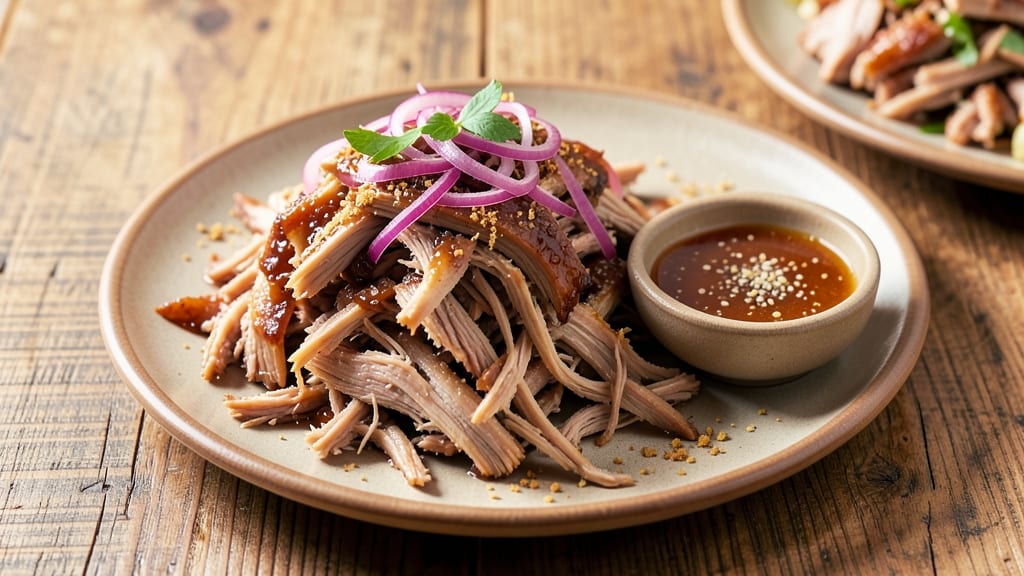
This mild pulled pork recipe delivers all the comforting tenderness of slow-smoked pork without the heat you might find in traditional recipes. 🔥 Growing up in Georgia, I learned that great pulled pork isn’t about spice levels—it’s about patience, quality meat, and a gentle blend of flavors that let the pork shine.
The secret lies in using apple cider vinegar and a touch of cumin to tenderize the meat while keeping the heat profile approachable, perfect for families or anyone who prefers a milder taste.
The process is straightforward but requires time—about 8 hours of slow cooking—to transform a tough pork shoulder into melt-in-your-mouth shreds. You’ll start with a simple rub of garlic, onion powder, and a hint of brown sugar, then let the smoker or oven work its magic.
The result is pork so tender it practically falls apart at the touch, with a subtle sweetness and smoky aroma that fills your kitchen and draws everyone to the table.
What makes this recipe stand out is its versatility. Serve it on soft buns for sandwiches, pile it into tacos for a lighter meal, or pair it with classic sides like coleslaw and cornbread for a full Southern-style feast.
The mild flavor profile ensures it’s a crowd-pleaser, whether you’re feeding a family or hosting a gathering. The key is letting the pork rest after cooking—this step is non-negotiable for achieving that perfect texture.
For those who love BBQ but want a gentler approach, this recipe delivers restaurant-quality results at home. The slow cooking method ensures every bite is juicy and flavorful, while the mild seasoning keeps it approachable.
Trust me, once you try this, you’ll never go back to the overly spicy versions. Let’s get started on creating something truly special.
Ingredients for mild pulled pork
Six ingredients make the rub, plus a few pantry staples for the sauce. Nothing spicy, just pure tender comfort.
| Ingredient | Amount | Notes |
|---|---|---|
| Pork Shoulder (Boston Butt) 🐖 | 5 lb | Bone-in for best flavor |
| Apple Cider Vinegar 🍎 | ½ cup | For tenderizing and tang |
| Brown Sugar 🍚 | ¼ cup | Lightly packed for sweetness |
| Ground Cumin 🌿 | 1 ½ tbsp | Toasted for depth of flavor |
| Garlic Powder 🧄 | 1 ½ tbsp | Freshly ground preferred |
| Onion Powder 🧅 | 1 ½ tbsp | For aromatic base |
| Smoked Paprika 🌶️ | 1 tbsp | Mild for subtle smokiness |
| Salt 🧂 | 1 ½ tbsp | Kosher or sea salt |
| Black Pepper 🌶️ | 1 tbsp | Freshly cracked |
| Yellow Onion 🧅 | 1 whole | Sliced into wedges |
| Fresh Garlic Cloves 🧄 | 6 cloves | Crushed for rub |
| Beef Broth 🥫 | 1 ½ cups | Low-sodium preferred |
| Honey 🍯 | 2 tbsp | For subtle sweetness |
| Olive Oil 🫒 | 2 tbsp | For moisture |
The pork shoulder is where it all starts. Bone-in gives you more flavor, and 5 lbs is perfect for a crowd—you can always scale up. Look for a cut with good marbling at Kroger or Whole Foods, but honestly, any grocery store's pork shoulder will work if it's fresh. The apple cider vinegar is non-negotiable here—it's what breaks down the meat over time. Grab the Bragg brand if you're at a big-box store, or any organic option if you prefer. Fresh garlic and onion? Trader Joe's has the best prices on those—just make sure the garlic cloves are firm and the onion doesn't feel mushy.
No apple cider vinegar? White vinegar or lemon juice in a pinch, but the flavor won't be quite the same. Brown sugar substitutes? Coconut sugar or maple syrup work, but keep the amount the same. The beef broth can be swapped for chicken broth or even water if you're in a bind, though the flavor will be milder. Want to skip the honey? A little more brown sugar will do the trick. The olive oil is just for moisture—avocado oil works too. Toast your cumin seeds in a dry pan for 30 seconds before grinding if you want to take it to the next level, but pre-ground is totally fine. No need to stress over perfection here.
The pork shoulder keeps beautifully in the fridge for 3-4 days before cooking, wrapped tightly in plastic. Once cooked, it reheats like a dream—just wrap it in foil with a splash of broth and warm it in the oven at 300°F for 20 minutes. The leftovers? Freeze for up to 3 months in portions. I always make a double batch because it's just too good to resist. Store the cooked pork in the fridge in a sealed container with a little extra broth to keep it moist. Trust me, the second day is even better than the first.
Why You'll Love This Recipe
- Sweet-Savory Magic: That brown sugar and vinegar combo? It’s where the flavor party happens. The cumin adds warmth, the garlic powder gives it depth, and the vinegar keeps it from being too heavy. Honestly, it’s the kind of balance that makes you want to eat it straight from the pot.
- Game for Any Day: Between us, this pulled pork works for game days, lazy Sundays, or even a quick lunch when my kids are home from school. I’ll serve it on buns, over rice, or straight up with pickles—it never lets me down.
- Budget Stretch: A single pork shoulder feeds my family for days. I’ll make a big batch, freeze half, and still have leftovers for sandwiches all week. Plus, the ingredients? Most are pantry staples, so it’s gentle on the wallet without sacrificing taste.
Step-by-step instructions for mild pulled pork
Here's how to create melt-in-your-mouth pulled pork with a gentle, balanced flavor profile.
👨🍳 Step 1: Prepare the Pork and Rub
Start by removing the pork shoulder from the refrigerator and letting it sit at room temperature for 1 hour. This ensures even cooking. Pat the meat dry with paper towels—this step is crucial for developing that perfect bark later. I like to trim any excess fat down to about ¼ inch thickness, leaving enough to protect the meat during the long cook.
In a large bowl, combine the 0.5 cup apple cider vinegar, 0.25 cup brown sugar, 1.5 tbsp ground cumin, 1.5 tbsp garlic powder, 1.5 tbsp onion powder, 1 tbsp smoked paprika, 1.5 tbsp salt, and 1 tbsp black pepper. Mix until the sugar dissolves completely. This creates a sticky, flavorful paste that will cling beautifully to the pork.
Rub this mixture all over the pork shoulder, pressing it into the meat so it penetrates the surface. Don't forget to get into the crevices and around the edges. Place the pork in a large resealable bag and marinate in the refrigerator for at least 4 hours or overnight for maximum flavor development. Here's the thing—this step makes all the difference in tenderness and flavor.
🔥 Step 2: Sear the Pork for Flavor and Texture
Preheat your smoker to 225°F using wood chips of your choice. I like to use a mix of hickory and apple for a balanced flavor. While the smoker heats up, heat a large skillet over medium-high heat and add 2 tbsp olive oil. Place the marinated pork in the skillet, fat-side down, and sear for 5 minutes until a deep golden crust forms.
Flip the pork and sear the other side for another 5 minutes. This initial sear locks in juices and creates a flavorful crust that will carry through the long cook. Transfer the seared pork to your smoker and place it fat-side up. The rendered fat will baste the meat as it cooks, adding to the moisture and flavor.
Close the lid and smoke the pork undisturbed for 6 hours. Here's where patience pays off—resist the urge to peek or open the smoker during this time. Every time you open it, you lose heat and moisture, potentially adding 15-20 minutes to your cook time. You'll know it's ready when the internal temperature reaches 165°F.
🥘 Step 3: Wrap and Cook to Perfection
When the pork reaches 165°F, you'll notice the internal temperature stall—a common phase where the meat stops cooking temporarily. This is the perfect time to wrap the pork. I use a double layer of foil to create a makeshift pouch. Add the sliced 1 whole yellow onion and 6 cloves fresh garlic to the pouch along with the pork.
Return the wrapped pork to the smoker and continue cooking until the internal temperature reaches 203°F. This usually takes another 2-3 hours. The wrapping technique, known as the "Texas crutch," helps break down the connective tissue and tenderizes the meat. The onions and garlic infuse the pork with additional flavor during this phase.
Once the pork reaches the desired temperature, remove it from the smoker and let it rest in the foil pouch for 30 minutes. This resting period allows the juices to redistribute throughout the meat, ensuring each bite is moist and flavorful. Don't skip this step—it's crucial for the final texture.
🔪 Step 4: Shred and Finish with Sweet Sauce
After resting, unwrap the pork and transfer it to a cutting board. Using two forks, shred the meat into ¼-inch thick strands. Discard any large pieces of fat or connective tissue. The pork should pull apart easily, with no resistance when you tug on it.
In a large saucepan, combine the 1.5 cups beef broth and 2 tbsp honey. Bring to a gentle simmer over medium heat and add the shredded pork. Let it cook for 10 minutes to allow the flavors to meld together. You can add a splash more broth if the mixture seems too dry.
Taste and adjust seasoning with additional salt or pepper if needed. The sauce should be slightly sweet and savory, with a gentle tang from the vinegar used in the rub. Serve the pulled pork on soft buns with your favorite toppings like coleslaw or pickles. Each bite should be tender, juicy, and packed with flavor—no heat, just pure, comforting goodness.
Pro Tips For Making Mild Pulled Pork
- USE A THERMOMETER: The apple cider vinegar and brown sugar in this recipe make the meat look done before it actually is. Pull it at 203°F—any lower and you’ll end up with chewy, undercooked pork that’s still tough to shred. (Yes, even if it’s glistening like a Thanksgiving centerpiece.)
- SALT THE PORK FIRST: Toss the Boston butt with 1 tablespoon of kosher salt before adding your dry rub. The salt penetrates while it rests, making the cumin and garlic powder stick better later. I learned this the hard way—skipping it means flavor clinging to the surface only.
- DON’T SKIP THE REST: Let the pork shoulder sit uncovered in the fridge for 12–24 hours after salting. The cold slows moisture loss, and the dry surface helps the brown sugar caramelize later. I used to rush this, and my pulled pork always tasted duller—like someone forgot to season it halfway through.
- BUILD FLAVOR IN BATCHES: Instead of dumping all the apple cider vinegar at once, add half early (with the cumin and garlic powder) and save the rest for the last hour. This keeps the meat tender without making it too tangy. (Your future self will notice the difference—trust me.)
Creative variations of this dish
Southern-Style BBQ
This is my go-to variation when I want to keep things classic but still add depth. After the initial 6-hour smoke, I add ½ cup of apple cider vinegar and ¼ cup of molasses to the foil wrap along with the onions and garlic.
The molasses brings a deep, caramelized sweetness that pairs perfectly with the smoky pork. Serve it on soft potato rolls with a side of creamy coleslaw—just like my grandma used to make.
The key here is balancing the sweetness with the tangy vinegar so it doesn’t overpower the mild flavor profile. 🌶️
Asian-Inspired Glaze
For a fusion twist, I swap out the honey in the finishing sauce for a ¼ cup soy sauce and 2 tbsp hoisin sauce, then add 1 tbsp grated fresh ginger and 1 minced garlic clove.
This creates a sticky, savory glaze that clings beautifully to the pulled pork. Garnish with thinly sliced scallions and a sprinkle of toasted sesame seeds for a crunchy finish. Serve it in steamed buns or over jasmine rice for a lighter meal.
The ginger and garlic add aromatic warmth without any heat. 🌿
Breakfast Pulled Pork
Turn your pulled pork into a hearty breakfast by mixing in 2 scrambled eggs and ¼ cup shredded cheddar cheese into the shredded pork. The eggs add richness, while the cheese ties everything together. Serve it on English muffins with a side of crispy hash browns or buttered toast.
For extra flavor, drizzle with a little hot sauce on the side—just enough to add a kick if someone wants it. This variation is a game-changer for brunch or lazy weekend mornings. 🍳
Taco-Style Mild
Skip the buns and serve your pulled pork in corn tortillas for a lighter, fresher meal. Top with diced avocado, shredded lettuce, diced tomatoes, and a dollop of sour cream. For extra brightness, add a squeeze of lime juice and a sprinkle of fresh cilantro.
This version is perfect for warm weather or when you want something lighter than traditional BBQ. The lime and avocado cut through the richness of the pork beautifully. 🌮
Slow Cooker Adaptation
No smoker? No problem. You can easily adapt this recipe for a slow cooker. After searing the pork, place it in the slow cooker with the sliced onions, garlic, 1.5 cups beef broth, and 2 tbsp apple cider vinegar.
Cook on low for 8 hours or high for 5-6 hours, then shred and mix with the honey sauce as directed. The slow cooker method is foolproof and requires minimal effort—just set it and forget it.
The result is just as tender, though the flavor might be slightly less smoky. 🍲
Korean-Inspired Buldak
For a bold but still mild twist, mix ¼ cup gochujang (Korean chili paste) with 2 tbsp soy sauce, 1 tbsp honey, and 1 tbsp rice vinegar to create a sweet-spicy glaze. Brush this over the pork during the last 30 minutes of cooking.
The gochujang adds depth without overwhelming heat, thanks to the honey and vinegar balancing it out. Serve it over steamed rice with kimchi on the side. This fusion variation is a crowd-pleaser that keeps the mild profile while adding global flair. 🌏
Nutrition facts
Frequently asked questions
Why does the recipe call for apple cider vinegar instead of hot sauce?
The apple cider vinegar tenderizes the meat and adds a gentle tang without any heat. Traditional hot sauce would overpower the mild flavor profile we're aiming for. The vinegar also helps break down the collagen in the pork shoulder, making it extra tender during the long cook.
Can I use a different cut of pork like pork butt or shoulder interchangeably?
Yes! Pork shoulder and pork butt are essentially the same cut (just different names depending on where it's cut from the hog). For this recipe, either works perfectly. Just make sure it's a bone-in cut with good marbling for the best flavor and texture.
What's the best way to reheat leftover pulled pork?
Wrap the leftovers tightly in foil with a splash of beef broth, then reheat in a 300°F oven for 20 minutes. This keeps it moist and prevents drying out. Never microwave directly—it makes the pork rubbery. For extra flavor, add a little more honey or apple cider vinegar when reheating.
How do I know when the pork is fully cooked and ready to shred?
The pork is done when it reaches an internal temperature of 203°F—this is called the "stall" phase where it becomes fork-tender. Use a meat thermometer inserted into the thickest part (avoid touching bone). The meat should pull apart easily with two forks, with no resistance.
Can I make this in an oven instead of a smoker?
Preheat your oven to 275°F and place the pork on a rack in a roasting pan. Add 1 cup water to the bottom to create steam. Cook for 6-7 hours until it reaches 203°F, then wrap in foil with onions and garlic for another 1-2 hours. The flavor will be less smoky but still delicious and tender.