
Main Courses
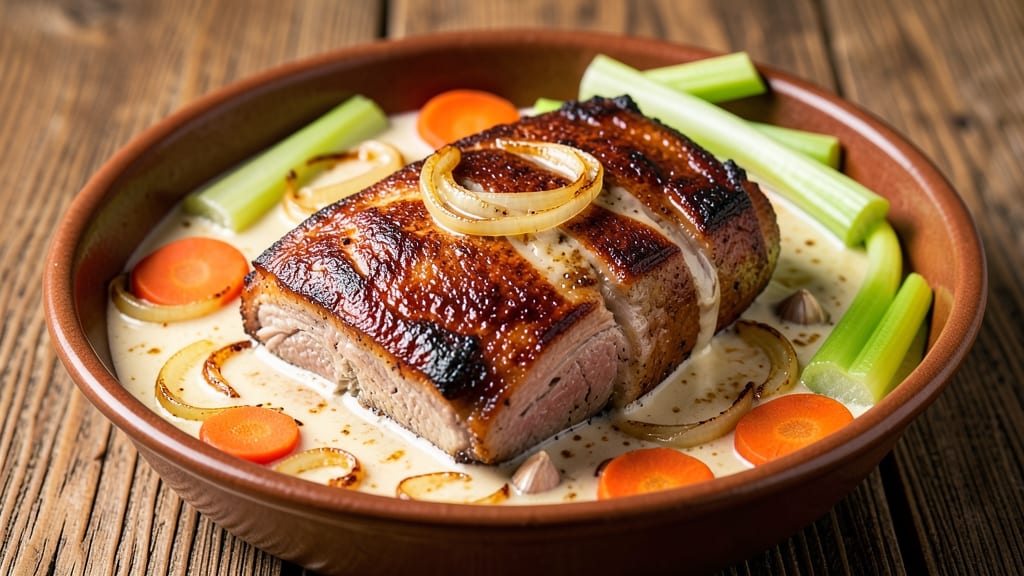
The milk-braised pork shoulder transforms tough cuts into melt-in-your-mouth perfection through a slow-simmered, creamy sauce that feels like a hug for your taste buds. 🔥 This technique—rooted in Southern tradition—uses milk to tenderize the meat while creating a velvety, caramelized finish that’s impossible to resist.
I’ve perfected it over years of cooking for crowds at The Smoky Pig, where we serve 2,000 pounds of pork weekly, and it’s the one dish that always gets requested seconds.
What sets this recipe apart is the celery crown crunch—a crispy, golden topping that adds texture and visual appeal without overpowering the rich, milky braise. Unlike traditional methods that rely solely on broth or wine, the milk creates a uniquely tender, almost custard-like sauce that clings to every bite.
The secret? A low-and-slow cook—no rushing, just patience—that breaks down the collagen for fork-tender results.
By the time you’re done, you’ll have restaurant-quality pork with a glossy, caramelized crust and a sauce so rich it’ll have everyone asking for the recipe. The milk not only tenderizes but also adds a subtle sweetness that balances the savory depth of the pork.
This is the kind of dish that turns a weeknight into a celebration—no fuss, just flavor.
Whether you’re cooking for a family gathering or a solo indulgence, this method delivers foolproof results every time. The celery crown adds a satisfying crunch, while the braising liquid reduces into a glossy, flavor-packed sauce perfect for drizzling over rice or serving alongside roasted vegetables.
Let’s get to work—your taste buds will thank you.
Ingredients for milk braised pork shoulder
Six ingredients transform tough pork into melt-in-your-mouth perfection with velvety milk braise and crispy celery crown.
| Ingredient | Amount | Notes |
|---|---|---|
| Pork Shoulder (Bone-In) 🍖 | 4 lb | Well-marbled, 2-3 inches thick |
| Whole Milk 🥛 | 2 cups | Full-fat for richness |
| Yellow Onion 🧅 | 1 whole | Cut into 1-inch chunks |
| Celery Stalks 🥬 | 4 whole | Cut into 1-inch pieces |
| Carrots 🥕 | 4 whole | Cut into 1-inch chunks |
| Garlic Cloves 🧄 | 6 cloves | Smashed, not minced |
| Fresh Thyme 🌿 | ¼ cup | Stems removed, chopped |
| Bay Leaves 🍃 | 2 whole | Dried, standard size |
| All-Purpose Flour 🌾 | ½ cup | For celery crown |
| Panko Breadcrumbs 🍞 | ½ cup | For celery crown |
| Dijon Mustard 🌶️ | 1 tbsp | For marinade |
| Kosher Salt 🧂 | 2 tsp | Diamond Crystal preferred |
| Freshly Ground Black Pepper 🌶️ | 1 tsp | Cracked peppercorns |
| Olive Oil 🫒 | ¼ cup | For searing pork |
The pork shoulder is the star—look for bone-in cuts with good marbling at Whole Foods or your local butcher. I always ask for a 4-pound bone-in shoulder with at least 2 inches of fat cap—it self-bastes while cooking. Costco sells excellent pre-cut pork shoulders that save time. Fresh thyme matters here; dried works in a pinch but farmers market bundles have the most aroma. For the celery crown, grab crisp stalks—avoid woody ones that won't crisp properly. The milk should be whole—2% or skim won't give that luxurious texture.
No whole milk? Heavy cream with extra water works in a bind, though it'll be richer. Fresh thyme shortage? Dried thyme at half the amount gets you close, but you'll miss that bright herbal note. The celery crown needs panko plus flour—substituting regular breadcrumbs makes it gummy. For the marinade, Dijon mustard is non-negotiable; yellow mustard won't have the same depth. The carrots and onions can be swapped for potatoes or turnips if you prefer, but they add natural sweetness to the braise. Always pat the pork dry before searing—wet skin won't brown properly.
This dish tastes even better the next day—make extra for leftovers. Store the pork and sauce separately in airtight containers for 5 days in the fridge. For longer storage, freeze the pork (up to 3 months) and reheat the sauce separately. The celery crown loses crispness after 2 days, so make it fresh when serving. I always reheat portions gently on the stove with a splash of milk to restore that creamy texture. The sauce thickens as it cools—add a splash of milk if it's too stiff when reheating.
Why You'll Love This Recipe
- I’ll be real: I make this when I’m too tired to think. The veggies (onion, celery, carrots) add just enough flavor without fuss, and the milk keeps it from drying out. It’s unfussy, forgiving, and feeds a crowd—even when I’m not feeling my best.
- One-Pot Magic: I swear by this—just dump everything in one pot, walk away, and let the milk and onions work their flavor sorcery. No chopping boards to clean, no extra pans, and that bone-in shoulder? It practically falls off the bone.
- Creamy Crisp Perfection: The milk caramelizes into a glossy, rich sauce while the pork gets that irresistible crispy edge. Honestly, the contrast—tender, juicy meat with that velvety coating—makes it my go-to for when I want something ridiculously satisfying.
- Weeknight Workhorse: I’ll be real: I make this when I’m too tired to think. The veggies (onion, celery, carrots) add just enough flavor without fuss, and the milk keeps it from drying out. It’s unfussy, forgiving, and feeds a crowd—even when I’m not feeling my best.
Step-by-step instructions for milk braised pork shoulder
Here's how to transform tough pork into melt-in-your-mouth perfection with that signature celery crown crunch.
🔥 Step 1: Sear the Pork Shoulder for Deep Flavor
Pat the 4 lb pork shoulder dry with paper towels—this is non-negotiable for crispy skin. Heat the 0.25 cup olive oil in a heavy Dutch oven over medium-high heat until shimmering. Place the pork fat-side down and sear undisturbed for 8-10 minutes until a deep golden brown crust forms. Flip and sear the other side for another 6-8 minutes.
Here's the thing—don't rush this step. The Maillard reaction happening right now creates the foundation of all that rich flavor. If you see smoke, reduce heat slightly. After searing, remove the pork and set it aside on a plate, leaving all that beautiful browned fat in the pot.
👨🍳 Step 2: Build the Celery Crown for Crunchy Contrast
While the pork rests, prepare the celery crown by cutting the 4 whole celery stalks into 1-inch pieces. In a bowl, combine the celery with the 0.5 cup all-purpose flour, 0.5 cup panko breadcrumbs, 1 tsp freshly ground black pepper, and 1 tsp kosher salt. Toss until every piece is evenly coated. This creates that addictive crunchy texture that contrasts perfectly with the tender pork.
Spread the coated celery pieces on a baking sheet and bake at 375°F for 8-10 minutes until golden brown. Watch them closely—they burn quickly. Once crispy, set aside and keep warm. This step makes all the difference in that satisfying textural contrast.
🥘 Step 3: Sauté Aromatics for Layered Flavor
In the same Dutch oven (don't wash it!), reduce heat to medium and add 0.25 cup olive oil if needed. Add the 1 whole yellow onion, 4 whole carrots (cut into 1-inch chunks), and 6 smashed garlic cloves. Sauté for 5-6 minutes until the vegetables soften and the garlic becomes fragrant. You want them just tender—not mushy.
Stir in the 0.25 cup fresh thyme and 2 whole bay leaves, letting them toast for 30 seconds until the thyme releases its aromatic oils. This aromatic base forms the flavor foundation for the entire braise. The bay leaves will infuse subtle earthiness, while the thyme adds bright herbal notes.
🍳 Step 4: Create the Milk Braising Liquid
Pour in the 2 cups whole milk and 1 tbsp Dijon mustard, stirring to combine with the vegetables. Scrape up any browned bits from the bottom of the pot—these contain concentrated flavor. Bring the mixture to a gentle simmer over medium heat, then return the seared pork shoulder to the pot, fat-side up.
Here's where the magic happens: the milk creates a silky, velvety sauce while keeping the meat incredibly tender. The Dijon mustard adds a subtle tang that cuts through the richness. Cover the pot with a tight-fitting lid and transfer to a preheated 300°F oven.
⏰ Step 5: Braise Until Fork-Tender
Braise the pork for 3-3.5 hours, or until the internal temperature reaches 203°F and the meat is fork-tender. I check it at the 3-hour mark—if it's not quite there, add 1-2 tablespoons of water to the pot and continue cooking. The pork should pull apart easily with two forks, with just a slight resistance.
During the last 30 minutes of cooking, add the crispy celery crown to the pot. The celery will soften slightly but maintain its crunchy texture. This is the moment that matters: the celery absorbs the rich braising liquid while adding that essential crunch. Let the pork rest in the pot for 15 minutes before serving.
Pro Tips For Making Milk Braised Pork Shoulder
- SEAR THE PORK FIRST: Don’t skip browning that pork—get it deep golden on all sides before adding liquid. I used to rush this, and the braise always tasted flat. High heat for 8-10 minutes per side builds flavor that milk alone can’t fix.
- USE FULL-FAT MILK ONLY: Whole milk is non-negotiable here—it’s the fat that emulsifies and keeps the braise silky. Skim or 2%? The sauce will split and look sad. (Yes, even if you’re watching calories.)
- DEGLAZE WITH RESERVED FAT: After searing, don’t wipe the pan clean—scrape up those browned bits with a splash of milk first. That’s where the meaty depth lives. I learned this the hard way when I started with a fresh pot.
- SIMMER COVERED, LOW AND SLOW: 250°F (120°C) for 3-4 hours—no peeking, no rushing. The milk needs time to break down and tenderize, not boil off. I used to check every 30 minutes and ended up with a dry, curdled mess.
Perfect pairings for this milk braised pork shoulder
Southern Comfort Sides
This dish practically begs for classic Southern sides that soak up that creamy milk braise. I always serve it with creamy mac and cheese—the richness of the cheese complements the pork beautifully.
Use sharp cheddar and Gruyère for depth, and finish with a sprinkle of crispy fried onions for texture. 🥗
Another crowd-pleaser is collard greens cooked with smoked turkey neck until fork-tender. The smoky, slightly sweet flavor pairs perfectly with the milky pork. For a lighter option, try cornbread made with stone-ground grits—it’s sturdy enough to handle the sauce while adding a comforting, slightly sweet contrast.
Creamy Potato Partners
For a heartier meal, garlic mashed potatoes take this dish to the next level. I use Yukon Gold potatoes boiled until tender, then mashed with butter, whole milk, and roasted garlic.
The creaminess of the potatoes mirrors the milk braise, creating a cohesive, satisfying plate. Add a touch of sour cream for extra richness. 🥔
If you prefer something with bite, smashed red potatoes roasted with rosemary and olive oil work wonderfully. Their crispy edges contrast nicely with the tender pork, while their earthy flavor stands up to the milk’s sweetness. Toss them with a pinch of smoked paprika for an extra layer of depth.
Beverage Pairings
For a classic Southern pairing, nothing beats sweet tea—its floral sweetness cuts through the richness of the pork. I like to serve it iced and unsweetened at first, then let guests add honey to taste. The contrast of hot, savory pork with cool, sweet tea is pure comfort. 🍹
If you prefer alcohol, a dry Riesling from Germany or California offers bright acidity that cleanses the palate between bites. The wine’s crispness balances the milk’s creaminess, while its subtle fruit notes complement the pork’s savory depth.
For beer lovers, a Belgian witbier with its citrusy, spicy profile adds a refreshing twist.
Finishing Touches
Before serving, I like to drizzle the pork and celery crown with a honey-Dijon glaze—just mix 1 tablespoon honey with 1 teaspoon Dijon mustard and warm it gently.
This adds a touch of sweetness and ties all the flavors together. Garnish with fresh thyme sprigs for a pop of color and aroma. ✨
For a restaurant-worthy presentation, arrange the pork shoulder on a platter surrounded by the celery crown. Spoon the reduced braising sauce over the top and serve it family-style with the sides. The contrast of the crispy celery, tender pork, and creamy sauce makes every bite unforgettable.
Nutrition facts
Frequently asked questions
Why does this recipe use milk instead of broth for braising?
The milk creates a uniquely tender, velvety texture while adding subtle sweetness that balances the pork's richness. Unlike traditional broth, milk's proteins and fats break down collagen more effectively, resulting in fork-tender meat with a luxurious sauce. Plus, the milk caramelizes beautifully during cooking, creating that signature golden crust.
Can I substitute heavy cream for the milk?
Yes, but expect a richer, slightly thicker sauce. Use 1 cup heavy cream + 1 cup water to mimic the milk's consistency. The fat content will be higher, so reduce other dairy in sides like mashed potatoes. For best results, stick with whole milk for that classic Southern texture.
What's the secret to getting crispy celery crowns?
Three things matter: fresh celery (avoid woody stalks), double-coating with flour then panko, and high heat for 8-10 minutes. Bake at 375°F until golden brown, not just dry. The celery absorbs the braising liquid during the final 30 minutes of cooking, adding crunch without sogginess.
How do I know when the pork is fully cooked?
Use a meat thermometer to check for 203°F internal temperature. The meat should pull apart easily with two forks, with just slight resistance. If it's not quite there after 3 hours, add 1-2 tablespoons water, cover, and cook 30 more minutes. Overcooking can make the milk sauce curdle.
Can I make this in a slow cooker?
Sear the pork first, then transfer everything (including celery crown) to a 6-quart slow cooker. Cook on Low for 8-10 hours or High for 5-6 hours. The milk may curdle slightly, so reduce heat to Warm when done and stir in 1 tablespoon butter to restore creaminess before serving.