
Main Courses
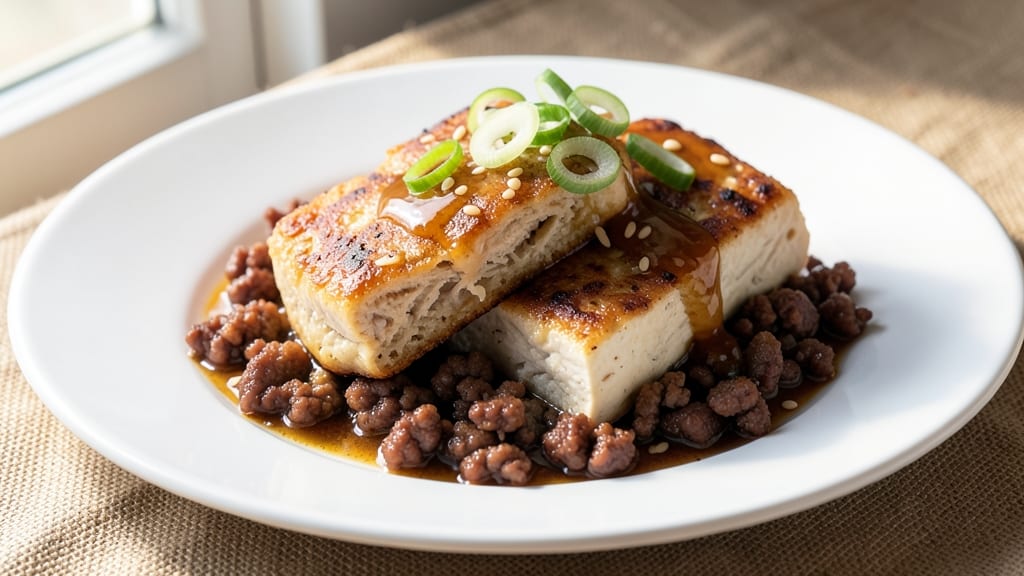
This minced pork and tofu stir-fry delivers restaurant-quality umami depth with every bite—where tender pork meets crispy tofu in a savory dance. 🔥 The secret lies in proper tofu pressing and high-heat searing to balance textures while building layers of flavor through aromatics and soy-based seasoning.
I developed this recipe after years of perfecting protein combinations that satisfy both texture and taste cravings.
The foundation starts with extra-firm tofu pressed to remove moisture, then coated in cornstarch for that perfect crispy exterior while keeping the interior tender. Minced pork gets its own treatment—quick searing to render fat before adding aromatics that infuse the entire dish.
What makes this recipe special is the umami bomb created by combining soy sauce, fish sauce, and a touch of oyster sauce without overpowering the natural flavors.
By the time you plate this stir-fry, you'll have a dish that's rich in flavor but balanced in texture—crispy tofu cubes alongside tender, caramelized pork pieces. The sauce clings perfectly, delivering that signature umami depth that makes every bite satisfying.
This is the kind of meal that works for weeknight dinners or impressing guests without requiring hours in the kitchen.
Serve over steamed jasmine rice or noodles to soak up every last bit of that savory sauce. The recipe scales beautifully too—double it for leftovers that reheat just as well as the first serving. Let's create this umami-packed stir-fry that proves plant-based and meat proteins can coexist perfectly.
Ingredients for minced pork and tofu
Restaurant-quality umami comes from balancing textures and aromatics—crispy tofu meets tender pork in a savory dance.
| Ingredient | Amount | Notes |
|---|---|---|
| Extra-Firm Tofu 🍱 | 1 lb | Pressed for 30 minutes, cut into 1-inch cubes |
| Ground Cornstarch 🌾 | ¼ cup | For crispy exterior coating |
| Minced Pork 🐖 | ¾ lb | 93% lean, finely chopped |
| Light Soy Sauce 🍶 | ¼ cup | Kikkoman preferred for balance |
| Fish Sauce 🐟 | 1 tbsp | Red Boat brand for authentic umami |
| Oyster Sauce 🦪 | 1 tbsp | Lee Kum Kee for rich depth |
| Sesame Oil 🌰 | 1 tbsp | Toasted, for aroma finish |
| Garlic Cloves 🧄 | 6 cloves | Minced, for aromatic base |
| Fresh Ginger 🌿 | 1 ½ tbsp | Grated, for bright zing |
| Scallions 🧅 | 4 whole | Thinly sliced, for freshness |
| Vegetable Oil 🫒 | ¼ cup | High smoke point for searing |
| White Pepper 🌶️ | ½ tsp | Freshly ground for subtle heat |
| Brown Sugar 🍬 | ½ tbsp | For caramelized depth |
| Jasmine Rice 🍚 | 1 ½ cups | Uncooked, for serving base |
The tofu's texture is non-negotiable—extra-firm pressed for 30 minutes removes excess moisture while maintaining structure. Trader Joe's carries pre-pressed blocks, saving time, but if using standard tofu, wrap in a towel and place a heavy pan on top. Cornstarch creates that golden crust; Bob's Red Mill brand works best for even coating. For the pork, 93% lean ground pork prevents greasiness while delivering satisfying texture. Look for it in the meat section near ground beef—Costco or Whole Foods carry reliable cuts. The umami trio (soy, fish, oyster sauces) requires balance—too much fish sauce overpowers, but too little leaves flavors flat.
No fish sauce? Worcestershire sauce at half the amount mimics the umami punch, though with slightly different depth. Substituting oyster sauce with mushroom sauce works but loses that signature richness. Fresh ginger and garlic are ideal, but powdered ginger at half the amount suffices in a pinch. For the cornstarch coating, arrowroot powder creates similar crispiness. The pork can be swapped for ground turkey or chicken, though texture will differ slightly. If using pre-minced pork from the deli section, pat it thoroughly dry to prevent splattering during searing—this is critical for even cooking.
Press the tofu immediately after opening to maximize crispiness. Store uncooked proteins in the coldest part of the fridge, using within 3 days for optimal texture. The cooked stir-fry reheats beautifully—2 minutes in the microwave or 3 minutes in a skillet restores crispiness. Portion into airtight containers with a thin layer of oil on top to preserve texture for 4 days in the fridge. Freeze for 3 months by spreading portions on a tray before bagging—prevents clumping. The jasmine rice keeps for 1 week in the fridge once cooked, or freeze cooked rice for 6 months.
Why You'll Love This Recipe
- No-Fuss Protein Hack: I press the tofu, toss it in cornstarch, and pan-fry it alongside the pork—no fancy techniques, just a crispy, meaty texture that tricks everyone. (Yes, even my dad, who "doesn’t eat tofu.")
- Umami Bomb Combo: That fish sauce and light soy sauce? It’s the secret weapon—deep, savory, and just salty enough to make your taste buds do a happy dance. The pork adds richness, while the tofu soaks up all the flavor like a sponge.
- Leftover Goldmine: Double the batch and reheat it for days—stir-fry, noodle bowls, or even stuffed into wraps. It keeps well, tastes better the next day, and won’t break the bank while doing it.
- Budget Meal MVP: Half the cost of all-pork dishes, but just as satisfying. The tofu stretches the pork further, and the cornstarch coating makes it feel like a treat. My wallet and I both approve.
Step-by-step instructions for savory stir-fry with umami depth
Here's the method for achieving that perfect balance of crispy, tender textures and layered umami flavors.
👨🍳 Step 1: Prepare the Tofu for Maximum Crispiness
Start by pressing the 1 lb extra-firm tofu for 30 minutes between paper towels with a heavy object. This removes excess moisture that would otherwise prevent crisping. Cut the pressed tofu into 1-inch cubes—uniform size ensures even cooking.
Transfer the tofu cubes to a bowl and toss them with all 0.25 cup ground cornstarch until each piece is fully coated. This cornstarch barrier creates that satisfying crunch we're after. Let the coated tofu rest for 5 minutes while you prepare the pork—this helps the coating adhere better.
🍳 Step 2: Sear the Minced Pork with Aromatics
Heat 0.25 cup vegetable oil in a wok or large skillet over medium-high heat until shimmering. Add the 0.75 lb minced pork and cook for 3-4 minutes, stirring constantly, until the pork loses its raw color and starts to brown. This initial searing builds foundational flavor.
Push the pork to one side of the pan and add 6 cloves minced garlic and 1.5 tbsp grated fresh ginger. Stir for 30 seconds until fragrant—this releases their essential oils and prevents them from burning. The pork should remain slightly pink in the center at this stage.
🥘 Step 3: Build the Umami Sauce Base
Pour in 0.25 cup light soy sauce, 1 tbsp fish sauce, and 1 tbsp oyster sauce, stirring to combine with the pork and aromatics. Add 0.5 tbsp brown sugar and 0.5 tsp white pepper, then let the mixture simmer for 2 minutes until slightly reduced. This creates a concentrated flavor base.
Real talk: The fish and oyster sauces might smell intense at first, but they'll transform into that irresistible umami depth. Taste the sauce now—it should be salty with a touch of sweetness. If needed, adjust with a splash more soy sauce or a pinch of sugar.
🔥 Step 4: Cook the Tofu to Golden Perfection
Increase heat to high and add the cornstarch-coated tofu in a single layer. Let it sear undisturbed for 2 minutes until golden brown on the bottom. This initial contact creates the crispy exterior we want. Stir gently and cook for another 2-3 minutes until all sides are evenly browned.
Here's where it gets fun—toss in 4 whole thinly sliced scallions and 1 tbsp sesame oil. The scallions add freshness while the sesame oil infuses a nutty aroma. Cook for 1 more minute, then pour the pork mixture over the tofu. Combine everything and cook for 30 seconds to meld flavors.
⏰ Step 5: Finish with Jasmine Rice and Rest
While the stir-fry cooks, prepare the 1.5 cups jasmine rice according to package instructions for perfect al dente texture. Serve the stir-fry immediately over the hot rice—each bite should deliver crispy tofu, tender pork, and that complex umami sauce.
The reason we don't overcook the rice is simple: It continues steaming from the hot stir-fry, maintaining that ideal texture. Garnish with extra scallions if desired, but don't skip the sesame oil—it's what ties all those flavors together into one cohesive dish.
Pro Tips For Making Minced Pork And Tofu
- PRESS THE TOFU DRY: I learned this the hard way—skipping this step means your tofu will steam instead of sear. Wrap the extra-firm block in a towel, place a heavy pan on top for 10 minutes, then press again. The drier it is, the better it’ll absorb flavors and crisp up.
- SEAR THE PORK FIRST: Don’t mix everything at once. Cook the minced pork in the pan until it’s just browned—about 3-4 minutes—before adding tofu or cornstarch. This builds real depth of flavor instead of letting the tofu soak up raw meat taste.
- SKIP THE OVERMIXING: After adding cornstarch and sauces, stir just until combined. Overworking it turns the texture into glue. A few lumps? Doesn’t matter—those disappear when it hits the pan. Your future self will thank you for not turning this into a paste.
- USE COLD TOFU: Take the pressed tofu out of the fridge and let it sit for 10 minutes before cubing. Cold tofu releases water like a faucet when you cut it, and that’s the last thing you want in your pan. Room temp = better texture, less mess.
Pro cooking tips for minced pork and tofu
Tofu Pressing Secrets
I can't stress enough how critical proper tofu pressing is for crispy results. Wrap the 1 lb extra-firm tofu in paper towels and place a heavy cast iron skillet on top for 30 minutes. This removes excess moisture that would otherwise steam instead of crisp.
For even better results, I press mine twice—first for 15 minutes, then flip and press another 15 minutes. The goal is to get the tofu to a firm, almost dry texture before cutting. 💪
Pork Searing Mastery
When cooking the 0.75 lb minced pork, never rush the searing stage. Use a 14-inch cast iron wok (like my Lodge brand) over medium-high heat until the oil shimmers. Cook the pork for 3-4 minutes, stirring constantly, until it loses its raw color.
This initial sear builds deep flavor through the Maillard reaction. If your pork releases too much fat, drain it onto paper towels before adding aromatics to prevent a greasy sauce. 🍳
Umami Layering Technique
The secret to that restaurant-quality umami depth lies in the sauce combination. Start with 0.25 cup soy sauce, then add 1 tbsp fish sauce and 1 tbsp oyster sauce—this trio creates a perfect umami bridge. Simmer for 2 minutes to reduce slightly, then taste.
The sauce should be salty with a touch of sweetness from the 0.5 tbsp brown sugar. I often add a pinch of white pepper here for subtle heat that complements both proteins. This is where the magic happens! ✨
Crispy Tofu Timing
For golden, crispy tofu cubes, work in batches if needed. Heat your pan to high heat and add the cornstarch-coated tofu in a single layer. Let it sear undisturbed for 2 minutes to develop that perfect crust.
Stir gently and cook another 2-3 minutes, shaking the pan occasionally for even browning. The key is patience—rushing will steam the tofu instead of crisping it. I've found that Bob's Red Mill cornstarch creates the most consistent texture. 🔥
Flavor Fusion Finish
The final minute of cooking is where we bring everything together. Toss in the 4 sliced scallions and 1 tbsp sesame oil—this adds freshness and nutty aroma that cuts through the richness. Then combine with the pork mixture and cook for just 30 seconds.
The sesame oil should perfume the entire dish, while the scallions add a bright contrast. This is the moment where all the flavors meld into one cohesive, umami-packed experience. 💫
Heat Management Tips
Maintaining proper heat control is everything in stir-frying. Use a thermometer to keep your wok between 375-400°F. If the heat drops below 350°F, your tofu will steam instead of crisp. I keep my burner on high and adjust the pan position as needed.
For gas stoves, position the pan slightly off-center from the hottest burner zone. Electric stoves often require preheating the pan for 2-3 minutes** before adding oil to reach optimal temperature. 🌡️
Nutrition facts
Frequently asked questions about minced pork and tofu stir-fry
Can I substitute ground turkey or chicken for the minced pork?
Yes, you can use ground turkey or chicken as a substitute, but expect slight texture differences. Turkey stays slightly moister, while chicken tends to be leaner. Use the same amount (0.75 lb) and cook it for 2-3 minutes less than pork to avoid overcooking. The flavor profile will be lighter, so consider adding an extra 0.5 tbsp soy sauce to compensate.
What if I don't have cornstarch? Can I make crispy tofu another way?
Use arrowroot powder or potato starch as a 1:1 substitute for cornstarch. For a gluten-free option, try tapioca starch. If you're completely out of starches, coat the tofu in 1 tbsp flour per 0.25 cup and add 1 tbsp baking powder to help with crispiness. The texture won't be quite as perfect, but it'll still deliver great results.
How do I prevent the tofu from getting soggy when reheating?
To maintain crispiness, reheat in a skillet over high heat for 2-3 minutes with a splash of oil. For microwave reheating, cover with a damp paper towel and heat for 45 seconds—this traps steam and helps restore some crispness. The best method is to store portions with a thin layer of oil on top in airtight containers. When ready to eat, simply pan-fry for 1 minute to revive the texture.
Can I make this recipe without fish sauce?
Yes, but the umami depth will be less pronounced. Replace the 1 tbsp fish sauce with 1 tbsp Worcestershire sauce or 1 tbsp soy sauce plus 0.5 tsp mushroom powder. For a vegetarian option, use 1 tbsp coconut aminos plus 0.5 tsp nutritional yeast. The flavor won't be identical, but these substitutions will still deliver satisfying results. Taste and adjust seasoning after cooking.
What's the best way to store leftovers to maintain texture?
Store the stir-fry in airtight containers with a thin layer of oil on top to preserve crispiness. Keep in the fridge for up to 4 days. For longer storage, freeze portions on a tray first (to prevent clumping), then transfer to bags for up to 3 months. When reheating frozen portions, thaw overnight in the fridge first, then reheat in a skillet with a splash of oil to restore texture.