
Main Courses
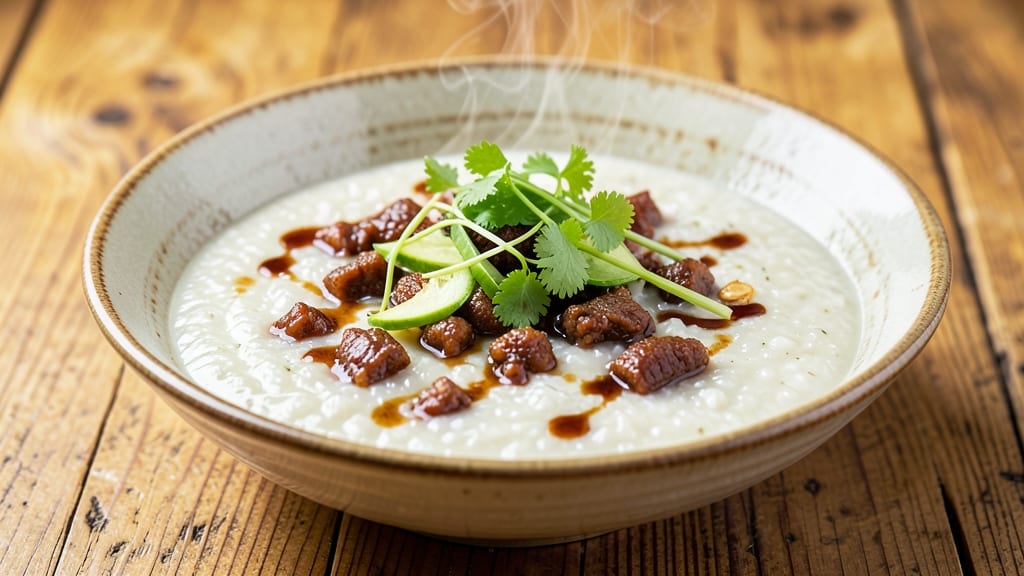
This minced pork congee recipe transforms simple ingredients into a comforting bowl of silky porridge with tender pork and aromatic ginger notes. 💛 After years of perfecting the balance between rice texture and pork tenderness, I’ve developed a method that delivers restaurant-quality results at home—whether you simmer on the stovetop or use a pressure cooker for speed.
The secret lies in soaking the rice properly and simmering it low and slow, allowing the grains to break down into a velvety consistency while the pork absorbs the rich, savory broth.
Fresh ginger and scallions add layers of warmth, while a touch of soy sauce and sesame oil deepens the flavor without overpowering the delicate porridge. By the time you’re done, you’ll have a bowl of fragrant, silky congee with perfectly minced pork that melts in your mouth.
Garnish with green onions, cilantro, and a drizzle of chili oil for extra depth—this dish is equally comforting as a breakfast staple or a light dinner. Whether you’re craving a traditional Asian remedy or a modern twist on comfort food, this recipe delivers. Let’s get started!
Ingredients for minced pork congee
Four cups of silky rice, tender pork, and aromatic ginger—this is comfort food at its finest.
| Ingredient | Amount | Notes |
|---|---|---|
| Jasmine Rice 🌾 | ½ cup | Uncooked, medium-grain preferred |
| Ground Pork 🥩 | 1 lb | 80% lean, minced finely |
| Fresh Ginger 🧅 | 2 tbsp | Finely grated, aromatic |
| Green Onions 🧅 | ¼ cup | Thinly sliced, white and green parts |
| Fresh Cilantro 🌿 | 0.15 cup | Chopped, for garnish |
| Light Soy Sauce 🥄 | 1 ½ tbsp | Kikkoman preferred |
| Sesame Oil 🫒 | 1 tbsp | Toasted, for aroma |
| Chicken Broth 💧 | 4 cups | Low-sodium, homemade or store-bought |
| Water 💧 | 4 cups | Filtered preferred |
| Salt 🧂 | 1 tsp | Kosher or sea salt |
| White Pepper 🌶️ | ¼ tsp | Freshly ground preferred |
| Chili Oil 🔥 | 1 ½ tbsp | For garnish, optional |
| Vegetable Oil 🫒 | 1 tbsp | For cooking pork |
| Garlic Cloves 🧄 | 2 cloves | Minced finely |
The rice is the heart of this dish. Jasmine rice is ideal—it absorbs liquid beautifully and gives that signature silky texture. Trader Joe's or Asian markets usually have the best quality, but any medium-grain rice works in a pinch. For the pork, 80% lean ground pork is perfect—it stays tender while adding richness. If you can't find it, regular ground pork works too, but trim any extra fat. Fresh ginger is a must here—none of that powdered stuff. Look for knobby, firm roots with smooth skin; those are the freshest. The green onions and cilantro should be bright and crisp—no wilted stems allowed.
No jasmine rice? Short-grain white rice is your next best bet. Running short on pork? Ground chicken or turkey works, but the flavor won't be as rich. The soy sauce can be swapped for coconut aminos if you're avoiding sodium. Sesame oil is non-negotiable for the aroma, but if you're sensitive to its flavor, use half the amount. For the broth, homemade chicken broth is ideal, but low-sodium store-bought is fine too. Skip the salt in the broth if you're using it—you'll adjust at the end. The garlic and ginger should be minced finely—almost paste-like—so they dissolve into the congee. If you're in a hurry, pre-minced garlic from a jar works, but fresh is always better.
This congee tastes even better the next day—make extra and store it in the fridge for 3-4 days. Reheat gently on the stove with a splash of water to restore that silky texture. The pork and rice keep well separately, so you can prep components ahead. For freezing, portion into airtight containers—it reheats beautifully, though the texture might be slightly firmer. Garnish with green onions, cilantro, and a drizzle of chili oil right before serving—that's when it all comes together. Leftovers? Perfect for lunch the next day.
Why You'll Love This Recipe
- I make this for everything: lazy Sundays, post-workout recovery, or when my partner’s friends drop by unannounced. It’s light enough for summer but filling enough to satisfy a hungry group. (Bonus: Kids love picking out the green onions.)
- One-Pot Magic: I swear by this recipe because it’s literally one pot—no chopping boards, no extra pans, just stir, simmer, and serve. The jasmine rice soaks up all the porky, ginger-spiced goodness while I clean up in under five minutes. (Yes, even on a Tuesday night.)
- Umami Bomb: That first bite? The ground pork caramelizes into tiny, crispy bits while the ginger infuses the broth with a slow, warm kick. Top it with cilantro and green onions, and it’s like a flavor party in a bowl—no fancy techniques, just ridiculously good.
- Budget Hero: A bag of jasmine rice, a pound of ground pork, and a ginger root last me weeks—this recipe stretches into multiple meals without tasting repetitive. Freeze leftovers, reheat with a splash of water, and boom: instant comfort food for pennies.
Step-by-step instructions for fragrant ginger-scented congee
This congee comes together with simple steps but requires patience for that perfect silky texture.
🍳 Step 1: Cook the Pork and Aromatics
Heat the 1 tablespoon vegetable oil in a heavy-bottomed pot over medium-high heat. Add the 1 lb ground pork and cook for 5-6 minutes, breaking it up with a wooden spoon until it loses its raw color and turns golden brown. This step is crucial—don't rush it, or the pork will stay greasy.
Once the pork is cooked, add the 2 cloves minced garlic and 2 tablespoons finely grated fresh ginger. Stir for 30 seconds until fragrant—you should smell that bright, zesty aroma wafting up. The ginger will infuse the entire congee with its signature warmth, so don't skip this step. If you're using fresh ginger, grate it just before adding to preserve its potency.
🍳 Step 2: Build the Congee Base
Pour in the 4 cups chicken broth and 4 cups water, then bring to a gentle boil. Add the 0.5 cup jasmine rice, 1.5 tablespoons light soy sauce, 1 teaspoon salt, and 0.25 teaspoon white pepper. Stir once to distribute everything evenly, then reduce heat to low—this is where the magic happens.
Here's the thing—congee needs time to break down. Let it simmer uncovered for 45 minutes, stirring occasionally (about every 10 minutes) to prevent sticking. You'll notice the rice will start to disintegrate and the mixture will become increasingly creamy. The texture should transform from a thick porridge to a silky, almost liquid consistency—this is your goal. If it gets too thick, add a splash of hot water.
🥘 Step 3: Finish with Fragrant Oils
After 45 minutes, stir in the 1 tablespoon toasted sesame oil. This is what gives the congee its signature nutty aroma and depth of flavor. The oil should disperse evenly, creating a delicate sheen on the surface. Taste and adjust seasoning if needed—you might need a touch more soy sauce or salt to balance the flavors.
Remove from heat and let it rest for 5 minutes. This resting period allows the congee to fully absorb all the flavors and reach its ideal texture. Here's a pro tip: if you're short on time, you can speed this up slightly by transferring the pot to a warm oven at 200°F for 10 minutes, but the stovetop method yields the best results.
👨🍳 Step 4: Garnish and Serve
Ladle the congee into bowls and garnish with 0.25 cup thinly sliced green onions and 0.15 cup chopped fresh cilantro. For an extra kick, drizzle with 1.5 tablespoons chili oil—this adds heat and visual appeal. The green onions should be distributed evenly throughout each serving, while the cilantro adds a fresh, bright contrast to the rich congee.
Serve immediately while hot, with the garnishes mixed in right before eating. The congee should be silky smooth with just a hint of resistance—like warm, comforting silk. Each spoonful should deliver that perfect balance of savory pork, aromatic ginger, and umami-rich broth. Pair it with a side of pickled vegetables or a simple cucumber salad for a complete meal.
Pro Tips For Making Minced Pork Congee
- Bloom the Ginger First: I learned this the hard way—chopping ginger into the pot raw just makes the congee taste like medicine. Instead, peel a 2-inch knob, slice it thin, then fry it in the pork oil until fragrant and slightly crisp at the edges. That aroma locks into the broth better than any other step.
- Sear the Pork in Batches: Ground pork loves to stick, and a crowded pan means gray, greasy meat instead of crispy, flavorful bits. Split your 200g into two portions and cook each separately over medium-high heat for 3-4 minutes—just until the edges brown. Your congee’s texture and taste will thank you.
- Stir the Rice Constantly: The first 10 minutes are where the magic happens—or where your congee turns to glue. After adding the rice, keep stirring vigorously with a wooden spoon, especially around the edges. If you walk away, even for a minute, you’ll end up with a pot of unappetizing paste.
- Finish with Cilantro Last: Sounds weird, but it works: chop half your cilantro fine and stir it into the congee while it’s still hot. The rest goes on top as garnish. The heat wilts the leaves just enough to release their flavor without turning the broth bitter. (Yes, even if you’re impatient like me.)
Essential equipment for this recipe
Heavy-Bottomed Pot
You absolutely need a heavy-bottomed pot with at least a 4-quart capacity—I swear by my Le Creuset Dutch oven (it’s my go-to for everything from congee to braising). The thick base distributes heat evenly, preventing scorching and ensuring that silky texture.
If you don’t have one, a stainless steel stockpot with a lid works too, but avoid thin aluminum—it heats unevenly and can burn the rice. 🔥
Wooden Spoon
A wooden spoon is non-negotiable for stirring your congee. Metal spoons can scratch the pot and alter the flavor over time, but wood gently folds the rice without breaking it down too quickly.
I keep a maple or hickory spoon in my kitchen solely for congee—it’s worth the investment. If you’re in a pinch, a silicon spatula works, but it won’t last as long.
Fine-Mesh Strainer
For preparing your ginger and garlic, a fine-mesh strainer (like the OXO Good Grips) is a game-changer. It ensures your aromatics are minced to a paste-like consistency, which dissolves perfectly into the broth.
If you’re grating fresh ginger, a microplane is even better—it yields finer, more potent zest. Pro tip: Save the strained pulp for stir-fries or broths—it’s packed with flavor!
Instant-Read Thermometer
While not strictly necessary, an instant-read thermometer (I use the Thermoworks ThermoPop) helps you monitor the broth temperature. Congee should simmer at 180-190°F—any hotter, and the rice breaks down too quickly. It’s a small tool, but it takes the guesswork out of achieving that perfect silky texture. 🌡️
Fine-Mesh Ladle
Serving congee requires precision, and a fine-mesh ladle (like the Norpro 1-cup) ensures you scoop up every last bit of that creamy porridge without leaving behind the good stuff.
It also helps distribute garnishes evenly when plating. If you don’t have one, a slotted spoon works in a pinch, but it’s less efficient for larger batches.
Optional: Pressure Cooker
For those short on time, a pressure cooker (like the Instant Pot) cuts the simmering time from 45 minutes to 20 minutes. Just follow the same steps—sauté the pork, add the rice and broth, and pressure cook on high for 20 minutes.
Release the pressure naturally, then stir in the sesame oil. The texture will be slightly firmer, but it’s a lifesaver on busy mornings. ⏰
Nutrition facts
Frequently asked questions
Can I use regular ground pork instead of 80% lean?
Yes, you can use regular ground pork, but trim any excess fat first to prevent greasiness. The recipe works best with 80% lean because it balances tenderness and richness without making the congee too heavy. If using regular pork, cook it until all fat renders out and skim excess from the surface while simmering.
What if my congee gets too thick or too thin?
If it's too thick, add hot water one ladle at a time while stirring gently. For a thinner texture, extend simmering time by 10-15 minutes uncovered. The ideal consistency should be like "warm pudding" - creamy but still able to coat a spoon. Pro tip: Use a wooden spoon to stir occasionally during cooking to prevent sticking.
How do I make this in an Instant Pot?
Use the same ingredients but adjust the method: Sauté pork, garlic, and ginger first, then add rice, broth, and seasonings. Pressure cook on high for 20 minutes, then let pressure release naturally. Stir in sesame oil and adjust texture with water if needed. The texture will be slightly firmer than stovetop but still delicious.
Can I make this congee ahead of time?
Congee actually tastes better the next day. Store in an airtight container in the fridge for 3-4 days. Reheat gently on low heat with a splash of water until creamy. For freezing, portion into containers and reheat in the microwave with 10 seconds of water added per cup. The texture may be slightly firmer after freezing.
What are good toppings besides green onions and cilantro?
Try crispy fried shallots, soft-boiled eggs, sliced mushrooms, or a sprinkle of toasted sesame seeds. For extra protein, add shredded chicken or shrimp. In Asian markets, look for pickled mustard greens or chili crisp for tangy contrast. Garnish just before serving to keep toppings fresh and crunchy.