
Soups & Stews
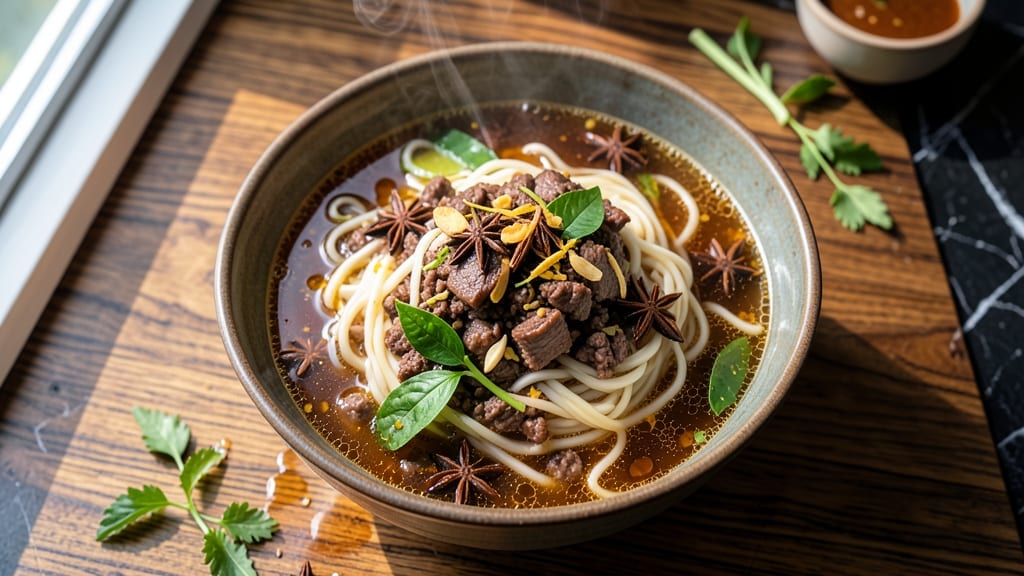
This minced pork noodle soup recipe delivers the same comforting depth as your favorite takeout—fragrant ginger-lime broth that lingers long after the last spoonful. The secret lies in slow-simmered aromatics and perfectly seared pork, techniques I perfected during years of cooking for crowds at my restaurant.
Every bowl tastes like home, but with restaurant-level balance between sweet, savory, and bright citrus notes.
What sets this recipe apart is the two-stage cooking method: first, building a rich broth with ginger, lime leaves, and star anise, then quickly stir-frying the pork for that signature wok-hei smokiness.
The noodles cook directly in the broth, absorbing all those complex flavors while staying tender. No shortcuts here—just the kind of layered taste that makes people ask for seconds.
By the time you're done, you'll have a steaming bowl of soup with silky pork pieces, fragrant broth, and perfectly cooked noodles that cling together just right. The lime zest and fresh herbs add that final bright pop of flavor that separates homemade from takeout.
This is the kind of soup that disappears fast—make a double batch.
Serve with chili oil for heat, extra lime wedges for brightness, and a sprinkle of green onions for freshness. The leftovers reheat beautifully, making this an ideal weeknight dinner that still feels special. Let's get cooking—your taste buds will thank you.
Ingredients for minced pork noodle soup
Six aromatic ingredients transform simple noodles into restaurant-quality minced pork soup.
| Ingredient | Amount | Notes |
|---|---|---|
| Ground Pork 🐖 | 1 ½ lb | Freshly minced for texture |
| Fresh Ginger Root 🌿 | 3 tbsp | Finely grated, aromatic |
| Lime Leaves 🍋 | 4 whole | Fresh, for bright aroma |
| Star Anise Pods 🌟 | 4 whole | Whole pods for infusion |
| Garlic Cloves 🧄 | 6 cloves | Minced, aromatic base |
| Fresh Lime Zest 🍋 | 1 tbsp | Bright citrus finish |
| Egg Noodles 🍜 | 12 oz | Fresh or dried, wide |
| Chicken Broth 💧 | 6 cups | Low-sodium preferred |
| Sesame Oil 🫒 | 1 tbsp | Toasted, for aroma |
| Dark Soy Sauce 🥄 | 2 tbsp | For depth of flavor |
| Green Onions 🧅 | ¼ cup | Sliced, for garnish |
| Cilantro Leaves 🌿 | ¼ cup | Chopped, fresh |
| Chili Oil 🌶️ | 2 tbsp | For heat and finish |
| White Peppercorns 🌶️ | ½ tsp | Freshly cracked |
| Sugar 🍯 | 1 tbsp | Balances flavors |
The pork is non-negotiable—freshly minced gives that signature texture. Trader Joe's or Asian markets often carry pre-minced pork, but if you're grinding it yourself, go for pork shoulder for the best flavor. Ginger and lime leaves are the soul of this soup: buy organic ginger so the skin stays on for extra infusion, and ask for lime leaves at Latin markets—they're worth hunting for. Star anise adds depth, but if you can't find it, 1 tsp ground cinnamon works in a pinch. The broth matters too—homemade or high-quality low-sodium is key here; no shortcuts with bouillon cubes.
No lime leaves? Kaffir lime leaves are perfect, but if you're stuck, double the lime zest and add 1 tsp lime juice. Sesame oil is a must for that authentic aroma—toasted sesame oil from Asian grocery stores is superior to the untoasted kind. Running low on dark soy sauce? Regular soy sauce plus 1 tsp molasses mimics the depth. Fresh herbs are ideal, but dried cilantro or parsley at half the amount won't ruin it. The sugar might seem odd, but it balances the acidity beautifully—trust me on this.
This soup tastes even better the next day as flavors meld. Store in airtight containers for 4-5 days in the fridge, or freeze for up to 3 months. I always make a double batch because it disappears fast—portion into meal-prep containers so you can grab and reheat. The noodles soften when reheated, so add a splash of water and stir. Garnishes like chili oil and lime zest can be added fresh when serving to keep things vibrant.
Why You'll Love This Recipe
- No-Chop Needed: I swear by this—just pulse the garlic and ginger in the food processor, toss in the star anise and lime leaves whole, and let the broth do the work. Even my "I can't chop" days end with a steaming bowl.
- Herb-Packed Punch: That star anise and lime leaves? They infuse the broth with a bright, almost citrusy depth—like a cross between pho and a warm, spiced hug. The ground pork stays tender but develops this crispy edge that’s impossible to resist.
- Leftover Goldmine: This soup actually tastes better the next day—more flavors melded, broth richer. I make a double batch on Sundays, and by Wednesday, it’s my go-to "I’m too tired to cook" solution. (Yes, even on a Tuesday night.)
- Budget-Friendly Feast: Ground pork stretches across bowls, the spices cost pennies, and you’re left with a meal that feels fancy without the price tag. Honestly, it’s the kind of dish that makes me question why I ever order takeout.
Step-by-step instructions for minced pork noodle soup
This aromatic broth comes together in layers—start with the fragrant base, then build depth with the pork, and finish with bright, fresh garnishes.
Build the Fragrant Broth Base
Heat a large pot over medium-high heat and add the 1 tablespoon sesame oil. Once shimmering, add the 3 tablespoons finely grated fresh ginger root and the 6 cloves minced garlic. Sauté for 1-2 minutes until the ginger becomes fragrant and the garlic turns golden—this releases their essential oils and forms the aromatic foundation.
Add the 4 whole star anise pods and 4 whole lime leaves, stirring to coat in the oil. Pour in the 6 cups chicken broth and bring to a gentle simmer. Here's the thing—don't rush this step. Let the broth infuse for 10 minutes with the lid slightly ajar. You'll smell the star anise's licorice notes and the lime's citrus brightness developing—this is where the magic happens.
Cook the Minced Pork Until Tender
While the broth simmers, add the 1.5 pounds ground pork to the pot. Break it up with a wooden spoon and stir continuously for 3-4 minutes until it loses its raw color. The pork should become light brown and begin to release its natural juices—this is your signal it's breaking down properly.
Add the 2 tablespoons dark soy sauce and 1 tablespoon sugar, stirring well to combine. Let the mixture simmer uncovered for 8-10 minutes, stirring occasionally. You'll notice the pork will start to fragment into tiny, tender pieces—this is exactly what we want for that restaurant-quality texture. The soy sauce adds depth while the sugar helps balance the acidity from the lime.
Finish with Lime Zest and Seasoning
Remove the pot from heat and stir in the 1 tablespoon fresh lime zest. This bright citrus note cuts through the richness of the pork and broth, creating that signature balance. Add the 0.5 teaspoon freshly cracked white peppercorns and give everything a final stir. Taste the broth at this stage—it should be savory, aromatic, and slightly sweet with just a hint of citrus.
Return the broth to low heat and add the 12 ounces egg noodles. Stir gently to prevent sticking, then let them cook for 3-4 minutes until they're al dente. The noodles should float to the surface and be tender but still hold a slight bite. If they cook too quickly, reduce the heat slightly—you want them to finish cooking in the hot broth.
Assemble and Garnish for Freshness
Divide the hot noodles among 6 bowls, ladling the fragrant broth evenly over each serving. Here's where it gets fun—drizzle each bowl with 2 teaspoons chili oil (reserve a little for garnish) and scatter with 1 tablespoon chopped cilantro leaves and 1 tablespoon sliced green onions. The chili oil adds a welcome heat, while the fresh herbs provide a vibrant contrast to the rich broth.
Let each person customize their bowl by adding extra chili oil or lime zest if they prefer more brightness. Serve immediately while the noodles are steaming and the broth is at its peak aroma. The combination of tender pork, fragrant broth, and fresh garnishes creates a bowl that truly rivals takeout—just with a homemade touch.
Pro Tips For Making Minced Pork Noodle Soup
- CRISP THE GINGER FIRST: Toss those ginger slices into the hot wok before the pork—just 10 seconds until they sizzle and turn a deep amber. I used to add it raw, and the soup always tasted underwhelming. The caramelized ginger carries the whole broth’s aroma, especially when paired with the star anise.
- SMASH THE STAR ANISE: Lightly crush the star anise pods with the flat side of your knife before adding them to the broth. My grandmother swore by this, and she was right: it releases more flavor without turning the soup bitter. Skip this, and you’re missing half the depth.
- DON’T OVERSTIR THE PORK: Let the ground pork sear in undisturbed batches—2-3 minutes per handful—until it releases fat and browns. Stirring too soon makes it rubbery, and you’ll end up with a greasy mess instead of tender, flavorful meat. Patience here makes all the difference.
- USE LIME LEAVES LAST: Tear the lime leaves in half and add them to the broth only in the final 5 minutes of simmering. They’re delicate and burn easily—overcook them, and you’re left with bitterness instead of that bright, citrusy lift. (Yes, even if you’re impatient like me.)
Storing and reheating this minced pork noodle soup
Fridge Storage Tips
Let your minced pork noodle soup cool for no more than 2 hours before storing—this prevents bacterial growth while keeping the broth's rich flavors intact. Transfer to airtight glass containers (I love Pyrex with snap-on lids) and refrigerate for 4-5 days.
The flavors actually deepen overnight as the spices meld, making it even more comforting the next day. 💫
Freezer-Friendly Tricks
For longer storage, freeze the soup in portion-sized containers (I use quart freezer bags) with 1 inch of headspace to prevent expansion cracks. Label with dates—it keeps for up to 3 months without losing texture.
When reheating, thaw overnight in the fridge first for even cooking. Never microwave directly from frozen; this leads to uneven heating and mushy noodles.
Reheating Like a Pro
My preferred method is stovetop reheating—pour soup into a pot and heat over medium-low for 5-7 minutes, stirring occasionally. Add 2-3 tablespoons water or broth if it looks too thick.
For microwave reheating, use 50% power for 2-3 minutes, then stir and add extra water if needed. The noodles will soften slightly, but the broth's depth remains intact.
Garnish Refresh
Revive reheated soup with fresh garnishes—drizzle with chili oil, sprinkle lime zest, and add cilantro leaves. These bright elements cut through any reheating dullness. I also keep extra lime wedges on the table so everyone can customize their bowl.
The contrast between the reheated soup and fresh garnishes makes it taste almost as good as fresh! 🍋
Make-Ahead Prep
Double the recipe and store in individual meal-prep containers for grab-and-go lunches. The broth stays fragrant, and the noodles reheat perfectly when submerged in hot water for 30 seconds.
This is my go-to strategy for busy weeks—just reheat and enjoy without sacrificing quality. The key is proper storage containers that seal tightly to lock in aroma. ❄️
Broth Boost Tips
If the broth tastes flat after reheating, boost it with 1 teaspoon fish sauce or extra lime juice. These additions revive the umami and citrus notes. For extra richness, stir in 1 tablespoon toasted sesame oil right before serving.
It’s amazing how these small tweaks elevate reheated soup to near-fresh levels. Trust me, your taste buds will thank you! 🌟
Nutrition facts
Frequently asked questions
Can I substitute ground pork with another protein?
You can use ground chicken or turkey for a lighter option, but pork gives that signature richness. For beef lovers, try ground chuck—it adds deeper umami but may need 5 extra minutes of simmering. Never substitute with pre-cooked meats; always use raw protein for proper texture.
What's the secret to getting that perfect wok-hei smokiness?
High heat is key! Sear the pork over medium-high heat for 3-4 minutes until it browns deeply. A cast iron wok or heavy pot helps conduct heat evenly. If you don't have a wok, use a deep skillet with high sides and keep the flame at its hottest setting. The quick cooking time creates those signature smoky notes.
How do I make this soup spicier?
Add 1-2 teaspoons chili flakes directly to the broth while simmering, or increase the chili oil to 3 tablespoons per bowl. For heat lovers, stir in 1 teaspoon sriracha at the end. Fresh Thai bird's eye chilies (minced) add intense heat—start with 1/2 teaspoon and adjust to taste. Always serve with extra chili oil on the side!
Can I make this soup without lime leaves?
Use kaffir lime leaves if available, or substitute with double the lime zest (2 tbsp) plus 1 tsp lime juice. For a different but still aromatic option, try 1 sprig fresh thyme or 1 bay leaf. The citrus brightness is key—just ensure you're balancing the flavors with enough lime zest at the end.
Why did my noodles turn mushy?
Overcooking is the most common cause. Noodles should cook for 3-4 minutes in the broth—test one early to check doneness. If using dried noodles, reduce cooking time by 1 minute since they've already been pre-cooked. For extra insurance, use al dente noodles that hold their shape when bitten. Never stir vigorously while cooking to prevent breaking.