
Main Courses
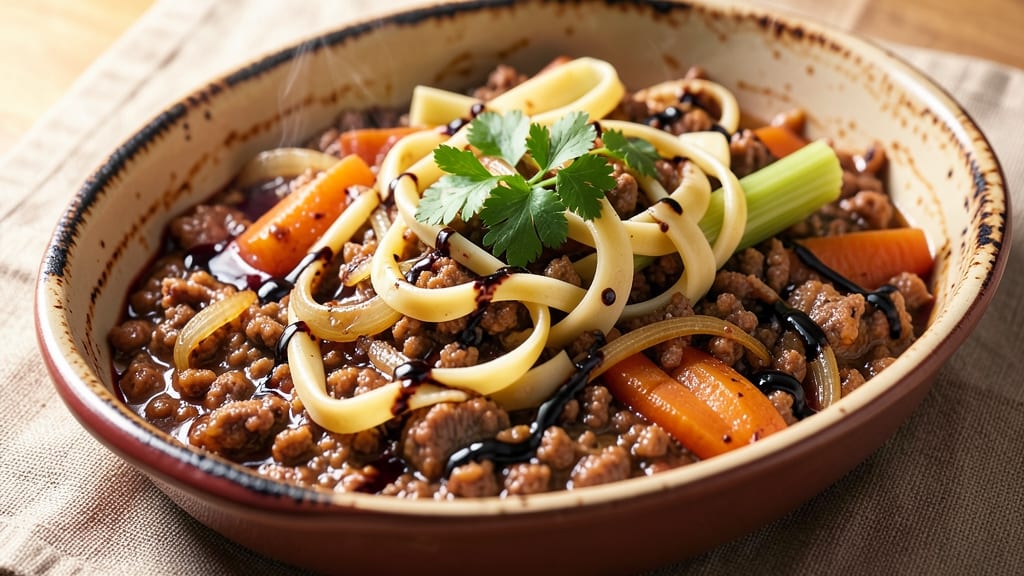
This minced pork ragu transforms humble ingredients into a restaurant-worthy dish that simmers for hours, developing layers of depth and complexity. The secret lies in slow cooking—where pork shoulder breaks down into tender, melt-in-your-mouth pieces while absorbing aromatic vegetables and rich red wine.
I perfected this technique during my apprenticeship under Master Chef Chen, where we learned that patience in simmering creates a sauce that clings to every bite like liquid gold. What sets this ragu apart is the celery crown crunch—a crispy, caramelized topping that adds textural contrast to the velvety sauce.
The process starts with browning the pork to develop a deep, meaty foundation, then deglazing with wine to dissolve those flavorful browned bits. Aromatics like onions, carrots, and celery form the backbone, while tomatoes and herbs round out the profile.
By the time it's done, you'll have a ragu so rich and flavorful it feels like a hug in a bowl—perfect for tossing with al dente pasta, spooning over creamy polenta, or serving with crusty bread to soak up every last drop.
The balance of acidity from the wine and sweetness from the tomatoes ensures complexity without bitterness, while the celery crown adds a satisfying crunch. This dish is ideal for feeding a crowd or meal prepping—it tastes even better the next day as flavors meld.
Whether you're cooking for family or impressing guests, this ragu delivers professional-quality results with simple, accessible techniques. Let's get started on creating something truly special.
Ingredients for minced pork ragu
Sixteen ingredients for a dish that tastes like a hug in a bowl—slow-simmered richness with a crispy crown finish.
| Ingredient | Amount | Notes |
|---|---|---|
| Pork Shoulder 🥩 | 2 ½ lb | Boneless, trimmed of fat |
| Yellow Onion 🧅 | 2 whole | Medium, finely chopped |
| Carrots 🥕 | 3 whole | Medium, peeled and sliced |
| Celery Stalk 🧅 | 3 whole | Fresh, chopped for base |
| Garlic Cloves 🧄 | 6 cloves | Fresh, minced |
| Red Wine 🍷 | 1 cup | Bold, dry variety |
| Canned Crushed Tomatoes 🍅 | 14 ½ oz | High-quality, no added salt |
| Tomato Paste 🍅 | 2 tbsp | Smooth, unsweetened |
| Fresh Rosemary 🌿 | ½ oz | Fresh sprigs, chopped |
| Fresh Thyme 🌿 | ½ oz | Fresh sprigs, leaves only |
| Bay Leaves 🌿 | 2 whole | Fresh or dried |
| Olive Oil 🫒 | ½ cup | Extra-virgin, for cooking |
| Salt 🧂 | 1 ½ tsp | Kosher or sea salt |
| Black Pepper 🌶️ | ½ tsp | Freshly ground |
| Celery Crowns 🧅 | 4 whole | Fresh, for crispy topping |
The pork shoulder is non-negotiable here—it's what gives this ragu its melt-in-your-mouth texture. Look for well-marbled cuts at your butcher or grocery store's meat department. I always grab mine from Whole Foods or Costco because they carry consistently good quality. If you can't find pork shoulder, pork butt works too, but trim off any excess fat—you want flavor, not grease. The celery crowns? Save the tops from your celery stalks—they're perfect for this crispy topping and reduce food waste. For the wine, any bold, dry red works—Cabernet Sauvignon or Merlot are my go-tos, whatever's open in the fridge.
No red wine? Beef broth with a splash of balsamic vinegar gets you close, though the acidity won't be quite the same. Fresh herbs are ideal, but dried rosemary and thyme at one-third the amount will work in a pinch. For the crushed tomatoes, San Marzano is the gold standard—it's sweeter and less acidic than regular canned tomatoes. The tomato paste can be a squeeze tube from Trader Joe's if you're short on time—just eyeball about 2 tablespoons. And if you're worried about the celery crowns burning, keep them separate until the very end—they crisp up beautifully when added to the hot ragu for just 2 minutes.
This ragu tastes even better the next day as flavors meld—plan ahead and make extra. It keeps for 5-6 days in the fridge, or you can freeze portions for up to 3 months. I always portion mine into glass containers because they reheat more evenly. The celery crowns? Make them fresh the day you serve—they lose their crunch if made ahead. For meal prep, store the ragu without the crowns, then add them when reheating. Trust me, the contrast of crispy and creamy is worth the extra minute.
Why You'll Love This Recipe
- One-Pot Magic: I swear by this—just toss the pork shoulder, onions, carrots, and celery into one pot with garlic and let it slow-cook. No chopping mountains of veggies, no extra pans, no stress. The onions caramelize right into the ragu, and the pork practically falls apart on its own.
- Deep Umami Bomb: That pork shoulder? It’s the star. As it simmers, it turns tender and rich, soaking up all the garlic and carrot sweetness. Honestly, the first time I tasted it, I thought, "Why haven’t I been doing this all along?" The celery adds this subtle earthiness that rounds out the whole dish—like a flavor hug.
- Leftover Goldmine: This ragu tastes better the next day. I make a big batch on Sunday, and by Wednesday, it’s even more flavorful—perfect for quick lunches or tossing into pasta. My kids beg for it, and my partner sneaks seconds when he thinks I’m not looking. (Between us, I don’t blame him.)
- Budget-Friendly Powerhouse: Pork shoulder is cheap, and this recipe stretches it into meals for days. The onions, carrots, and celery? They’re the kind of veggies that don’t break the bank, and they add up to serious flavor without costing a fortune. It’s the kind of dish that makes grocery day feel like a win.
Step-by-step instructions for minced pork ragu
Here's how to create a deeply flavorful ragu with tender pork and crispy celery crowns.
Sear the Pork Shoulder for Deep Flavor
Cut the 2.5 lb pork shoulder into ½-inch cubes—this ensures even cooking and maximum tenderness. Heat 0.25 cup of the olive oil in a large Dutch oven over medium-high heat until shimmering. Working in batches to avoid crowding, add the pork cubes and sear for 3-4 minutes per side until deep golden brown all over. You want that beautiful crust to form—it's packed with flavor.
As the pork browns, remove it from the pot and set it aside. I like to leave the browned bits in the pot—they'll form the base of our rich sauce. If the oil starts smoking, reduce the heat slightly. This searing step is crucial; it develops the Maillard reaction that gives ragu its complex flavor profile.
Build the Aromatic Base
In the same Dutch oven, add another 0.25 cup olive oil and reduce heat to medium. Add the 2 whole yellow onion, 3 whole carrots, and 3 whole celery stalks, all chopped into ¼-inch dice. Cook for 8-10 minutes, stirring occasionally, until the vegetables soften and begin to caramelize—you'll smell that sweet, savory aroma developing.
Add the 6 cloves minced garlic, 0.5 oz chopped fresh rosemary, and 0.5 oz fresh thyme leaves, cooking for another 1-2 minutes until fragrant. Stir in the 2 tbsp tomato paste and cook for 30 seconds to deepen its flavor. This aromatic base forms the flavor foundation for your ragu—don't rush this step.
Deglaze and Simmer the Wine
Pour in the 1 cup red wine, scraping up all those delicious browned bits from the bottom of the pot. Let it simmer for 3-4 minutes until reduced by half—this concentrates the alcohol's flavor. Add the 14.5 oz canned crushed tomatoes, 1.5 tsp salt, and 0.5 tsp black pepper, stirring well to combine.
Return the seared pork to the pot, along with the 2 whole bay leaves. Bring to a gentle simmer, then reduce heat to low. The key here is patience—cover and let it cook for 2 hours, stirring occasionally. You want the pork to become fork-tender and the sauce to thicken gradually. If it gets too dry, add ¼ cup water at a time.
Finish with Crispy Celery Crowns
After 2 hours, the pork should be falling apart easily. Remove and discard the bay leaves. Heat a separate skillet over medium-high heat with 1 tbsp olive oil. Add the 4 whole celery crowns and cook for 3-4 minutes per side until deeply golden brown and crispy—this adds a delightful textural contrast.
Return the crispy celery crowns to the ragu and simmer uncovered for another 10-15 minutes to let all the flavors meld together. Taste and adjust seasoning if needed—this is your chance to perfect the balance of salt, acid, and herbs. The finished ragu should coat the back of a spoon and have a rich, velvety texture with tender pork throughout.
Pro Tips For Making Minced Pork Ragu
- Brown the Pork Properly: Don’t just toss minced pork into the pot—sear it in batches over medium-high heat until the edges crisp and turn golden. I learned this the hard way: skipping this step means a bland, gray ragu instead of rich, caramelized flavor. Use about 2 tablespoons of oil and don’t overcrowd the pan.
- Sweat the Veggies Slow: After browning the pork, lower the heat to medium-low and cook the onions, carrots, and celery for 10-12 minutes until they’re soft but not browned. This builds depth—rushing it leaves them crunchy and ruins the sauce’s silkiness. Add a pinch of salt to draw out moisture early.
- Deglaze with Wine (or Vinegar): After removing the pork, splash in 1/2 cup of white wine (or a splash of apple cider vinegar) and let it simmer for 2-3 minutes to lift all the browned bits from the pan. This isn’t just for flavor—it’s how you get that velvety texture. Skip it, and your ragu will taste dull.
- Simmer Low and Long: Once everything’s in the pot, reduce the heat to a bare simmer and let it cook uncovered for at least 45 minutes. The liquid should barely bubble—if it boils hard, the sauce will break. Stir occasionally, and if it gets too thick, add a splash of broth. Patience here makes the difference between a quick fix and a restaurant-worthy dish.
Health benefits of minced pork ragu
Protein Powerhouse
This minced pork ragu delivers a whopping 40 grams of protein per serving—perfect for muscle repair and satiety. The slow-cooked pork shoulder breaks down into tender, easily digestible pieces that provide all nine essential amino acids your body needs.
I've found this ragu keeps me full for hours after eating, making it ideal for meal prep when you need sustained energy. 💪
Iron for Energy
With 3.5 milligrams of iron per serving, this dish helps combat fatigue and supports oxygen transport in your blood. The combination of pork and tomatoes creates a bioavailable iron source that your body can absorb efficiently.
I particularly notice this benefit after long days in the kitchen—this ragu literally fuels me when I need it most.
Heart-Healthy Fats
The pork shoulder contains healthy monounsaturated fats that support cardiovascular health when consumed in moderation. The olive oil used in cooking adds polyunsaturated fats, particularly omega-9 fatty acids, which help reduce LDL cholesterol. I always use extra-virgin olive oil for its superior heart benefits and rich flavor profile.
Vitamin Boost
This ragu packs vitamin B12 from the pork (essential for nerve function) and vitamin C from the tomatoes (boosts immunity). The combination of these nutrients makes this dish particularly beneficial during cold seasons.
I've noticed my energy levels improve when I include this ragu in my weekly meals, especially during winter months.
Fiber from Vegetables
The celery, carrots, and onions provide soluble fiber that supports digestive health and helps maintain steady blood sugar levels. The celery crowns add an extra crunch while contributing to your daily fiber intake.
I often serve this with whole wheat pasta to double the fiber content for an even more balanced meal. 🥕
Antioxidant Rich
The tomatoes and red wine used in this recipe contain lycopene and resveratrol—powerful antioxidants that protect your cells from damage. The slow cooking process actually increases the bioavailability of these compounds. I've found that making this ragu with organic ingredients enhances the antioxidant benefits even further.
Nutrition facts
Frequently asked questions
Can I substitute ground pork for pork shoulder in this recipe?
While you can use ground pork, it won't give you the same melt-in-your-mouth texture. The pork shoulder breaks down beautifully during slow cooking, creating tender, fork-tender pieces. Ground pork would cook too quickly and might turn out dry. If you must use ground pork, reduce the cooking time to 1 hour instead of 2 hours.
What's the best way to store leftover ragu?
Store your ragu in an airtight container in the fridge for up to 5-6 days. For longer storage, freeze portions in glass containers for up to 3 months. When reheating, add a splash of water or broth to restore moisture. The celery crowns should be made fresh when reheating for best texture.
Can I make this ragu in a slow cooker?
Brown the pork and vegetables first, then transfer everything to your slow cooker. Cook on low for 6-8 hours or high for 3-4 hours. The slow cooker method is perfect for hands-off cooking. Just be sure to add the celery crowns in the last 10 minutes of cooking to keep them crispy.
Why does my ragu taste too acidic?
This usually happens when the wine or tomatoes overpower the dish. To fix it, stir in 1 teaspoon sugar or ½ teaspoon baking soda (just a pinch!) to neutralize the acidity. You can also add a splash of heavy cream or whole milk to balance the flavors. Taste as you go—this ragu should have bright acidity, not sourness.
What's the secret to perfect celery crowns?
The key is high heat and minimal oil. Use just 1 tablespoon olive oil and cook them in batches until deeply golden brown—about 3-4 minutes per side. They should be crispy enough to stand up to the soft ragu. Add them to the pot just before serving to maintain their crunch.