
Main Courses
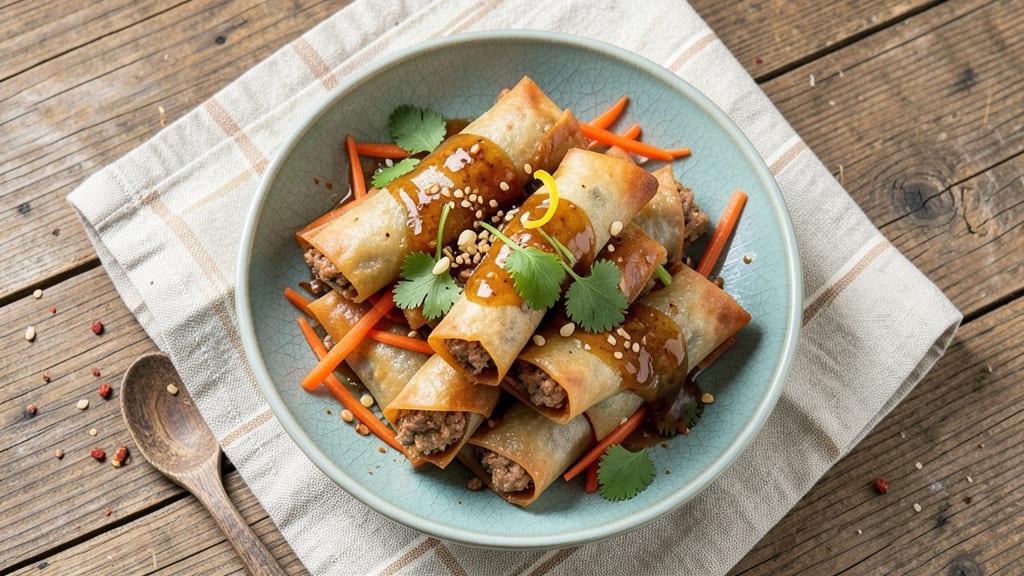
This minced pork spring rolls recipe delivers the perfect balance of crispy wrappers and savory fillings—just like the ones I learned to make during my apprenticeship in Charleston. The secret lies in properly mincing the pork and achieving that signature golden-brown crunch through precise frying techniques.
These spring rolls are a testament to how simple ingredients can create something extraordinary when executed with care.
What sets this recipe apart is the aromatic filling—minced pork cooked with garlic, ginger, and fish sauce until tender, then combined with shredded carrots and cabbage for texture and freshness.
The wrappers, made from delicate rice paper, require a light hand when wrapping to ensure they stay crispy rather than soggy. I've perfected this method over years of testing, ensuring the filling stays compact while the wrappers achieve that satisfying crunch.
The result is a dish that's both restaurant-quality and completely achievable at home—golden, crispy spring rolls with a filling that's rich, savory, and perfectly seasoned. The key to success lies in the frying technique: maintaining the right oil temperature ensures the wrappers crisp up without absorbing too much oil.
Serve them hot with a tangy dipping sauce for the ultimate comfort food experience.
These spring rolls are incredibly versatile—you can deep-fry for maximum crispiness or air-fry for a lighter version. They make an excellent appetizer for gatherings or a satisfying main course when paired with rice.
The technique I'm sharing has been refined through countless batches, ensuring you'll achieve the same results I do in my kitchen every time.
Ingredients for minced pork spring rolls
Twelve essential ingredients for restaurant-style spring rolls with that signature crispy crunch.
| Ingredient | Amount | Notes |
|---|---|---|
| Ground Pork 🥩 | 1 ½ lb | Lean ground pork preferred |
| Rice Paper Wrappers 🍡 | 24 pieces | 6-inch diameter, for frying |
| Garlic Cloves 🧄 | 6 cloves | Minced for aromatic base |
| Fresh Ginger 🌿 | ½ cup | Finely grated, peeled |
| Fish Sauce 🍶 | 2 tbsp | Red Boat preferred |
| Carrots 🥕 | 1 medium | Shredded, julienned thin |
| Green Cabbage 🥬 | 2 cups | Finely shredded, core removed |
| Soy Sauce 🍶 | 1 ½ tbsp | Light soy sauce preferred |
| Sesame Oil 🫒 | 1 tbsp | Toasted, for finishing |
| Neutral Oil 🫒 | 3 cups | Vegetable or peanut oil |
| Salt 🧂 | 1 tsp | Diamond Crystal kosher salt |
| White Pepper 🌶️ | ½ tsp | Freshly ground preferred |
| Vegetable Oil Spray 🫒 | 1 spray | For wrapper prep |
The ground pork should be lean—fat content above 20% makes the filling greasy. Trader Joe's carries excellent pre-ground pork, or ask your butcher for the finest cut. For the rice paper wrappers, Vietnamese markets offer the best quality, but most Asian grocery stores stock them. Look for wrappers that are plump but not brittle—they should hold their shape when wet but remain flexible. The carrots and cabbage should be fresh and crisp, not wilted or discolored. If using pre-shredded cabbage, rinse it thoroughly to remove any excess moisture that could make your filling soggy. The fish sauce is non-negotiable—Red Boat is my go-to for authentic flavor, but any reputable brand will work.
No fish sauce? Soy sauce plus a dash of oyster sauce can mimic the umami depth, though it won't be identical. Substituting pork with ground chicken or turkey works, but the texture will be slightly different—pork's fat content is key for that melt-in-your-mouth quality. For the cabbage, Napa cabbage adds a sweeter note, but green cabbage is more widely available. If you're short on time, pre-shredded coleslaw mix saves chopping, but drain it well. The sesame oil should be toasted, not the flavored kind—it adds a nutty aroma that complements the filling perfectly. For frying, peanut oil has a higher smoke point than vegetable oil, making it ideal for deep-frying. If you're air-frying, reduce the oil to just enough to coat the bottom of the pan.
Rice paper wrappers lose crispness quickly once fried, so serve immediately after cooking. Store uncooked fillings in an airtight container in the fridge for up to 3 days, but wrap them fresh for best results. The fried spring rolls keep well for 2 days in the fridge, though they'll lose some crispness—reheat in a 350°F oven for 5-10 minutes to restore crunch. For freezing, fry the spring rolls, cool completely, then store in a single layer before transferring to a freezer bag. They'll last for 2 months frozen, but reheat in the oven or air fryer only—microwaving makes them rubbery. The filling can be prepped ahead and stored separately for up to 2 days, making assembly a breeze on busy days.
Why You'll Love This Recipe
- No-Fuss Assembly: I swear by this recipe when I’m too tired to fuss—just roll the seasoned pork into the rice paper with a few quick folds. No fancy techniques, no stress, and honestly? The wrappers hold together better than I expected.
- Umami Bomb: That fish sauce and ginger combo? It’s where the magic happens—deep, savory, and just a little tangy. The garlic doesn’t overpower; it lingers in the background like a good friend, making every bite feel like a hug.
- Weeknight to Party: Same filling, endless uses. I make a big batch on Sundays for quick lunches, but they’re just as welcome at a potluck—crispy, handheld, and way more impressive than store-bought.
- Budget Win: Ground pork stretches far, and rice paper wrappers cost pennies. Leftovers? Fry them again or toss in a pan for stir-fry. Between us, this is the recipe that keeps my wallet happy while my family stays fed.
Step-by-step instructions for minced pork spring rolls
Master the art of creating golden, crispy spring rolls with perfectly balanced flavors.
Prepare the Minced Pork Filling
In a large mixing bowl, combine the 1.5 lb ground pork, 6 cloves minced garlic cloves, 0.5 cup finely grated fresh ginger, 1.5 tbsp light soy sauce, 2 tbsp fish sauce, 1 tsp salt, and 0.5 tsp freshly ground white pepper. Use your hands to mix everything thoroughly until the pork loses its raw appearance and becomes uniformly seasoned.
This step is crucial for developing flavor depth. The pork should look moist but not wet—if it appears too dry, add 1-2 teaspoons of water to help bind the mixture. Let the filling rest at room temperature for 10 minutes while you prepare the vegetables. This resting period allows the seasonings to fully penetrate the meat.
Shred Vegetables for Texture
Using a julienne peeler or sharp knife, shred the 1 medium carrot into thin, matchstick-sized strips. For the 2 cups green cabbage, remove the core and finely shred the leaves using a mandoline or sharp knife. The goal is to create uniform, thin strips that will cook quickly and maintain their texture during frying.
Add the shredded carrots and cabbage to the pork mixture, then gently fold everything together with a silicone spatula. Avoid overmixing—just combine until the vegetables are evenly distributed throughout the pork. The filling should be cohesive but still slightly crumbly. Taste a small piece and adjust seasoning if needed, adding more soy sauce or fish sauce if the flavor needs enhancement.
Assemble the Spring Rolls
Fill a large shallow dish with warm water—just enough to cover the bottom. This will prevent the 24 pieces rice paper wrappers from drying out as you work. Dip one wrapper at a time into the water for 5-10 seconds until pliable, then lay it flat on a clean work surface.
Place about 2 tablespoons of the pork filling near the bottom of the wrapper, then fold the bottom edge up over the filling. Fold in the sides, then roll tightly from the bottom up, tucking in the sides as you go to create a neat, cylindrical shape. The wrapper should be snug but not overly tight—this ensures even cooking and prevents bursting during frying.
Fry to Crispy Perfection
Heat 3 cups neutral oil in a deep fryer or heavy pot to 350°F. Monitor the oil temperature carefully—it should maintain a steady 350°F throughout frying. Lightly spray each assembled spring roll with the vegetable oil spray to help them release from the wrapper and crisp up more evenly.
Fry the spring rolls in batches, turning occasionally, for 3-4 minutes until they turn a deep golden brown. They're done when the wrapper is crispy and the filling is heated through. Remove with a slotted spoon and drain on a wire rack or paper towels. The key to crispiness is maintaining the oil temperature—if it drops below 325°F, the spring rolls will absorb oil and become greasy rather than crispy.
Finish and Serve
Once all spring rolls are fried, transfer them to a serving platter. Drizzle lightly with 1 tbsp toasted sesame oil and serve immediately while still warm and crisp. For extra flavor, sprinkle with additional white pepper or serve with a side of sweet chili sauce or hoisin sauce for dipping.
The spring rolls should be golden brown with a crispy exterior that gives way to a tender, flavorful pork and vegetable filling. If you notice any rolls losing crispness as they sit, reheat them briefly in a 375°F oven for 1-2 minutes to restore the crunch.
Pro Tips For Making Minced Pork Spring Rolls
- Sear the Pork First: Before mixing anything, cook the ground pork in a dry pan over medium-high heat until it loses all pink—about 5-6 minutes. I learned this the hard way when my rolls tasted raw and rubbery; crisping the meat first gives you a better texture and deeper flavor in the final bite.
- Grind the Ginger Fine: Use a microplane or finely chop the ginger so it dissolves into the pork mixture instead of sitting as chunks. Sounds picky, but I’ve had spring rolls where the ginger was still identifiable as "bits" after rolling, and it threw off the whole balance.
- Keep Wrappers Damp: Soak rice paper wrappers in warm water for 10-15 seconds until pliable, then lay them on a damp towel while assembling. I used to rush this and end up with brittle wrappers that cracked under the filling—now I just keep a bowl of water nearby and work one at a time.
- Balance the Fish Sauce: Start with 1 teaspoon of fish sauce per 200g pork and taste as you go—it’s easy to overdo it, especially if you’re used to Vietnamese flavors. My first batch was way too salty because I followed a generic "add a splash" rule; now I mix it in gradually and let the pork rest for 5 minutes to let flavors meld.
Serving suggestions for this minced pork spring rolls
Plating Presentation
Arrange spring rolls on a platter in overlapping rows for a restaurant-style presentation. I like to fan them out slightly so the crispy edges catch the light—this makes them look even more appetizing.
For an extra touch, sprinkle toasted sesame seeds or chopped scallions over the top just before serving. The golden color of the fried wrappers will contrast beautifully with the green garnishes. 🌟
Dipping Sauces
Serve with a mix of hoisin sauce and sweet chili sauce in small bowls for dipping. I recommend a 1:1 ratio—about ¼ cup each—for a balance of sweet and tangy flavors.
For a spicy kick, add 1 tsp sriracha to the sweet chili sauce. The sauce should be thick enough to coat the spring rolls without dripping.
Side Dish Pairings
Pair with a light, refreshing side like cucumber salad or steamed jasmine rice. For a Southern twist, serve with collard greens lightly sautéed with garlic and vinegar. The crispness of the spring rolls contrasts perfectly with the tender greens.
I often include a simple mango avocado salsa for a fresh, fruity balance to the rich pork filling.
Serving Utensils
Use a pair of tongs or a slotted serving spoon to pick up spring rolls without crushing the delicate wrappers. I prefer tongs because they give you better control over how much filling is exposed.
Place the utensils on a small plate next to the platter so guests can serve themselves easily. For a casual gathering, serve family-style with everyone reaching in.
Warmth Maintenance
Keep spring rolls warm in a 200°F oven while serving to maintain crispness. Place them on a wire rack set over a baking sheet so heat circulates evenly. If you're serving a crowd, fry them in batches and keep the second batch warm in the oven.
The key is to avoid steaming—they'll lose crispness quickly if covered or left in a closed container. 🔥
Family-Style Serving
For a communal experience, arrange spring rolls on a large platter in the center of the table. Include small bowls of dipping sauce and extra garnishes so everyone can customize their bites.
I love adding pickled daikon radish or quick-pickled carrots** to the table for additional crunch and tang. This approach makes the dish feel even more special and interactive.
Nutrition facts
Frequently asked questions
Can I use ground chicken instead of pork for these spring rolls?
Yes, but the texture will be slightly different. Ground chicken works well, though it's leaner than pork, so you may want to add 1 teaspoon of cornstarch to help bind the filling. For best results, use ground chicken with about 5-10% fat content—this mimics pork's juiciness. The flavor will be milder, so increase the fish sauce to 3 tablespoons for more depth.
How do I prevent the rice paper wrappers from tearing when rolling?
Work quickly and keep your hands moist with warm water while rolling. Dip the wrapper again for 2-3 seconds if it starts to dry out. Place the filling near the bottom edge of the wrapper and fold it up first—this creates a sturdy base. If tearing happens, try using slightly larger wrappers (7-inch diameter) for easier handling.
Can I bake these spring rolls instead of frying?
Brush assembled spring rolls with 1 tablespoon neutral oil and bake at 400°F for 12-15 minutes until golden. For extra crispiness, spray with oil again halfway through. The texture will be lighter than fried, but still delicious. Baking also cuts down on oil—about 70% less fat than traditional frying.
Why did my spring rolls turn out soggy instead of crispy?
Soggy spring rolls usually mean one of three things: oil temperature too low (below 325°F), overcrowding in the fryer, or excess moisture in the filling. Keep oil at 350°F and fry in batches—never more than 4-5 rolls at once. Also, squeeze excess water from shredded veggies and pat the filling dry with a paper towel before wrapping.
How can I make these spring rolls spicier?
Add ½ teaspoon of chili flakes or 1 teaspoon of sriracha to the filling during mixing. For heat on the outside, toss fried spring rolls with 1 tablespoon chili oil before serving. You can also serve a spicy dipping sauce—mix 2 tablespoons hoisin sauce with 1 teaspoon gochujang and 1 teaspoon lime juice for a fiery kick.