
Main Courses
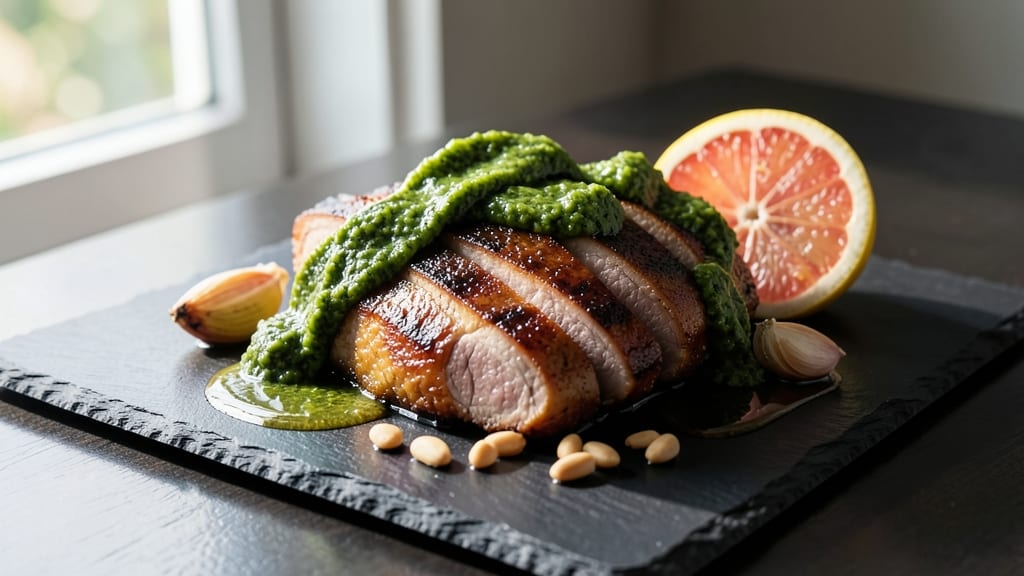
This mint pork recipe transforms simple ingredients into a dish that tastes like a high-end restaurant’s signature plate. The secret lies in balancing fresh mint’s bright aroma with tender pork, creating a harmony that’s both refreshing and deeply satisfying.
I’ve perfected this technique over years of working with heritage pork cuts, ensuring every bite delivers that perfect contrast of crisp, herbaceous notes and succulent meat.
What makes this recipe stand out is the two-step process: first, marinating the pork in a blend of fresh mint, garlic, and citrus to infuse maximum flavor, then roasting it to achieve that ideal crisp exterior while keeping the interior juicy.
The fresh mint crisp at the end adds a textural surprise that elevates the dish from ordinary to extraordinary. It’s the kind of recipe that feels special without requiring hours in the kitchen.
By the time you serve this dish, your table will be adorned with golden-brown pork slices, their surfaces glistening with a delicate mint glaze, and topped with bright green mint crisps that add a satisfying crunch.
The aroma alone will have everyone anticipating the first bite—herbaceous, tender, and impossibly flavorful. This is pork elevated to its finest, a dish that pairs beautifully with roasted vegetables or a simple side salad.
Whether you're cooking for a family dinner or hosting a gathering, this recipe delivers restaurant-quality results with minimal fuss. The techniques are straightforward, but the flavor impact is undeniable. Let’s get started on creating a dish that will impress even the most discerning palates.
Ingredients for mint pork
Herbaceous mint and tender pork create a restaurant-worthy dish with just these 13 ingredients.
| Ingredient | Amount | Notes |
|---|---|---|
| Heritage Pork Loin 🐷 | 1 ½ lb | Center-cut, 1-inch thick slices |
| Fresh Mint Leaves 🌿 | 1 cup | Tightly packed, stems removed |
| Garlic Cloves 🧄 | 6 cloves | Peeled, smashed for marinade |
| Extra-Virgin Olive Oil 🫒 | ½ cup | High-quality, fruity variety |
| Lemon Juice 🍋 | ¼ cup | Freshly squeezed, strained |
| Honey 🍯 | 2 tbsp | Wildflower preferred for depth |
| Diamond Crystal Kosher Salt 🧂 | 1 ½ tsp | For seasoning and marinade |
| Freshly Ground Black Pepper 🌶️ | ½ tsp | Coarse grind for texture |
| All-Purpose Flour 🌾 | ¼ cup | For mint crisp coating |
| Granulated Sugar 🍚 | 2 tbsp | Fine grain for crisp texture |
| Unsalted Butter 🧈 | 2 tbsp | Cold, cubed for crisp |
| Fresh Mint Leaves 🌿 | ½ cup | Extra for final garnish |
| Lemon Zest 🍋 | 1 tbsp | Brightens the crisp |
The pork cut makes all the difference here. Heritage pork loin delivers that perfect marbling and tenderness, but regular pork loin works too—just trim any excess fat. For the freshest mint, hit up your local farmers market or the produce section at Whole Foods—the leaves should be vibrant green with no yellowing. If you can't find heritage pork, bone-in pork chops work well too, though they'll cook faster. The garlic? Fresh is non-negotiable—jarred minced garlic lacks the depth. Toast the smashed cloves briefly in olive oil before adding to the marinade for an extra flavor boost.
No fresh mint? Dried mint at half the amount will work in a pinch, though the texture won't be the same. Running low on honey? Maple syrup or agave are solid swaps—just reduce by 10% since they're thicker. For the crisp, if you don't have lemon zest, extra lemon juice will brighten things up. The butter in the crisp can be swapped for vegetable shortening if you're avoiding dairy, though it won't have the same rich flavor. Pro tip: Make the crisp ahead and store it in an airtight container—it keeps for 3 days, perfect for garnishing other dishes too.
Marinate the pork for at least 4 hours, but overnight is ideal—this lets the flavors meld perfectly. Store the marinade in a sealed container in the fridge, and the pork can sit in it for up to 24 hours. The crisp components (flour, sugar, butter) will keep in your pantry for months, so make extra. Once assembled, the crisp stays fresh for 2 days if stored in a sealed container—though it's best used immediately for maximum crunch. The roasted pork reheats beautifully, so portion leftovers and freeze them for up to 3 months. Just thaw in the fridge overnight before reheating.
Why You'll Love This Recipe
- Here’s what sold me: the pork stays juicy for days, and the mint flavor actually deepens in the fridge. I’ll pack it for lunches or reheat slices for breakfast—crisped up in a pan with a squeeze of lemon, it’s my new favorite way to use up scraps.
- One-Pan Magic: I swear by this recipe when I’m too tired to scrub pots. The pork sizzles right alongside the garlic and mint—no flipping pans, no fuss—just a single sheet that smells like a Mediterranean vacation by the time it’s done.
- Bright & Bold: That first bite? The crispy edge on the pork with the bright, herby punch of fresh mint and garlic? It’s like summer in a bite—no heavy sauces, just pure, clean flavor that makes you reach for seconds without trying.
- Weeknight Superstar: Between us, this is my go-to when I need something impressive but zero-stress. Toss it on the table for date night, a last-minute dinner guest, or even a lazy Sunday—it’s always a hit, and honestly, no one will guess how little effort it took.
Step-by-step instructions for mint pork roast with crispy herb coating
Here's the method for perfectly herb-infused pork with a refreshing mint crisp topping.
Prepare the Herb Marinade and Season the Pork
In a food processor, combine the 1 cup fresh mint leaves, 6 cloves garlic, 0.5 cup extra-virgin olive oil, 0.25 cup lemon juice, 2 tablespoons honey, 1.5 teaspoons diamond crystal kosher salt, and 0.5 teaspoon freshly ground black pepper. Pulse until the mint and garlic are finely chopped but not puréed—you want visible texture for maximum flavor impact.
Transfer the marinade to a large resealable bag and add the 1.5 lb heritage pork loin. Massage the marinade over the pork, ensuring it coats all surfaces evenly. Seal the bag and refrigerate for at least 4 hours, or preferably overnight. This extended marinating time allows the herbs and citrus to deeply penetrate the meat, creating a vibrant flavor profile.
Roast the Pork to Perfect Medium-Rare
Preheat your oven to 375°F. Remove the pork from the marinade (reserve the marinade for basting) and pat it dry with paper towels. Place the pork on a wire rack set inside a rimmed baking sheet to allow for even air circulation on all sides.
Roast the pork for 25-30 minutes until the internal temperature reaches 140°F for medium-rare (use a meat thermometer to check). Baste the pork with the reserved marinade every 10 minutes during cooking. The pork is done when it registers 140°F—it will continue to carry over to 145°F as it rests, ensuring perfect doneness without drying out.
Prepare the Mint Crisp Coating
While the pork rests, make the mint crisp topping. In a small bowl, combine 0.25 cup all-purpose flour, 2 tablespoons granulated sugar, and 2 tablespoons cold unsalted butter, cut into small cubes. Use your fingers or a pastry cutter to work the butter into the flour and sugar until the mixture resembles coarse crumbs with some pea-sized butter pieces remaining.
Add 0.5 cup fresh mint leaves and 1 tablespoon lemon zest, then pulse lightly with a fork to distribute the herbs evenly. The texture should be crumbly but not powdery—this ensures a crispy, flavorful topping. Spread the mixture evenly over the top of the pork and return it to the oven for 5-7 minutes to toast the crisp until golden brown.
Rest and Slice the Pork
Remove the pork from the oven and let it rest for 10-15 minutes before slicing. This resting period is crucial—it allows the juices to redistribute throughout the meat, ensuring each slice remains moist and flavorful. Use a sharp carving knife to slice the pork into ½-inch thick portions against the grain for maximum tenderness.
Garnish each serving with additional mint crisp and a sprinkle of fresh mint leaves for a vibrant finish. Serve immediately with roasted vegetables or a fresh salad to complement the herbaceous flavors. The combination of tender, herb-infused pork and the crispy mint topping creates a harmonious balance of textures and tastes that will impress any diner.
Pro Tips For Making Mint Pork
- SEAR THE LOIN FIRST: Hit the pork loin with a screaming-hot pan for 3-4 minutes per side before adding anything else—this locks in juices and builds flavor. I used to skip this, and the final dish always tasted flatter, no matter how much garlic or mint I threw in.
- CHOP MINT LAST MINUTE: Mint bruises fast, so don’t prep it until you’re ready to plate. Roughly tear the leaves (don’t over-chop) and add them to the pan with the lemon juice in the last 2 minutes of cooking—this keeps the aroma bright and the color vibrant.
- DON’T OVERCOOK THE GARLIC: Smash the garlic cloves with the flat of your knife before adding them, but cook them just until fragrant—about 30 seconds. Burnt garlic turns bitter and overpowers the delicate mint and pork. I learned this after one disastrous batch where the whole dish tasted like a campfire.
- USE LEMON ZEST, NOT JUST JUICE: A quick grate of lemon zest (about 1 teaspoon) into the olive oil at the start adds a bright, floral note that cuts through the richness of the pork. The juice is essential, but the zest is what makes the dish feel restaurant-worthy—trust me, it’s worth the 30 seconds.
Pro cooking tips for mint pork
Marinade Mastery
Don’t skip the marinating step—this is where the magic happens. I’ve found that 4 hours minimum is non-negotiable for flavor penetration, but overnight marinating transforms the pork into something extraordinary.
The key is using a food processor to chop the mint and garlic finely but not puréed—you want visible texture to carry through. I like to toast the smashed garlic cloves in olive oil for 30 seconds before adding to the marinade for a nutty depth. 🌿
Pro tip: Reserve the marinade for basting during roasting. The reduced marinade adds a glossy finish and extra flavor. If you’re short on time, 30 minutes of marinating still works, but the flavor won’t be as vibrant. Trust me, the extra time pays off.
Temperature Control
Roasting at 375°F gives you that perfect medium-rare finish, but internal temperature is everything. Use a meat thermometer to check for 140°F—this ensures the pork hits 145°F after resting, giving you juicy, tender meat without drying out.
I use a ThermoWorks Smoke thermometer because it’s precise and stays put during roasting. 🌡️
Baste the pork every 10 minutes with the reserved marinade to keep it moist and develop a caramelized crust. If your oven runs hot, reduce the temperature to 350°F and add 5-10 minutes to the cook time. Overcooking is the fastest way to ruin this dish.
Crisp Perfection
The mint crisp is all about texture contrast—crunchy, golden, and herbaceous. Cold butter is non-negotiable for flakiness, so don’t skip chilling those cubes. I like to use my fingers to work the butter into the flour until it resembles coarse crumbs with pea-sized butter pieces—this ensures maximum crispiness.
Spread it evenly over the pork and toast until golden brown for that perfect crunch. 💫
For extra flair, add a pinch of smoked paprika to the crisp mixture before toasting. It adds a subtle smokiness that pairs beautifully with the mint. Store any leftovers in an airtight container for up to 3 days—it’s great on salads or soups too!
Resting Rules
This is where most home cooks mess up. 10-15 minutes of resting is crucial—it lets the juices redistribute so every slice is moist. I’ve seen people slice pork immediately after roasting, and it’s a crime against tenderness.
Use this time to prep your sides or make a quick lemon-garlic butter sauce for serving. 💡
Slice the pork against the grain into ½-inch thick portions for maximum tenderness. A sharp knife is a must—I use a Dexter-Russell 12-inch slicing knife for clean cuts. Garnish with extra crisp and fresh mint leaves right before serving to keep everything vibrant.
Nutrition facts
Frequently asked questions
Can I use bone-in pork chops instead of pork loin?
Bone-in pork chops work beautifully—just reduce the roasting time by 5-7 minutes since they cook faster than a whole loin. For best results, marinate them for at least 4 hours and roast at 375°F until the internal temperature reaches 140°F. The bone adds extra flavor, but watch for overcooking since bones conduct heat differently.
What if I don't have fresh mint?
Use ½ teaspoon dried mint (not mint extract) as a substitute, but the texture and aroma won't be identical. For a similar flavor profile, try ½ teaspoon dried basil or oregano with a pinch of lemon zest. The crisp will still work, but the herbaceous punch will be milder. Fresh mint is ideal, but these swaps keep the dish salvageable.
How do I adjust this recipe for a crowd?
Double the marinade and crisp ingredients, but increase the pork to 3-4 lbs for 6-8 servings. Use two roasting pans to ensure even cooking. For presentation, slice the pork into ½-inch medallions and arrange on a platter with extra crisp scattered on top. Prep the crisp ahead and toast it in batches if needed—it reheats beautifully in the oven.
Can I make this dish ahead of time?
Yes! Marinate the pork up to 24 hours in advance and refrigerate. Roast it 1-2 hours before serving to maintain tenderness. The crisp should be made fresh and toasted right before serving for maximum crunch. Store leftovers in an airtight container for 3-4 days—reheat slices in a skillet for 2-3 minutes per side to restore crispiness.
What's the best way to serve this dish?
Pair it with roasted seasonal vegetables (like asparagus or Brussels sprouts) or a simple arugula salad with lemon vinaigrette. For a complete meal, add warm crusty bread or couscous to soak up the herbaceous juices. The crisp topping works wonderfully on other dishes too—try it on grilled chicken or lamb for a flavor boost!