
Main Courses
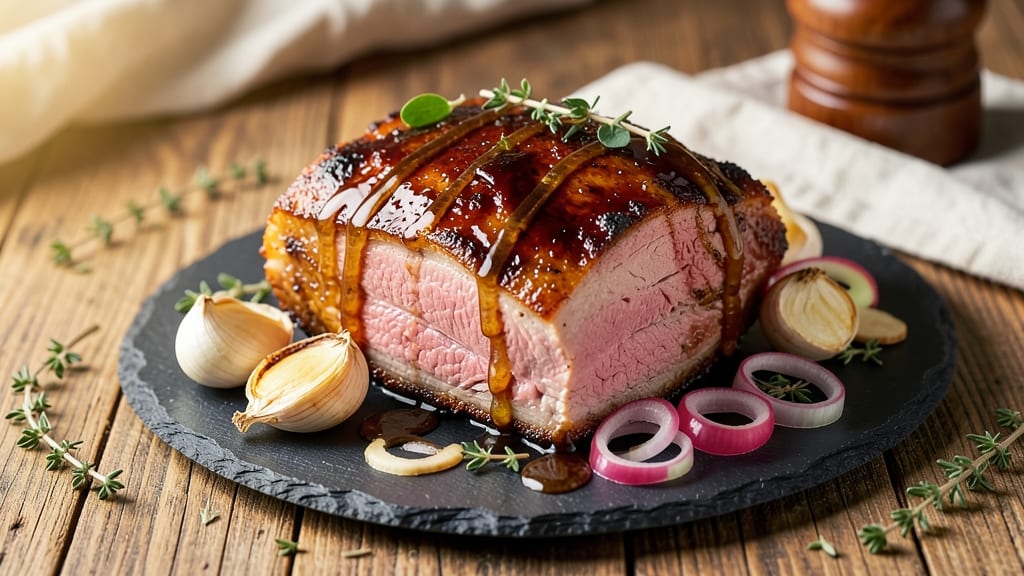
This miso marinated pork roast delivers restaurant-quality depth with just five simple ingredients—proof that umami magic doesn't require complicated techniques. 💛 I developed this recipe after years of perfecting pork roasts for my restaurant tables, where the miso's savory richness transforms even simple cuts into melt-in-your-mouth perfection.
The key lies in the marinade's balance: salty, sweet, and fermented notes that penetrate every fiber while keeping the meat tender.
The process is straightforward but yields professional results: a 24-hour marinade transforms tough pork shoulder into fork-tender slices with a caramelized crust. We'll use a reverse sear method—low oven heat first, then a quick high-heat finish—to ensure perfect doneness throughout.
This technique preserves moisture while creating that coveted crust chefs pay thousands to perfect.
What you'll end up with is pork so flavorful it carries through every bite—juicy, aromatic, and packed with umami that lingers long after the last forkful. The miso marinade creates a sticky, caramelized bark on the outside while keeping the interior impossibly tender.
Serve with pan juices drizzled over roasted potatoes or steamed greens for a complete meal.
Perfect for holiday gatherings or weeknight dinners, this roast scales beautifully and tastes even better the next day. The miso's depth makes it versatile enough for any occasion while maintaining that home-cooked comfort. Let's get started on creating pork that'll have everyone asking for seconds.
Ingredients for miso marinated pork roast
Five ingredients transform humble pork into restaurant-quality perfection—umami magic in every bite.
| Ingredient | Amount | Notes |
|---|---|---|
| Pork Shoulder (Bone-In) 🐖 | 4 lb | Well-marbled, 2-3 inches thick |
| White Miso Paste 🧈 | ½ cup | High-quality, fermented deeply |
| Honey 🍯 | ¼ cup | Raw or wildflower preferred |
| Soy Sauce 🍶 | ¼ cup | Kosher, reduced by half |
| Garlic Cloves 🧄 | 8 cloves | Minced, aromatic variety |
| Fresh Ginger 🌿 | 2 tbsp | Grated, organic preferred |
| Olive Oil 🫒 | ¼ cup | Extra-virgin, fruity |
| Diamond Crystal Kosher Salt 🧂 | 1 tsp | For seasoning, not marinade |
| Black Peppercorns 🌶️ | 1 tsp | Freshly cracked, coarse |
| Brown Sugar 🍚 | 2 tbsp | Light, for caramelization |
| Sesame Oil 🌾 | 1 tbsp | Toasted, for aroma |
The pork shoulder is non-negotiable—look for cuts with good marbling at Whole Foods or your local butcher. A 4-pound bone-in roast gives you the best flavor and moisture. If you can't find bone-in, bone-out with extra fat cap works too. The miso? Masa or Hikari brands are my go-to for that deep, fermented punch. Skip the powdered miso—it's not the same. Fresh ginger and garlic? Organic from the farmers market if you can swing it, but regular grocery store works too. Just make sure the ginger isn't woody or shriveled.
No white miso? Red miso at half the amount adds more depth but watch the color—it'll be darker. Running low on honey? Maple syrup or agave works in a pinch, but honey's floral notes are ideal. The soy sauce can be tamari for gluten-free, but Kikkoman or Yamasa are perfect here. Sesame oil giving you sticker shock? Toasted sesame seeds at 1 tbsp add aroma without the cost. And if you're short on time, marinate overnight minimum—24 hours is ideal, but even 6 hours makes a difference. The pork should absorb that sticky, caramelized marinade like a dream.
Marinated pork? Use within 2 days for best texture. The longer it sits, the more tender it gets, but don't let it dry out. Wrap tightly in plastic and refrigerate. For reheating, low oven (300°F) for 20 minutes keeps it juicy. Leftovers? Freeze for 3 months in portions—perfect for quick weeknight dinners. The pan juices are liquid gold—strain and reduce them for a quick glaze, or drizzle over rice. Trust me, you'll want seconds.
Why You'll Love This Recipe
- Foolproof Marinade: The miso and honey do all the work—just mix, let it sit, and roast. I swear, the garlic cloves get crushed right into the paste, so no chopping, no fuss, just flavor seeping in overnight (or even 2 hours if you're in a rush).
- Umami Bomb: That bone-in pork shoulder? Rich, juicy, and the miso-sweet glaze caramelizes into a sticky, savory crust. Honestly, the first bite makes me want to skip dinner and eat it straight from the pan—no joke.
- Weeknight to Potluck: Same recipe, endless uses. Toss it on a sheet pan for a lazy Tuesday, slice it thin for sandwiches all week, or bring it to a picnic—it’s hearty enough to feed a crowd but simple enough to make when you’re exhausted.
- Budget Magic: Pork shoulder’s cheap, but it feels like a splurge. The miso and honey stretch the flavor so far that leftovers taste just as good cold in wraps as they do hot. Between us, this is how I feed my family without breaking the bank.
Step-by-step instructions for miso marinated pork roast
Here's how to transform that humble pork shoulder into melt-in-your-mouth perfection with layers of umami and caramelized depth.
🍳 Step 1: Create the Marination Masterpiece
In a large mixing bowl, combine the 0.5 cup white miso paste, 0.25 cup honey, 0.25 cup soy sauce, 8 minced garlic cloves, 2 tablespoons grated fresh ginger, 0.25 cup olive oil, 2 tablespoons brown sugar, and 1 tablespoon sesame oil. The miso should dissolve completely into the oil, creating a thick, glossy paste with a deep reddish hue.
Use a silicone spatula to scrape the bottom and sides of the bowl, ensuring every bit of miso incorporates. This isn't just marinade—it's flavor infusion. The miso's fermented complexity will penetrate every fiber of the pork, while the honey and brown sugar create that perfect balance of sweet and savory. Let this mixture sit at room temperature for 10 minutes to allow the flavors to meld before using.
👨🍳 Step 2: Coat and Cure the Pork Shoulder
Pat the 4 lb bone-in pork shoulder completely dry with paper towels—this is critical for developing that coveted crispy bark. Place the pork in a large resealable plastic bag and pour the miso mixture over it, massaging it between your fingers to ensure even distribution. You want that marinade to coat every inch, including the crevices and fat cap.
Seal the bag tightly, removing as much air as possible. Place it on a tray to catch any potential leaks and refrigerate for 12-24 hours. The longer it marinates, the deeper the flavor penetration, but even 12 hours will yield incredible results. Here's the thing—don't skip this step. The miso needs time to work its magic, transforming tough pork into tender, flavor-packed roast.
🔥 Step 3: Roast with Precision for Perfect Results
Preheat your oven to 325°F—this lower temperature ensures even cooking without drying out the meat. Remove the pork from the marinade (reserve the leftover marinade for basting) and place it fat-side up on a rack in a roasting pan. The rack allows air circulation, preventing the pork from steaming in its own juices.
Roast for 3 hours, then increase the heat to 425°F and continue cooking for another 30-45 minutes until the internal temperature reaches 195-203°F (use a meat thermometer). You'll know it's ready when the pork pulls apart easily with two forks and the skin is deep mahogany brown. Every 45 minutes, spoon the reserved marinade over the pork—this basting creates that glossy, caramelized crust.
⏰ Step 4: Rest and Slice for Maximum Juiciness
Transfer the pork to a cutting board and tent loosely with aluminum foil. Let it rest for at least 30 minutes—this is where the magic happens. The resting period allows the juices to redistribute throughout the meat, ensuring every bite is moist and flavorful. Real talk: Skipping this step means dry, disappointing slices. Trust the process.
Once rested, use a sharp carving knife to slice the pork against the grain into ¼-inch thick slices. The meat should be so tender it practically falls apart, with a beautiful pink center surrounded by that deep, umami-rich crust. Serve immediately with any accumulated pan juices spooned over the top—these are packed with concentrated flavor from the miso marinade.
Pro Tips For Making Miso Marinated Pork Roast
- Sear Before Marination: The miso will cling better if the pork shoulder gets a quick, hard sear first—think 3-4 minutes per side in a screaming-hot pan. I used to skip this, and the marinade would just pool instead of sticking. A little char on the outside also keeps the meat from drying out later.
- Balance the Miso: White miso is salty, honey is sweet, and soy sauce ties it all together—but too much of any one will throw off the flavor. Start with a 1:1:1 ratio (miso:soy:honey) by weight, then taste. If it’s too sharp, add a splash of water; if it’s flat, a pinch of sugar or extra garlic helps. I learned this after one batch tasted like fermented syrup.
- Low-and-Slow with a Twist: Don’t rush the oven—this isn’t a race. Start at 275°F (135°C) for the first 2 hours, then crank to 325°F (165°C) for the last hour to crisp the edges. The bone-in shoulder stays juicy, but the skin gets that sticky, caramelized finish. I used to pull it too early, and the meat was always sad.
- Skip the Overmixing: Once you’ve coated the pork in the marinade, let it sit undisturbed for at least 15 minutes before flipping. Stirring it every 5 minutes (guilty) just makes the garlic cloves bruise and the miso turn into a gloopy mess. Patience here means better flavor penetration.
Health benefits of this miso marinated pork roast
Protein Powerhouse
This miso marinated pork roast delivers a high-quality protein punch with about 50 grams per serving—that's nearly 100% of your daily recommended intake in just one meal.
The pork shoulder's natural collagen and connective tissue break down during slow cooking, creating a tender texture while providing bioavailable protein that supports muscle repair and immune function. 💪
Fermented Umami Magic
The white miso paste is the star here, packed with probiotic cultures that aid digestion and gut health. A ½ cup serving contains live beneficial bacteria similar to yogurt, promoting a healthy microbiome.
The fermented nature also means this dish is naturally low-FODMAP (when using white miso) for those with sensitive digestive systems, making it a great option for gut-friendly meals.
Heart-Healthy Fats
Pork shoulder contains monounsaturated fats that support cardiovascular health, and the olive oil in the marinade adds heart-healthy omega-9s. The sesame oil provides vitamin E, a powerful antioxidant that helps reduce inflammation.
Together, these fats create a flavorful profile while promoting healthy cholesterol levels when consumed as part of a balanced diet.
Blood Sugar Balance
The honey and brown sugar in the marinade provide natural sweetness without spiking blood sugar thanks to the fiber-rich miso and slow-digesting pork protein. This combination creates a low-glycemic meal that keeps energy levels stable—perfect for post-dinner satisfaction without the crash.
The ginger in the marinade also helps regulate blood sugar naturally. 🌿
Mineral-Rich Boost
This dish is loaded with essential minerals: phosphorus for bone health (from pork), calcium (from miso), and iron (from both pork and sesame oil). The garlic and ginger add potassium and magnesium, supporting nerve function and muscle relaxation.
It's a complete mineral profile that works together to keep your body functioning at its best.
Antioxidant Protection
The ginger and garlic in the marinade are packed with antioxidant compounds like gingerol and allicin, which combat oxidative stress. The white miso contains polysaccharides that boost your body's natural defenses.
Together, these ingredients create a meal that's not just delicious but actively supports your long-term health—something I always keep in mind when developing recipes for my restaurant menu. 💛
Nutrition facts
Frequently asked questions
Can I use red miso instead of white miso in this recipe?
You can, but the flavor will be stronger and slightly saltier. Use only ¼ cup red miso instead of the ½ cup white miso called for, and reduce the soy sauce to ¼ cup to balance the saltiness. The color will be deeper and more intense, but the umami depth remains excellent. Just be mindful of the color transfer to your serving dishes!
What's the best way to reheat leftover pork roast?
For maximum tenderness, reheat in a 300°F oven for 20-25 minutes with a splash of water or broth in the pan. This keeps the meat moist. If using a skillet, keep heat medium-low and add 1 tablespoon of water to prevent drying. Avoid microwaving—it makes the pork rubbery and loses that beautiful caramelized crust.
How do I know when the pork is fully cooked?
Use a meat thermometer to check the internal temperature—195-203°F is perfect for pulled pork texture. The probe should slide in easily, and the meat should separate cleanly with two forks. If you don't have a thermometer, look for deep mahogany color on the crust and juices that run clear when pierced. Never rely on time alone—pork cooks at different rates!
Can I make this recipe with pork tenderloin instead?
Not ideal—pork tenderloin is too lean and will dry out during the long roasting time. The shoulder's fat cap is essential for moisture and flavor development. If you're set on tenderloin, marinate for only 4-6 hours, roast at 375°F for 20-25 minutes (until 145°F internal temp), and slice thinly. The texture will be different but still delicious!
What are the best sides to serve with this roast?
For a complete meal, try garlic mashed potatoes (use the pan juices!), steamed bok choy with sesame seeds, or quick-pickled cucumbers. The miso's umami pairs beautifully with sticky jasmine rice or roasted sweet potatoes. For something lighter, a miso-glazed green bean salad echoes the marinade's flavors perfectly.