
Main Courses
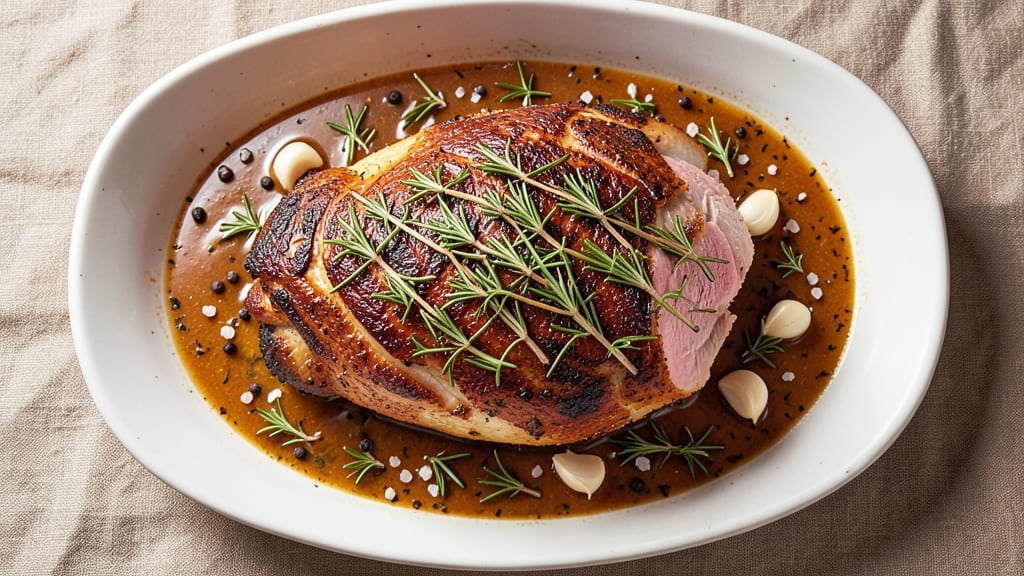
A 2 lb pork roast oven recipe cooked to perfection delivers moist pink centers and herb-roasted crispness—the kind of restaurant-quality result that transforms a simple Sunday dinner into something special.
I’ve perfected this technique over years of cooking for crowds at The Smoky Pig, where we roast hundreds of pounds of pork weekly. The secret lies in a reverse sear method that ensures juicy meat with a caramelized exterior, no matter your oven’s quirks.
This recipe starts with a simple herb rub—rosemary, thyme, and garlic—that infuses the pork with deep, aromatic flavors while keeping the process straightforward. A 325°F oven does the heavy lifting, allowing the meat to cook slowly to 145°F internal temperature for that ideal medium-rare finish.
No fancy equipment needed, just patience and a meat thermometer to guarantee perfect results every time.
By the time you pull it from the oven, you’ll have a tender, juicy roast with a golden-brown crust that’s impossible to resist. The reverse sear method locks in moisture while creating that coveted caramelization, making this the foolproof technique I rely on for family dinners and holiday feasts alike.
Serve it with roasted root vegetables or a quick pan sauce for a complete meal that feels like a celebration.
Leftovers reheat beautifully, and the method scales effortlessly for larger gatherings. Whether you’re feeding a family or treating yourself to a special meal, this herb-roasted pork roast delivers restaurant-quality satisfaction with minimal effort. Let’s get started—your taste buds will thank you.
Ingredients for 2 lb pork roast oven
Pantry staples plus a few fresh herbs transform a simple pork roast into restaurant-quality perfection.
| Ingredient | Amount | Notes |
|---|---|---|
| Pork Roast 🐖 | 2 lb | Bone-in, center-cut preferred |
| Fresh Rosemary 🌿 | ½ cup | Finely chopped, stems removed |
| Fresh Thyme 🌿 | ¼ cup | Leaves only, stems removed |
| Garlic Cloves 🧄 | 6 cloves | Minced, for herb rub |
| Kosher Salt 🧂 | 1 ½ tbsp | Diamond Crystal preferred |
| Freshly Ground Black Pepper 🌶️ | 1 tbsp | Coarsely cracked |
| Extra-Virgin Olive Oil 🫒 | 2 tbsp | For herb rub and searing |
| Unsalted Butter 🧈 | 2 tbsp | Cold, for reverse sear |
| Yellow Onion 🧅 | 1 whole | Sliced for pan sauce |
| Garlic Cloves 🧄 | 2 cloves | Minced for pan sauce |
| Dry Red Wine 🍷 | ½ cup | Cabernet Sauvignon preferred |
| Chicken Stock 🥄 | 1 cup | Homemade or quality store-bought |
| Fresh Parsley 🌿 | 0.1 cup | Chopped, for garnish |
The pork roast is your canvas here—bone-in, center-cut delivers the best flavor and moisture. Whole Foods or your local butcher shop are great sources for quality cuts. Look for good marbling and vibrant color. If you can't find bone-in, a thick-cut pork loin works too. The herb rub is where the magic happens—fresh rosemary and thyme from the grocery store's produce section (not dried) give the best flavor. I always grab extra because I like to garnish the finished dish with a sprig or two. For the garlic, peel and mince it yourself—pre-minced garlic loses its punch fast.
No fresh rosemary? Dried works at one-third the amount, but honestly, it's not the same. Short on red wine? Beef stock with a splash of balsamic vinegar mimics the depth. The chicken stock can be subbed with vegetable stock if you're avoiding poultry. For the pan sauce, if you don't have red wine, apple cider vinegar adds brightness. The butter for the reverse sear? Use cold butter—it browns beautifully and adds richness. If you're cooking for a crowd, double the herb rub and keep it in a jar for future use on chicken or lamb.
This roast reheats beautifully—2-3 minutes in a skillet over medium heat brings it back to life. Store leftovers in the fridge for 4-5 days or freeze for 3 months. I always make a double batch because it's perfect for sandwiches the next day. The herb rub keeps in the fridge for 1 week if you want to make it ahead. For the pan sauce, make a little extra—it's amazing drizzled over roasted potatoes or mashed sweet potatoes.
Why You'll Love This Recipe
- Herb-Crusted Magic: That crispy, golden crust from the salt and garlic? It’s the star. The rosemary and thyme infuse the meat so deeply, every bite tastes like a hug—no dry, bland pork here.
- Leftovers That Win: Between us, this roast is so good the second day it becomes a sandwich or a hash. I make it on Sundays, and by Wednesday, it’s still the hero of my meals—no sad, rubbery leftovers.
- Budget Crowd-Pleaser: A 2 lb roast feeds four (or two very hungry people) without breaking the bank. Fresh herbs make it feel fancy, but the cost? Half of what you’d pay for takeout. Plus, the bones? Soup gold.
Step-by-step instructions for herb-roasted pork roast
Here's how to achieve that perfect balance of crispy exterior and juicy pink interior every time.
Prepare the Herb Rub and Season the Roast
In a small bowl, combine the 0.5 cup fresh rosemary, 0.25 cup fresh thyme, 6 cloves minced garlic, 1.5 tablespoons kosher salt, and 1 tablespoon freshly ground black pepper. This aromatic blend will infuse the pork with deep herbal notes while keeping it tender.
Pat the 2 lb pork roast completely dry with paper towels—this is crucial for crispy skin. Rub the herb mixture all over the meat, pressing firmly so it adheres. Let it sit at room temperature for 30 minutes while you preheat the oven. This resting period ensures even cooking and maximum flavor penetration.
Sear the Roast for Maximum Flavor
Preheat your oven to 375°F. Heat 2 tablespoons extra-virgin olive oil in a large oven-safe skillet over medium-high heat. Once shimmering, add the pork roast and sear for 4 minutes per side until deeply golden brown. This step develops a rich crust that locks in juices.
Transfer the skillet to the preheated oven and roast for 45 minutes. The roast will start cooking through while developing that coveted caramelized exterior. Here's the thing—don't peek! Every time you open the oven, you lose heat and moisture, potentially drying out the meat.
Reverse Sear for Perfect Doneness
Remove the roast from the oven and let it rest on a cutting board for 10 minutes. While it rests, increase your oven temperature to 425°F. This resting period allows the juices to redistribute, ensuring each slice stays moist.
Return the roast to the oven and sear again for 8-10 minutes until the internal temperature reaches 145°F (medium-rare) and the exterior is beautifully crisp. The reverse sear technique guarantees a perfect pink center while maintaining that irresistible crust. Use a meat thermometer for accuracy—this is where precision matters most.
Prepare the Pan Sauce
In the same skillet (with all those delicious browned bits), add 1 whole sliced yellow onion and 2 cloves minced garlic. Cook over medium heat for 5 minutes until softened. Deglaze with 0.5 cup dry red wine, scraping up any stuck-on bits—this captures all the flavor.
Pour in 1 cup chicken stock and simmer for 10 minutes until reduced by half. The sauce should coat the back of a spoon. Remove from heat and stir in 2 tablespoons cold unsalted butter, creating a silky emulsion. This rich sauce complements the herb-roasted pork beautifully.
Rest and Serve with Garnish
Let the roast rest for another 10 minutes before slicing. This final rest ensures maximum juiciness in every bite. Carve against the grain into ½-inch thick slices and arrange on a platter. Spoon the pan sauce generously over the top and garnish with 0.1 cup chopped fresh parsley. The vibrant green contrasts beautifully with the golden-brown roast.
Serve immediately with roasted vegetables or crusty bread to soak up that delicious pan sauce. The result is a pork roast with a crisp exterior, tender pink center, and layers of herb-infused flavor that will impress anyone at your table.
Pro Tips For Making 2 Lb Pork Roast Oven
- SEAR THE ROAST FIRST: High heat. Seriously, crank your oven to 425°F for 15 minutes before lowering it to 325°F. That quick sear locks in juices and builds flavor—no, it doesn’t take extra time, and yes, it makes the difference between dry pork and melt-in-your-mouth perfection. (I learned this the hard way after serving a bland roast that looked like it was boiled.)
- SMASH THOSE GARLIC CLOVES: Skip the minced garlic—it burns. Instead, peel the cloves, smash them flat with the side of your knife, and scatter them directly on the roast. They’ll soften and infuse without turning bitter, and you’ll taste every layer of flavor instead of just a hint. (Your future self will notice the difference.)
- DON’T POKERHOLE THE MEAT: Resist the urge to stab the roast with a fork or knife to check doneness. Every puncture lets juices escape, turning your tender roast into a sad, dry mess. Use an instant-read thermometer (145°F for pork) and pull it 5 minutes early—it’ll carry over perfectly. (I’ve ruined three roasts this way; you don’t have to.)
- USE WET HERBS, NOT DRY: Tuck sprigs of rosemary and thyme inside the roast (cut a few slits if needed) and place the rest on top. The steam from the meat keeps the herbs vibrant and aromatic instead of crispy and flavorless. Pro move: Lightly bruise the herbs with the flat of your knife first—they’ll release more oil and aroma. (Sounds weird, but it works.)
Troubleshooting perfect results
Dry, Tough Meat
If your pork roast turns out dry, the issue is usually overcooking or insufficient resting time. I’ve seen this happen when people cut into the meat too soon—juices need 15-20 minutes to redistribute after roasting.
Always use a meat thermometer to avoid guessing; pull the roast at 145°F internal temperature for medium-rare. Another culprit? Starting at too high a temperature—stick to 325°F for low-and-slow cooking before the final sear. 💫
For extra moisture, try a 1-hour brine in ¼ cup kosher salt dissolved in 4 cups water before seasoning. This hydrates the meat without overpowering flavor. If you’re cooking a larger roast (like 3-4 lbs), reduce oven temperature to 300°F for the initial cook to prevent drying.
Pale, Bland Exterior
A pale, flavorless crust usually means the sear wasn’t hot enough or the meat wasn’t dry before seasoning. Pat the roast thoroughly with paper towels—no moisture left behind. For the sear, crank your oven-safe skillet to medium-high heat until the oil shimmers like a mirror.
If your roast isn’t browning, it’s time to crank the heat or use a cast-iron skillet (my Lodge 10.25-inch is my go-to).
For extra depth, add 1 tbsp brown sugar to your herb rub—it caramelizes beautifully during the sear. If you’re short on time, broil the roast for 2-3 minutes at the end on high heat for a quick color boost. Just watch it like a hawk to avoid burning!
Uneven Cooking
Uneven doneness often happens with thicker cuts or when the roast isn’t properly rested before cooking. Let your 2 lb pork roast sit at room temperature for 30 minutes before seasoning—this ensures even heat penetration.
If your oven runs hot or cold spots, rotate the roast halfway through cooking (after the initial 45 minutes at 375°F). For stubborn cold spots, tent loosely with foil and return to the oven for 10-15 minutes.
Another trick? Use a wire rack on your baking sheet—this allows hot air to circulate underneath, cooking the meat more evenly. If you’re using a bone-in roast, the bone can create uneven heat; in this case, add 15-20 minutes to your total cook time.
Sauce Too Thin or Gluey
A thin, watery pan sauce usually means the stock wasn’t reduced enough. Simmer the sauce uncovered until it coats the back of a spoon—this can take 15-20 minutes depending on your stove.
For a silkier texture, whisk in the 2 tbsp cold butter at the end slowly to create an emulsion. If your sauce is too acidic (from wine or vinegar), balance it with ½ tsp sugar or a pinch of cream cheese stirred in at the finish.
For extra richness, deglaze with ½ cup beef stock instead of wine, then add 1 tbsp Worcestershire sauce for depth. If you’re short on time, reduce the stock by half first, then add the wine to control acidity better.
A splash of heavy cream at the end also thickens and adds luxury!
Nutrition facts
Frequently asked questions
What's the best cut for a 2 lb pork roast?
A bone-in, center-cut pork loin or pork tenderloin works best for this recipe. The bone adds flavor and helps retain moisture, while the center cut ensures tender meat. If you can't find bone-in, a thick-cut pork loin (about 1.5-inch thick) will work too—just add 5-10 minutes to your cook time.
Can I cook this pork roast without a meat thermometer?
While I recommend using a meat thermometer for perfect results, you can estimate by cutting into the thickest part—it should feel slightly firm but still springy at 145°F (medium-rare). For a 2 lb roast, plan for about 1 hour 15 minutes total cook time (including rests) at 325°F. Use the finger test: press gently—juices should run clear, not pink or bloody.
How do I adjust this recipe for a larger roast?
For every additional 1 lb, add 30-45 minutes to your cook time and increase the oven temperature by 10°F for the final sear. For example, a 3 lb roast would cook at 315°F for 1 hour 45 minutes before the final 425°F sear. Scale the herb rub proportionally (double for 4 lbs) and use a wire rack to ensure even cooking.
What sides pair best with this herb-roasted pork?
This roast shines with roasted root vegetables (carrots, parsnips, or sweet potatoes), creamy mashed potatoes, or a fresh green salad with a tangy vinaigrette. For a heartier meal, serve with crusty bread to soak up the pan sauce. My go-to is garlic-herb roasted potatoes—toss 1.5 lbs baby potatoes in olive oil, rosemary, and garlic, then roast at 400°F for 30 minutes.
Can I make the herb rub ahead of time?
Store the herb rub in an airtight container in the fridge for up to 1 week or freeze for 3 months. Just let it sit at room temperature for 10 minutes before using to soften the herbs. For extra flavor, add 1 tsp smoked paprika to the rub. If you're short on fresh herbs, dried rosemary and thyme work in a 1:3 ratio (e.g., 1 tbsp dried for every 3 tbsp fresh).